
Views: 222 Author: Amanda Publish Time: 2025-12-01 Origin: Site


Content Menu
● Shangchen: One‑Stop Rapid Prototyping Factory
● Understanding Rapid Control Prototyping
● Rapid Control Prototyping and Rapid Prototyping
● How Rapid Control Prototyping Works in Practice
● Key Benefits of Rapid Control Prototyping
● Why Rapid Prototyping Is Crucial for RCP
● CNC Machining in Rapid Prototyping for RCP
● Turning and Lathe Work for Functional Prototypes
● Sheet Metal Fabrication in Rapid Prototyping Environments
● 3D Printing for Complex Rapid Prototyping Tasks
● From Rapid Prototyping to Precision Batch Production
● Integrating Tooling and Mold Making with RCP
● Typical Applications of Rapid Control Prototyping
● Building an RCP‑Ready Rapid Prototyping Workflow with Shangchen
● FAQs
>> 1. What is the core purpose of Rapid Control Prototyping?
>> 2. How does Rapid Prototyping improve RCP results?
>> 3. Why choose CNC machining for Rapid Prototyping in control projects?
>> 4. What types of products benefit most from RCP and Rapid Prototyping?
>> 5. How can Shangchen support an end‑to‑end RCP‑driven development project?
Rapid Control Prototyping (RCP) is a development methodology that lets engineers design, test, and optimize control algorithms on real‑time hardware connected to realistic plants long before committing those algorithms to final embedded controllers. RCP dramatically accelerates rapid prototyping cycles in modern products that combine mechanics, electronics, and software, reducing risk and shortening time‑to‑market.
Shangchen (sc-rapidmanufacturing.com) is a China‑based factory focusing on Rapid Prototyping, CNC machining, precision batch production, turning, sheet metal fabrication, 3D printing services, and mold production for overseas brands, wholesalers, and OEM manufacturers. By combining multiple in‑house processes, Shangchen supports both early Rapid Prototyping and the production‑ready stages of complex mechanical and electromechanical products.
For teams working with Rapid Control Prototyping, Shangchen can manufacture test rigs, housings, brackets, and other structural parts required to implement and validate control systems on real hardware. Integrating CNC machining with Rapid Prototyping and small‑batch production helps customers keep mechanical changes synchronized with control algorithm iterations, which is critical when both structure and control strategy are evolving at high speed.
Rapid Control Prototyping is a technique for rapidly evaluating and refining control systems by running control algorithms in real time on flexible prototype hardware connected to actual or mock‑up plants. Instead of coding directly into constrained embedded controllers, engineers deploy algorithms to powerful development platforms that interact with sensors, actuators, and mechanical assemblies as the product would in the field.
This approach allows the development team to focus on controller structure, stability, tuning, and robustness without being blocked by low‑level implementation issues. Once the behavior is validated through Rapid Control Prototyping, the algorithm can be streamlined and ported to production‑grade microcontrollers, digital signal processors, or custom ASICs with much lower risk.
Rapid Prototyping is the umbrella term for techniques that quickly fabricate physical parts and assemblies from digital designs. In manufacturing, Rapid Prototyping typically relies on processes like CNC machining, 3D printing, and sheet metal fabrication to turn CAD models into real parts within days rather than weeks.
Rapid Control Prototyping is closely related but focuses on validating how software‑based control algorithms behave when connected to real or realistic hardware. Rapid Prototyping creates the mechanical and electrical prototypes, while Rapid Control Prototyping ensures that the control logic can manage those prototypes safely and efficiently. Together, they form a closed loop where physical changes and controller updates inform each other until the design converges.
A typical Rapid Control Prototyping workflow begins with a model of the control system in a high‑level environment, often based on block diagrams or other model‑based design tools. Engineers define the plant model, controller structure, feedback paths, and reference signals, then configure the system to run in real time on a dedicated hardware platform.
The prototype controller interfaces with the plant through measurement and actuation channels—for example, motor encoders, current sensors, temperature sensors, valves, or relays. In early stages, the plant may be a downscaled mock‑up or a Rapid Prototyping assembly built with CNC‑machined parts, 3D printed fixtures, and simple frames. As the design matures, the same Rapid Control Prototyping setup can be used with more refined Rapid Prototyping hardware that closely mirrors the final product geometry and materials.
Rapid Control Prototyping offers benefits that align well with the goals of Rapid Prototyping in manufacturing:
- Faster development cycles by reducing the need for repeated manual coding on embedded controllers during experimentation.
- Earlier detection of issues such as instability, oscillations, non‑linear behavior, and noise sensitivity in control loops.
- Greater flexibility to explore alternative control strategies, from classical PID to advanced state‑space or model predictive control, without redesigning hardware each time.
- Improved collaboration between mechanical, electrical, and software teams who can all work against a common Rapid Prototyping and Rapid Control Prototyping platform.
When both mechanical Rapid Prototyping and Rapid Control Prototyping are in place, teams can iterate quickly on complex mechatronic products, including robotics, automotive subsystems, power electronics, and industrial machinery.
Rapid Control Prototyping depends heavily on having hardware that can be built and modified quickly. Rapid Prototyping provides exactly that capability by turning updated digital models into real parts on short notice. Every time the team learns something new about their control requirements—such as a need for better stiffness, revised mass distribution, or improved airflow— Rapid Prototyping allows them to change the mechanical design and test the new configuration within the same RCP environment.
This tight loop between Rapid Prototyping and Rapid Control Prototyping encourages experimentation with different mechanical layouts, sensor placements, and actuator selections. Rather than freezing the mechanical design too early, engineering teams can keep it flexible until the control system has been sufficiently characterized and tuned in hardware.
CNC machining is central to industrial Rapid Prototyping because it delivers precise, repeatable parts suitable for functional testing. For Rapid Control Prototyping, CNC‑machined components can serve as:
- Motor housings and end caps that maintain alignment and cooling performance.
- Gearbox parts, couplings, and shafts in motion control applications.
- Structural frames and brackets that hold sensors and actuators in accurate positions.
- Thermal management components like heat sinks and cold plates for power electronics.
Using Rapid Prototyping through CNC machining, engineers can refine dimensions, tolerances, and material choices as they observe how the control system responds to real‑world loads, vibrations, and environmental conditions.
Turning operations complement CNC milling by producing cylindrical parts that frequently appear in control‑centric systems. In Rapid Prototyping for RCP, precision turned components may include rotor shafts, rollers, pulleys, bushings, and spacers.
Accurate diameters, concentricity, and surface finishes are fundamental to stable mechanical behavior, especially when feedback signals depend on smooth rotation or linear motion. Reliable Rapid Prototyping of these parts supports more predictable responses in Rapid Control Prototyping experiments, making it easier to isolate algorithm‑related issues from purely mechanical problems.
Sheet metal fabrication is another core technique in Rapid Prototyping that brings speed and versatility to RCP test setups. Typical uses include:
- Enclosures for Rapid Prototyping control hardware, power supplies, and I/O modules.
- Panels, mounting plates, and chassis for assembling plant mock‑ups and test benches.
- Guards and safety covers that let engineers perform aggressive RCP experiments without exposing operators to hazards.
Because sheet metal can be cut, bent, welded, and finished quickly, it fits naturally into Rapid Prototyping workflows where the layout of components and cable routing may change multiple times as control strategies evolve.
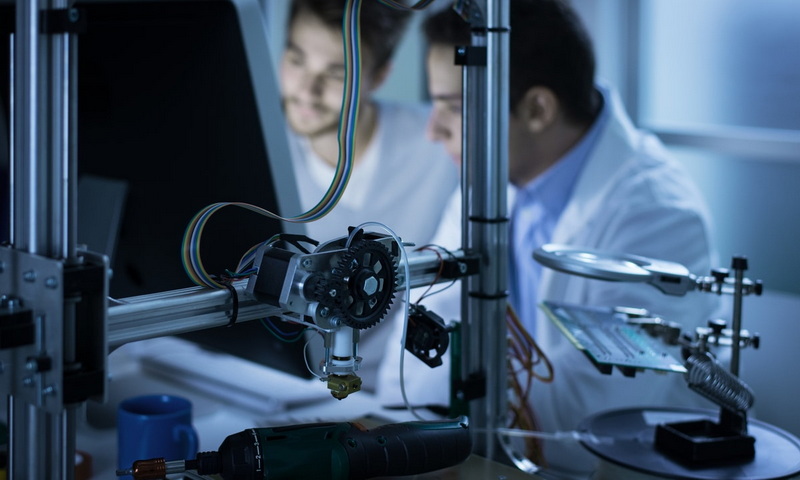
3D printing extends Rapid Prototyping into geometries that would be difficult or slow to produce with traditional methods. In Rapid Control Prototyping, 3D printed components often include:
- Custom sensor brackets tailored to exact mounting angles and offsets.
- Cable management parts that maintain signal integrity during movement.
- Fluid or airflow channels that are critical to thermal control algorithms.
- Ergonomic interfaces for operator controls in test rigs.
Because the cost of design changes is low, 3D‑based Rapid Prototyping encourages creative designs that make RCP experiments more realistic and informative. Engineers can quickly test ideas about sensor placement, cooling patterns, or mechanical support and immediately see the effect in Rapid Control Prototyping measurements.
Once Rapid Prototyping and Rapid Control Prototyping have stabilized both the hardware design and control algorithms, the focus shifts to producing multiple units with consistent behavior. Precision batch production ensures that every part manufactured has the same critical dimensions, materials, and surface properties that were validated during RCP.
For RCP‑driven projects, this consistency is essential, because control tuning and performance metrics depend on the mechanical system matching the Rapid Prototyping units used during development. A supplier like Shangchen, which can provide both Rapid Prototyping and precision batch production under the same roof, simplifies this transition and helps maintain continuity from prototype to early production.
For products that will eventually be produced in large volumes, tooling and mold making are the next logical step beyond Rapid Prototyping. By the time molds are designed, Rapid Control Prototyping should have verified the control strategies and highlighted which dimensions, tolerances, and material behaviors are most important to maintain.
Tooling teams can then design molds that preserve those critical features, aligning the mass‑production process with the behaviors characterized during RCP on Rapid Prototyping hardware. Because mold changes are more expensive than Rapid Prototyping revisions, the early risk reduction provided by Rapid Control Prototyping is particularly valuable at this stage.
Rapid Control Prototyping appears wherever dynamic systems require precise and reliable control. Common application domains include:
- Automotive systems such as powertrains, electric drives, active suspension, and driver assistance functions.
- Aerospace subsystems including flight stabilization, propulsion control, and actuation systems.
- Industrial automation with robots, conveyors, packaging lines, and process equipment.
- Power electronics, where control of inverters, converters, and drives is essential for efficiency and safety.
In each of these areas, combining Rapid Prototyping of mechanical and electrical hardware with RCP significantly reduces time‑to‑market and helps ensure that products behave as intended under real‑world conditions.
To fully leverage Rapid Control Prototyping, companies need a Rapid Prototyping workflow that responds quickly to design changes and supports tight collaboration between disciplines. Shangchen can play a central role in this workflow by:
- Producing CNC‑machined prototypes and Rapid Prototyping assemblies for early plant mock‑ups and test benches.
- Delivering sheet metal frames, enclosures, and brackets that house Rapid Control Prototyping hardware and instrumentation.
- Supplying 3D printed fixtures, sensor mounts, and custom components for specialized experiments.
- Scaling successful Rapid Prototyping designs into precision batch production or preparing tooling and molds for larger volumes.
By partnering with Shangchen, OEMs, brands, and manufacturing customers can maintain a continuous chain from conceptual models to Rapid Prototyping prototypes, through Rapid Control Prototyping, and into pre‑production and mass manufacturing. This continuity simplifies documentation, minimizes miscommunication, and keeps control performance consistent throughout the product life cycle.
Rapid Control Prototyping is a powerful methodology for designing and validating control algorithms in real time on representative hardware, providing rapid feedback and reducing risks that typically surface late in development. When combined with robust Rapid Prototyping capabilities—CNC machining, turning, sheet metal fabrication, 3D printing, and mold making—RCP enables teams to explore more ideas, optimize performance, and bring sophisticated products to market faster.
Shangchen (sc-rapidmanufacturing.com) offers an integrated set of Rapid Prototyping and production services that align naturally with Rapid Control Prototyping workflows. By delivering prototypes, test rigs, precision batch parts, and tooling from a single source, Shangchen helps global customers execute ambitious control‑driven projects with confidence, from first prototype to stable, scalable production.
The core purpose of Rapid Control Prototyping is to let engineers test and refine control algorithms on flexible prototype hardware connected to realistic plants before committing to final embedded implementations. This approach improves confidence in control performance, reduces the likelihood of late‑stage redesigns, and aligns closely with the fast iterations typical of Rapid Prototyping.
Rapid Prototyping improves RCP results by providing physical hardware that can be changed quickly as engineers learn from experiments. When mechanical parts, sensor layouts, and actuator configurations can be updated rapidly, RCP can explore a broader design space, leading to better overall system behavior and fewer compromises between mechanics and control algorithms.
CNC machining is often chosen for Rapid Prototyping in control projects because it delivers high accuracy, good surface finishes, and strong, repeatable parts in metals and engineering plastics. These qualities make CNC‑machined prototypes suitable for functional testing in RCP, where stiffness, alignment, and thermal behavior can significantly influence control performance.
Products that combine mechanical structures with sophisticated control, especially in automotive, aerospace, industrial automation, robotics, and power electronics, benefit most from RCP and Rapid Prototyping. In these products, behavior depends on complex interactions between hardware and software, and early, iterative testing with Rapid Prototyping and Rapid Control Prototyping greatly reduces uncertainty.
Shangchen supports end‑to‑end RCP‑driven development by offering Rapid Prototyping of mechanical and structural parts, providing CNC machining, turning, sheet metal, and 3D printing services for test rigs and pilot runs, and then transitioning validated designs into precision batch production and tooling. This integrated capability allows engineering teams to concentrate on control strategy and system architecture while relying on Shangchen to deliver consistent, high‑quality hardware throughout the project.
[1](https://www.speedgoat.com/knowledge-center/whitepapers-and-technical-articles/fpga-based-rapid-control-prototyping-of-pmsm)
[2](https://www.monolithicpower.com/en/learning/mpscholar/analog-vs-digital-control/software-tools-and-simulation/rapid-control-prototyping)
[3](https://ieeexplore.ieee.org/document/10056232/)
[4](https://en.wikipedia.org/wiki/Rapid_control_prototyping)
[5](https://formlabs.com/blog/ultimate-guide-to-rapid-prototyping/)
[6](https://www.sciencedirect.com/science/article/pii/S235197891830550X)

