
Views: 222 Author: Amanda Publish Time: 2025-11-22 Origin: Site


Content Menu
● What Rapid Prototyping Really Means
● What 3D Printing Actually Is
● Rapid Prototyping vs 3D Printing
● Why Rapid Prototyping Is Broader
● Where 3D Printing Fits Inside Rapid Prototyping
● When Rapid Prototyping Needs More Than 3D Printing
● CNC Rapid Prototyping vs 3D Printing
● Cost and Complexity in Rapid Prototyping
● Accuracy, Surface Quality, and Mechanical Properties
● Rapid Prototyping in Different Industries
>> Medical and Consumer Electronics
● Rapid Prototyping for Global OEM and Wholesale Customers
● Future Directions in Rapid Prototyping
● FAQs
>> 1. Is Rapid Prototyping the same as 3D Printing?
>> 2. When should 3D Printing be used in Rapid Prototyping?
>> 3. When is CNC Rapid Prototyping better than 3D Printing?
>> 4. Is Rapid Prototyping more expensive than simple 3D Printing?
>> 5. How can an overseas OEM brand work with Shangchen for Rapid Prototyping?
In engineering and manufacturing, people often use the terms Rapid Prototyping and 3D Printing as if they mean exactly the same thing, but they do not. Rapid Prototyping is a broader product development strategy, while 3D printing is a specific manufacturing process that is frequently used to achieve Rapid Prototyping. Understanding the real relationship between these concepts helps brands, wholesalers, and OEM manufacturers choose the best path from digital idea to physical part.[1][8][9]
Shangchen (sc-rapidmanufacturing.com) supports this full journey by combining Rapid Prototyping with CNC machining, precision batch production, turning, sheet metal fabrication, 3D printing, and mold production for global OEM customers.
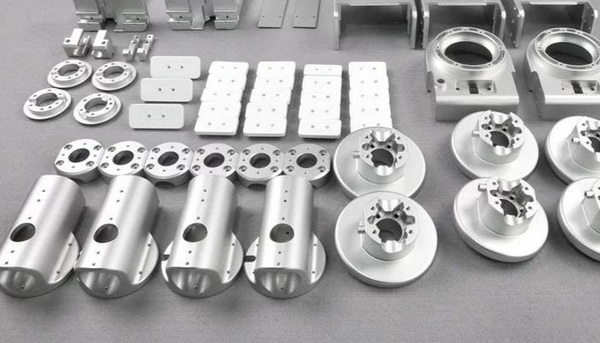
Rapid Prototyping is the fast, iterative fabrication of physical models or parts directly from 3D CAD data, used to verify design, function, and manufacturability before full-scale production. It focuses on speed, iteration, and learning, not on any single tool or machine.[9][1]
The key characteristics of Rapid Prototyping are:
- Very short lead times from CAD to part.
- Flexible design changes between iterations.
- Ability to test appearance, ergonomics, and performance.
- Integration with later manufacturing methods like CNC, molding, and stamping.[6][9]
In practice, Rapid Prototyping can mix additive processes (3D Printing), subtractive processes (CNC machining), and even short-run molding or casting to support the full development cycle.[5][9]
3D Printing is an additive manufacturing process that builds parts layer by layer from materials such as plastics, resins, or metals, based on a digital CAD model. Popular technologies include FDM, SLA, SLS, and others, each using different materials and energy sources.[8][9]
3D Printing is often the first technology people think of for Rapid Prototyping because:
- It has minimal setup.
- It can create highly complex geometries.
- It is relatively affordable and accessible for early-stage prototypes.[5][8]
However, 3D Printing is just one possible method inside a larger Rapid Prototyping toolkit.
Rapid Prototyping and 3D Printing are related, but they are not identical. Rapid Prototyping describes the goal and workflow (fast functional and visual prototypes), while 3D Printing describes one of the processes used to achieve that goal.[1][8]
In practical terms:
- 3D Printing is a process.
- Rapid Prototyping is an application and strategy that may use 3D Printing, CNC, vacuum casting, sheet metal, and more in combination.[2][1]
This means an engineer can practice Rapid Prototyping without using any 3D Printer at all by relying on fast CNC machining or rapid tooling, and conversely, a factory can use 3D Printing directly for small-batch production without calling it Rapid Prototyping.[9][5]
Rapid Prototyping usually spans several stages of product development instead of a single print job. It often includes:
- Early “looks-like” prototypes for shape and style.
- Mid-stage “works-like” prototypes to test assembly and movement.
- Final-stage engineering prototypes using near-production materials and tolerances.[6][9]
To support these stages, Rapid Prototyping can combine:
- 3D Printing for early proof-of-concept and geometrical validation.
- CNC machining for functional strength and tight tolerances.
- Vacuum casting or low-volume molding for realistic plastics and small pre-production batches.[5][6]
Shangchen can integrate every one of these options into a single Rapid Prototyping workflow, allowing international OEM clients to move from digital files to pilot production with fewer handoffs and delays.
3D Printing is extremely powerful inside Rapid Prototyping because it is ideal for:
- Quick design validation in hours or days.
- Complex internal geometries like lattice structures or internal channels.
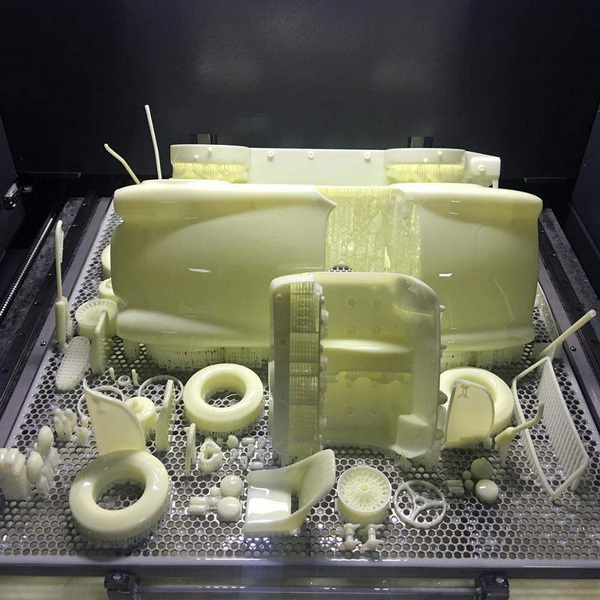
- Multiple design variants (A/B/C) printed in parallel.[8][5]
Common Rapid Prototyping use cases for 3D Printing include:
- Concept models for design review.
- Ergonomic hand-held models.
- Low-load functional parts for fit and assembly checks.
- Visual marketing samples for early promotion.[6][8]
As a Rapid Prototyping partner, Shangchen leverages professional 3D Printing technologies alongside CNC and other methods so the same part can move from printed concept to machined functional prototype and finally to molded batch production with consistent quality expectations.
Not every project can rely on 3D Printing alone. As designs move closer to production, Rapid Prototyping often demands:
- Higher accuracy and surface finish than typical 3D Printing can deliver.
- Real production materials, such as specific aluminum alloys or engineering plastics like PEEK or ULTEM.
- Tight tolerances for assemblies and mechanical interfaces.[2][5]
In these cases, Rapid Prototyping will typically shift toward:
- CNC Rapid Prototyping to match final material properties and tolerances.
- Sheet metal Rapid Prototyping to test enclosures and brackets.
- Rapid tooling and pilot molding to evaluate injection-grade materials and cycle behavior.[9][5]
Shangchen's integrated Rapid Prototyping and precision batch production services allow overseas brands to keep all these stages within a single factory, shortening feedback loops and reducing risk.
CNC Rapid Prototyping and 3D Printing are often compared because both can create prototypes quickly, but they excel in different areas. CNC is subtractive, removing material from a solid block, while 3D Printing is additive, building layer by layer.[5][9]
Key differences include:
- Material behavior: CNC preserves the full mechanical properties of engineering-grade metals and plastics, which is critical for structural and thermal tests.[5]
- Surface quality: CNC Rapid Prototyping can achieve mirror-like finishes and very tight tolerances directly off the machine, often without further finishing.[5]
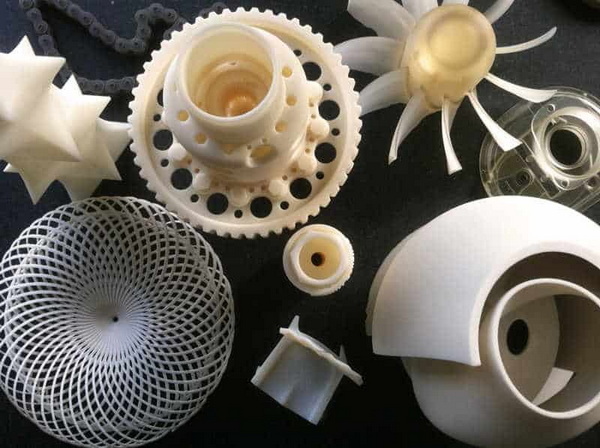
- Geometry freedom: 3D Printing allows internal channels, lattice structures, and shapes that are impossible or uneconomical to machine.[8][5]
An effective Rapid Prototyping strategy often combines both: printing for extreme complexity and iteration speed, machining for final functional verification. Shangchen can advise international OEM customers on when to shift from printed prototypes to CNC Rapid Prototyping and then into mold-based production.
From a cost perspective, 3D Printing and full Rapid Prototyping systems differ in machine cost, operation, and maintenance. Entry-level or mid-range 3D Printing solutions are relatively affordable and require less training. Rapid Prototyping equipment for industrial accuracy and throughput can be more costly to buy and maintain but delivers superior consistency and capacity.[2][6]
When planning Rapid Prototyping budgets, companies typically evaluate:
- Machine and material costs.
- Labor skill level and programming time.
- Post-processing requirements for surface finish and accuracy.
- Number of design iterations expected.[2][6]
Shangchen helps overseas brands balance these trade-offs by selecting the most economical process for each project stage: early 3D Printing for low-cost trials, then CNC Rapid Prototyping or rapid tooling when higher precision and material fidelity are essential.
Accuracy and mechanical performance are critical differentiators between pure 3D Printing and broader Rapid Prototyping. Advanced Rapid Prototyping workflows using CNC machining can deliver extremely tight dimensional tolerances and high-quality surfaces suitable for functional assemblies and client presentations.[2][5]
Meanwhile, modern 3D Printing is improving in resolution and reliability but may still require post-processing such as sanding, coating, or machining to reach final finish targets. Mechanical strength and heat resistance of 3D-printed parts depend heavily on material selection and build orientation, whereas CNC Rapid Prototyping uses fully dense materials with predictable properties.[8][9][5]
For OEM projects that must pass demanding mechanical tests, Shangchen often proposes a staged Rapid Prototyping plan: initial 3D-printed mockups followed by CNC Rapid Prototyping, then small-batch molding or precision machining to verify long-term performance.
Automotive and aerospace manufacturers use Rapid Prototyping to validate aerodynamics, durability, and assembly workflows before building expensive tooling or vehicles. Aerodynamic models, brackets, housings, and interior components can all be rapidly produced, tested, revised, and produced again.[6][9]
3D Printing in these sectors focuses on complex geometries and weight reduction, while CNC Rapid Prototyping supports safety-critical metal components where mechanical integrity is non-negotiable. Shangchen's combination of multi-axis machining, turning, and 3D Printing aligns with this mixed requirement.[8][5]
In medical devices, Rapid Prototyping enables patient-specific models, device housings, and ergonomic instruments that can be refined quickly based on surgeon and patient feedback. 3D Printing is valuable for anatomical models and small plastic parts, while CNC and molding are essential for sterilizable, production-grade components.[9][6]
Consumer electronics brands use Rapid Prototyping for external covers, internal brackets, connectivity modules, and even packaging prototypes. Rapid Prototyping allows teams to discover early whether a design is comfortable to hold, easy to assemble, and ready for mass manufacturing. Shangchen offers sheet metal Rapid Prototyping, CNC machining, and 3D Printing to support both inner structures and external casings.
For overseas brands and wholesalers, the biggest advantage of Rapid Prototyping is the ability to collaborate with a manufacturing partner that can handle every stage from initial concept to ready-for-market production. Working with a factory like Shangchen provides:
- Unified CAD data management across Rapid Prototyping, CNC, and molding.
- Consistent quality standards from prototype to batch production.
- Shorter lead times because different processes are under one roof.
- OEM confidentiality and tailored production planning.[6][5]
This integrated Rapid Prototyping approach is particularly valuable for customers who want to launch new SKUs frequently, test multiple design versions, or scale successful prototypes into repeatable production runs.
Rapid Prototyping is evolving beyond simple “fast models” into a full digital manufacturing ecosystem. Trends include:
- Hybrid manufacturing, which combines 3D-printed inserts with CNC-machined bodies to reduce cooling times, deformation, and cost in mold and tooling design.[9][5]
- Generative design and topology optimization, using 3D Printing to realize organic, lightweight structures that were previously impossible to manufacture.
- AI-driven parameter optimization that automatically adjusts print settings or machining strategies for better quality and efficiency.[6][8]
Shangchen follows these developments to provide Rapid Prototyping services that are not only fast but also intelligent and future-ready, helping global clients win in competitive markets.
Rapid Prototyping and 3D Printing are deeply connected but clearly not the same. 3D Printing is a powerful additive manufacturing process that supports Rapid Prototyping by producing complex parts quickly from CAD data, while Rapid Prototyping is a broader development strategy that may also include CNC machining, vacuum casting, sheet metal work, and rapid tooling.[1][8]
For serious product development, the question is not Rapid Prototyping or 3D Printing, but rather how to combine 3D Printing with other Rapid Prototyping technologies to move from idea to stable production as efficiently as possible. By offering CNC Rapid Prototyping, precision batch production, turning, sheet metal fabrication, 3D Printing, and mold manufacturing, Shangchen serves as a one-stop Rapid Prototyping and OEM partner for international brands, wholesalers, and manufacturers seeking speed, quality, and reliability.
No. Rapid Prototyping is a wider concept that covers the fast creation and iteration of prototypes using multiple technologies, including 3D Printing, CNC machining, and casting. 3D Printing is one additive manufacturing process that Rapid Prototyping often uses, but Rapid Prototyping can also be achieved without 3D Printing in some projects.[1][9]
3D Printing is best for early-stage prototypes, complex geometries, and fast visual or fit checks where ultimate strength is not yet critical. It allows designers to print several variants at low cost and quickly discover which design direction is best before switching to CNC Rapid Prototyping or molding.[8][5]
CNC Rapid Prototyping is preferable when prototypes must match final production materials, tolerances, and mechanical performance. It is especially useful for load-bearing parts, heat-resistant components, or parts that will guide the design of production tooling and molds.[9][5]
Rapid Prototyping can be more complex and sometimes more expensive because it often involves high-end equipment, skilled programming, and multiple processes across different stages. However, it usually saves money overall by preventing design errors, avoiding tooling rework, and shortening time to market.[2][6]
Overseas OEM brands can provide 3D CAD files and technical requirements, then choose a Rapid Prototyping plan that may include 3D Printing, CNC Rapid Prototyping, sheet metal, and rapid tooling. Shangchen can iterate prototypes, refine designs for manufacturability, and then scale into precision batch production and full OEM manufacturing for international markets.[5][6]
[1](https://www.tth.com/blog/what-is-the-difference-between-3d-printing-additive-manufacturing-and-rapid-prototyping)
[2](https://www.cmac.com.au/blog/difference-between-3d-printing-rapid-prototyping)
[3](https://www.mfgproto.com/uncover-the-truth-about-whether-rapid-prototyping-is-truly-the-same-as-3d-printing-in-this-insightful-blog-post/)
[4](https://www.reddit.com/r/3Dprinting/comments/aiijon/who_else_thinks_rapid_prototyping_and_iterative/)
[5](https://www.lsrpf.com/en/blog/cnc-rapid-prototyping-vs-3d-printing-how-to-balance-cost-efficiency-and-quality)
[6](https://www.protolabs.com/en-gb/resources/blog/the-benefits-of-3d-printing-for-rapid-prototyping/)
[7](https://www.reddit.com/r/3dprinter/comments/o2mj4j/comparing_some_of_the_best_3d_printing_and_rapid/)
[8](https://www.hubs.com/knowledge-base/selecting-right-3d-printing-process/)
[9](https://luxcreo.com/what-is-3d-printing-additive-manufacturing-and-rapid-prototyping-lc/)

