
Views: 222 Author: Amanda Publish Time: 2025-12-25 Origin: Site


Content Menu
● Understanding CNC Machining Basics
● What Is 5 Axis CNC Machining?
● Types of 5 Axis CNC Machines
● How 5 Axis CNC Machining Works
● Benefits of 5 Axis CNC Machining
● Typical Applications of 5 Axis CNC Machining
● 5 Axis vs 3 Axis CNC Machining
● Design Tips for 5 Axis CNC Machining
● Materials for 5 Axis CNC Machining
● Quality Control in 5 Axis CNC Machining
● Why 5 Axis CNC Machining Matters for OEMs
● FAQ About 5 Axis CNC Machining
>> 1. What makes 5 axis CNC machining different from 3 axis machining?
>> 2. Is 5 axis CNC machining always better than 3 axis?
>> 3. Which materials can be processed with 5 axis CNC machining?
>> 4. Does 5 axis CNC machining reduce lead time?
>> 5. Is 5 axis CNC machining more expensive?
5 axis CNC machining is an advanced CNC Machining process where the cutting tool or the workpiece can move along five different axes at the same time, enabling the machining of complex, highly precise parts in one setup. For OEM brands, wholesalers, and manufacturers, 5 axis CNC machining provides a powerful combination of accuracy, efficiency, and flexibility that goes far beyond traditional 3 axis CNC Machining.[1][2]
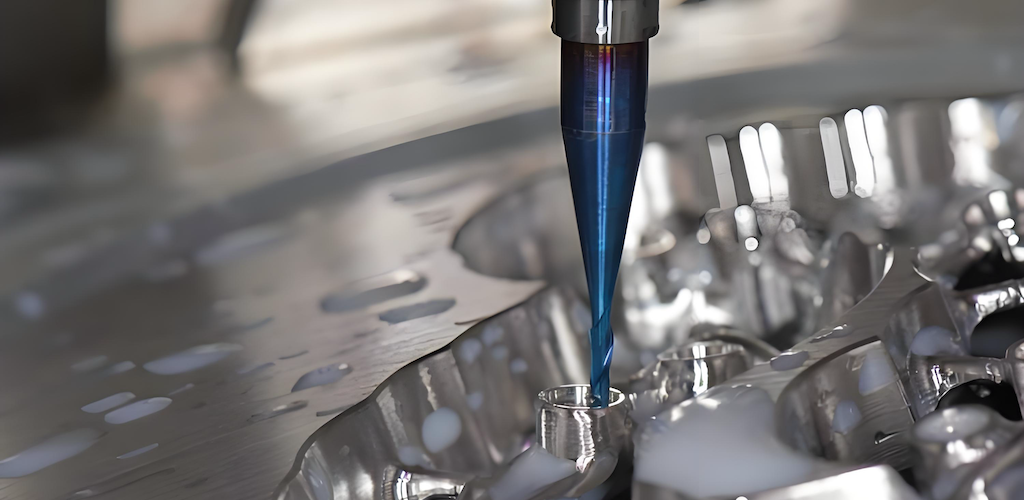
CNC Machining is a subtractive manufacturing process in which computer-controlled cutting tools remove material from a solid block, plate, or bar to create a finished component. The process relies on a digital 3D CAD model, which is converted into machine-readable code so that every movement of the cutting tool is precisely controlled during CNC Machining.[3][4]
In standard 3 axis CNC Machining, the machine operates along three linear directions:[4][3]
- X axis: Left–right movement
- Y axis: Front–back movement
- Z axis: Up–down movement
Key characteristics of CNC Machining:[3]
- The workflow begins with CAD design, continues through CAM programming, and ends with controlled cutting on CNC machines.
- CNC Machining can perform milling, drilling, tapping, pocketing, contouring, and finishing operations on the same setup.
- It is suitable for both rapid prototyping and precision batch production in metals and plastics.
For international buyers using Chinese suppliers, CNC Machining is often the backbone of rapid prototyping, functional testing, and small-to-medium volume production because it combines speed, reasonable cost, and dimensional accuracy in one flexible process.[3]
5 axis CNC machining expands the capabilities of standard CNC Machining by adding two rotational axes on top of the three linear axes. Instead of only moving in X, Y, and Z, the machine can also tilt and rotate the tool or the table, so the cutting edge approaches the part from many different angles without manually repositioning the workpiece.[1][4]
Typical axis definitions in 5 axis CNC machining:[5][1]
- X, Y, Z: Linear axes that position the tool relative to the part
- A axis: Rotation around the X axis
- B axis: Rotation around the Y axis
- C axis: Rotation around the Z axis
By coordinating these five axes, the CNC Machining center can follow complex 3D curves and machine tight pockets, deep cavities, and undercuts that would be very difficult or impossible on basic 3 axis equipment.[2]
Not all 5 axis CNC machining centers share the same mechanical layout, and the type of machine directly affects the machining strategy, workholding, and part size capacity.[3]
Common 5 axis CNC machining configurations:[5][3]
- Trunnion-style 5 axis: The table tilts and rotates (often A and C axes), while the spindle provides X, Y, Z motion. This style is ideal for heavy metal removal and large workpieces.
- Swivel-head 5 axis: The spindle head tilts and rotates (commonly B and C axes), while the table moves linearly. This style offers excellent flexibility for a wide range of CNC Machining jobs.
- Hybrid 5 axis: Some machines combine both tilting tables and swiveling heads for maximum reach and versatility.
In practice, the choice of machine type affects fixture design, reachable angles, and optimal tool lengths, so experienced CNC Machining engineers select the configuration that best matches the geometry and size of each project.[3]
The workflow for 5 axis CNC machining follows the same digital pipeline as other CNC Machining processes but with more complex toolpath programming.[4]
Typical process steps:[4][3]
- CAD design: Engineers or product designers create the 3D model of the part with all functional features.
- CAM programming: CAM software generates 5 axis CNC machining toolpaths, defining how the tool moves and tilts around the part.
- Post-processing: The CAM program is converted into G-code tailored to the specific CNC Machining center.
- Setup and fixturing: The operator mounts the workpiece and cutting tools, sets work offsets, and verifies tool lengths.
- Machining and inspection: The 5 axis CNC machining program is executed, and critical dimensions are checked with measuring tools or CMM.
There are two major operating modes in 5 axis CNC machining:[5][4]
- 3+2 (indexed) 5 axis: The rotary axes are positioned to a fixed orientation, and then the machining is performed using standard 3 axis movement from that angle.
- Simultaneous 5 axis: All five axes can move at the same time, which is ideal for sculpted surfaces, turbine blades, and complex molds.
Both modes still fall under the umbrella of CNC Machining and can be combined in a single program depending on the geometry and tolerance requirements.[4]
The main reason manufacturers invest in 5 axis CNC machining is its ability to improve quality and reduce production costs for complex parts. When correctly applied, 5 axis CNC machining can transform the economics of producing intricate OEM components.[6][2]
Key benefits of 5-axis CNC Machining:[7][2][6]
- Fewer setups: Parts can often be finished in a single clamping instead of multiple operations on different machines.
- Higher accuracy: Eliminating repeated re-clamping reduces cumulative positioning errors and improves dimensional stability.
- Better surface finish: Shorter tools, optimal tool angles, and continuous tool engagement provide smooth surfaces and less need for manual finishing.
- Shorter cycle times: More efficient toolpaths and multi-side access reduce machining time for complex geometries.
- Complex geometry capability: Free-form curves, deep pockets, and undercuts become feasible tasks instead of expensive special processes.
Additional advantages that matter to OEM buyers and sourcing managers:[8][9][2]
- Reduced fixture costs, since one flexible fixture can replace several dedicated jigs.
- Less human handling between operations, which lowers risk of damage and improves consistency.
- More stable quality over long production runs, thanks to repeatable CNC Machining programs and fixed setups.

5 axis CNC machining plays a vital role in industries where performance, reliability, and lightweight design are critical. Because 5 axis CNC Machining can handle complex and organic shapes, it is often used in advanced engineering applications.[10][11]
Representative applications:[11][12][10]
- Aerospace: Turbine blades, blisks, structural brackets, and airframe components with contoured surfaces and precise holes at compound angles.
- Automotive and motorsport: Cylinder heads, engine blocks, transmission housings, suspension parts, and high-performance racing components.
- Medical and dental: Artificial joints, bone plates, surgical instruments, and dental abutments that require both biocompatible materials and excellent surface finish.
- Energy: Compressor impellers, pump parts, and components for oil & gas, wind, and other power-generation systems.
- Mold and die: Injection molds, compression molds, die-casting tools, and complex cavity inserts for plastic and metal parts.
In these fields, 5 axis CNC machining is often combined with other CNC Machining processes, such as high-speed milling, precision turning, and EDM, to create complete tooling and production solutions.[12]
Choosing between 3 axis and 5 axis CNC machining depends on part geometry, tolerance, volume, and cost targets. While 3 axis CNC Machining remains very effective for simple parts, 5 axis CNC machining offers important advantages for high-value components.[2][5]
Compared characteristics:[7][2][4]
- Geometric complexity: 3 axis CNC Machining is well suited for flat, prismatic parts, while 5 axis CNC machining handles free-form surfaces and complex angles with ease.
- Number of setups: 3 axis machining often requires multiple fixtures and re-clamping; 5 axis CNC machining can complete many parts in one setup.
- Dimensional accuracy: Fewer clamps and fewer manual interventions in 5 axis CNC machining usually translate into more consistent tolerances.
- Surface quality: Simultaneous 5 axis CNC machining can maintain a constant tool angle and chip load, which leads to smoother surfaces.
- Cost structure: 3 axis machines have lower hourly rates but may require more fixtures and labor; 5 axis CNC machining has a higher machine rate but can reduce total manufacturing cost for complex parts.
For simple brackets or plates, 3 axis CNC Machining is normally sufficient, but for advanced housings, impellers, orthopedic implants, and complex tooling, 5 axis CNC machining becomes the more economical and reliable option over the full product life cycle.[2]
Good design decisions can significantly improve the performance and cost-effectiveness of 5 axis CNC machining. Applying design-for-manufacturing principles allows engineers to get the most from modern CNC Machining capabilities.[4][3]
Useful design guidelines:[12][4]
- Keep wall thickness and rib features robust enough to resist vibration during CNC Machining, especially for thin aluminum and titanium parts.
- Use fillets and radii that match commonly available end mill sizes to simplify tool selection and avoid micro-tools where not necessary.
- Avoid unnecessary deep and narrow slots; if such features are essential, check with the CNC Machining supplier to confirm tool access.
- Consolidate multiple assembled parts into a single machined component when feasible, using 5 axis CNC machining to create integrated geometry.
From a documentation perspective, clear communication is essential:[3]
- Provide 3D models and 2D drawings with complete tolerance, datum, and surface finish specifications.
- Indicate critical features that must be prioritized in the CNC Machining process.
- Discuss acceptable deviations or alternative design options early to avoid repeated redesign.
5 axis CNC machining supports almost the same material range as traditional CNC Machining, but the combination of complex geometry and challenging materials puts extra demands on tooling and programming.[10]
Common materials for 5 axis CNC machining:[10][12]
- Aluminum alloys (e.g., 6061, 7075) for lightweight structural parts, housings, and prototypes
- Carbon and alloy steels for high-strength mechanical components
- Stainless steels (e.g., 304, 316, 17-4PH) for corrosion-resistant parts and medical instruments
- Titanium alloys for aerospace and medical applications requiring exceptional strength-to-weight ratios
- Copper and brass for electrical and thermal components
- Engineering plastics such as POM, PEEK, and nylon for functional prototypes and low-volume production
For each material, CNC Machining specialists must tailor cutting parameters, tool coating, and coolant strategy to ensure stable 5 axis CNC machining performance and long tool life.[12]
Because 5 axis CNC machining is often used for safety-critical or high-value parts, rigorous quality control is a standard requirement. The same principles used in other CNC Machining workflows apply, but the complex geometry requires thorough inspection planning.[11][12]
Key quality practices:[12]
- First article inspection (FAI) to validate dimensions, surface finish, and material certification.
- Use of CMMs, optical scanners, or laser scanning to compare the machined part directly to the CAD model.
- Process capability studies and statistical process control for repeat production in precision CNC Machining.
- Traceability of materials, CNC programs, and measurement data for regulated industries like aerospace and medical.
When OEM customers work with experienced 5 axis CNC machining suppliers, these quality processes are integrated into the standard CNC Machining workflow to ensure stable, repeatable results over long periods.[12]
For international brands and manufacturing companies, 5 axis CNC machining is not just a technical upgrade; it is a strategic capability. By using 5 axis CNC machining in combination with rapid prototyping, low-volume validation builds, and scalable CNC Machining production, OEMs can shorten innovation cycles and respond more quickly to market changes.[13][11]
Key strategic advantages:[6][2]
- Faster development: New designs move quickly from digital model to physical sample, with fewer compromises on geometry.
- Better product performance: Complex shapes and optimized structures can be produced efficiently with 5 axis CNC machining.
- Supply chain resilience: A single multi-axis CNC Machining setup can often replace multiple machines and processes, simplifying logistics and vendor management.
- Customization: It becomes easier to offer variant designs or customized features tailored to different markets without investing in new tooling for every change.
For buyers sourcing in China, choosing a partner with strong 5 axis CNC machining capabilities helps secure high-precision parts, consistent quality, and competitive lead times across prototyping and mass production.[13]
5 axis CNC machining is a powerful extension of conventional CNC Machining, adding two rotational axes to the three standard linear axes so that the cutting tool can reach a workpiece from almost any direction. This capability makes it possible to machine intricate geometries, deep cavities, free-form surfaces, and multiple angled features in a single setup, which improves dimensional accuracy, surface finish, and overall productivity. For OEM manufacturers, wholesalers, and brand owners, 5 axis CNC machining enables faster product development, more advanced designs, and more efficient CNC Machining production, especially when working with an experienced precision supplier capable of handling complex parts, tight tolerances, and demanding materials.[1][11][13][2][10]
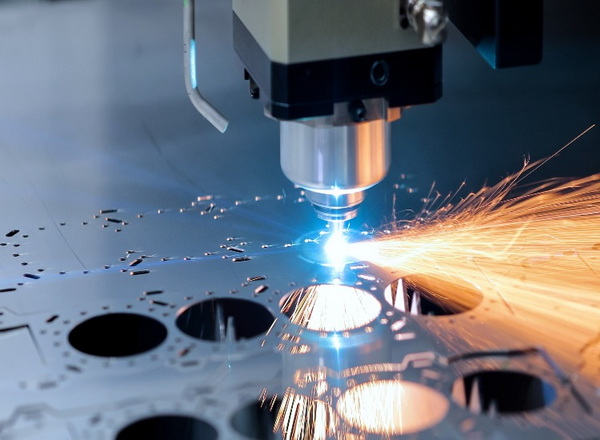
5 axis CNC machining uses three linear axes plus two rotational axes, while 3 axis CNC Machining only moves along X, Y, and Z. The additional axes allow the tool or table to rotate and tilt, enabling access to more faces of the part and making it possible to machine complex, multi-angle features in one setup.[1][5][4][3]
5 axis CNC machining is not always necessary for every part, especially simple plates, brackets, or blocks where 3 axis CNC Machining already provides high efficiency and low cost. It becomes the better choice when parts have compound angles, undercuts, curved surfaces, or multiple reachable faces that would require several fixtures and re-clamping on a standard 3 axis machine.[9][8][2][4]
5 axis CNC machining can handle nearly all the materials used in conventional CNC Machining, including aluminum alloys, carbon steels, stainless steels, titanium, copper alloys, and engineering plastics. The right choice of cutting tools, coatings, and machining parameters allows stable and efficient 5 axis CNC machining even with difficult materials such as hardened steels and titanium.[10][12]
Yes, 5 axis CNC machining often reduces lead time because it consolidates multiple operations into a single setup and allows more efficient toolpaths. With fewer fixtures, less part handling, and optimized cutting conditions, complex components can move from design to finished CNC Machining parts faster than with separate 3 axis operations and secondary processes.[6][2]
The machine hourly rate for a 5 axis CNC center is usually higher than for a typical 3 axis mill because the equipment and control systems are more advanced. However, for complex parts, 5 axis CNC machining often lowers the overall cost per part by reducing fixture expenses, labor, setup time, machining time, and secondary finishing operations, making it a cost-effective solution for demanding CNC Machining projects.[9][7][2][6]
[1](https://www.datron.com/resources/blog/what-is-a-5-axis-cnc-machine/)
[2](https://www.methodsmachine.com/blog/benefits-of-5-axis-machining/)
[3](https://www.china-machining.com/blog/what-is-a-5-axis-cnc-machine/)
[4](https://geomiq.com/blog/what-is-5-axis-cnc-machining/)
[5](https://ezgmfg.com/what-are-5-axis-cnc-machines/)
[6](https://www.owensind.com/CNC-Information/Benefits5AxisMachining)
[7](https://www.3erp.com/blog/5-axis-cnc-machining-advantages/)
[8](https://www.klhindustries.com/about/newsletter/five-benefits-five-axis-cnc-machining)
[9](https://www.yamazen.com/about/news/post/unique-advantages-of-5-axis-machining)
[10](https://www.improprecision.com/applications-5-axis-cnc-machine/)
[11](https://www.wenext.com/blog/CNC-Machining/5-axis-cnc-machining-applications-advantages-cost)
[12](https://astromachineworks.com/what-is-5-axis-machining/)
[13](https://jlccnc.com/blog/latest-breakthroughs-and-application-scenarios-of-5-axis-cnc-machining-services)

