
Views: 222 Author: Amanda Publish Time: 2026-01-11 Origin: Site


Content Menu
● CNC Machining vs Manual Processes
● Key Advantages of CNC Machining
>> Precision, Tolerances, and Surface Quality
>> Repeatability in Batch Production
>> Speed, Throughput, and Lead Time
>> Labor Efficiency and Cost Structure
>> Design Freedom and Complexity
>> Safety and Workplace Conditions
● CNC Machining in the Product Lifecycle
>> From Concept to Rapid Prototype
>> Bridge and Small-Batch Production
● CNC Machining for Global OEM and International Partners
>> Standardization and Digital Transfer
>> Integration with Other Processes
● Practical Considerations When Choosing CNC Machining
>> When CNC Machining Is the Best Choice
>> When Manual Processes May Still Help
● FAQ
>> 2. Why is CNC Machining more accurate than manual machining?
>> 3. Is CNC Machining suitable for both prototypes and mass production?
>> 4. How does CNC Machining reduce overall manufacturing costs?
>> 5. Which industries rely most on CNC Machining?
CNC Machining offers superior precision, repeatability, scalability, and cost-efficiency compared with traditional hand-operated equipment, especially for modern OEM and international manufacturing programs. For brands, wholesalers, and production-oriented companies that need reliable partners, CNC Machining has become the core process behind rapid prototyping, small batch runs, and full-scale mass production.[1][2][3][4]
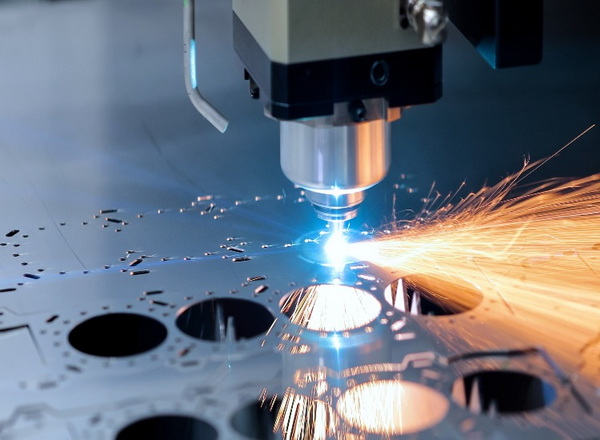
CNC Machining (Computer Numerical Control machining) is a subtractive manufacturing process that uses computer programs to control machine tools instead of manual handwheels and levers. The machine reads G-code or other numerical instructions to manage movements, spindle speeds, tool changes, and coolant, producing consistent, accurate parts from metals, plastics, and other materials.[2][5][6][1]
In practical use, CNC Machining covers operations such as milling, turning, drilling, tapping, boring, reaming, and contouring within one integrated workflow. Because the entire process is driven by digital data, CNC Machining links directly with CAD and CAM environments, supporting seamless transition from 3D models to physical components.[5][7][8][9]
Manual machining depends heavily on the operator's hands and experience for positioning, feeding, and tool control, which naturally introduces variation from part to part. CNC Machining replaces much of this manual control with precise servo motors and programmed paths, dramatically reducing human error and improving consistency.[10][11][1][5]
While manual methods still have a role in simple maintenance tasks and very low-volume work, CNC Machining dominates in situations where tight tolerances, complex geometries, and repeatable quality are essential. Industries such as aerospace, automotive, medical, electronics, and industrial machinery now rely on CNC Machining as a core production technology.[6][9][2][5]
CNC Machining routinely achieves extremely tight tolerances, often to a few thousandths of an inch or even better when required. This precision ensures reliable fit between mating parts, smooth motion in assemblies, and stable performance under demanding loads.[8][2][5][6]
Because CNC Machining follows a digital toolpath derived from the CAD model, each operation can be optimized for the best balance of accuracy, surface finish, and tool life. The result is more uniform dimensions, cleaner edges, and repeatable finishes compared with purely manual operations.[7][11][6][10]
Once a CNC Machining program is proven, it can be reused for hundreds or thousands of components with only minor setup adjustments. Encoders, feedback systems, and controlled toolpaths allow each part to be produced under nearly identical conditions.[5][6][7][8]
By contrast, manual machining will always show small differences because no human can replicate every movement exactly over long runs. For OEM customers and global brands that require interchangeable parts across different regions and production batches, CNC Machining offers a much higher level of repeatability.[4][12][1][10]
CNC Machining maximizes productivity by combining rapid positioning with automated feed rate control, spindle speed management, and automatic tool changes. Complex parts that might take many hours of manual work can often be produced far faster once the CNC Machining program is optimized.[11][2][6][7]
Modern multi-axis CNC Machining centers can perform several operations on different faces of the workpiece in a single setup, which greatly reduces handling time and positioning errors. This efficiency translates into shorter lead times, faster response to urgent orders, and more flexible scheduling for both prototypes and mass production.[2][6][8][11]
Although CNC Machining requires investment in skilled programmers and operators, one trained person can often oversee multiple machines at the same time. Automated loading, tool changing, and monitoring features reduce the need for constant hands-on involvement at each workstation.[13][1][8][2]
This labor leverage leads to lower cost per part in medium and high-volume production, especially when combined with reduced scrap rates and shorter cycle times. Over the life of a project, CNC Machining typically delivers better total cost of ownership than manually operated machines, even when machine purchase prices are higher.[9][4][8][11]
CNC Machining excels at manufacturing complex geometries that would be impractical to produce with conventional tools alone. Multi-axis CNC Machining systems can create 3D contours, internal channels, compound angles, and intricate pockets in a single process chain.[6][7][2]
For designers, this means greater freedom to optimize weight, stiffness, cooling performance, or fluid flow without being limited by manual machining capabilities. In many cases, CNC Machining allows multiple simpler parts to be consolidated into a single, more sophisticated component, reducing assembly time and potential failure points.[7][8][9][5]
CNC Machining works with a broad set of materials including aluminum, steel, stainless steel, copper alloys, engineering plastics, and certain composites. Tooling and parameters can be adjusted to match the characteristics of each material, allowing high-quality results across diverse applications.[8][2][5][6]
For OEM customers and international buyers, this flexibility means the same CNC Machining supplier can handle parts for different product lines without changing the core technology. This simplifies supplier management and improves consistency in multi-material projects.[3][12][4]
CNC Machining enhances safety by separating operators from the cutting area through guards, covers, and enclosed work zones. Automated door interlocks and emergency stop functions reduce the risk of direct contact with rotating tools and hot chips.[14][1][13]
Because CNC Machining requires less manual intervention near the cutting zone, there are fewer opportunities for accidents due to slips, distractions, or unexpected tool movements. Safer working conditions also support better long-term staffing, lower downtime, and fewer interruptions to production schedules.[13][2][8]
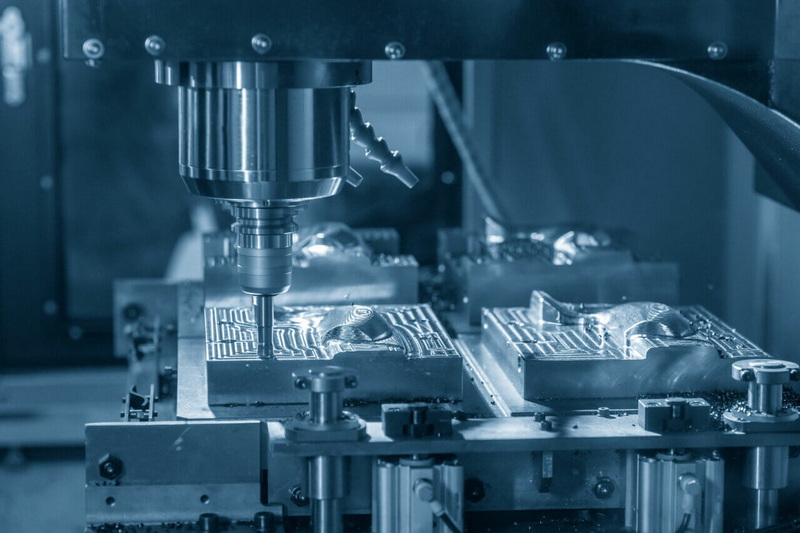
During early design stages, CNC Machining is often used to produce functional prototypes that accurately represent the final production design. The digital workflow enables quick modifications to CAD models and programs, making it ideal for iterative development.[3][4][2][5]
Compared with purely manual approaches, CNC Machining prototypes offer more reliable mechanical properties, tighter dimensional control, and more representative surface finishes. This helps engineers validate fit, assembly, performance, and manufacturability before committing to tooling for mass production.[12][4][11][3]
After design validation, many OEMs move into small-batch or bridge production while preparing for larger volumes. CNC Machining supports this phase perfectly because the same setup used for prototypes can be scaled to produce stable batches without large upfront tooling costs.[4][2][3][8]
This approach allows brands and wholesalers to start shipments earlier, gather market feedback, and refine their products while keeping fixed costs low. CNC Machining can then continue to play a role in spare parts, engineering changes, or niche variants even after other processes are introduced.[12][2][4][7]
For many components, especially those needing high accuracy and flexibility, CNC Machining remains the primary process even in full-scale mass production. High-speed machining strategies, optimized cutting conditions, and robust fixturing allow very competitive cycle times with excellent quality.[9][11][2][6]
When combined with automation such as pallet changers and robotic loading, CNC Machining cells can run continuously to meet demanding volume and delivery requirements for global supply chains. This makes CNC Machining a long-term solution rather than a temporary step in the production lifecycle.[4][7][8][12]
Because CNC Machining is driven by digital data, programs and process parameters can be standardized and shared across multiple sites or partners. OEMs can define clear specifications for toolpaths, feeds, speeds, and quality checks, reducing ambiguity in international collaborations.[2][5][9][12]
This standardization helps ensure that CNC Machining parts produced in different factories still meet the same dimensional and performance requirements. For brands working with overseas suppliers, CNC Machining provides a more predictable and auditable platform compared with heavily manual operations.[3][7][12][4]
CNC Machining works well alongside 3D printing, sheet metal fabrication, and molding to create complete product solutions. For example, 3D printing can be used for fast conceptual models, while CNC Machining produces functional prototypes and high-precision components that require tight tolerances.[12][2][3]
In many production workflows, CNC Machining is used to finish castings, forgings, or molded parts, adding critical machined surfaces and interfaces. This hybrid approach maximizes both efficiency and precision while maintaining the benefits of CNC Machining in key areas.[7][8][2][4]
CNC Machining is especially valuable when:
- High precision and tight tolerances are required for performance or safety.[5][6]
- Part geometries involve complex shapes, multi-face features, or 3D contours.[6][2]
- Production volumes range from low to very high, with a need for consistent quality.[8][7]
- Projects demand quick turnaround times from design to physical parts.[11][2]
- OEMs plan long-term programs that rely on repeatable quality and digital traceability.[4][12]
In these scenarios, CNC Machining usually outperforms manual machining in both performance and total cost over the life of the product.[9][8]
Manual machining still has useful roles, particularly for:
- Simple, one-off repairs where programming time would exceed cutting time.[1][6]
- Very simple parts with wide tolerances where ultimate precision is not required.[10][14]
- Quick fixture adjustments or experimental operations during early development.[7][9]
However, once requirements grow toward repeatability, documentation, and scalability, CNC Machining becomes the more reliable backbone of the production strategy.[11][2]
CNC Machining has clearly become the preferred choice over manual processes in modern manufacturing because it offers a powerful combination of precision, repeatability, speed, and flexibility. From rapid prototyping and bridge production to full-scale mass manufacturing, CNC Machining provides a stable and scalable platform for OEM brands, wholesalers, and producers that need reliable quality across global supply chains.[1][2][3][4]
By leveraging digital data, multi-axis capability, automation, and efficient material removal, CNC Machining enables complex designs, reduces total cost per part, and supports demanding industry standards. As expectations for performance, traceability, and delivery speed continue to rise, CNC Machining will remain at the center of advanced manufacturing strategies worldwide.[5][6][8][9]
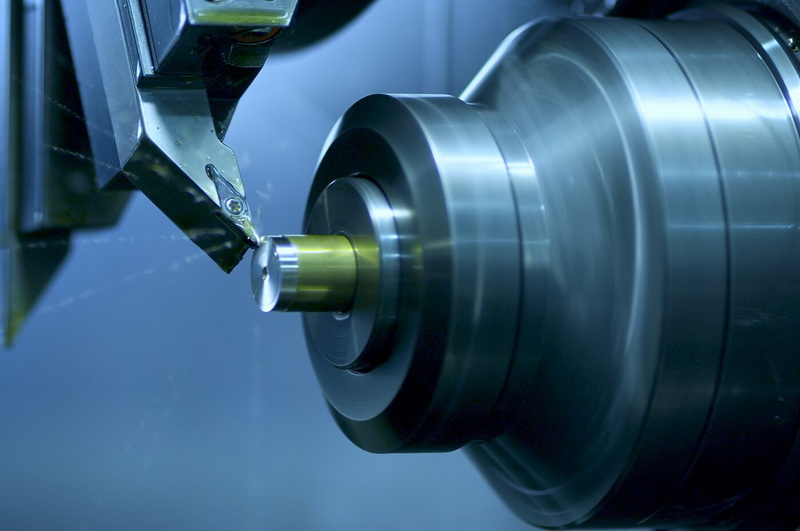
CNC Machining is a computer-controlled manufacturing process where cutting tools remove material from a workpiece according to programmed digital instructions. It supports operations such as milling, turning, drilling, and tapping to produce precise components from metals and plastics.[1][2][6][5]
CNC Machining uses servo-driven axes and digital toolpaths that control every motion precisely, minimizing human variability. This allows CNC Machining to achieve much tighter tolerances and more consistent results across large batches than manual processes.[6][8][11][5]
Yes, CNC Machining is ideal for functional prototypes, bridge production, and long-term serial manufacturing because the same program can be scaled. Once validated, a CNC Machining strategy can support the entire product lifecycle, from design validation to ongoing spare parts.[2][3][12][4]
CNC Machining shortens cycle times, reduces scrap, and allows one operator to supervise multiple machines, lowering labor cost per part. Over the life of a project, these efficiencies often deliver lower total cost compared with manually operated equipment, especially for precision components.[13][8][9][1]
Industries such as aerospace, automotive, medical devices, industrial machinery, electronics, and energy rely heavily on CNC Machining for critical components. They depend on the high precision, repeatability, and material versatility that CNC Machining provides to meet strict performance and regulatory requirements.[2][4][5][7]
[1](https://www.uti.edu/blog/cnc/manual-vs-cnc)
[2](https://thorrez.com/the-benefits-of-cnc-machining-for-precision-manufacturing/)
[3](https://www.amtechinternational.com/additional-services/prototyping-engineering/)
[4](https://www.pinnaclemetal.com/industries/oem-cnc-machining-parts/)
[5](https://www.ycmalliance.com/everything-you-need-to-know-about-cnc-machining/)
[6](https://www.jarviscuttingtools.com/news/cnc-vs-manual-machining-advantages)
[7](https://avantiengineering.com/5-benefits-of-cnc-machining-vs-manual-machining/)
[8](https://www.fisherbarton.com/capabilities/cnc-precision-machining)
[9](https://www.datron.com/resources/blog/cnc-machining-vs-manual-machining/)
[10](https://eagletube.com/about-us/news/what-are-the-advantages-of-cnc-machining-vs-manual-machining/)
[11](https://www.xometry.com/resources/machining/cnc-machining-benefits/)
[12](https://www.protomatic.com/why-protomatic/services)
[13](https://staubinc.com/news/automation-vs-manual-operations-a-comparative-analysis-in-precision-machining/)
[14](https://www.3erp.com/blog/cnc-machining-vs-manual-machining/)

