


Content Menu
● Shangchen: One-Stop Rapid Prototyping Partner
● Why Rapid Prototyping Matters
● Core Benefits of Rapid Prototyping
● Key Rapid Prototyping Processes at Shangchen
● How Rapid Prototyping Speeds Development
● Reducing Risk Through Rapid Prototyping
● Improving Communication With Stakeholders
● Using Visual Content to Present Rapid Prototyping
● From Rapid Prototyping to Mass Production
● Industries That Rely on Rapid Prototyping
● Why Choose a Chinese Rapid Prototyping Partner
● How Shangchen Supports OEM Projects
● Design Tips to Maximize Rapid Prototyping Value
● Cost Considerations in Rapid Prototyping
● Material Choices in Rapid Prototyping
● Tolerances and Quality in Rapid Prototyping
● Surface Finishing and Aesthetics
● Integrating Rapid Prototyping Into Your Workflow
● Leveraging Digital Collaboration for Rapid Prototyping
● Scaling From One-Off Rapid Prototyping to Series Production
● FAQs
>> 1. What is Rapid Prototyping in manufacturing?
>> 2. How does Rapid Prototyping reduce time and cost?
>> 3. Which Rapid Prototyping services does Shangchen provide?
>> 4. What industries benefit most from Rapid Prototyping?
>> 5. How can overseas OEMs work with Shangchen for Rapid Prototyping?
Rapid Prototyping has become the backbone of modern product development, helping brands innovate faster, reduce risk, and move smoothly from idea to mass production. For overseas OEM buyers, partnering with a specialized factory like Shangchen (sc-rapidmanufacturing.com) in China turns Rapid Prototyping into a powerful competitive advantage.
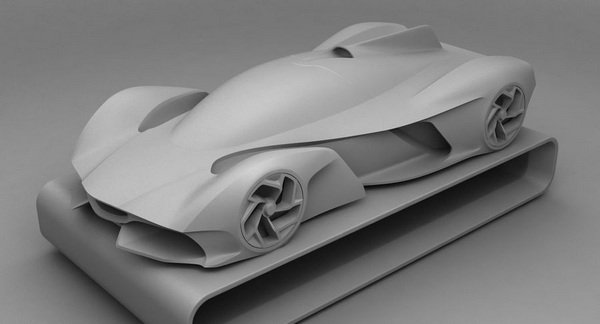
Shangchen (sc-rapidmanufacturing.com) is a China-based factory focusing on Rapid Prototyping, CNC machining, precision batch production, turning, sheet metal fabrication, 3D printing, vacuum casting, and mold manufacturing for global OEM customers. With tight tolerances, quick lead times, and quality-oriented management, Shangchen supports overseas brands, wholesalers, and manufacturers from early concept to full-scale production.
To better communicate design intent and manufacturing solutions, Shangchen provides engineering consultations, DFM/DFA suggestions, and flexible order quantities for both prototypes and low-volume runs. Customers can combine multiple processes—such as CNC machining, sheet metal fabrication, and 3D printing—within a single project to validate complex assemblies before investing in expensive tooling.
Rapid Prototyping is a collection of technologies and processes that can quickly turn CAD data into physical parts for design verification, functional testing, and marketing validation. It typically leverages processes like CNC machining, 3D printing, vacuum casting, and rapid tooling to shorten development cycles and reduce upfront investment.
Instead of waiting weeks or months for traditional tooling, Rapid Prototyping allows engineers to test shapes, fits, functions, and finishes in days. This speed dramatically improves decision-making, allowing teams to make real-world design choices based on tangible parts rather than static models.
Rapid Prototyping matters because it compresses product development timelines and cuts the cost of mistakes. By validating concepts early, teams reduce the risk of launching products with design flaws, ergonomic issues, or manufacturing problems.
It also strengthens communication among design, engineering, marketing, and management teams, as everyone can review and critique the same physical prototype. In many industries, Rapid Prototyping is now essential to stay competitive, especially when product life cycles are short and customer expectations are high.
The business value of Rapid Prototyping spans speed, cost, quality, and innovation.
- Faster time-to-market: Rapid Prototyping reduces the time needed for each design iteration, accelerating the entire product development process.
- Lower development cost: By minimizing rework and avoiding unnecessary tooling changes, Rapid Prototyping reduces total development costs.
- Better design quality: Physical prototypes reveal issues that CAD cannot, leading to more robust, user-friendly designs.
- Reduced risk: Early testing of form, fit, and function cuts the chance of expensive failures after launch.
- Higher customer satisfaction: Prototypes enable early user feedback, improving alignment with customer needs.
Shangchen integrates several Rapid Prototyping technologies under one roof, allowing flexible combinations tailored to each project.
- CNC machining: High-precision milling and turning for metal and plastic parts, ideal for functional prototypes and small-batch production with tight tolerances.
- 3D printing: Processes such as SLA, SLS, and FDM for complex geometries, quick design validation, and lightweight structures.
- Sheet metal fabrication: Cutting, bending, stamping, and welding for enclosures, brackets, and structural parts.
- Vacuum casting and low-volume molding: Urethane or resin casting into silicone molds to simulate injection-molded parts for pilot runs.
- Rapid tooling and mold manufacturing: Fast steel or aluminum tooling that bridges the gap between prototypes and mass production.
This combination lets OEM customers use Rapid Prototyping for both engineering samples and marketing samples, while ensuring that every step is ready for future scaling.
Rapid Prototyping shortens each loop of the design–build–test–learn cycle. Engineers can adjust CAD models, produce new prototypes in days, and refine shapes or mechanisms before committing to final designs and production tooling.
This iterative approach allows multiple concepts to be tested in parallel, rather than sequentially, increasing the chances of finding optimal solutions. For global OEMs under tight launch schedules, shortening cycles from months to weeks or days is a decisive strategic advantage.
Rapid Prototyping identifies issues early, when changes are cheaper and less disruptive. Teams can test assembly interfaces, material behavior, thermal performance, and ergonomic factors before high-volume manufacturing begins.
By combining different Rapid Prototyping methods—like using CNC machining for metal components and 3D printing for plastic housings—brands can validate entire subsystems and their interactions. This integrated testing significantly lowers the risk of costly recalls, tooling modifications, or reengineering later in the life cycle.
Rapid Prototyping makes it easier to explain complex design concepts to non-engineers. Sales, marketing, and management teams can review realistic prototypes in the correct scale and appearance, which leads to clearer discussions and faster approvals.
Customer-facing teams can also use Rapid Prototyping samples for pre-launch demonstrations, trade shows, and pilot user groups. This approach strengthens collaboration with distributors and end users by turning abstract ideas into tangible experiences.
In many projects, brands prepare detailed presentations or technical dossiers to introduce Rapid Prototyping work to internal and external stakeholders. Within these materials, it is helpful to show different process stages, such as rough machining, semi-finished parts, surface finishing, and final assembly.
Short explanatory clips of CNC milling, turning, 3D printing builds, or sheet metal forming help overseas teams understand how each Rapid Prototyping step adds value. Visual comparisons between early prototypes and final versions also highlight how design evolves with each iteration, proving the return on investment of Rapid Prototyping activities.
Rapid Prototyping at Shangchen is designed as the first phase of a complete manufacturing pipeline, not an isolated service. Once prototypes are validated, the same engineering knowledge, process parameters, and quality standards can be migrated to precision batch production and full-volume manufacturing.
CNC programs, fixtures, inspection routines, and material specifications created for Rapid Prototyping can be refined rather than rebuilt from scratch, saving time and cost. For customers, this means smoother transitions, more predictable lead times, and consistent quality from the first prototype to the millionth part.
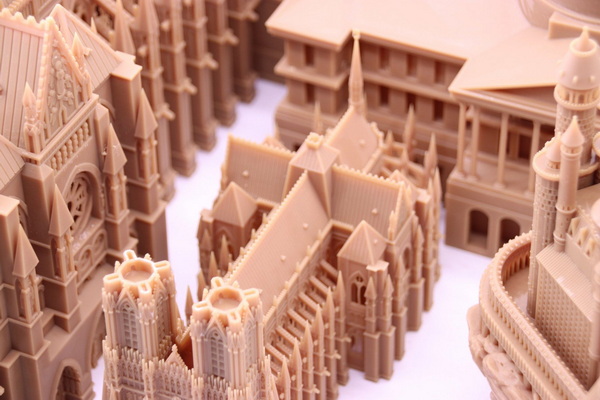
Rapid Prototyping is widely used in sectors where innovation speed and reliability are critical.
- Automotive and transportation: Components, housings, brackets, and interior parts for functional testing and pre-production builds.
- Aerospace and drones: Lightweight structural and electronic components requiring precision and robustness.
- Medical devices: Ergonomic handles, enclosures, and functional prototypes that must meet strict regulatory demands.
- Consumer electronics: Enclosures, buttons, frames, and decorative parts with demanding cosmetic requirements.
- Industrial equipment: Mechanical parts, fixtures, and tooling that support complex machinery.
Across these industries, Rapid Prototyping allows designers to validate performance, assembly, and user experience much earlier than traditional methods.
China has developed a strong ecosystem for Rapid Prototyping, combining advanced equipment, skilled engineers, and a mature supply chain. Factories like Shangchen can source metals, plastics, and surface treatments quickly and cost-effectively, even for complex multi-process projects.
For overseas brands and wholesalers, working with a Chinese Rapid Prototyping partner offers attractive pricing, flexible minimum order quantities, and the ability to scale from single pieces to thousands of units. When supported by clear communication and robust quality control, this model enables global customers to stay agile without compromising reliability.
Shangchen structures Rapid Prototyping projects around close OEM collaboration and transparency.
Typical support includes:
- Early-stage engineering review: Checking CAD for manufacturability, tolerances, and material suitability.
- Process selection and combination: Choosing between CNC machining, 3D printing, sheet metal, vacuum casting, and rapid tooling based on project goals.
- Sample validation and reporting: Providing dimensional reports, material certificates, and function tests for Rapid Prototyping parts.
- Scaling up to batches: Transitioning validated Rapid Prototyping designs into precision batch production and mass manufacturing with stable processes.
This integrated approach ensures that Rapid Prototyping is not just fast, but also aligned with long-term product strategy.
To gain the most from Rapid Prototyping with Shangchen, OEM customers can follow several practical design guidelines.
- Design with manufacturing in mind: Use reasonable wall thicknesses, fillets, and tolerances that match the chosen Rapid Prototyping process.
- Separate cosmetic and functional tests: Use different Rapid Prototyping iterations for mechanical validation and color/finish evaluation when needed.
- Plan for assembly: Ensure clear alignment features, fastening strategies, and mating surfaces at the Rapid Prototyping stage to avoid surprises later.
- Use staged iterations: Start with simpler Rapid Prototyping parts for basic checks, then move to more refined versions with final materials and finishes.
These practices keep Rapid Prototyping cycles efficient while maintaining clear progress toward the final product.
Rapid Prototyping is usually more cost-effective than traditional tooling-based development, especially in early design stages. Because it avoids large upfront mold investments and reduces manual processes, the per-iteration cost is relatively low.
Total cost depends on complexity, material, tolerance level, and finishing requirements, but the main savings come from preventing major design changes once tooling is built. By catching issues through Rapid Prototyping, OEMs significantly reduce the probability of scrapping molds, reworking fixtures, or recalling products after launch.
Material selection is one of the most important decisions in any Rapid Prototyping project. For functional tests, many teams choose engineering plastics and metals that are close to the final production material, giving realistic data for strength, stiffness, and durability.
In early concept stages, it can be more efficient to select materials that machine or print quickly, even if they differ from the final choice. As the design matures, Rapid Prototyping rounds can gradually shift to closer production equivalents, including aluminum, stainless steel, or high-performance plastics, ensuring that tests reflect real-world performance.
Tolerances in Rapid Prototyping should be realistic and aligned with the selected process. CNC machining can usually achieve tighter tolerances than most 3D printing methods, while sheet metal fabrication follows its own rules based on thickness and forming operations.
During Rapid Prototyping, Shangchen can provide inspection data, including key dimensions and fit checks, to verify that parts meet design intent. By reviewing these reports together, OEM customers and engineers can decide where to tighten tolerances, where to relax them, and how to optimize the balance between cost and precision.
Rapid Prototyping is not only about geometry; it is also a powerful way to test look and feel. Machined parts can be bead-blasted, polished, anodized, painted, or plated to simulate final production finishes. Printed components can be sanded, coated, or dyed for closer visual alignment.
These finishing options allow marketing and design teams to evaluate product color, texture, and perceived quality before final decisions are made. For consumer-facing goods, this stage of Rapid Prototyping is crucial, because subtle visual and tactile differences can strongly affect user perception and brand positioning.
To gain maximum benefit, Rapid Prototyping should be embedded into the standard product development process, not treated as an occasional tool. This means planning design milestones around physical prototypes, allocating budget for multiple Rapid Prototyping rounds, and involving manufacturing partners early.
Working with a partner such as Shangchen allows design teams to align CAD practices, material selections, and quality expectations from the first prototype onward. Over time, this collaborative model creates a continuous improvement loop, where each Rapid Prototyping project builds shared knowledge for future products.
Modern Rapid Prototyping projects benefit from digital communication tools that allow fast feedback between OEM designers and the manufacturing team. Online meetings, annotated CAD screenshots, and shared revision logs make it easy to track changes from one prototype to the next.
For overseas customers, this digital approach reduces time-zone delays and keeps every Rapid Prototyping stage transparent. When questions about tolerances, materials, or assembly appear, they can be resolved quickly, preventing misunderstandings and keeping the project on schedule.
A well-planned Rapid Prototyping strategy considers how every prototype prepares the design for series production. Early parts might emphasize agility and learning, while later prototypes focus on repeatability and manufacturability.
Once the design stabilizes, Shangchen can reuse optimized tool paths, fixtures, and inspection routines to run small or medium batches with consistent results. This continuity from Rapid Prototyping to production simplifies documentation, reduces risk, and ensures that all lessons learned are directly embedded into the manufacturing process.
Rapid Prototyping is essential for modern product development because it transforms abstract ideas into testable, manufacturable realities with unprecedented speed and flexibility. It shortens development cycles, reduces risk, and improves product quality, enabling brands to respond quickly to market demands and stay ahead of competitors.
By partnering with a specialized Chinese factory like Shangchen (sc-rapidmanufacturing.com), overseas brands, wholesalers, and manufacturers can integrate Rapid Prototyping, CNC machining, sheet metal fabrication, 3D printing, vacuum casting, and mold manufacturing into one coherent OEM workflow. This integrated approach turns Rapid Prototyping into a strategic asset, supporting everything from first concepts to high-volume production with consistent quality and cost efficiency.
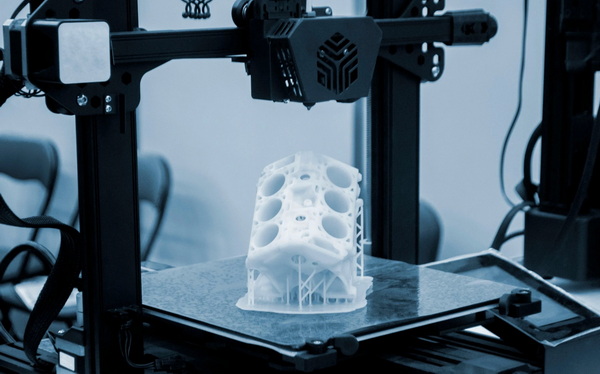
Rapid Prototyping in manufacturing is the use of fast, flexible processes like CNC machining, 3D printing, sheet metal fabrication, vacuum casting, and rapid tooling to convert CAD models into physical parts for testing and validation. It focuses on speed, iteration, and risk reduction, rather than immediate large-volume production.
Rapid Prototyping reduces time by enabling quick design–build–test cycles, allowing multiple design variants to be produced and evaluated in parallel. It lowers cost by catching design issues early and avoiding major tooling changes, scrap, and rework later in the project.
Shangchen offers Rapid Prototyping services including CNC machining, precision lathe turning, sheet metal fabrication, 3D printing, vacuum casting, rapid tooling, and mold manufacturing for global OEM customers. These capabilities cover single prototypes, low-volume builds, and scalable batch production in metals and plastics.
Industries that benefit most include automotive, aerospace, medical devices, consumer electronics, industrial equipment, and many startup hardware sectors. In these fields, Rapid Prototyping supports faster innovation, regulatory validation, ergonomic testing, and smoother transitions into mass production.
Overseas OEMs typically share CAD files, technical requirements, and target timelines, after which Shangchen proposes a Rapid Prototyping process plan, quotation, and schedule. Once prototypes are approved, Shangchen can refine designs and scale up to precision batch production or full mass manufacturing using the same integrated workflow.

