
Views: 222 Author: Amanda Publish Time: 2025-09-23 Origin: Site


Content Menu
● Detailed Vacuum Casting Process
>> Preparation and Mixing of Polyurethane
>> Vacuum Degassing and Pouring
>> Finishing and Secondary Operations
● Advantages of Vacuum Casting for Functional Prototypes
● Material Options for Vacuum Casting
>> Rigid and Semi-Rigid Resins
>> Flexible and Elastomeric Resins
>> High-Temperature Resistant Resins
>> Specialty and Custom Compounds
● Applications of Vacuum Casting in Industry
>> Automotive
>> Packaging and Consumer Goods
● Quality Control and Consistency in Vacuum Casting
● Integrating Vacuum Casting into Product Development
● Why Choose Shangchen for Your Vacuum Casting Needs?
● Frequently Asked Questions (FAQ)
>> 1. What is the typical lead time for vacuum casting parts?
>> 2. How many parts can one silicone mold produce?
>> 3. Can vacuum casting replicate transparent or flexible parts?
>> 4. How accurate are vacuum cast parts compared to injection molding?
>> 5. What post-processing services are available after vacuum casting?
Vacuum casting has become a critical manufacturing technique for producing high-quality functional prototypes and small batch end-use parts. At Shangchen, we specialize in delivering comprehensive vacuum casting solutions tailored to meet the exact requirements of international brands, wholesalers, and manufacturers. This article explores the advantages of vacuum casting, the process details, applications, materials used, and how it fits into the product development lifecycle. Practical insights and technical considerations are discussed to help you make the most of vacuum casting for your projects.
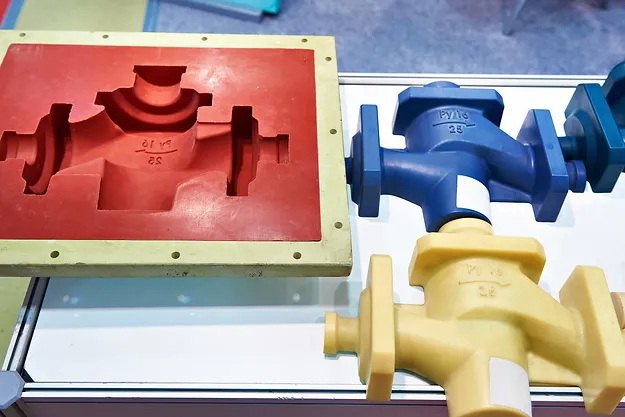
Vacuum casting is a manufacturing method that involves pouring polyurethane rubber into a silicone mold under vacuum conditions to eliminate air bubbles and ensure fine surface detail. This results in parts that closely replicate the properties of injection-molded products but at a fraction of the cost and faster turnaround times. Because the silicone molds are derived from master patterns, vacuum casting can produce highly accurate duplicates of the prototype or master.
Several features make vacuum casting ideal for functional prototypes and limited production runs:
- High dimensional accuracy and surface finish
- Use of diverse engineering-grade materials with customizable mechanical properties
- Fast cycle times compared to traditional tooling
- Low tooling cost and rapid mold fabrication
- Suitability for complex geometries and thin-wall components
Understanding the nuances of each step in the vacuum casting workflow helps maximize quality and efficiency:
The process starts with a high-quality master model, typically created using CNC machining or advanced 3D printing technologies such as SLA or SLS. This master represents the final product's geometry, contours, and detailed features with exact dimensions and surface texture. High fidelity in the master model is essential because all subsequent copies originate from this reference.
Once the master is verified, it is embedded in liquid silicone within a mold box. The silicone cures into a flexible mold that perfectly captures every detail of the master, including undercuts and complex surfaces. The mold is designed to open in halves or multiple parts to facilitate easy demolding of cast components. Silicone's properties allow it to endure repeated use while maintaining dimensional stability.
Polyurethane resin systems come in two parts, which are carefully measured and mixed in exact ratios to achieve target material characteristics. The selection of resin depends on whether the part requires rigidity, flexibility, transparency, or heat resistance. Additives can be incorporated to further customize performance such as enhanced UV stability or flame retardancy.
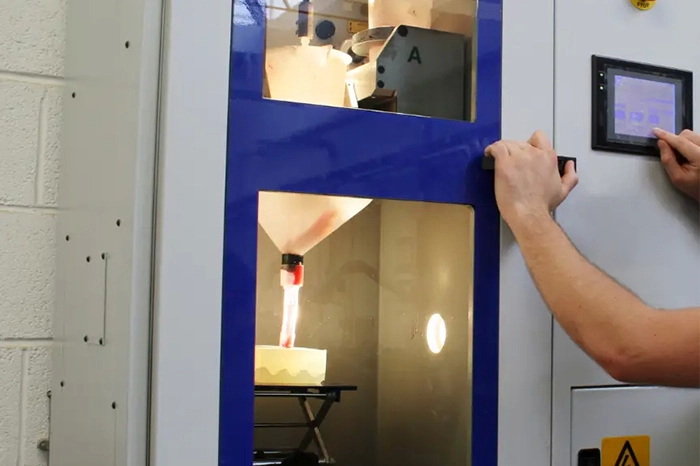
Both the silicone mold and liquid polyurethane are placed in a vacuum chamber. Vacuum degassing extracts trapped air from the resin mixture and prevents bubble formation during casting. The resin is then poured into the evacuated mold cavity, allowing uniform filling that replicates every mold detail even in thin sections.
After pouring, the resin cures at room temperature or in an oven depending on the formulation, solidifying within 15 minutes to a few hours. Once cured, the parts are carefully demolded. The silicone mold can be reused for multiple cycles, typically ranging from 20 to 30 parts depending on resin abrasiveness and mold maintenance.
Post-processing is key to achieving the final look and feel expected from end-use parts. It can include trimming flash, sanding molded seam lines, painting or coating, plating, and assembly of inserts or fasteners. If necessary, functional testing such as fitment, strength, or flexibility is performed to validate part performance.
Vacuum casting fills the gap between 3D printing and injection molding for prototype and limited production parts. Key benefits include:
- Cost-Effectiveness: Silicone mold toolings are far less costly than metal injection mold tooling, especially for quantities below 100 parts.
- Low Lead Times: Mold fabrication can be completed in days instead of weeks or months, allowing rapid iterations.
- Material Variety: Polyurethane resins can simulate many thermoplastics and elastomers, offering mechanical and visual versatility.
- Excellent Surface Finish: The silicone mold produces smooth, fine cosmetic surfaces that minimize post-processing.
- Dimensional Accuracy: Parts typically meet tolerances within ±0.3 mm, suitable for fit and functional validation.
- Flexible Production Runs: Ideal for pilot production, market testing, or pre-production validation.
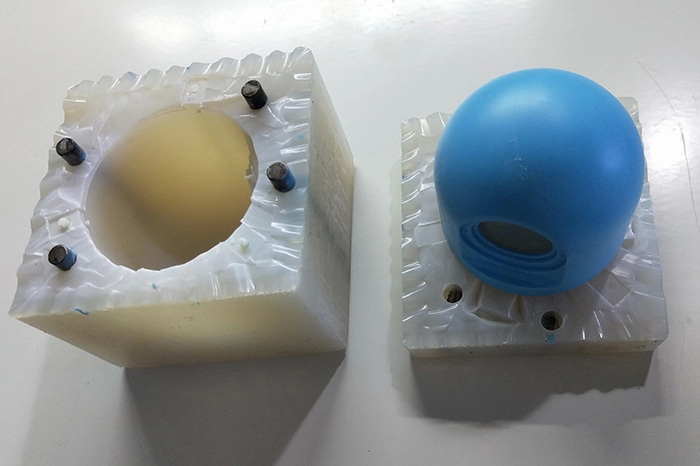
Polyurethane resins form the backbone of vacuum casting materials, offering broad options tailored to the functional needs of prototypes and production parts.
These resins simulate the toughness and stiffness of materials like ABS and polycarbonate. They provide impact resistance and can be pigmented to achieve desired aesthetics, including matt or gloss finishes.
For applications requiring soft-touch surfaces, rubber-like flexibility, or impact absorption, elastomeric polyurethane resins are ideal. They replicate seals, grips, or cushioning parts effectively.
Clear polyurethane resins allow the production of lenses, display covers, or aesthetic prototypes that need optical clarity with minimal yellowing or distortion.
Special formulations provide resistance to elevated temperatures, making them suitable for engine components, electrical housings, or other heat-exposed parts.
Shangchen offers tailored resin blends addressing chemical resistance, flame retardancy, or enhanced UV stability to meet industry-specific standards.
Vacuum casting's adaptability makes it valuable across multiple sectors:
Dashboard components, sensor housings, connectors, clips, and trim pieces are prototyped or produced in low volumes using vacuum casting, supporting design verification and pilot manufacturing.
Durable housings, buttons, and internal supports for devices benefit from the rapid turnaround and material simulation vacuum casting offers.
Prototyping surgical tools, testing ergonomic device shells, and producing small batches of specialized medical instruments are routine applications.
Functional parts for machine prototypes, wear parts for pilot production, and mounting components benefit from vacuum casting's cost and time advantages.
Custom caps, closures, and functional containers for cosmetic, pharmaceutical, or food packaging use vacuum cast parts for early market introduction.
Maintaining high quality and dimensional consistency requires attention to several factors:
- Accurate master model inspection and validation before mold making.
- Silicone mold manufacturing with controlled curing cycles to prevent shrinkage or distortion.
- Precise polyurethane resin measurement and mixing protocols.
- Vacuum chamber maintenance and correct degassing parameters.
- Regular mold cleaning and condition monitoring after each production run.
Shangchen employs rigorous quality management systems, including dimensional inspection with CMM (Coordinate Measuring Machines) and visual surface assessments, to ensure delivered parts meet client specifications consistently.
Combining vacuum casting with other rapid manufacturing techniques creates an efficient path from concept to production:
- Using 3D printing or CNC machining for master model creation.
- Employing vacuum casting for functional prototypes to validate fit, form, and mechanical properties before investment in tooling.
- Utilizing vacuum casting parts in market testing or soft launches to gather customer feedback.
- Scaling vacuum casting production as a stop-gap while injection molds are fabricated or for low-volume bespoke manufacturing.
Shangchen offers world-class expertise and capabilities for vacuum casting solutions with advantages such as:
- State-of-the-art CNC machining and 3D printing to produce master models with exceptional precision.
- High-grade silicone mold fabrication ensuring repeatability and durability.
- Broad polyurethane resin portfolio to meet diverse mechanical and aesthetic requirements.
- Skilled technicians managing each casting cycle to deliver defect-free parts.
- Complete OEM services supporting design optimization, prototyping, small-batch production, and global logistics.
Our customer-centric approach ensures transparent communication, fast project turnaround, and high-value cost solutions for international brands aiming to speed up their product development cycles.
Vacuum casting is an indispensable process for companies needing reliable functional prototypes and limited runs of end-use parts without the high costs and lead times associated with injection molding. Its ability to deliver accurate, cosmetically refined parts with versatile material properties makes it a preferred choice for many industries—from automotive and electronics to medical and packaging. Shangchen's expertise in rapid prototyping, precision mold making, and polyurethane casting, combined with our comprehensive OEM service capacity, enables global clients to accelerate innovation and bring products to market faster and more cost-effectively. Embarking on vacuum casting with Shangchen means gaining a trusted manufacturing partner capable of turning complex designs into quality realities.
The lead time typically ranges from 7 to 14 days, depending on the mold complexity and batch size. Silicone mold fabrication and resin curing are relatively fast processes.
Generally, one silicone mold can produce 20 to 30 high-quality parts. The actual lifespan depends on resin abrasiveness and mold care.
Yes, vacuum casting supports transparent and flexible polyurethane materials, making it possible to produce lenses, elastomeric parts, grips, and seals.
Vacuum cast parts typically achieve tolerances within ±0.3 mm. While not as precise as injection molded parts, this level is adequate for most prototype and small batch applications.
Post-processing includes trimming, sanding, painting, assembly of inserts, plating, and other finishing operations to meet required functional and visual standards.

