
Views: 222 Author: Amanda Publish Time: 2025-12-30 Origin: Site


Content Menu
● What AI Really Does in CNC Machining
● Will AI Replace CNC Machining Jobs?
● Key Ways AI Is Transforming CNC Machining
>> Smarter CNC Programming and CAM
>> Predictive Maintenance for CNC Machining Centers
>> Real-Time Quality Control in CNC Machining
>> Adaptive CNC Machining Processes
>> Autonomous Cells and Lights-Out CNC Machining
● Why Human Machinists Still Matter
● New Skill Requirements in AI-Driven CNC Machining
● How Shangchen Uses AI-Enhanced CNC Machining for OEM Clients
● Practical Strategies for CNC Machining Shops in the AI Era
● Business Benefits of AI-Enabled CNC Machining for OEM Brands
● FAQ About AI and CNC Machining
>> Q1. Will AI completely replace CNC Machining operators?
>> Q2. How does AI improve CNC Machining quality?
>> Q3. Is AI-powered CNC Machining only for large factories?
>> Q4. What skills do machinists need in an AI-driven CNC Machining environment?
>> Q5. Why should OEM brands choose an AI-ready CNC Machining partner?
Artificial intelligence is transforming CNC Machining at a stunning pace, but it is not replacing skilled machinists any time soon. Instead, AI is becoming a powerful assistant that automates repetitive tasks, boosts productivity, and allows factories like Shangchen to deliver faster, more precise OEM CNC Machining services to global customers.[1][2][3][4]
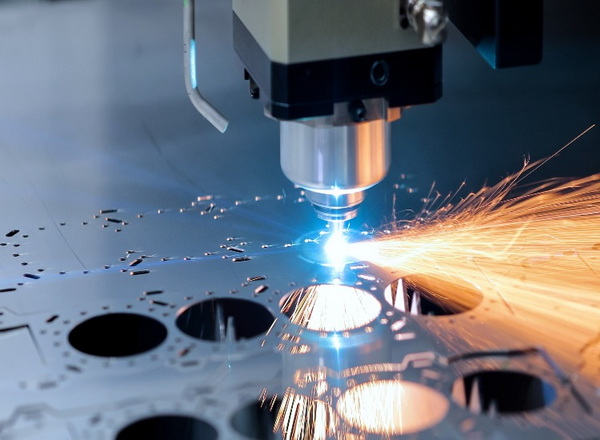
AI in CNC Machining focuses on data, automation, and decision support rather than independent creativity. Modern AI-driven CNC Machining systems can optimize toolpaths, adjust cutting parameters in real time, and schedule predictive maintenance, but they still depend on human engineers to define goals, constraints, and quality standards.[2][5][6][7][1]
- AI analyzes real-time sensor data from CNC Machining centers to fine-tune feeds, speeds, and tool engagement for higher efficiency.
- AI-supported CNC Machining reduces defect rates through automatic in-process inspection and anomaly detection during machining.
- AI tools generate or refine CNC Machining programs faster, especially for standard features and repetitive components.
- AI helps operators monitor entire CNC Machining cells, scheduling jobs, tools, and maintenance intelligently.[3][5][8][9][1]
Because AI learns from historical machining data, it becomes better over time at predicting how CNC Machining operations will behave under different conditions. This learning capability allows CNC Machining systems to move from static, one-time programming toward dynamic, continuously optimized production.[5][8][3]
Many people worry that AI will “take over” CNC Machining and eliminate jobs, but the reality is more nuanced. AI is automating routine CNC Machining tasks such as basic programming, toolpath optimization, and monitoring, yet complex decision-making and problem-solving still require experienced machinists and manufacturing engineers.[7][10][11][3]
Industry research increasingly describes AI as a copilot for CNC Machining rather than a full replacement. In practice, AI handles repetitive digital work while human specialists focus on process improvement, communication with customers, creative fixturing, and solving non-standard problems on the CNC Machining floor.[11][3][7]
- AI-enhanced CNC Machining reduces setup times and waste rather than eliminating the need for CNC specialists.
- AI-powered CAM and quoting tools for CNC Machining give machinists more time for high-value tasks like complex programming and process debugging.
- In smart factories, humans shift from purely manual CNC Machining operations to supervision, optimization, process engineering, and cross-team collaboration.[10][12][3][7][11]
AI-driven CAM software is reshaping how CNC Machining programs are generated from CAD models. Machine learning can recognize part features, select tools, and create optimized toolpaths automatically, dramatically reducing programming time for CNC Machining jobs.[8][9][3]
AI-based CAM for CNC Machining can test enormous numbers of potential paths in the cloud to find efficient cutting strategies. As a result, CNC Machining shops can quote and program complex parts more quickly, which is especially important when serving overseas OEM clients who expect fast response times.[9][3][8]
- Automatic feature recognition helps CNC Machining shops turn 3D models into production-ready G-code with fewer manual steps.
- AI engines can suggest tools, cutting conditions, and strategies that balance cost, time, and surface finish for CNC Machining.
- Less-experienced programmers gain a higher baseline quality level when using AI-assisted CNC Machining software.[3][9]
One of the strongest AI applications in CNC Machining is predictive maintenance, which uses data to prevent breakdowns. By monitoring vibration, temperature, spindle load, and other signals, AI models can forecast when a CNC Machining center needs service before it fails.[6][2][5]
For high-volume CNC Machining operations, even a short period of unplanned downtime can affect delivery schedules and customer satisfaction. Predictive maintenance reduces these risks and helps factories plan service windows around real production needs.[2][5]
- AI-based predictive maintenance in CNC Machining reduces unplanned downtime and extends machine life.
- Factories can schedule CNC Machining maintenance during low-demand periods, improving utilization and delivery reliability for OEM clients.
- Over the long term, predictive maintenance supports higher OEE (Overall Equipment Effectiveness) in CNC Machining facilities.[5][6][2]
AI significantly improves the quality assurance process in CNC Machining by analyzing data from probes, cameras, and sensors. Instead of checking parts only after production, AI can detect deviations during machining and trigger corrections immediately.[6][7][5]
AI-supported metrology software can identify trends in CNC Machining data, such as gradual tool wear or thermal drift, before they cause parts to go out of tolerance. This leads to a more stable process and fewer surprises during final inspection.[5][6]
- AI-powered inspection systems in CNC Machining have been reported to cut defect rates and scrap.
- Continuous feedback loops allow CNC Machining parameters to be updated on the fly, keeping tight tolerances for high-precision OEM parts.
- Quality teams gain better traceability and data for audits, certifications, and long-term process improvement.[7][6][5]
Traditional CNC Machining runs on static programs, but AI enables truly adaptive machining. By constantly measuring cutting forces and tool wear, AI can modify feeds, speeds, and strategies to keep CNC Machining both stable and efficient.[12][1][3]
Adaptive CNC Machining is especially valuable when working with variable materials, such as castings, forgings, or composites where internal structure is not perfectly uniform. AI allows the CNC Machining process to react in real time, rather than relying on conservative estimates.[1][3][5]
- Adaptive CNC Machining ensures surface finish and dimensional accuracy even when material behavior varies from batch to batch.
- AI-based control reduces the need for conservative safety margins in CNC Machining, shortening cycle times and lowering costs.
- Over many production runs, adaptive control can learn the “personality” of each CNC Machining center, making the process more predictable.[12][1][3][5]
The concept of fully autonomous CNC Machining cells—often called “lights-out” machining—is becoming more realistic with AI. Robots can load and unload parts, while AI coordinates CNC Machining, inspection, and logistics across the cell.[13][8][12]
Although true full autonomy is still limited to well-structured product families, AI orchestration can already help CNC Machining cells increase spindle utilization and operate overnight without direct human presence. Human experts monitor the cell remotely and handle exceptions or complex tasks.[13][3][12]
- Some advanced facilities are already close to end-to-end automated CNC Machining for specific product lines.
- AI scheduling tools can assign jobs to different CNC Machining centers to balance workload and delivery dates.
- Lights-out CNC Machining becomes more feasible when AI integrates robots, machines, and inspection equipment into a single digital workflow.[8][3][12][13]

Despite all this automation, human expertise remains central to CNC Machining. AI is powerful at pattern recognition and optimization, but it lacks context understanding, creativity, and practical shop-floor judgment.[9][10][3][7]
Skilled machinists define tolerances, surface requirements, and process priorities that guide AI-assisted CNC Machining. They also make critical decisions when drawings are unclear, when prototypes must be adjusted quickly, or when a customer needs guidance on manufacturability.[10][7]
- Complex prototypes, multi-process parts, and unusual materials often require manual experimentation and process tuning in CNC Machining.
- Human engineers evaluate trade-offs between cost, lead time, and risk when planning CNC Machining routes for OEM projects.
- Customer communication, problem escalation, and final accountability still rest with human teams in CNC Machining companies.[4][2][5]
As AI becomes more integrated into CNC Machining, the skill set for machinists and engineers naturally evolves. Technical teams must combine traditional machining know-how with digital skills and data literacy.[3][7][9]
Modern CNC Machining roles increasingly involve interpreting analytics dashboards, validating AI-generated toolpaths, and collaborating with software engineers or automation specialists. These hybrid skills give employees more career flexibility and make CNC Machining work more attractive to younger talent.[7][9]
- Operators and programmers benefit from basic understanding of data, such as cycle-time charts, maintenance logs, and SPC outputs for CNC Machining.
- CAM programmers learn to steer AI suggestions instead of manually choosing every tool and path for CNC Machining.
- Process engineers use data from AI-enabled CNC Machining lines to justify investments, update work instructions, and standardize best practices.[10][3][7]
Shangchen in China combines advanced CNC Machining technology with rapid prototyping, precision batch production, and auxiliary processes such as sheet metal, 3D printing, turning, and mold manufacturing. For overseas brands, wholesalers, and manufacturers, this integrated approach enables flexible CNC Machining solutions from prototype to mass production under one roof.[14][15][16][4]
CNC Machining at Shangchen leverages digital workflows and strict quality control to ensure accuracy, consistency, and performance for custom parts. By connecting CNC Machining with rapid prototyping and tooling, Shangchen supports shorter product-development cycles and more competitive OEM supply chains.[14][15][4]
- Shangchen's CNC Machining services are suitable for complex prototypes, low-volume production, and precision batch manufacturing.
- The factory can combine CNC Machining with 3D printing or sheet metal fabrication to build complete assemblies for OEM customers.
- International clients benefit from one-stop CNC Machining and fabrication support, reducing communication complexity and lead times.[15][4][14]
CNC Machining businesses that adopt AI thoughtfully will gain a strong competitive edge. The goal is not to replace people, but to equip teams with digital tools that make CNC Machining faster, more predictable, and more scalable.[1][12][3][7]
For many companies, the best path is to start small and build experience with AI step by step. Early wins in programming, monitoring, or quality control make it easier to justify larger investments in CNC Machining automation and connectivity.[2][3][5]
- Start with AI-powered CAM and quoting tools to speed up CNC Machining programming and estimation.
- Implement basic predictive maintenance and machine monitoring to protect CNC Machining assets and reduce downtime.
- Use AI-driven inspection and measurement to tighten quality loops in CNC Machining without slowing throughput.
- Invest in upskilling machinists so they can manage AI-enabled CNC Machining cells and analyze process data.[9][2][3][5][7]
For OEM brands, the main question is not whether AI is “cool,” but whether it creates real business value in CNC Machining supply chains. AI-enabled CNC Machining delivers gains in cost, speed, risk reduction, and innovation potential.[12][2][3][5]
With better visibility into CNC Machining performance, OEMs can plan launches and ramp-ups more confidently. They can also work with suppliers to redesign components for improved manufacturability, using AI simulations and machining data to guide decisions.[4][8][5]
- Faster and more accurate quoting from AI-assisted CNC Machining systems shortens sourcing cycles.
- Stable, predictable CNC Machining processes reduce warranty risk and field failures.
- Data-driven collaboration between OEM engineering teams and CNC Machining suppliers accelerates product optimization.[4][2][3][5]
AI will not “take over” CNC Machining in the sense of making machinists obsolete; instead, it is changing the nature of their work and raising expectations for efficiency and quality. The most successful CNC Machining operations will be those that combine AI-driven automation with human experience to deliver higher precision, lower costs, and faster lead times. For global OEM brands, partnering with an AI-ready CNC Machining supplier like Shangchen creates a resilient, flexible, and scalable manufacturing strategy from prototype to volume production.[16][11][14][15][1][2][3][4][7]
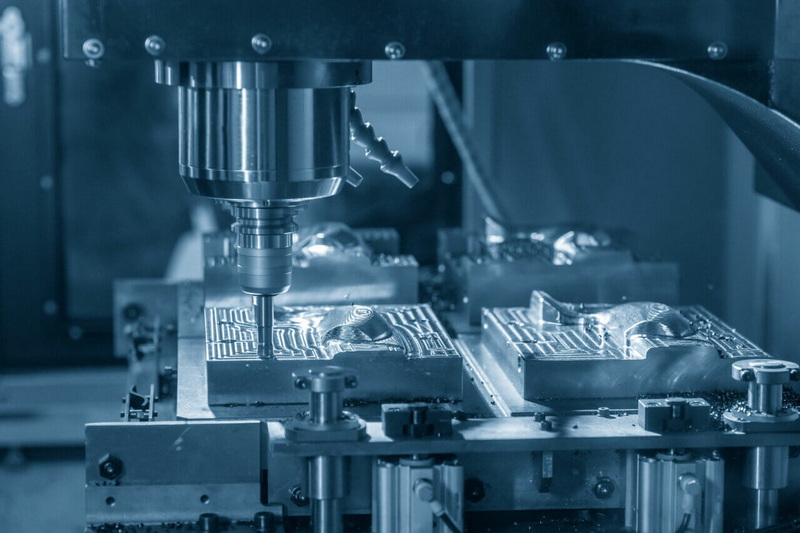
No, AI is unlikely to completely replace CNC Machining operators in the foreseeable future. AI automates repetitive tasks, but operators still handle setup, complex problem-solving, fixturing, and final responsibility for quality in CNC Machining. Most experts expect roles to evolve rather than disappear, with machinists becoming supervisors and process specialists in AI-enabled CNC Machining environments.[11][3][7][10]
AI improves CNC Machining quality by analyzing sensor and measurement data to detect deviations early and trigger corrective actions during machining. This leads to fewer defects, tighter tolerances, and better surface finishes, especially for demanding aerospace, automotive, and industrial OEM applications that rely on CNC Machining. AI also supports long-term process capability improvements through data-driven analysis of trends and variations.[6][3][5][7]
AI-enhanced CNC Machining started in large enterprises, but cloud software and affordable sensors are making these tools accessible to small and mid-sized shops. Even a single CNC Machining center can benefit from AI-based CAM, quoting, or monitoring solutions, and many vendors offer subscription models that reduce upfront cost. Over time, AI may become a standard feature in mainstream CNC Machining equipment and software, not just a premium add-on.[8][2][3][9]
In an AI-enabled CNC Machining shop, machinists need strong fundamentals in machining plus data literacy and familiarity with digital tools. Skills such as interpreting dashboards, checking AI-generated CNC Machining programs, and communicating with engineers about process optimization become especially important. Workers who can bridge hands-on CNC Machining experience with software and analytics are likely to be in high demand.[3][7][9][10]
An AI-ready CNC Machining partner can offer faster quoting, shorter lead times, higher quality, and better cost control through predictive maintenance and optimized processes. For overseas OEM brands, working with a digital, AI-enhanced CNC Machining supplier like Shangchen helps secure a more reliable and competitive global supply chain, from rapid prototyping to precision batch production. Data sharing between OEMs and such CNC Machining partners also supports continuous improvement and innovation over the life of the product.[14][15][2][4][5][3]
[1](https://blog.hurco.com/how-ai-is-revolutionizing-the-cnc-machining-industry)
[2](https://www.morrisgroupinc.com/news/ai-in-cnc-manufacturing-exploring-the-future-of-industry-4-0/)
[3](https://www.3erp.com/blog/ai-for-cnc-machining/)
[4](https://www.sc-rapidmanufacturing.com)
[5](https://www.3erp.com/blog/future-of-cnc-machining/)
[6](https://blog.3ds.com/brands/delmia/revolutionizing-machining-operations-with-artificial-intelligence/)
[7](https://limitlesscnc.ai/why-ai-cnc-programming-makes-machinists-more-valuable-not-obsolete/)
[8](https://www.cloudnc.com/blog/cloudnc-ai-technology-for-cnc-machining)
[9](https://blogs.sw.siemens.com/nx-manufacturing/how-ai-powered-cam-software-is-transforming-cnc-machining/)
[10](https://premierequipment.com/cnc-blog/can-ai-replace-cnc-programmers/)
[11](https://manufacturingdigital.com/articles/delmia-answers-will-ai-take-manufacturing-jobs)
[12](https://www.roboticstomorrow.com/article/2025/02/2025-top-article-the-future-of-machining-key-trends-and-innovations/24066)
[13](https://www.reddit.com/r/singularity/comments/1bycbc9/thoughts_within_5_years_we_will_have_a_cnc/)
[14](https://www.sc-rapidmanufacturing.com/rapid-prototyping-knowledge.html)
[15](https://www.sc-rapidmanufacturing.com/cnc-machining.html)
[16](https://www.sc-rapidmanufacturing.com/aboutus.html)

