
Views: 222 Author: Amanda Publish Time: 2025-12-23 Origin: Site


Content Menu
● Why Rapid Prototyping Is Used In Product Development
● Core Benefits Of Rapid Prototyping
● How OEMs Use Rapid Prototyping With Chinese Factories
● Key Processes Used In Rapid Prototyping
>> CNC Machining In Rapid Prototyping
>> 3D Printing And Additive Manufacturing
>> Vacuum Casting And Low-Volume Molding
● Materials Used In Rapid Prototyping
● How Shangchen Supports Rapid Prototyping
● Typical Use Cases For Rapid Prototyping
● Why Rapid Prototyping Matters For OEM Strategy
>> 1. What is the main goal of Rapid Prototyping?
>> 2. At which stage should Rapid Prototyping start?
>> 3. How does Rapid Prototyping support mass production?
>> 4. Why do OEM brands outsource Rapid Prototyping to China?
>> 5. What information is needed to start a Rapid Prototyping project with Shangchen?
Rapid Prototyping is used because it compresses development time, reduces technical and commercial risk, and lets companies validate products with real parts long before committing to expensive mass production. For international OEM buyers working with Chinese factories like Shangchen, Rapid Prototyping connects design, CNC machining, sheet metal fabrication, 3D printing, and molding into a single, agile development workflow that supports both prototypes and small-batch production.[1][2]
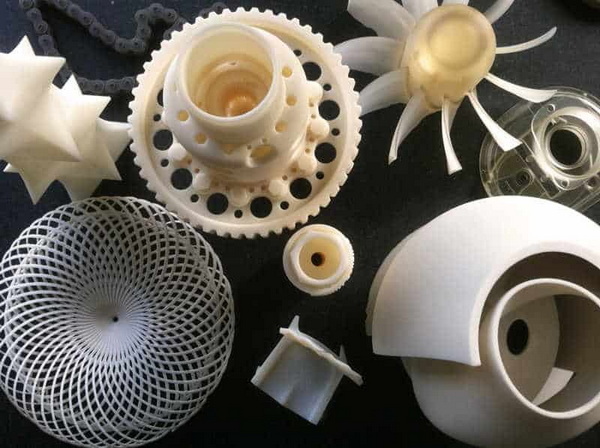
Rapid Prototyping is a group of digital manufacturing technologies that transform 3D CAD data into physical components in a short lead time. These components can be visual mock-ups, fully functional test parts, or near-production assemblies depending on the chosen process and material.[3][4]
- The core idea of Rapid Prototyping is to replace long design cycles and guesswork with fast, physical feedback so that every iteration is guided by real performance and user response.[4]
- Typical Rapid Prototyping processes include CNC machining, 3D printing, sheet metal forming, vacuum casting, and low-volume injection molding, often combined in one project as designs mature.[5][6]
Rapid Prototyping plays a central role in modern product development because it aligns design, engineering, marketing, and manufacturing around tangible, testable parts. Instead of relying only on renderings or simulations, teams can evaluate real prototypes early and often.[7][4]
Key reasons Rapid Prototyping is widely used:
1. Speed to market
Rapid Prototyping shortens the time from concept to testable parts from months to days or weeks, enabling brands to respond faster to trends, regulations, and customer feedback.[8][7]
This accelerated pace helps OEM companies win market share by launching new or updated products ahead of competitors.[9]
2. Risk and cost reduction
The cost of a single mistake in production tooling can be extremely high, so Rapid Prototyping is used to uncover design issues before hard tooling is cut.[10][8]
By validating geometry, assembly, and performance with Rapid Prototyping, companies reduce scrap, rework, and late engineering changes.[11]
3. Better decision-making
Physical Rapid Prototyping parts are easier to understand than CAD images, so cross-functional teams and non-technical stakeholders can make more confident decisions.[12][4]
Management, investors, and customers can touch, feel, and test real parts instead of relying on slides or animations, which leads to clearer communication and faster approval cycles.[7]
4. Design freedom and innovation
Rapid Prototyping encourages experimentation because each iteration is relatively fast and inexpensive compared with traditional build-and-test cycles.[3][9]
Designers can explore complex shapes, lightweight internal structures, and multiple styling directions while still keeping the timeline under control.[5]
Rapid Prototyping is not just about speed; it delivers a combination of technical and business advantages that support the entire product lifecycle. These benefits appear from the first sketch through to the final validation runs.
1. Improved functional validation
With Rapid Prototyping, teams can test strength, stiffness, thermal behavior, and assembly tolerance under real or simulated operating conditions.[4][11]
Functional Rapid Prototyping parts allow engineers to check clearances, torque requirements, sealing performance, ergonomics, and durability before locking in the final design.[8]
2. Enhanced user experience testing
Physical prototypes generated through Rapid Prototyping make it possible to run hands-on user tests with target customers or internal teams.[4]
Feedback on grip, button position, visibility, and overall feel can be captured and integrated into the next Rapid Prototyping iteration.[7]
3. Faster iteration cycles
Rapid Prototyping allows multiple design variants to be produced in parallel so that teams can compare options directly rather than guessing from virtual models.[8]
This parallel testing approach leads to more optimized final products, because the best solution emerges from real comparative data instead of theory alone.[9]
4. Smoother transition to manufacturing
When Rapid Prototyping uses production-grade materials and processes such as CNC machining and injection molding, the gap between prototype and production becomes much smaller.[13][11]
Manufacturing teams can refine fixtures, assembly sequences, and inspection methods during Rapid Prototyping, which reduces surprises during ramp-up.[14]
Global OEM customers often rely on Chinese factories to provide one-stop Rapid Prototyping, bridge production, and full mass production. This partnership model lets brands focus on design and marketing while leveraging specialized manufacturing expertise overseas.[15][14]
A typical OEM Rapid Prototyping workflow includes:
1. Concept and feasibility stage
At the earliest stage, Rapid Prototyping is used to explore different design directions, overall size, and ergonomic concepts without strict tolerance requirements.[4]
Factories provide simple CNC machined or 3D printed samples that help clarify whether the concept is attractive, realistic, and manufacturable.[5]
2. Engineering and DFM optimization
As the concept stabilizes, engineers refine wall thickness, draft angles, rib structures, and assembly features using DFM feedback from the Rapid Prototyping supplier.[11]
Multiple Rapid Prototyping builds may be used to validate each improvement, ensuring that the final version balances performance, cost, and ease of manufacturing.[14]
3. Functional and reliability testing
In this phase, Rapid Prototyping focuses on end-use performance; the factory produces prototypes from similar or identical materials to the final product using CNC, sheet metal, or low-volume molding.[2][13]
The OEM performs life-cycle testing, environmental testing, and safety validation based on these Rapid Prototyping parts, adjusting the design where needed.[11]
4. Bridge production and pilot runs
Once the design is stable, Rapid Prototyping seamlessly transitions into bridge production, with limited tooling or soft molds used to create small batches for pilot customers or field trials.[14]
These runs help the OEM check supply chain performance, packaging, installation, and after-sales support before committing to full-scale production.[11]
5. Full mass production
After successful Rapid Prototyping and pilot phases, the same factory can build production tooling and scale up to higher volumes while maintaining the knowledge gained during earlier stages.[13][15]
This continuity between Rapid Prototyping and production reduces miscommunication and supports stable long-term supply for OEM customers.[14]
Rapid Prototyping uses several complementary manufacturing technologies, each with specific strengths. Choosing the right process or combination ensures that each project hits its technical and commercial targets.
CNC machining is heavily used in Rapid Prototyping because it delivers high accuracy, excellent surface finish, and compatibility with many metals and plastics.
- CNC Rapid Prototyping is ideal for structural parts, precise housings, and components that must match production materials and tolerances.[16][13]
- Multi-axis CNC machining can cut complex features, undercuts, and intricate profiles, allowing Rapid Prototyping to simulate demanding mechanical parts.[17]
Lathe turning is often required for shafts, bushings, threaded connectors, valves, and other rotational parts in Rapid Prototyping projects.
- Turning provides tight concentricity, roundness, and surface quality, which is critical for sealing and rotational performance.[16]
- Combining turning with milling lets Rapid Prototyping suppliers deliver complete assemblies such as hydraulic fittings, motor shafts, and gearbox components.[17]
Sheet metal fabrication is another important part of Rapid Prototyping, especially for enclosures, brackets, cabinets, and structural frames.
- Processes such as laser cutting, bending, stamping, and welding help create realistic assemblies for mechanical and electrical integration tests.[6][2]
- Rapid Prototyping with sheet metal lets OEMs evaluate stiffness, installation space, cabling, and ventilation at an early stage.[11]
3D printing is widely associated with Rapid Prototyping because of its ability to produce complex geometries without dedicated tooling.
- Additive Rapid Prototyping supports accelerated design exploration, internal channels, lattice structures, and organic shapes that are difficult to machine.[9][4]
- Different technologies such as SLA, SLS, and metal printing can be selected depending on whether appearance, mechanical performance, or heat resistance is most important.[12]
Vacuum casting and soft tooling are used in Rapid Prototyping to create small batches of polyurethane or plastic parts that are close to injection-molded quality.
- These Rapid Prototyping techniques are ideal for appearance models, enclosure sets, and beta test units that must look and feel like final products.[11]
- Low-volume injection molding extends Rapid Prototyping into bridge production, giving OEMs realistic data on cycle times, shrinkage, and cosmetic quality.[14]
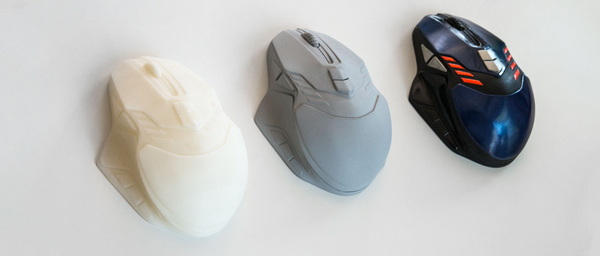
Material choice is critical for Rapid Prototyping because it determines how closely prototypes match final products in performance and appearance. A broad material library also allows one Rapid Prototyping supplier to support a wide range of industries.[13]
1. Metals
Common metals in Rapid Prototyping include aluminum alloys (such as 6061 and 7075), stainless steels (304, 316), carbon steels, brass, copper, and sometimes titanium for high-performance parts.[2][13]
Metal Rapid Prototyping is especially important for structural components, heat-dissipating parts, and safety-critical systems.[11]
2. Engineering plastics
Engineering plastics like ABS, PC, PA, POM, PMMA, PEEK, and blends are frequently used for Rapid Prototyping of housings, clips, gears, and handles.[2][12]
These materials provide realistic insight into impact resistance, flexibility, and long-term stability in end-use conditions.[4]
3. Elastomers and special materials
For seals, gaskets, grips, and cushioning components, Rapid Prototyping may use cast urethanes, silicones, or rubber-like materials.[11]
Special materials such as high-temperature plastics or chemically resistant metals can be used in Rapid Prototyping when applications demand extreme conditions.[9]
Shangchen is a China-based factory dedicated to Rapid Prototyping, CNC machining services, precision batch production, turning, sheet metal manufacturing, 3D printing services, and mold production for international OEM clients. The company focuses on customized parts for overseas brands, wholesalers, and manufacturers that require stable quality and responsive engineering support.[18][19][1]
Key aspects of Shangchen's Rapid Prototyping capability:
1. Integrated manufacturing platform
Shangchen combines CNC milling, CNC turning, sheet metal fabrication, Rapid Prototyping, 3D printing, and toolmaking in one facility, enabling full control of quality and scheduling.[1][2]
This integration allows OEM customers to manage all stages of Rapid Prototyping and production with a single partner instead of coordinating multiple suppliers.[19]
2. Flexible volumes and lead times
The factory supports everything from single-piece Rapid Prototyping orders to repeat low-volume and medium-volume batches with stable process windows.[2]
Lead times for Rapid Prototyping projects are optimized through efficient quoting, DFM feedback, and parallel machining strategies.[1]
3. Quality management and inspection
Shangchen follows an ISO9001-based quality system with incoming inspection, in-process control, and final inspection for Rapid Prototyping and production parts.[1][2]
Dimensional checks with CMM, 3D measuring equipment, and specialized gauges ensure that Rapid Prototyping parts meet drawing tolerances and OEM expectations.[19]
4. OEM-oriented engineering support
The team provides DFM advice on wall thickness, draft angle, fillets, and process choice so that Rapid Prototyping results are compatible with later mass production.[18][11]
OEM customers benefit from early manufacturability feedback, which reduces redesign loops and shortens the path from Rapid Prototyping to industrialization.[14]
5. Global customer base
Shangchen's Rapid Prototyping, CNC machining, and production services are used by clients in Europe, North America, and other regions that require reliable supply from China.[19][1]
The factory's experience with international standards and documentation helps OEM brands meet local regulatory and quality requirements.[18]
Rapid Prototyping supports many real-world scenarios across industries and product categories. OEMs apply these capabilities wherever speed, precision, and reliability matter.
1. Automotive and mobility
Rapid Prototyping serves lighting systems, drivetrain components, brackets, interior panels, and test rigs used in vehicle development.[5][2]
Engineers use Rapid Prototyping to validate assembly sequences, NVH behavior, and tolerance stacks across complex systems.[8]
2. Aerospace and defense
Structural brackets, sensor housings, connectors, and ducting components are often created through Rapid Prototyping to support flight testing and ground testing.[5][9]
High-precision Rapid Prototyping with metals and high-performance plastics is crucial where safety margins and certification standards are strict.[11]
3. Medical and laboratory equipment
Rapid Prototyping is used for housings, user interfaces, disposable parts, and test fixtures in devices that must meet regulatory and ergonomic requirements.[2][11]
OEMs rely on Rapid Prototyping to refine cleaning procedures, usability, and assembly in hygienic environments.[4]
4. Consumer electronics and appliances
Rapid Prototyping supports enclosures, structural frames, knobs, and thermal components used in fast-moving consumer products.[13][2]
Industrial designers use Rapid Prototyping to perfect surface transitions, joint lines, and perceived quality before mass production.[9]
5. Industrial and automation systems
Control panels, machine guards, brackets, manifolds, and custom fixtures are frequently produced through Rapid Prototyping for factory automation and robotics projects.[6]
Rapid Prototyping allows integrators to customize equipment for specific customers without long development delays.[4]
For OEM brands, Rapid Prototyping is no longer a nice-to-have tool but a strategic capability that influences competitiveness, reputation, and long-term profitability. The right Rapid Prototyping approach transforms the entire development process.
1. Stronger product-market fit
By testing multiple Rapid Prototyping iterations directly with target users, OEMs can confirm that real needs are addressed before large investments are made.[7][4]
This reduces the risk of launching products that are technically sound but misaligned with customer expectations.[8]
2. More predictable launches
Projects that rely on Rapid Prototyping generate more data about design performance, manufacturability, and supply chain readiness, making schedules more predictable.[14][11]
OEMs can manage internal and external expectations more accurately because Rapid Prototyping exposes issues while there is still time to fix them.[4]
3. Long-term supplier partnerships
Working with a partner that supports Rapid Prototyping, bridge production, and mass production encourages long-term collaboration instead of one-off transactions.[15][13]
Over time, the supplier learns the OEM's standards and preferences, making each Rapid Prototyping project faster and more efficient than the last.[14]
Rapid Prototyping is used because it reshapes product development into a fast, iterative, and evidence-driven process that supports better design decisions and more reliable launches. By enabling early physical testing, Rapid Prototyping reduces risk, compresses timelines, and helps OEM brands match products to real market needs before committing to full production. When Rapid Prototyping is combined with CNC machining, sheet metal fabrication, 3D printing, vacuum casting, and molding in one integrated factory, the path from idea to industrialization becomes smoother and more cost-effective. For international brands partnering with Chinese manufacturers such as Shangchen, Rapid Prototyping is a strategic tool that connects creative design with robust, scalable manufacturing.[19][1][7][2][11]
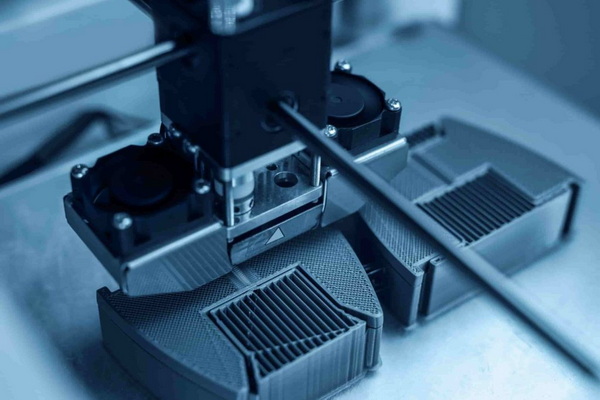
The main goal of Rapid Prototyping is to transform design concepts into physical parts quickly so that teams can evaluate function, fit, and appearance early in the development cycle. This reduces uncertainty and guides design decisions using real test data instead of assumptions.[3][8][4]
Rapid Prototyping should start as soon as there is a stable enough concept to build a basic 3D model, often during the early concept or feasibility phase. Starting Rapid Prototyping early helps detect fundamental problems before they spread into later engineering and tooling stages.[4][11]
Rapid Prototyping supports mass production by validating design geometry, materials, and assembly processes before tooling investment, and by enabling bridge production with low-volume molds or CNC batches. This step-by-step approach makes the transition to full-scale manufacturing smoother and more predictable.[13][14][11]
OEM brands outsource Rapid Prototyping to China to access a wide range of processes, experienced engineering teams, and competitive pricing in a single supply base. Factories such as Shangchen provide integrated Rapid Prototyping, CNC machining, sheet metal, 3D printing, and molding, which simplifies project management for overseas customers.[15][1][19][13]
To start a Rapid Prototyping project with Shangchen, OEM customers typically provide 3D CAD files, 2D drawings with tolerances, material requirements, surface finish expectations, quantities, and required lead times. With this information, the engineering team can recommend suitable Rapid Prototyping processes, provide DFM feedback, and issue a detailed quotation.[18][1][2]
[1](https://www.sc-rapidmanufacturing.com)
[2](https://shangchencnc.en.made-in-china.com/product/BFbGmPgEJNrf/China-Rapid-Plastic-Prototyping-Services-with-3D-Printing-and-CNC-Machining-China-Manufacturer.html)
[3](https://www.amazemet.com/rapid-prototyping-innovative-product-development/)
[4](https://online.hbs.edu/blog/post/rapid-prototyping)
[5](https://aegroup.uk.com/oem-fluid-technology-division/what-is-oem-rapid-prototyping/)
[6](https://www.roboticstomorrow.com/company_directory/uidea-rapid-prototype-china-co-ltd/11093)
[7](https://www.savio.io/blog/what-is-rapid-product-prototyping-and-when-should-you-use-it/)
[8](https://prototaluk.com/blog/advantages-of-rapid-prototyping/)
[9](https://www.stratasys.com/en/resources/blog/key-advantages-of-rapid-prototyping/)
[10](https://hlhrapid.com/blog/top-6-advantages-of-rapid-prototyping/)
[11](https://europlaz.co.uk/rapid-prototyping-prototyping-to-production/)
[12](https://ebcoinc.com/technical-support/rapid-prototyping)
[13](https://www.pcbway.com/rapid-prototyping/)
[14](https://quickparts.com/rapid-manufacturing-services-for-oem/)
[15](https://tirapid.com/rapid-prototyping-services-china/)
[16](https://rapidmanufacture.com/service/cnc-machining/)
[17](https://www.rapidcncprototyping.com)
[18](https://www.sc-rapidmanufacturing.com/aboutus.html)
[19](https://thetextilenetwork.com/company/cnc-machining-service-shangchen)

