
Views: 222 Author: Amanda Publish Time: 2025-11-05 Origin: Site


Content Menu
● The Role of Precision in Automotive Moulding Production
● Techniques and Technologies Driving Precision
>> High-Precision Injection Moulding
>> Two-Shot Injection Moulding
>> Advanced CAD/CAM Integration
>> Shrinkage Control and Thermal Management
● Best Practices to Achieve High-Precision Parts
>> Process Control and Calibration
● Common Defects in Moulding Production and Their Solutions
● The Business Advantages of Precision Moulding Production
>> Productivity and Scalability
>> Sustainability and Waste Reduction
>> Innovation in Automotive Design
● Looking Ahead: The Future of Automotive Moulding Production
>> Smart Manufacturing Integration
● FAQ: Precision Moulding Production for Automotive Parts
>> 1. Why is precision critical in automotive moulding production?
>> 2. How does advanced moulding production minimize defects?
>> 3. What technological advances support greater precision?
>> 4. How does precision help reduce manufacturing waste?
>> 5. How can automotive brands choose reliable precision moulding suppliers?
Precision is the bedrock of moulding production for automotive parts, underpinning the industry's ability to deliver exceptional quality, safety, and innovative design. Today's advanced manufacturing environments demand not just speed but repeatable accuracy—from prototypes to mass production runs. OEM service providers who master precision create value far beyond basic part fabrication.[2][4][5][6][10][11]
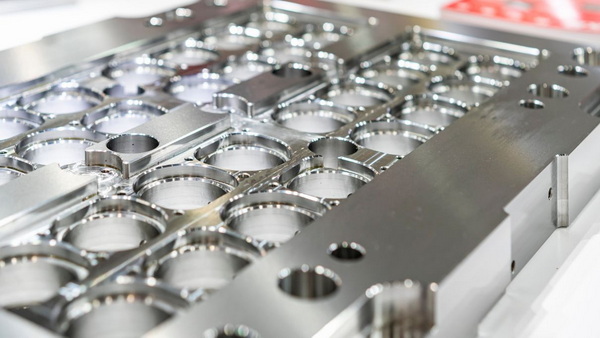
Each automotive moulded part must adhere to exact specifications for proper fit and function. Consistency within tight tolerances is not optional—it ensures flawless assembly, solves alignment challenges, and meets high customer expectations. Small dimensional errors can cause downstream failures, increased warranty claims, and safety risks.[4][5]
Vehicle safety standards are uncompromising. Critical components such as seatbelt buckles, airbag housings, and brake system parts require precision in every phase of moulding production. Achieving regulatory compliance means maintaining minute tolerances, as even the smallest variance can result in catastrophic performance failures.[10][11]
Though the development of high-precision moulds might seem costly, savings quickly accumulate through reduced waste, lower defect rates, and streamlined quality checks. With improved cycle efficiency, manufacturers can scale up production confidently—knowing their parts meet demanding industry standards from the start.[5][6][2]
A mainstay in automotive production, injection moulding delivers exact-fit parts by forcing molten plastic or metal into well-engineered moulds. Modern machines used in automotive moulding production achieve pressures upwards of 243 MPa, ensuring detailed cavities and repeatable outputs. Accuracy down to 0.01mm is now an industry standard in high-value applications.[9][2]
For multifunctional components, two-shot injection moulding joins different material zones in a single process. Soft-touch interiors on rigid panels exemplify how this process enables automotive door panels to integrate tactile surfaces without sacrificing structural endurance. The ability to combine materials seamlessly supports both safety and comfort requirements.[4]
Precision begins at the design stage. CAD/CAM systems simulate part geometry, material flow, thermal considerations, and expected shrinkage. These digital tools refine mould features such as runner systems and cooling channels, translating theoretical accuracy into practical manufacturability. Even multi-cavity moulds are balanced for uniform filling, avoiding issues like warping or incomplete shots.[6]
Complex mould features are realized through CNC milling, which enables intricate contours and uniform surface finishes. For sharper details—especially in complex undercut zones—Electrical Discharge Machining (EDM) offers the necessary precision, sculpting hardened steels and alloys that withstand high-volume production demands.[6]
In smart factories, real-time metrology (such as CMMs and laser scanners) validate every critical dimension during production. Automated feedback loops correct variances instantly. Such process monitoring is essential in maintaining dimensional consistency through prolonged production cycles.[2][5]
Precision moulding production demands expert control over shrinkage, a phenomenon caused by material cooling, phase change, and molecular orientation. Temperature management systems, pressure control, and optimized gate placement support stable material flow, yielding parts that maintain their intended dimensions whether produced in the hundreds or millions.[2]
Success in moulding production starts with robust tool engineering. This includes:
- Multi-cavity balance to ensure consistent part geometry.
- Conformal cooling channels that follow the part's contours for efficient temperature regulation.
- High-quality tool steels selected for longevity and thermal resistance.[6][2]
Precise calibration of injection pressures, speeds, and cooling cycles prevents common defects like short shots, warping, or uneven surfaces. Manufacturers rely on advanced PLCs with statistical analysis capabilities to maintain process stability and traceability.[5]
Dimensional stability of finished parts is directly linked to material choice. Polymers and alloys are specified to resist shrinkage, minimize thermal expansion, and maintain consistent flow profiles. Material compatibility with specific mould designs determines both part performance and manufacturing efficiency.[2]
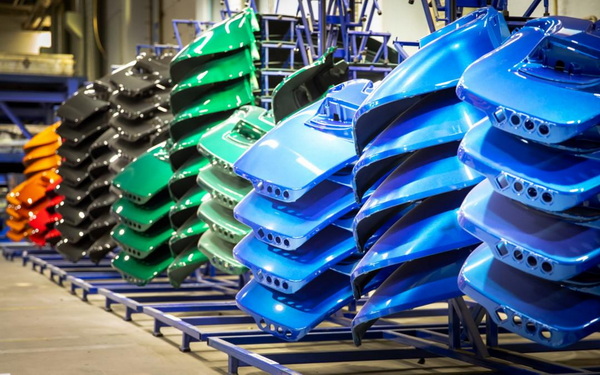
Flow lines—visual streaks caused by uneven cooling or material flow—can compromise surface aesthetics and underlying integrity. Short shots result from insufficient cavity filling, frequently linked to inadequate pressure or venting. Both can be prevented by fine-tuning mould temperature control, runner geometry, and injection parameters.[12][13]
Warping is typically the result of inconsistent cooling or material shrinkage. Precision cooling systems, coupled with careful mould design, correct these issues. Flash occurs when excessive material escapes the mould cavity; maintaining closed mould tolerances and robust parting line seals prevents it.[12][5]
Surface blemishes or rough finishes are indicators of impurities in tooling or raw materials, or suboptimal cooling. Rigorous material inspection and mould maintenance routines ensure defect-free results, boosting part reliability and brand reputation.[4][2]
Precision machinery and moulds are investments that yield high throughput without sacrificing quality. These assets enable rapid transitions from prototyping to mass-scale production and support customized variants for different markets, all while keeping unit costs predictable.[5][6]
Tighter tolerances result in less rejected material, which means manufacturers lower their environmental footprint while running leaner operations. Precise process engineering reduces overspending on raw materials and energy, aligning with global sustainability targets.[2]
Automobile brands rely on the flexibility of precision moulding production to introduce new styles, shapes, and features quickly. The blending of digital engineering, automated controls, and high-quality tooling supports breakthrough design and rapid iteration.
Industry 4.0 technologies—including AI-driven defect prediction, IoT sensors, and closed-loop feedback systems—are transforming moulding production. These systems guarantee zero-defect manufacturing and allow remote monitoring, predictive maintenance, and full lifecycle analytics.
- Adoption of 3D printing for rapid prototyping and direct mould fabrication.[8]
- Widespread use of composite materials for lightweight, durable automotive components.
- Cross-industry application of scientific moulding techniques from aerospace, electronics, and medical sectors improving performance benchmarking and compliance.[6][2]
Precision in moulding production is non-negotiable in the automotive sector. It secures the safety, quality, and competitive edge manufacturers require, from prototype through mass production. As technology evolves, manufacturers who invest in precision engineering, automated quality controls, and robust supply chain partnerships will deliver consistent excellence in every vehicle part—shaping the future of mobility.
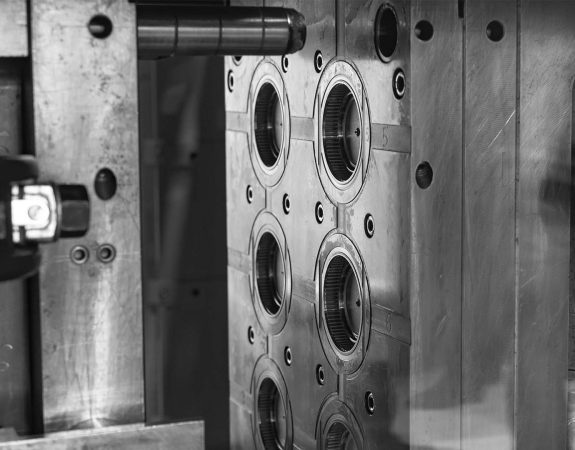
Precision ensures every part fits and functions correctly, supporting complex vehicle assemblies and guaranteeing regulatory compliance—especially for safety-critical systems.[11][10][4]
Process control, robust tool engineering, thermal management, and automated inspection systems prevent defects such as short shots, warping, and flash, resulting in smoother mass production.[13][12][5][2]
CAD/CAM software, CNC machining, EDM, AI-powered process control, and integrated metrology systems all dramatically improve the accuracy and repeatability of automotive moulding production.[5][6]
Precision tooling lowers scrap rates by ensuring every cycle produces usable, in-spec parts. Real-time quality feedback immediately flags variances, reducing wasted time, energy, and raw materials.[5][2]
Brands should look for suppliers who invest in advanced technology, provide transparent quality tracking, demonstrate successful delivery of tight-tolerance parts, and maintain strong certifications.[14][6][5]
[1](https://www.jtape.com/news/automotive-injection-moulding-explained/)
[2](https://amt-mat.com/guide-on-high-precision-plastic-injection-molding/)
[3](https://www.hansenplastics.com/automotive-injection-molding-everything-you-need-to-know/)
[4](https://www.ace-mold.com/automotive-mold-making-why-precision-and-accuracy-matter/)
[5](https://www.thogus.com/blog/post/what-is-precision-injection-molding-scientific-principles-and-capabilities/)
[6](https://witmold.com/what-is-the-precision-injection-molding-process/)
[7](https://promedmolding.com/resources/a-guide-to-injection-molding-unveiling-the-secrets-of-precision-manufacturing/)
[8](https://maycointernational.com/blog/4-precision-parts-manufacturing-trends-shaping-the-automotive-industry/)
[9](https://pmc.ncbi.nlm.nih.gov/articles/PMC10489002/)
[10](https://www.bh-med.com/blog/why-precision-matters-in-injection-mold-fabrication)
[11](https://jinchenprecision.com/how-do-precision-mold-parts-reduce-automotive-production-costs/)
[12](https://www.intouch-quality.com/blog/injection-molding-defects-and-how-to-prevent)
[13](https://www.plasticstoday.com/injection-molding/the-troubleshooter-preventing-speed-and-time-related-defects-in-injection-molded-parts)
[14](https://us.arrk.com/how-precision-mold-manufacturing-shapes-industry-excellence/)

