
Views: 222 Author: Amanda Publish Time: 2026-01-11 Origin: Site


Content Menu
>> Core Characteristics of CNC Machining
>> Typical CNC Machining Processes
>> How a Typical CNC Machining Workflow Operates
● Why CNC Machining Is Necessary Today
>> Precision and Repeatability
>> Speed, Efficiency and 24/7 Production
>> Complex Geometry and Design Freedom
>> Material Versatility and Surface Quality
● CNC Machining in Prototyping and Production
>> Bridge and Low‑Volume Production
>> High‑Volume and Precision Manufacturing
● CNC Machining vs Traditional Machining
>> Key Differences in Practice
● Applications Across Industries
● How CNC Machining Supports Global OEM Services
>> CNC Machining in Integrated Manufacturing Systems
● Challenges and Limitations of CNC Machining
>> Cost and Material Considerations
>> Geometric and Process Limits
>> 1. What makes CNC Machining different from 3D printing?
>> 2. When should I choose CNC Machining over injection molding?
>> 3. How accurate is CNC Machining in real projects?
>> 4. Is CNC Machining cost‑effective for small batches?
>> 5. What industries benefit most from CNC Machining?
CNC Machining has become a core technology in modern manufacturing because it combines high precision, consistency and speed in a way that traditional manual methods cannot match. From rapid prototyping to mass production, CNC Machining makes it possible to produce complex, tight‑tolerance parts reliably and cost‑effectively across many industries.

CNC Machining (Computer Numerical Control Machining) is a subtractive manufacturing process where cutting tools are guided by computer programs to remove material from a solid block and create a final part. The process covers CNC milling, CNC turning, drilling, boring and other operations on metals, plastics and many advanced materials.
CNC Machining converts a 3D CAD model into machine‑readable code that precisely defines tool paths, cutting speeds, feeds and depths of cut. Because every step is digitally controlled, CNC Machining delivers a predictable result that can be repeated over and over without relying purely on operator feel.
- Computer control: Digital instructions (often G‑code) guide every movement of the cutting tools in CNC Machining, ensuring repeatable, predictable results.
- High precision: Modern CNC Machining equipment can routinely hold tight tolerances suitable for aerospace, medical and automotive components.
- Automation: CNC Machining systems can run with minimal supervision, often integrated with automatic loading, unloading and tool‑changing devices.
- Multi‑operation capability: A single CNC Machining center can mill, drill, tap and bore in one setup, improving accuracy and efficiency.
- CNC milling: Rotary cutters remove material along multiple axes, ideal for pockets, slots, 3D surfaces and complex contours in CNC Machining projects.
- CNC turning: Workpieces rotate while tools cut on the lathe, producing shafts, bushings, connectors and other cylindrical parts via CNC Machining.
- CNC drilling and tapping: Precision holes, threads and counterbores are produced in a controlled CNC Machining cycle.
- Secondary operations: Boring, reaming, engraving and surface finishing can all be integrated into a CNC Machining workflow for complete parts.
A standard CNC Machining workflow begins when engineers finalize a 3D CAD model that defines the part geometry. Next, CAM software generates toolpaths, simulating the CNC Machining process to optimize cutting strategies and detect any interference before a single chip is produced.
After programming, technicians set up the CNC Machining center by loading tools, preparing fixtures and clamping the raw material. During cutting, in‑process inspection and probing can automatically measure features, allowing the CNC Machining system to compensate for tool wear or thermal expansion. Finally, finished parts move to quality inspection and any downstream processes such as anodizing, painting or assembly.
The necessity of CNC Machining comes from its ability to deliver accuracy, speed and consistency while controlling cost and risk across the entire product life cycle. For many applications, no other manufacturing process offers the same combination of flexibility and performance that CNC Machining provides.
Industries ranging from aerospace to consumer electronics have adopted CNC Machining not only because it is efficient, but because it supports digital, data‑driven manufacturing. As products become smaller, more complex and more customized, CNC Machining becomes even more critical.
Precision is one of the strongest arguments for CNC Machining. Manual machines depend heavily on operator skill and concentration, which vary from person to person and shift to shift. CNC Machining, however, drives each axis along mathematically defined paths, repeatedly hitting the same coordinates.
Repeatability is equally important. Once a program is validated and fixtures are standardized, CNC Machining can reproduce parts across thousands of cycles with negligible dimensional drift. This level of consistency is essential for assemblies where many pieces must fit together without adjustment, such as automotive engines or medical devices.
CNC Machining dramatically reduces production time compared with manual machining and many traditional prototyping methods. Higher spindle speeds, optimized toolpaths and automatic tool changes mean that CNC Machining can remove more material in less time, while maintaining surface finish and accuracy.
Automation allows CNC Machining centers to run around the clock with minimal intervention. Lights‑out manufacturing, where machines continue cutting during breaks or overnight, boosts capacity without expanding floor space. As labor shortages and wage pressure grow, the ability of CNC Machining to maintain throughput with fewer operators becomes a major competitive advantage.
Modern products increasingly rely on organic shapes, undercuts, internal channels and lightweight structures. These complex forms are difficult or impossible to produce with hand‑operated equipment, but they are natural targets for CNC Machining, especially with multi‑axis capability.
With 4‑ and 5‑axis CNC Machining, tools can approach a workpiece from several directions, eliminating multiple setups and enabling the creation of deep cavities, compound angles and contoured surfaces. Designers gain freedom to focus on performance and function, knowing that CNC Machining can realize their ideas in actual metal or plastic.
CNC Machining supports an extensive range of materials, from common engineering plastics to hardened steels and high‑temperature alloys. This flexibility makes CNC Machining useful across sectors that need very different combinations of strength, weight, conductivity and corrosion resistance.
Because cutting parameters are so tightly controlled, CNC Machining can achieve fine surface finishes directly off the machine, reducing or eliminating the need for additional polishing or grinding. Smoother surfaces improve fatigue life, sealing behavior and visual appearance, all of which are important for premium products.
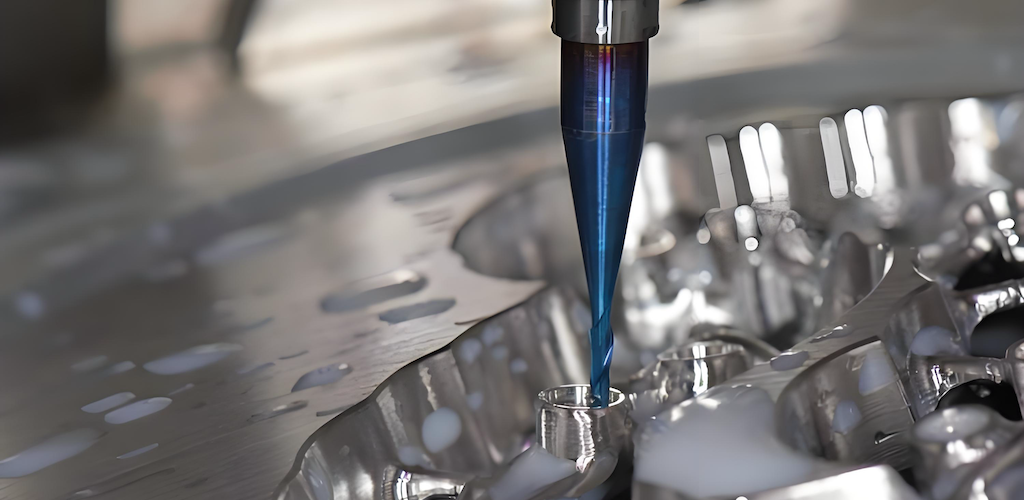
CNC Machining is essential in both rapid prototyping and full‑scale production because it shortens development cycles while delivering production‑grade parts. Using CNC Machining from concept through mass manufacturing reduces the risk that products will face surprises when they reach the factory.
By unifying prototyping and production within the same CNC Machining technology, companies avoid large shifts in tolerances or material behavior between development and commercialization. Engineers can test exactly what will be manufactured, improving decision‑making.
In the early design phase, CNC Machining enables fast, precise prototypes that behave very similarly to final parts. Where some additive processes struggle with exact material properties, CNC Machining can cut directly from the specified production materials.
Design teams can then evaluate assembly fit, mechanical strength, thermal behavior and even cosmetic appearance. Because CNC Machining prototypes are so accurate, they are valuable in customer reviews, certification tests and pilot builds. Each iteration is also faster, because changes require updates to programs rather than new molds or dies.
For many products, there is a gap between prototype quantities and the high volumes needed to justify complex tooling. CNC Machining fills this gap as a bridge manufacturing solution that can scale from tens to thousands of units.
Instead of investing early in expensive molds that might need changes, companies can rely on CNC Machining during ramp‑up, while they refine design details and test real‑world demand. If designs evolve, engineers simply revise toolpaths and fixtures, avoiding the sunk costs and long lead times associated with traditional tooling modifications.
While CNC Machining is often associated with small batches, advanced lines can support substantial volume. By standardizing fixtures, cutting strategies and inspection routines, manufacturers can create stable CNC Machining processes that run for months with only minor adjustments.
In these environments, CNC Machining works alongside other technologies like stamping and molding to handle high‑value, critical components. Key interfaces, precision bearing seats, sealing faces and threaded features are often finished on CNC Machining centers, even when other parts of the product use different processes.
CNC Machining differs fundamentally from traditional manual machining in its reliance on software, automation and repeatable digital workflows. These differences explain why CNC Machining has become the preferred approach for most modern precision parts.
Manual machines still have a place in very simple operations, repair work and low‑budget workshops. However, where consistent quality, scalability and complex geometry are required, CNC Machining almost always offers a better long‑term solution.
- Control method: CNC Machining uses programmed coordinates to control motion, while manual machining depends on operator manipulation of handwheels and levers.
- Dependence on skill: CNC Machining still needs expertise but is less sensitive to moment‑by‑moment human variation, improving consistency across shifts.
- Setup and changeover: Once programs and fixtures are established, CNC Machining changeovers are faster, especially for repeating jobs, whereas manual setups must be recreated each time.
CNC Machining supports critical components in sectors where failure is not acceptable, such as aerospace, medical devices and automotive. Its flexibility also makes CNC Machining valuable for consumer electronics, industrial equipment, robotics and custom machinery.
Because CNC Machining can handle both prototypes and production parts using the same foundational technology, it simplifies supply chains and improves communication between designers, engineers and manufacturing partners.
- Aerospace: Structural brackets, turbine components, housings and interior hardware rely on CNC Machining for consistent geometry and high strength‑to‑weight ratios.
- Automotive: Powertrain components, suspension parts, brackets, fixtures and tooling for assembly lines are frequently produced using CNC Machining.
- Medical: Surgical instruments, orthopedic implants, dental parts and diagnostic equipment frames depend on the reliability and cleanliness of CNC Machining.
- Electronics: Thermal management components, precision enclosures, mounting plates and connectors are routinely manufactured by CNC Machining for tight fits and stable performance.
For international brands, wholesalers and manufacturers, CNC Machining is a foundation for reliable OEM and ODM partnerships. When a factory offers CNC Machining alongside other capabilities such as rapid prototyping, sheet metal fabrication, turning, 3D printing and molding, customers can manage the entire product cycle under one roof.
CNC Machining also makes it easier for OEM clients to localize or customize parts for different markets. By updating digital drawings and programs, suppliers can adapt designs for regional standards or branding requirements without modifying hard tooling. This is especially powerful for companies that need frequent refreshes of housings, fixtures, interfaces or mechanical subassemblies.
Within an integrated manufacturing plant, CNC Machining often sits at the center of a broader workflow that includes cutting, forming, joining and surface treatment. Raw materials may enter through saw cutting or laser cutting stations, then move to CNC Machining centers for critical features and fine tolerances.
After CNC Machining, parts can pass into processes such as deburring, bead blasting, anodizing, powder coating or assembly. Because CNC Machining delivers accurate reference surfaces and holes, it greatly simplifies downstream operations, ensures good fit‑up in welding or bolting, and stabilizes overall product quality.
Although CNC Machining is powerful and necessary in many contexts, it is not perfect for every situation. Understanding its limitations helps engineers choose wisely and design parts that make the most of what CNC Machining can offer. The main constraints concern very high‑volume mass production, extremely complex internal cavities and parts that would waste too much material if produced with subtractive methods alone. In such cases, CNC Machining is often combined with other technologies rather than used in isolation.
CNC Machining requires significant upfront investment in equipment, programming and skilled personnel. For extremely simple, commodity‑level parts that will be made in huge volumes, other processes such as stamping, die casting or injection molding may yield lower unit costs once tooling is in place.
Material removal also generates waste, which must be recycled or disposed of. While chip recycling is well‑established, some geometries lead to high buy‑to‑fly ratios, meaning that CNC Machining consumes much more raw stock than ends up in the finished part. Engineers can mitigate this by optimizing design and combining CNC Machining with near‑net‑shape processes where appropriate.
Even advanced multi‑axis CNC Machining has limits. Very deep, narrow cavities can be difficult to reach with rigid tools, and extremely small features may require specialized equipment beyond standard setups. In some cases, hybrid approaches such as combining CNC Machining with electrical discharge machining or additive manufacturing are used.
Thermal effects, tool wear and vibration can influence final results, especially in difficult materials or at aggressive feed rates. To manage these issues, experts rely on process optimization, dynamic toolpath strategies and real‑time monitoring, all of which build on the digital nature of CNC Machining.
CNC Machining is necessary because it unites precision, repeatability, speed and design freedom into one scalable manufacturing approach that manual methods cannot rival. By enabling accurate rapid prototyping, flexible low‑volume runs and efficient mass production, CNC Machining has become a cornerstone of modern industrial competitiveness across global supply chains.
From aerospace engines and medical implants to consumer electronics and industrial equipment, CNC Machining supports parts that must perform reliably in demanding environments. As products grow more complex and customization becomes the norm, CNC Machining will remain essential to turning digital designs into tangible, high‑quality components.
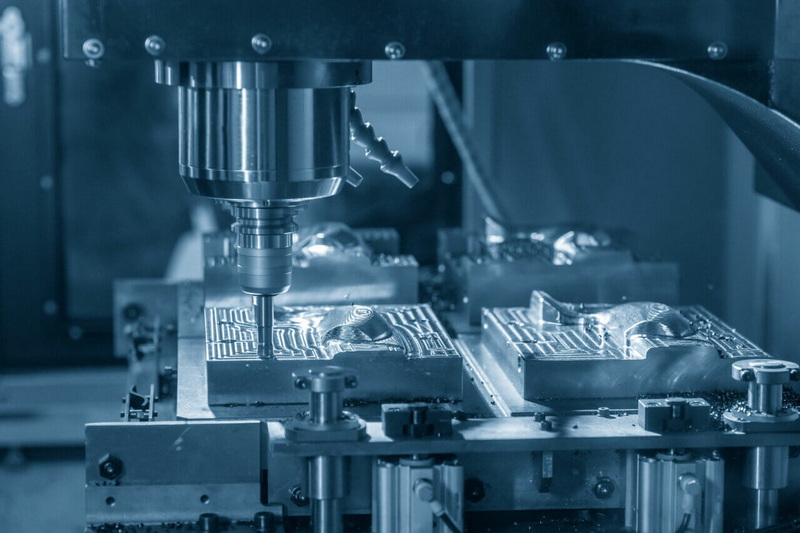
CNC Machining is a subtractive process that removes material from a solid block using cutting tools, while 3D printing is additive and builds parts layer by layer from powders, filaments or resins. CNC Machining generally offers tighter tolerances, better surface finish and broader material options for structural and functional parts, especially metals.
CNC Machining is ideal for prototypes, design validation and low‑to‑medium volumes because it does not require expensive molds or long tooling lead times. Injection molding becomes more economical only at very high volumes, after tooling costs are amortized, whereas CNC Machining remains flexible and easier to modify when designs change.
In many industrial applications, CNC Machining can achieve very tight dimensional tolerances suitable for aerospace and medical components. Actual accuracy depends on the machine, tooling, material, part size and inspection methods, but well‑controlled CNC Machining processes routinely deliver repeatable, precision parts.
CNC Machining is highly cost‑effective for small and medium batches because setup relies on programming and fixtures rather than dedicated hard tooling. Customers benefit from lower upfront investment, shorter lead times and the ability to adjust features or dimensions between runs without scrapping expensive molds or dies.
Industries that require reliable, precise components—such as aerospace, automotive, medical, electronics and industrial equipment—gain the greatest value from CNC Machining. These sectors depend on consistent quality, tight tolerances and material versatility, all of which are strengths of well‑implemented CNC Machining processes.

