
Views: 222 Author: Amanda Publish Time: 2025-11-08 Origin: Site


Content Menu
● Shangchen: A full-spectrum partner for moulding production and more
● The core premise: customer-centricity as a value driver in moulding production
● Precise requirement capture and upfront design alignment
● Flexible production plans accommodating multiple batch sizes
● Real-time feedback loops and data-driven decision-making
● Transparent, proactive communication and governance
● End-to-end capabilities that accelerate time-to-market
● Rapid prototyping to mature tooling
● Precision CNC turning and milling for mould components
● Injection moulding and other moulding production processes
● Secondary operations: finishing, painting, assembly
● Quality, compliance, and risk management
● Sustainability and cost efficiency
● Scaling from prototype to mass production
● Case studies and practical demonstrations (hypothetical examples)
● Quality, compliance, and risk management, revisited
● FAQ
>> 1. What is the benefit of a customer-centric approach in moulding production?
>> 2. How does rapid prototyping integrate with moulding production?
>> 3. What metrics matter most in monitoring moulding production quality?
>> 4. How are design changes handled during the transition from prototype to production?
>> 5. Can a supplier scale from low-volume prototyping to mass production?
In the modern landscape of moulding production, speed, accuracy, and reliability are not merely desirable traits—they are table stakes. For foreign brands, wholesale distributors, and contract manufacturers seeking a dependable partner, a customer-centric approach to moulding production is the decisive differentiator. This article explores how a customer-centric moulding production strategy aligns every stage of development with the client's business objectives, from initial concept and prototyping through tooling, validation, and mass manufacture. It also details how an integrated set of capabilities—rapid prototyping, CNC machining, sheet metal fabrication, 3D printing, tooling, and moulding production—can accelerate time-to-market, reduce risk, and improve total cost of ownership.
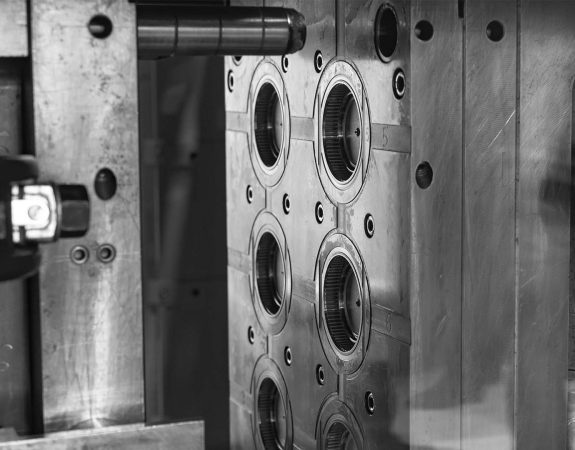
Shangchen specializes in rapid prototyping, CNC machining, sheet metal fabrication, 3D printing, vacuum casting, and moulding production. The company's integrated workflow is designed to support foreign brands and OEMs by delivering consistent quality, responsive support, and scalable manufacturing. By combining design-for-manufacturability, tooling development, and high-volume production under one umbrella, the partnership minimizes handoffs and communication gaps, enabling faster iterations and tighter schedule adherence. The moulding production pathway emphasizes preserving design intent while optimizing processes for yield, cycle times, and material efficiency.
A customer-centric moulding production model places the customer at the center of every decision. The approach integrates four interlocking pillars: precise requirements capture, flexible production planning, real-time quality feedback, and transparent governance. This combination ensures that design choices, process parameters, and supply-chain decisions are made with an explicit focus on delivering the customer's desired outcomes—quality, cost predictability, on-time delivery, and long-term reliability.
The journey begins with a collaborative discovery phase. Engineering teams conduct design-for-manufacturability (DfM) reviews, material feasibility assessments, tolerance analyses, and cost-driver evaluations. Early alignment helps identify potential manufacturability constraints and opportunities for design optimization that can shrink moulding production cycles, reduce scrap, and improve first-pass yield. Clear requirements reduce late-stage changes and rework, which directly translates to shorter lead times and more predictable project costs.
Not all components follow the same production curve. A customer-centric moulding production partner designs flexible manufacturing strategies that smoothly scale from rapid prototyping and low-volume runs to high-volume production. This flexibility includes adaptable tooling modules, scalable automation, and parameterized process controls that maintain consistency across batches. The outcome is a pricing model and a production plan that can accommodate shifting demand without sacrificing quality or timeliness.
Quality management in moulding production is an ongoing process, not a single milestone. Real-time process monitoring, inline metrology, and closed-loop control enable early detection of deviations and quick corrective actions. Data analytics support root-cause analysis and continuous improvement across the moulding production line. By turning every production cycle into a learning opportunity, the partner reduces risk, minimizes scrap, and stabilizes process capability over time.
Trustworthy partnerships rely on visibility. Regular program reviews, milestone dashboards, and shared performance metrics keep all stakeholders aligned. Clear escalation paths, risk registers, and formal deviation approvals minimize surprises. This governance framework helps foreign brands and OEM partners forecast budgets, schedule certifications, and maintain supply continuity across geographies and across supplier networks.
A truly customer-centric partner provides a continuum of capabilities that bridge concepts to high-volume production. The moulding production journey spans ideation, prototyping, tooling, validation, and scalable manufacturing, with quality and supply-chain considerations integrated at every step.
Early-stage concepts are validated through rapid prototyping methods, including 3D printing, vacuum casting, and quick-turn CNC prototypes. Prototypes allow functional, dimensional, and fit checks before committing to expensive moulds. The feedback from prototypes informs material choices, wall thickness optimization, and feature tolerances that influence the final mould design. As designs stabilize, a structured tooling plan ensures a smooth transition from prototype to production tooling with minimal downtime.
CNC turning and milling deliver the high-precision components essential for mould bases, cavities, cores, and aligned mating surfaces. Tight tolerances, superior surface finishes, and repeatable performance are fundamental. An optimized toolpath, in-house tooling, and 5-axis capabilities enable rapid iteration during tool development while maintaining accuracy and consistency across production runs.
Injection moulding remains the backbone of moulding production for thermoplastic components. A customer-centric approach prioritizes process validation, mould testing, and parameter optimization to achieve high first-pass yield. Depending on part geometry and material, alternative moulding approaches such as overmoulding, insert moulding, and hot runner systems may be deployed to improve performance and reduce cost. Material selection is guided by mechanical requirements, thermal properties, chemical resistance, and regulatory considerations.
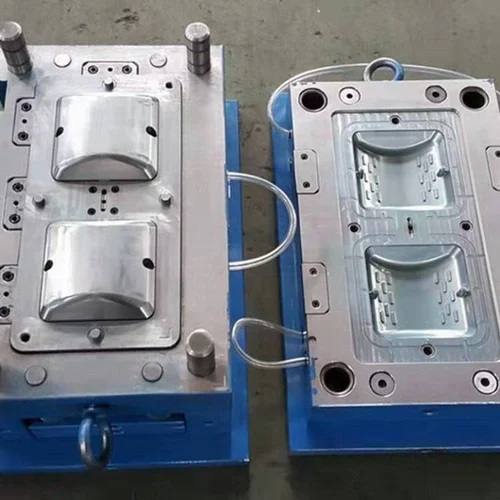
A complete moulding production solution includes finishing and assembly services that influence aesthetics, tactile quality, and function. Deburring, surface finishing, painting, metallization, and assembly are performed in-house where possible to shorten lead times, ensure consistent quality, and simplify supply-chain management. This integrated approach minimizes touchpoints and accelerates delivery timelines for complex assemblies.
Quality is built into the moulding production process from design through delivery. A robust quality management framework encompasses process capability studies, statistical process control, in-process inspection, final part verification, and traceability documentation. When applicable, regulatory compliance and certifications are reflected in the quality program. Supplier qualification and ongoing performance reviews ensure external inputs meet the same standards as in-house processes. Corrective and preventive actions (CAPA) with root-cause analysis drive continual improvement across the production lifecycle.
A customer-centric moulding production model integrates sustainability with cost control. Key levers include material optimization to minimize waste, energy-efficient equipment, reduced cycle times, and minimized secondary operations. Design-for-manufacturing strategies further reduce costs by simplifying features and enabling automation-friendly geometries. Transparent cost modeling linked to design decisions supports better total cost of ownership discussions and long-term budgeting for customers.
A practical roadmap ensures smooth progression from concept to high-volume manufacturing:
- Phase 1: Concept validation through rapid prototyping and DfM reviews
- Phase 2: Tooling development with validation and feedback integration
- Phase 3: Pilot production with rigorous quality gates
- Phase 4: Full-scale moulding production with ongoing process optimization
- Phase 5: Post-launch support and continuous improvement driven by field data
This phased approach minimizes risk, accelerates learning, and aligns production capacity with market demand, ensuring a reliable supply chain for every client.
To illustrate how a customer-centric moulding production approach yields tangible benefits, consider these hypothetical scenarios that align with typical client needs:
- Scenario A: A foreign brand requires rapid prototyping and a fast transition to low-volume production for a consumer electronic housing. The partner leverages rapid prototyping to validate fit and function, then rapidly develops tooling with a tight feedback loop, enabling a quick ramp to mass production while maintaining strict tolerances and cosmetic finish. The result is shorter time-to-market, reduced design changes, and a predictable cost curve across the initial production phase.
- Scenario B: A medical device component demands high cleanliness standards and traceability. The partner implements a rigorous quality framework, traceable tooling, and validated process controls, ensuring compliance with relevant standards. Repeatable manufacturing and robust documentation simplify regulatory submissions and post-market support.
- Scenario C: An automotive supplier seeks high-volume plastic interior parts with tight tolerances. The moulding production partner aligns the design through DfM, optimizes gate locations and cooling channels, and introduces a modular tooling strategy to support tiered production levels. The outcome is consistent part quality, minimized scrap, and scalable capacity to meet demand surges.
The moulding production journey must rigorously address quality and risk. Key components include:
- Capability studies and statistical process control to quantify process stability
- In-process inspections and final part verification against precise specifications
- Documentation to support traceability, regulatory compliance, and audit readiness
- Supplier qualification programs to ensure external inputs meet quality standards
- CAPA systems with root-cause analysis to prevent recurrence of issues
A customer-centric governance framework ensures suppliers, manufacturers, and product teams share a common understanding of quality expectations, delivery schedules, and risk exposure.
A customer-centric approach to moulding production creates a cohesive ecosystem where design intent, manufacturing capability, and supplier collaboration converge to deliver speed, quality, and reliability. By centering customer needs at every stage—from upfront DfM and prototyping to scalable production and transparent governance—foreign brands, wholesalers, and contract manufacturers gain a partner that not only supplies components but also accelerates their entire go-to-market strategy. Shangchen's integrated offerings across rapid prototyping, CNC machining, sheet metal fabrication, 3D printing, vacuum casting, and moulding production position the company as a strategic ally capable of turning concepts into competitive products with consistent quality and predictable timelines.
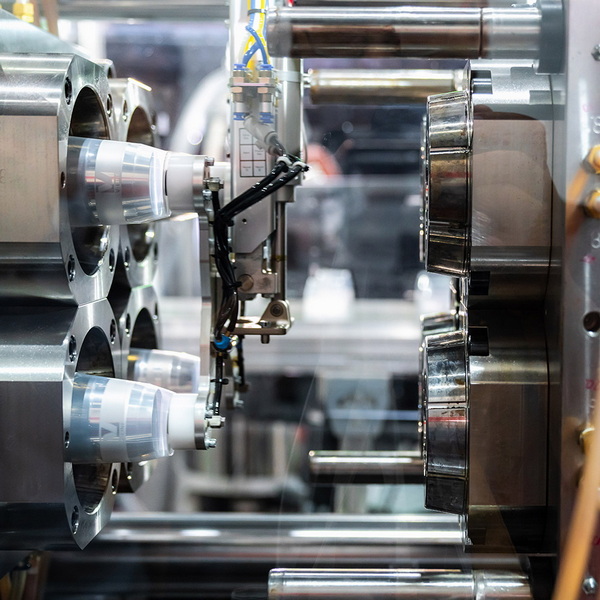
A customer-centric moulding production approach aligns design, tooling, and manufacturing with the client's goals, reducing risk, speeding time-to-market, and delivering consistent quality at scale.[1]
Rapid prototyping validates form, fit, and function early, informing tooling decisions and enabling quicker transitions from concept to production while preserving design intent in moulding production.[1]
Key metrics include process capability indices, defect rates, first-pass yield, cycle times, and on-time delivery performance to ensure stable moulding production quality.[1]
Design changes are managed through parallel DfM reviews, controlled change procedures, and feedback loops that minimize rework while preserving moulding production timelines.[1]
Yes, a well-structured moulding production partner offers flexible tooling, modular automation, and scalable processes to transition from prototype or low volume to high-volume production smoothly.[1]
[1](https://www.stephensplasticmouldings.co.uk/sectors/consumer-injection-moulding/)
[2](https://vantageplastics.com/vantage-news-updates/benefits-of-lean-manufacturing-reducing-costs-and-enhancing-product-quality)
[3](https://matrixtoolinc.com/why-matrix/injection-molding-customer-satisfaction/)
[4](https://cnctech.com.vn/news/why-is-customer-service-important-in-manufacturing.html)
[5](https://www.3erp.com/blog/injection-molding-benefits/)
[6](https://www.grahamengineering.com/about/ge-connect/a-customer-centric-approach-in-extrusion/)
[7](https://www.automationplastics.com/news/advantages-plastic-injection-molding)
[8](https://advancedplastiform.com/the-future-of-injection-molding/)
[9](https://cloudwars.com/commerce/how-customer-centric-co-creation-will-impact-the-future-of-product-development/)

