
Views: 222 Author: Amanda Publish Time: 2025-11-11 Origin: Site


Content Menu
● The Fundamentals of a Turning Lathe
● Precision and Accuracy: The Hallmarks of Excellence
● Driving Productivity and Efficiency
● Technical Advancements: Pushing Beyond Tradition
● Applications Across Diverse Industries
>> Aerospace
>> Automotive
>> Metalworking and Fabrication
>> Electronics and Precision Instruments
>> Shipbuilding and Marine Applications
>> Glassworking
>> Defense and Military Technology
● Cost Efficiency and Sustainability
● Unlocking New Design Possibilities
● Quality Control and Traceability
● The Future of the Turning Lathe in CNC
● FAQ
>> 1. What makes a high-quality turning lathe vital for CNC workshops?
>> 2. How do turning lathes influence production cost?
>> 3. What are the breakthrough innovations in turning lathe technology?
>> 4. Can one turning lathe handle both custom prototypes and mass production?
>> 5. Which industries benefit most from advanced turning lathe technologies?
In the ever-evolving manufacturing landscape, the turning lathe has become synonymous with precision, efficiency, and operational excellence. For CNC workshops striving to deliver advanced engineering solutions, especially in the realms of prototyping, batch production, and precision component manufacturing, investing in a high-quality turning lathe is essential. This article provides a detailed examination of why these machines form the backbone of CNC workshops and how their technological advances redefine what is possible in manufacturing.[6][9][10][11]
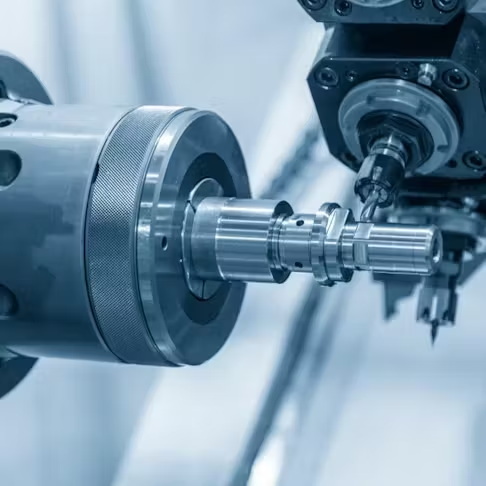
A turning lathe works by rotating a workpiece around a central axis while a stationary or moving cutting tool shapes the material into precise, repeatable forms. Whether used for metals, plastics, or composites, the lathe's core functions—facing, taper turning, threading, boring, and parting—are critical for producing cylinders, discs, rods, and other intricate geometries demanded by modern industries.[3][11][12][6]
The key components include:
- Bed: Provides structural stability that reduces vibrations and ensures accuracy.
- Headstock/Spindle: Rotates the workpiece at controlled speeds, often via powerful motors and advanced controls.
- Chuck: Clamps and stabilizes the material for machining.
- Tailstock: Offers additional support for long or slender components, such as shafts.
- Carriage and Tool Post: Houses and maneuvers the cutting tool precisely along the workpiece.
Advanced CNC systems automate these movements based on digital designs, ensuring consistent results across repetitive cycles.[9][13]
Precision is the distinguishing metric in high-end manufacturing. The capability to meet ultra-tight tolerances with every part makes the turning lathe indispensable for sectors where even minute deviations can compromise functionality, safety, or reliability. High-quality lathes utilize premium spindles, closely matched bearings, and advanced servo motors to deliver this precision.[10][14][6]
- CNC programming ensures that every cut matches engineering specifications—eliminating human error.
- Feedback Systems automatically calibrate tools in real time to compensate for wear or deviation.
- Thermal stability is maintained via materials and designs that resist heat-induced distortions.
Repeatability across hundreds or thousands of pieces fosters client confidence and expands a shop's reputation for quality.[14][15]
One of the greatest benefits of a modern turning lathe is its support for high-throughput workflows and seamless automation. Productivity is improved by:[15][16][6][14]
- Rapid tool change systems that allow for quick setup changes without significant downtime.
- Automated cycles reduce manual labor while boosting output volume.
- Batch consistency enables simultaneous work on multiple identical components—ideal for mass production.[17][6][14]
- Digital reprogramming accelerates transitions between different production runs.
Workshops equipped with advanced lathes are agile, capable of moving swiftly from prototypes to full-scale production with minimal intervention.
Contemporary lathes offer technical features unattainable on legacy machines. Notable advancements include:[18][19]
- Multi-axis capabilities: Enable the creation of complex forms without repositioning the workpiece. Five-axis machines, for instance, accommodate intricate contours and undercuts.[19][18]
- Live tooling: Drilling, milling, and tapping can be performed without moving the part to another station, reducing errors and production time.[18][19]
- Automated part loading/unloading: Robotic arms integrate with lathes for lights-out manufacturing.[18]
- User-friendly digital interfaces: Controllers now offer diagnostics and monitoring, improving ease-of-use and minimizing downtime.
These innovations enhance flexibility, throughput, and reliability, elevating the modern CNC workshop to industrial best-practice standards.
The versatility of the turning lathe is evident in its widespread adoption across numerous sectors.[1][2][7][3]
Precision and reliability are paramount in aerospace. Lathes manufacture engine casings, shafts, bolts, and bearings to rigorous quality protocols. CNC technology ensures high-volume parts—with minimal error—critical to flight safety.[2][7]
Automotive manufacturing depends on lathes for engine components, cylinders, pistons, gears, and camshafts. The ability to rapidly adjust for new models or prototypes gives CNC-equipped shops a decisive market advantage.[7][2]
Swiss-type CNC lathes create minute, high-precision parts for life-saving devices and equipment. Repeatability and traceable accuracy are essential for regulatory compliance and patient safety.[2]
From machining raw materials to forging custom tooling, turning lathes handle threading, polishing, and cutting with efficiency and low cost.[3][2]
Mini and micro lathes deliver the precision needed for small parts in watches, circuit boards, and precision gauges.[2]
Manufacturers use lathes to shape and polish metals into intricate, high-quality jewelry, ensuring consistency batch after batch.[2]
Lathes craft turbines, generators, and rotors for nuclear, fossil fuel, and renewable energy power plants—where reliability and efficiency are paramount.[2]
Heavy-duty lathes create large, high-strength components such as propeller shafts and marine engine parts, with advanced pallet and spindle systems enhancing output.[2]
Glass lathes precisely rotate heated glass for modeling laboratory equipment and artistic glassware.[2]
Parts for vehicles, artillery, and aircraft are machined to exact standards, with lathes supporting national security interests.[2]
Bench lathes used in schools train future machinists, ensuring a skilled labor pool for industry.[2]
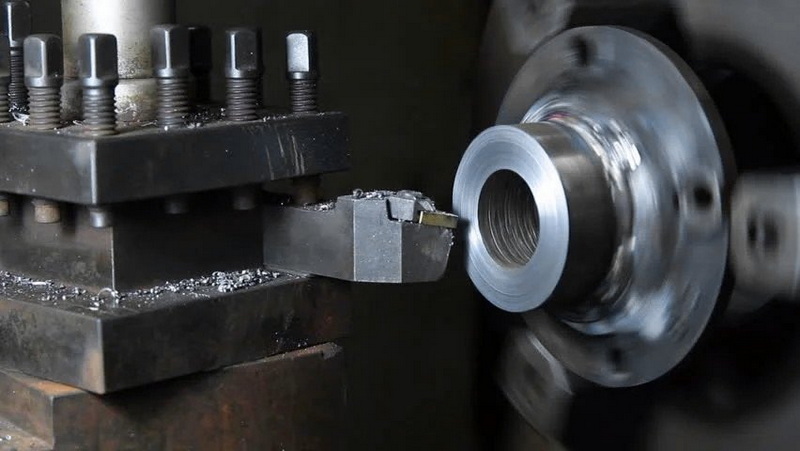
Adopting a high-quality lathe translates to long-term savings and efficient resource use. Key impacts include:
- Reduced material wastage as precision machining limits scrap and overruns.[20][6][15]
- Lower labor costs through automation, enabling skilled staff to focus on program optimization and quality control rather than repetitive tasks.[21][6][14]
- Minimized rework and rejection rates—achieving defined tolerances means fewer costly do-overs and less raw material loss.[15][20]
- Energy efficient operation, especially on next-generation models, supports carbon footprint reduction efforts for environmentally-conscious shops.[18]
CNC turning lathes expand creative engineering potential by allowing:
- Production of complex, custom geometries with tight tolerances.
- Rapid prototyping, shortening development cycles for new products.
- Batch-efficient manufacturing, from a single unit to thousands, supporting dynamic business needs.[11][6]
This versatility ensures that workshops remain competitive, responsive, and customer-focused—no matter the project scale or complexity.
In regulated industries, quality control is paramount. Advanced lathes offer:
- Integrated inspection routines (metrology systems) for in-process checks.
- Digital documentation of every production cycle, aiding traceability and compliance.
- Automated error detection, reducing risk of defective products in the supply chain.[6][10]
Empirical evidence supports that CNC workshops equipped with high-quality turning lathes consistently outperform those relying on outdated, manual technologies. Feedback from satisfied clients cites reduced lead times, improved product conformity, and greater flexibility—across prototyping, medium, and large-scale production.
The evolution of turning lathe technology remains ongoing. Innovations such as AI-driven program optimization, IoT-connected diagnostics, and adaptive tool control point to a future where manufacturing is ever more intelligent, precise, and sustainable. CNC workshops at the forefront of these developments establish themselves as leaders capable of serving global clients and industry sectors with ease.[19]
A high-quality turning lathe is not just equipment—it is a strategic asset for any CNC workshop looking to excel in today's competitive manufacturing environment. Precision, efficiency, and adaptability place turning lathes at the core of modern industry, enabling everything from breakthrough prototyping to flawless mass production. Embracing the latest technological advancements ensures shops meet the demands of aerospace, automotive, medical, and beyond, delivering superior results with every cycle.[9][10][11][6]
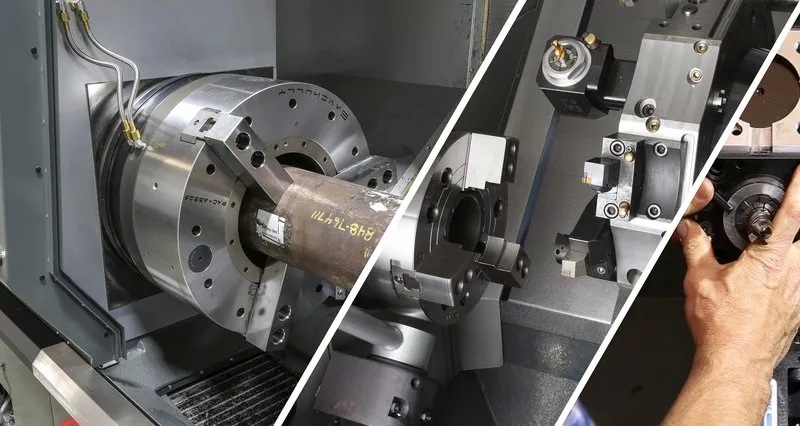
High-quality turning lathes assure extreme accuracy, stable repeatability, and operational flexibility, all of which are paramount for meeting modern manufacturing standards and market demands.[20][6][15]
Turning lathes minimize material waste, labor costs, and frequency of errors. Their precision results in fewer rejected parts, significant savings, and a strong ROI for CNC workshops.[21][6][15]
Advancements include multi-axis machining, live tooling, robotics for automation, intelligent controllers, and features that boost energy efficiency—all increasing accuracy and operational productivity.[6][19][18]
Yes. CNC turning lathes deliver versatility through swift reprogramming, automated tool changes, and robust quality control, accommodating one-off designs as well as batch orders.[11][14][6]
Industries such as aerospace, automotive, medical devices, electronics, energy, shipbuilding, defense, and precision metalwork benefit from the reliability, speed, and flexibility provided by high-quality turning lathes.[1][7][2]
[1](https://rwdtool.com/industrial-applications-of-a-cnc-lathe-machine/blog.html)
[2](https://boruimc.com/applications-of-lathe-machines/)
[3](https://www.yashmachine.com/blog/applications-of-lathe-machines-in-workshop-environments/)
[4](https://www.weerg.com/guides/lathe)
[5](https://lsgmts.co.za/applications-of-lathe-machines-in-engineering/)
[6](https://staubinc.com/news/a-guide-to-cnc-lathe-machining-processes-applications-benefits/)
[7](https://www.3erp.com/blog/cnc-machining-applications-and-uses/)
[8](https://www.faithmfg.com/cnc-lathe-machining-the-future-of-precision-manufacturing/)
[9](https://automechgroup.com/cnc-machining-lathes-what-it-is-and-how-it-works)
[10](https://tonzamaking.com/blog/why-quality-control-matters-in-high-precision-cnc-turning/)
[11](https://www.sc-rapidmanufacturing.com/what-is-a-turning-lathe-and-how-does-it-work-in-modern-manufacturing.html)
[12](https://cncwmt.com/qa/how-does-a-lathe-work/)
[13](https://www.covis-srl.com/cnc-lathe-operation/)
[14](https://hppi.com/knowledge-base/cnc-machining/cnc-turning)
[15](https://machinetoolspecialties.com/blog/1037-high-precision-cnc-lathes-for-sale-key-features-and-benefits)
[16](https://www.southernfabsales.com/blog/why-your-machine-shop-needs-a-cnc-turning-center)
[17](https://www.pickenstech.org/blog/what-is-cnc-manufacturing/)
[18](https://winndeavor.com/the-evolution-of-turning-centers/)
[19](https://radonix.com/the-latest-technological-developments-and-trends-in-lathe-works/)
[20](https://panotecmetalworking.com/en/2023/11/advantages-of-cnc-turning-the-art-of-precision-in-the-field-of-turning/)
[21](https://www.masscnctech.com/blog/reasons-best-cnc-turning-enhances-manufacturing-efficiency/)

