
Views: 222 Author: Amanda Publish Time: 2025-12-30 Origin: Site


Content Menu
● Core Moving Components in CNC Machining
● How the Spindle and Tool Move
● Worktable, Gantry, and Workpiece Motion
● Axis Systems, Ball Screws, and Servo Motors
● Moving Components Across Different CNC Machining Types
● Auxiliary Motion: Tool Turrets, Changers, and Feed Systems
● Motion Control, Accuracy, and Surface Quality
● Advanced Multi-Axis Motion in CNC Machining
● 1. Core Moving Components in CNC Machining
● 2. How the Spindle and Tool Move
● 3. Worktable, Gantry, and Workpiece Motion
● 4. Axis Systems, Ball Screws, and Servo Motors
● 5. Moving Components Across Major CNC Machining Types
● 6. Auxiliary Motion: Tool Turrets, Changers, and Feed Systems
● 7. Motion Control, Accuracy, and Surface Quality
● 8. Moving Components and CNC Machining Strategies
● 9. How Shangchen Optimizes Moving Components for OEM CNC Machining
● 10. Using Visual Media to Explain Moving Components
● FAQ
>> 1. Which parts move in a standard CNC milling machine?
>> 2. What moves in a CNC lathe during machining?
>> 3. How do ball screws and linear guides affect motion?
>> 4. Do all CNC Machining centers move the table?
>> 5. Why is controlled motion so important in CNC Machining?
CNC Machining is a precisely controlled process where cutting tools, spindles, tables, and axis systems move in a coordinated way to remove material and form complex parts. Understanding which components actually move is critical for optimizing accuracy, surface finish, and throughput in any CNC Machining workshop.[1][2][3]
At Shangchen, CNC Machining services combine advanced 3-, 4-, and 5-axis machines, CNC turning centers, and supporting processes such as sheet metal fabrication, 3D printing, and mold manufacturing to deliver reliable OEM parts for global brands and manufacturers. By focusing on how each moving component behaves under different loads and materials, Shangchen helps overseas buyers achieve stable, scalable CNC Machining supply chains.[4]

In any CNC Machining center, the main moving components are the spindle, the cutting tool, the worktable (or pallet), and the axis motion system driven by ball screws, linear guides, and servo motors. These elements work together so the machine can position the tool relative to the workpiece along multiple axes with high repeatability.[3][5][6][7][1]
- Spindle: Rotates the cutting tool (in milling) or workpiece (in turning) at controlled speeds, often up to tens of thousands of rpm depending on the machine design.[2][8]
- Tooling assembly: Includes tool holder, collet, and cutting tool, which move with the spindle and follow programmed toolpaths for CNC Machining operations.[9][1]
- Worktable / pallet: Moves linearly (or in some machines stays fixed while the gantry moves) to position the part in X, Y, and sometimes Z directions during CNC Machining.[5][10]
- Axis system: X, Y, Z (and possible A/B/C rotary axes) powered by servo motors and ball screws to generate smooth, accurate linear and rotary motion in CNC Machining.[3][5]
Because CNC Machining relies on synchronized movement, even small errors in any of these components can result in dimensional deviations or surface defects. That is why modern machines integrate feedback systems and high-precision mechanical elements to stabilize motion under real cutting conditions.[7][5][3]
The spindle is the central moving element in most CNC Machining setups because it delivers speed, torque, and positional control to the cutting tool. In machining centers, the spindle usually moves along at least one linear axis (commonly Z) while rotating at the programmed speed for milling, drilling, and tapping.[1][2][5]
- In vertical CNC Machining centers, the spindle head travels up and down along the Z-axis, adjusting depth of cut, while the tool rotates to mill, bore, or drill.[10][2]
- In turret milling machines, a quill mechanism inside the spindle head provides additional vertical feed movement, enabling precise plunging during CNC Machining.[11]
- In CNC turning centers, the spindle holds and rotates the workpiece while the cutting tool itself remains stationary in rotation but moves linearly along X and Z.[12][2]
The tool holder, collet, and cutting insert move together with the spindle or turret, forming one rigid cutting unit during CNC Machining. Careful selection of tool length, clamping, and balance helps reduce vibration as this assembly accelerates, decelerates, and changes direction in complex toolpaths.[13][5][9]
The way the workpiece moves relative to the tool in CNC Machining depends on the machine type and kinematic layout. Some machines rely on a moving table, while others use a moving gantry or column to bring the spindle over a stationary workpiece.[14][15][10]
- In many vertical CNC milling machines, the table carrying the workpiece moves along X and Y, while the spindle moves in Z during CNC Machining.[10][14]
- Turret-style or knee mills may have tables that move in X, Y, and Z via saddle and knee assemblies powered by feed mechanisms.[15][11]
- Gantry-style CNC Machining centers and routers typically keep the table fixed while a moving bridge or gantry travels in X and Y over the workpiece, with the spindle moving in Z.[9][10]
In CNC turning, the workpiece rotates with the spindle, and the carriage system (tool slide and cross-slide) moves the cutting tool parallel or perpendicular to the part axis. This moving carriage is a vital component that shapes shafts, bushings, and other rotational parts during CNC Machining by generating precise profiles and threads.[16][17][18][12]
The axis system is responsible for precise positioning along X, Y, and Z, and in multi-axis CNC Machining also controls rotary A, B, and C axes. It synchronizes movements of the spindle, table, and tools to follow the programmed toolpath and maintain high accuracy.[5][1][3]
- Servo motors: Provide controlled rotational motion with feedback, enabling accurate starts, stops, and speed changes on each axis in CNC Machining.[5][9]
- Ball screws: Convert motor rotation into low-friction linear motion, reducing backlash and allowing micron-level positioning of tables and heads.[6][7]
- Linear guides: Support the moving masses (table, gantry, or column) with rigid, low-friction rails so the axes can move smoothly and repeatedly in CNC Machining.[7][3]
CNC controllers continuously read encoder signals from these axis systems to correct position errors and keep the tool exactly where the program requires. This closed-loop motion control is a defining advantage of CNC Machining compared with conventional manual machines, especially on complex 3D surfaces.[17][13][3][5]
Different CNC Machining platforms move different components, even though the principle of relative motion between tool and workpiece remains the same. Knowing these differences helps engineers choose the best process for each part geometry and production volume.[13][17]
- Vertical machining centers: Spindle moves primarily in Z, table moves in X and Y, making them ideal for prismatic parts in CNC Machining.[14][10]
- Horizontal machining centers: Use a horizontal spindle, rotary tables, and pallet systems to improve chip evacuation and multi-side CNC Machining.[8][5]
- Gantry routers: Move a bridge structure over large, flat workpieces, commonly used in CNC Machining of panels, molds, and composite structures.[9][10]
- CNC lathes / turning centers: Rotate the workpiece and move the tool carriage and turret for cylindrical CNC Machining.[18][12]
- Mill-turn centers: Combine rotating spindles and moving turrets with live tools to perform both turning and milling in one CNC Machining setup.[18][3]
In every configuration, CNC Machining relies on controlled relative motion between the rotating element and the linearly moving assembly to cut metal, plastics, or composites efficiently and accurately.[17][13]
Beyond the main axes, several secondary systems also move dynamically during CNC Machining to support productivity and automation.[6][9]
- Tool turret: On CNC lathes and some mill-turn centers, the turret indexes to bring different tools into cutting position without manual intervention.[12][6]
- Automatic tool changer (ATC): In machining centers, a chain or carousel moves tools between the magazine and spindle, shortening setup and cycle times in CNC Machining.[6][9]
- Power feed mechanisms: In some mills, feed gearboxes and shafts drive table and saddle movement at controlled feed rates for smoother CNC Machining.[15][16]
Although these systems do not usually cut material directly, their motion directly affects non-cutting time and overall throughput in CNC Machining. Well-designed tool change and feed systems reduce idle moves and help factories like Shangchen process more OEM orders within tight delivery windows.[4][6][9]
The quality of CNC Machining results is strongly affected by how smoothly and precisely components move over time. Poorly tuned motion systems can create chatter, dimensional errors, and inconsistent finishes on critical surfaces.[3][7]
Key factors include:
- Axis acceleration and deceleration: Sudden speed changes in CNC Machining can induce vibration and overshoot, so modern controls use jerk-limited profiles.[3][5]
- Backlash and stiffness: High-quality ball screws, preloaded bearings, and rigid linear guides resist deflection, keeping tool and table motion aligned.[7][6]
- Thermal effects: Spindle and axis drives generate heat; compensation strategies help maintain dimensional stability during long CNC Machining runs.[2][3]
When customers specify tight tolerance bands or demanding surface roughness targets, the stability of these moving components becomes a key competitive factor for CNC Machining suppliers. Factories that invest in metrology, calibration, and motion tuning are better positioned to deliver repeatable OEM quality over long production campaigns.[4][13][5]
Modern multi-axis CNC Machining introduces additional moving components such as tilting rotary tables, swiveling spindle heads, and compound axis combinations.[<h1>Which Components Move During CNC Machining?</h1>[5]
CNC Machining is a precisely controlled process where cutting tools, spindles, tables, and axis systems move in a coordinated way to remove material and form complex parts. Understanding which components actually move is critical for optimizing accuracy, surface finish, and throughput in any CNC Machining workshop. For OEM buyers, knowing how motion is generated and controlled helps in selecting reliable CNC Machining partners for long-term cooperation.[1][2][4]
At Shangchen, CNC Machining services combine advanced 3-, 4-, and 5-axis machines, CNC turning centers, and supporting processes such as sheet metal fabrication, 3D printing, and mold manufacturing to deliver reliable OEM parts for global brands and manufacturers. These integrated capabilities allow fast response from rapid prototyping to precision batch production within one CNC Machining supply chain.
In any CNC Machining center, the main moving components are the spindle, the cutting tool, the worktable (or pallet), and the axis motion system driven by ball screws, linear guides, and servo motors. These elements work together so the machine can position the tool relative to the workpiece along multiple axes with high repeatability.[1][5]
- Spindle: Rotates the cutting tool (in milling) or workpiece (in turning) at controlled speeds, often from a few hundred to tens of thousands of rpm depending on the CNC Machining application.[2]
- Tooling assembly: Includes the tool holder, collet, and cutting tool, which move with the spindle and follow programmed toolpaths for CNC Machining operations such as milling, drilling, reaming, and tapping.[9]
- Worktable / pallet: Moves linearly (or in some machines stays fixed while the gantry moves) to position the part in X, Y, and sometimes Z directions during CNC Machining.[10]
- Axis system: X, Y, Z (and possible A/B/C rotary axes) powered by servo motors and ball screws generate smooth, accurate linear and rotary motion in CNC Machining.[6]
Because CNC Machining relies on relative motion between the tool and the workpiece, it does not matter whether the tool moves, the workpiece moves, or both, as long as the programmed path is followed with sufficient accuracy and rigidity.[14]
The spindle is the central moving element in most CNC Machining setups because it delivers speed, torque, and positional control to the cutting tool. In machining centers, the spindle usually moves along at least one linear axis (commonly Z) while rotating at the programmed speed for milling, drilling, and tapping.[1][5]
- In vertical CNC Machining centers, the spindle head travels up and down along the Z-axis, adjusting depth of cut, while the tool rotates to mill, bore, or drill.[10]
- In turret milling machines, a quill mechanism inside the spindle head provides additional vertical feed movement, enabling precise plunging during CNC Machining.[11]
- In horizontal machining centers, the spindle is mounted horizontally and moves relative to a rotating or indexing pallet, which improves chip evacuation and is ideal for multi-face CNC Machining of complex parts.[8]
In CNC turning centers, the spindle plays a different role. The spindle holds and rotates the workpiece, while the cutting tool itself remains stationary in rotation but moves linearly along X and Z axes. This configuration allows highly efficient CNC Machining of cylindrical and axisymmetric parts.[12]
Precision in spindle motion is essential. Runout, vibration, and thermal growth of the spindle directly influence surface quality, tool life, and dimensional accuracy in CNC Machining.[2]
The way the workpiece moves relative to the tool in CNC Machining depends on the machine type and kinematic layout. Some machines rely on a moving table, while others use a moving gantry or column to bring the spindle over a stationary workpiece.[15][10]
- In many vertical CNC Machining centers, the table carrying the workpiece moves along X and Y, while the spindle moves in Z during machining.[14]
- Turret-style or knee mills may have tables that move in X, Y, and Z via saddle and knee assemblies powered by feed mechanisms, which are now often servo-driven for CNC Machining.[15]
- Gantry-style CNC Machining centers and routers typically keep the table fixed while a moving bridge or gantry travels in X and Y over the workpiece, with the spindle moving in Z.[10]
For very large or heavy parts, a fixed-table design is preferred, because it is more practical to move the lighter gantry than to move a massive workpiece in CNC Machining. For smaller components, moving-table designs offer high stiffness and excellent positioning accuracy with relatively compact machine footprints.[8][15]
In CNC turning, the primary movement of the workpiece is rotational, generated by the spindle. Linear motion is handled by the carriage and cross-slide, which bring the cutting insert into and along the workpiece surface, shaping external diameters, faces, and grooves during CNC Machining.[16]
The axis system is responsible for precise positioning along X, Y, and Z, and in multi-axis CNC Machining it also controls rotary A, B, and C axes. It synchronizes movements of the spindle, table, and tools to follow the programmed toolpath and maintain high accuracy.[3][5]
- Servo motors: Provide controlled rotational motion with feedback, enabling accurate starts, stops, and speed changes on each axis in CNC Machining.[9]
- Ball screws: Convert motor rotation into low-friction linear motion, reducing backlash and allowing micron-level positioning of tables and heads.[7]
- Linear guides: Support the moving masses (table, gantry, or column) with rigid, low-friction rails so the axes can move smoothly and repeatedly in CNC Machining.[6]
Modern CNC controls use closed-loop feedback from encoders and sometimes linear scales. The control compares commanded positions with actual positions and adjusts servo output on the fly. This real-time correction is vital to keep CNC Machining accurate even under varying cutting loads and speeds.[3]
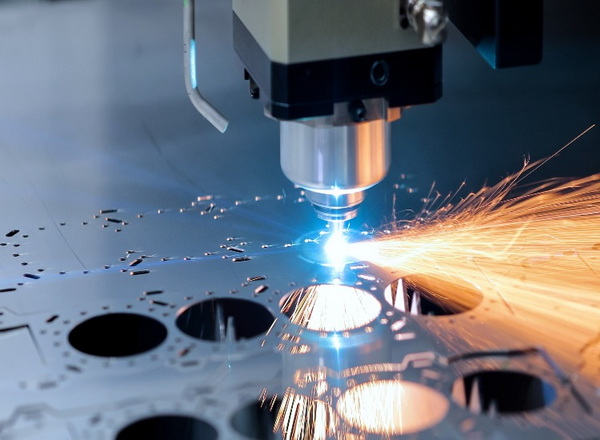
Different CNC Machining platforms move different components, even though the principle of relative motion between tool and workpiece remains the same. Understanding these differences helps engineers choose the best process for each part geometry.[17]
- Vertical machining centers: Tool rotates and typically moves in Z, table moves in X and Y, ideal for prismatic CNC Machining of plates, blocks, and housings.[2]
- Horizontal machining centers: Tool rotates horizontally, pallets index and move, supporting high-productivity CNC Machining with four-sided access and excellent chip evacuation.[8]
- Gantry routers and mills: Gantry and spindle move; table may remain fixed, suited for large-format CNC Machining of panels, molds, and composite structures.[10]
- CNC lathes and turning centers: Workpiece rotates in the spindle, tools move on linear slides, perfect for shafts, rings, and turned components in CNC Machining.[12]
- Mill-turn and multitasking machines: Combine rotating workholding and live tools with multiple axes so complex parts can be fully produced in one CNC Machining setup.[18]
In every platform, CNC Machining depends on precise orchestration of rotating and linear movement to maintain tight tolerances and repeatable quality.[13]
Beyond the main axes, several secondary systems also move dynamically during CNC Machining to support productivity and automation. Although they do not always cut material directly, their movement strongly affects cycle time and flexibility.[6]
- Tool turret: On CNC lathes and some mill-turn centers, the turret indexes (rotates) to bring different tools into cutting position without manual intervention.[12]
- Automatic tool changer (ATC): In machining centers, a chain or carousel moves tools between the magazine and spindle, shortening setup and cycle times in CNC Machining.[9]
- Pallet changers: Rotate or shuttle workholding pallets to and from the machining area, enabling offline loading and maximizing spindle utilization.[8]
- Feed mechanisms: In older or hybrid machines, mechanical feed gearboxes and shafts may supplement modern servo drives to control table and saddle movement during CNC Machining.[15]
Well-designed auxiliary motion allows a single CNC Machining cell to handle high-mix, low-volume production without excessive downtime for manual tool and part changes.[4]
The quality of CNC Machining results is strongly affected by how smoothly and precisely components move over time. Poorly tuned motion systems can create chatter, dimensional errors, and inconsistent finishes on critical surfaces.[7]
Key factors include:
- Axis acceleration and deceleration: Sudden speed changes in CNC Machining can induce vibration and overshoot, so modern controls use jerk-limited profiles for smoother transitions.[5]
- Backlash and stiffness: High-quality ball screws, preloaded bearings, and rigid linear guides resist deflection, keeping tool and table motion aligned.[7]
- Thermal effects: Spindle and axis drives generate heat; compensation strategies and warm-up cycles help maintain dimensional stability during long CNC Machining runs.[2]
When these elements are optimized, CNC Machining can repeatedly produce tight tolerances and fine surface finishes, even in demanding materials such as hardened steels, aluminum alloys, and engineering plastics.[13]
The way components move also influences process strategy, tooling selection, and fixture design in CNC Machining. By matching toolpaths to machine kinematics, programmers can shorten cycle times, extend tool life, and improve part quality.[17]
- High-speed machining: Uses smooth, continuous toolpaths that avoid abrupt direction changes, allowing the axes to move at high feed rates with reduced vibration in CNC Machining.[13]
- Simultaneous multi-axis machining: Coordinates rotation and translation of multiple axes so the tool remains at an optimal angle, reducing re-clamping and enabling complex 3D CNC Machining.[5]
- Adaptive roughing: Maintains a constant tool load by continuously adjusting tool engagement, which leads to more stable axis motion and reliable CNC Machining of difficult materials.[3]
Understanding how the spindle, table, and rotary axes can move allows engineers to design parts and fixtures that fully exploit the capabilities of CNC Machining equipment.[14]
As a professional Chinese factory, Shangchen integrates rapid prototyping, CNC Machining, precision batch production, turning, sheet metal fabrication, 3D printing, and mold production under one roof to support overseas brands and manufacturers. This structure allows close coordination between engineering, machining, and quality teams for every OEM project.
To keep all moving components performing reliably, Shangchen follows strict process controls and equipment management practices:
- Machine selection: Use of modern CNC Machining centers with stable spindles, high-precision ball screws, and robust linear guides for tight-tolerance metal and plastic parts.[6]
- Preventive maintenance: Scheduled lubrication, backlash checks, and spindle inspections reduce downtime and preserve axis accuracy during long-term CNC Machining production.[5]
- Process engineering: Optimized feeds, speeds, and toolpaths that respect machine kinematics ensure smoother motion and consistent quality for OEM orders in CNC Machining.[13]
By combining advanced motion systems with rich experience in OEM projects, Shangchen can handle everything from one-off prototypes to high-volume CNC Machining batches for global customers.
Because CNC Machining involves complex multi-axis motion, visual media help engineers, buyers, and designers quickly understand how each component moves. Explainer diagrams, axis-labeled photos, and short videos make it easier to see relationships between spindle, table, turret, and gantry motion in real CNC Machining environments.[1][5]
On a website or marketing page, it is helpful to show:
- Diagrams that label X, Y, Z, and rotary axes for a typical CNC Machining center.[14]
- Short video clips demonstrating spindle rotation, tool changes, and coordinated axis motion while machining metal or plastic components.[1]
- Visual sequences that compare the motion of a vertical machining center, a CNC lathe, and a gantry machine to highlight their different CNC Machining capabilities.[17]
These visual and video guides strengthen customer understanding of how CNC Machining works and why high-quality moving components matter for precision and reliability.[4]
During CNC Machining, multiple components move in a tightly coordinated way: the spindle and tool rotate and often travel linearly, the table or gantry positions the workpiece, and servo-driven axes guide all motion along precise paths. Supporting systems like tool turrets, automatic tool changers, ball screws, and linear guides ensure that this motion is accurate, repeatable, and efficient for OEM production. For global buyers, partnering with a CNC Machining supplier that understands and controls every moving component—like Shangchen—means better tolerances, more stable quality, and stronger long-term supply reliability.[1][6]
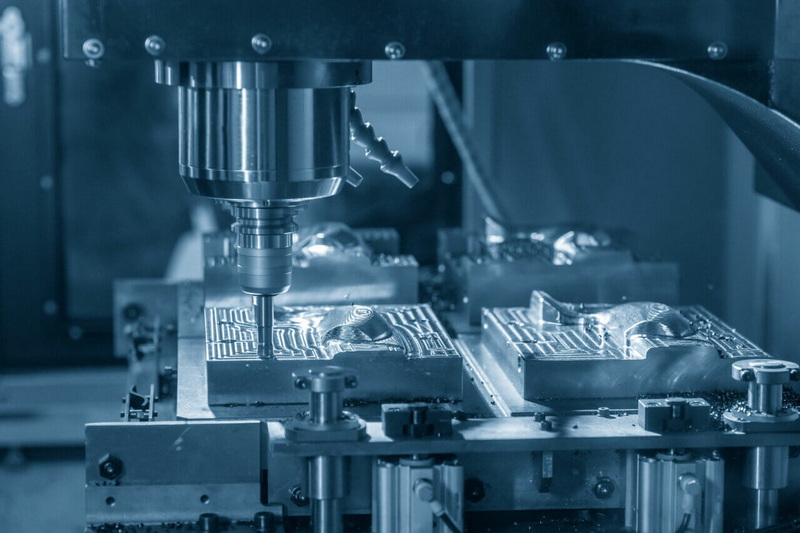
In a typical vertical CNC Machining center, the spindle head moves along the Z-axis while the worktable carrying the workpiece moves in X and Y directions. Together with the axis system driven by ball screws and servo motors, these moving components position the cutting tool accurately for milling operations.[10][5]
In CNC turning, the spindle rotates the workpiece while the cutting tool remains stationary in rotation but moves linearly via the carriage and cross-slide along Z and X axes. The tool turret also indexes to bring different tools into position, making CNC Machining of shafts, bushings, and fittings highly efficient.[16][12]
Ball screws convert the servo motor's rotary motion into precise linear movement with low friction and minimal backlash, directly affecting CNC Machining accuracy and repeatability. Linear guides support the moving table, gantry, or column, allowing smooth, low-resistance travel along the machine axes and improving surface quality.[7][6]
No, some CNC Machining platforms keep the table fixed and move a gantry or column instead, especially in large-format routers and gantry mills. In these machines, the spindle travels over a stationary workpiece, which is more practical for heavy or oversized parts and large molds.[15][10]
Controlled motion ensures that the cutting tool follows the programmed toolpath with high positional accuracy, which directly influences dimensional tolerance and surface finish in CNC Machining. Poor motion control can cause chatter, tool wear, and scrap, while precise, stable motion leads to reliable OEM-quality components and reduced production costs.[3][7]
[1](https://www.longshengmfg.com/understanding-the-components-that-move-during-cnc-machining/)
[2](https://accuratemts.com/cnc-machine-anatomy/)
[3](https://www.dosupply.com/tech/2025/12/22/cnc-machine-parts-explained-what-each-component-does-and-why-it-matters/)
[4](https://www.ubw.com/machining/cnc-machining/)
[5](https://www.steckermachine.com/blog/cnc-machining-101)
[6](https://www.3erp.com/blog/cnc-machine-parts/)
[7](https://www.nvt.com.sg/post/top-10-essential-cnc-machine-components-and-their-functions)
[8](https://robersontool.com/what-are-the-vital-parts-of-a-cnc-milling-machine/)
[9](https://www.elephant-cnc.com/blog/cnc-parts-name/)
[10](https://www.anebon.com/news/which-components-move-during-cnc-machining/)
[11](https://cncwmt.com/qa/cnc-turret-mill-guide-milling-machine-turret-parts-tips/)
[12](https://boruimc.com/parts-of-a-cnc-lathe-machine/)
[13](https://hppi.com/knowledge-base/cnc-machining/cnc-milling)
[14](https://www.industrialautomationco.com/blogs/news/guide-to-the-components-of-a-cnc-machine)
[15](https://www.cncmasters.com/cnc-mill-parts/)
[16](https://www.cnctraining.gr/en/activities/blog/272-cnc-turning-the-fundamentals-you-need-to-know)
[17](https://www.komacut.com/blog/cnc-turning-what-parts-can-it-make/)
[18](https://kingsburyuk.com/cnc-turning-guide/)

