
Views: 222 Author: Amanda Publish Time: 2025-12-23 Origin: Site


Content Menu
● Understanding Rapid Prototyping
● Core Technologies Used for Rapid Prototyping
>> 3D Printing in Rapid Prototyping
>>> FDM for Concept Rapid Prototyping
>>> SLA for High-Detail Rapid Prototyping
>>> SLS and MJF for Functional Rapid Prototyping
>>> Metal 3D Printing for Advanced Rapid Prototyping
>> CNC Machining in Rapid Prototyping
>>> CNC Milling for Precision Rapid Prototyping
>>> CNC Turning for Rotational Rapid Prototyping
>> Sheet Metal Fabrication in Rapid Prototyping
>> Vacuum Casting and Rapid Molding
>>> Vacuum Casting for Short-Run Rapid Prototyping
>>> Rapid Injection Molding for Pre-Production Prototypes
>> Supporting Processes in Rapid Prototyping
>>> Surface Finishing for Realistic Prototypes
>>> Quality Control and Metrology
>>> Engineering Support and Design for Manufacturability
● Choosing the Right Rapid Prototyping Method
>> Matching Goals to Rapid Prototyping Technologies
>> Practical Selection Tips for Rapid Prototyping
● Why Integrated Services Help Rapid Prototyping
● FAQ
>> 1. What is the main purpose of Rapid Prototyping?
>> 2. Which Rapid Prototyping method is best for metal parts?
>> 3. Can Rapid Prototyping be used for production parts?
>> 4. How many iterations are common in Rapid Prototyping?
>> 5. Is Rapid Prototyping cost-effective for small businesses?
Rapid prototyping uses a family of digital manufacturing technologies to turn 3D ideas into physical parts in days instead of weeks. It covers 3D printing, CNC machining, sheet metal fabrication, vacuum casting and rapid tooling, each chosen according to design, materials and production goals.
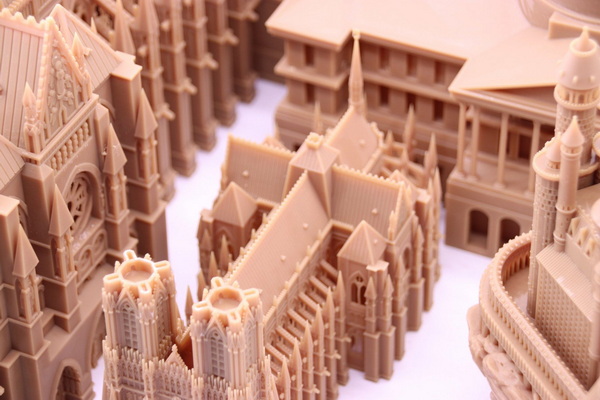
Rapid Prototyping describes a set of techniques that quickly transform CAD models into physical parts for design verification, functional testing and pilot production. It connects digital design with real components so engineers and product managers can see, touch and test ideas before committing to expensive mass-production tooling.
In modern product development, Rapid Prototyping supports iterative design: teams modify the CAD, build a new version and test again until performance and appearance match expectations. This loop reduces design risk, exposes hidden problems early and helps ensure that the final product is both manufacturable and attractive to customers.
Different Rapid Prototyping processes serve different purposes, and the most successful projects combine more than one technology. Below are the primary options and how each contributes to a complete Rapid Prototyping strategy.
3D printing, or additive manufacturing, builds parts layer by layer directly from digital data. This makes it a natural choice for Rapid Prototyping when complex geometry, fast turnaround and low quantities are important.
- It allows internal channels, lattice structures, organic shapes and topology-optimized forms that traditional methods cannot easily produce.
- It supports quick design changes, enabling multiple variants to be printed in a single build, which is ideal for early Rapid Prototyping stages.
- It can use plastics, resins or metals depending on the application.
Fused Deposition Modeling (FDM) is widely used for early-stage Rapid Prototyping because it is flexible and economical.
- Thermoplastic filaments such as PLA, ABS and PETG are extruded through a heated nozzle and deposited layer by layer.
- FDM Rapid Prototyping is excellent for concept verification, ergonomic models and fixtures where high precision and ultra-smooth surfaces are not yet required.
- Design teams can evaluate basic shapes, human factors, assembly approach and design direction using FDM Rapid Prototyping before moving to more refined methods.
Stereolithography (SLA) is a resin-based 3D printing process offering very fine detail and smooth surfaces for Rapid Prototyping.
- A UV laser cures liquid photopolymer layer by layer, achieving thin layers and sharp features.
- SLA Rapid Prototyping is ideal for appearance models, show samples, consumer product concepts and master patterns for casting.
- When marketing teams need realistic-looking samples for photography, presentations or trade shows, SLA Rapid Prototyping often provides the right balance of detail and speed.
Powder-bed fusion technologies such as Selective Laser Sintering (SLS) and Multi Jet Fusion (MJF) are powerful tools for functional Rapid Prototyping.
- They process nylon and related polymers into strong, durable parts without requiring traditional support structures.
- SLS and MJF Rapid Prototyping can produce hinges, snap-fit features, living joints and complex assemblies that perform well in testing environments.
- These processes bridge the gap between early samples and low-volume production, offering both design freedom and functional strength.
Metal 3D printing, such as Selective Laser Melting (SLM) or Direct Metal Laser Sintering (DMLS), brings additive manufacturing into high-performance Rapid Prototyping.
- Stainless steel, aluminum, titanium and other alloys can be printed with internal channels and optimized structures.
- Metal Rapid Prototyping is valuable in aerospace, automotive racing, medical implants and energy sectors, where weight reduction and complex internal geometries are key.
- Engineers often combine metal Rapid Prototyping with post-machining to refine critical surfaces and tolerances.
CNC machining is a subtractive Rapid Prototyping method that removes material from a solid block using precise cutting tools. It is especially important when prototypes must be made from production-equivalent metal or plastic.
- It offers tight tolerances and excellent surface finishes, making CNC Rapid Prototyping suitable for high-precision components.
- It can produce parts from aluminum, tool steel, stainless steel, brass, copper, engineering plastics and more.
- It supports both one-off Rapid Prototyping samples and short production runs.
CNC milling uses rotating tools on multiple axes to shape complex parts.
- 3-axis, 4-axis and 5-axis milling centers can create intricate surfaces, pockets, ribs and contours for Rapid Prototyping.
- This approach is ideal for housings, structural components, molds, fixtures and end-use parts that require accurate dimensions.
- CNC milling Rapid Prototyping provides highly repeatable quality, which is critical when prototypes will be tested in real operating conditions.
CNC turning focuses on rotational parts and is essential to many Rapid Prototyping programs.
- Shafts, rings, bushings, threaded parts, connectors and precision pins are easily produced by turning centers.
- When Rapid Prototyping requires excellent concentricity, smooth cylindrical surfaces or fine threaded features, CNC turning is often the most efficient choice.
- Many complex Rapid Prototyping components combine milled and turned features, so multi-tasking machines that perform both operations improve speed and accuracy.
Sheet metal fabrication plays a major role in Rapid Prototyping for enclosures, brackets, frames and structural parts.
- Processes typically include cutting, bending, punching, forming, welding and hardware installation.
- Sheet metal Rapid Prototyping lets designers check mounting points, stiffness, ventilation patterns and accessibility in real materials.
- It is particularly useful for electrical enclosures, machine covers, control panels and support structures that must be similar to the final design.
In many projects, teams combine sheet metal Rapid Prototyping with 3D printed internal components or CNC machined precision parts, creating complete assemblies for testing. This integrated approach allows realistic evaluation of the final product's function and manufacturability.
Vacuum casting and rapid molding bridge the gap between one-off prototypes and low-volume production. They are highly effective when Rapid Prototyping requires multiple units with consistent appearance and properties.
Vacuum casting uses a master model to create silicone molds that can be used repeatedly.
- The master model is often produced by high-quality SLA Rapid Prototyping.
- Polyurethane resins are poured into the mold under vacuum, reducing bubbles and improving surface quality.
- Vacuum casting Rapid Prototyping is ideal for 10–100+ parts, especially for consumer products, automotive interior components and decorative panels.
- Color, texture and transparency can be tuned to simulate injection-molded plastics, making vacuum casting Rapid Prototyping suitable for user testing and marketing samples.
Rapid injection molding uses simplified or soft tooling for thermoplastic injection.
- Aluminum or pre-hardened steel molds are machined quickly to support Rapid Prototyping and pilot manufacturing.
- Parts produced this way are very close to mass-production components in both material and geometry.
- Rapid injection molding Rapid Prototyping helps verify gate position, shrinkage behavior, assembly fit and aesthetics before investing in full-scale hardened tooling.
- This approach is particularly valuable for high-volume products where mold design has a major impact on cost and quality.
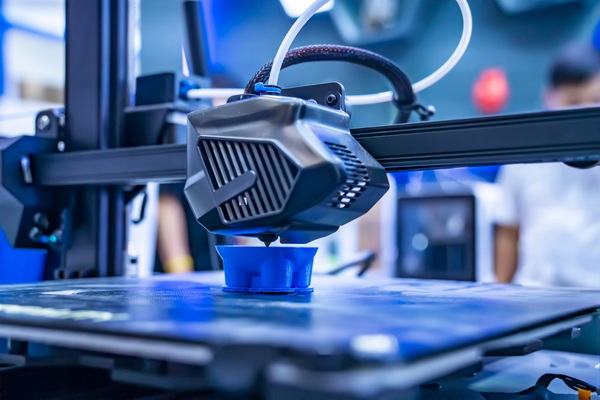
Alongside core manufacturing methods, several supporting processes add critical value to Rapid Prototyping projects.
Surface finishing ensures Rapid Prototyping parts look and feel like finished products.
- Techniques may include sanding, polishing, bead blasting, painting, powder coating, anodizing, plating and custom textures.
- High-quality finishing makes Rapid Prototyping samples suitable for photography, exhibitions, customer demonstrations and internal reviews.
- Color-matched Rapid Prototyping components help marketing and branding teams see how the final product will appear on shelves or in online images.
Accurate measurement is essential to reliable Rapid Prototyping.
- Tools such as coordinate measuring machines, optical measurement systems and 3D scanners confirm that prototypes match CAD designs.
- Dimensional reports help engineers identify deviations early and adjust designs before mass production.
- Stable metrology practices ensure that Rapid Prototyping results can be scaled confidently into serial manufacturing.
Design for Manufacturability (DFM) analysis is an important part of professional Rapid Prototyping services.
- Engineers review wall thickness, draft angles, radii, tolerances and material choices.
- Suggestions from manufacturing specialists help avoid undercuts, thin sections, weak joints and costly features.
- Integrating DFM feedback during Rapid Prototyping reduces later redesigns, shortens project timelines and improves long-term product reliability.
Different projects demand different Rapid Prototyping strategies. To select the most suitable method, consider the following key factors.
- If the goal is quick concept validation with complex shapes, 3D printing Rapid Prototyping is usually the first choice due to speed and design freedom.
- If prototypes must use production-grade metals or engineering plastics with tight tolerances, CNC machining Rapid Prototyping is often the best route.
- For flat or bent metal parts such as brackets and enclosures, sheet metal Rapid Prototyping is more efficient than carving them from a block.
- When dozens or hundreds of plastic pieces are needed before full-scale tooling, vacuum casting or rapid injection molding Rapid Prototyping provides the right balance of cost and consistency.
- Start with additive methods for early design exploration, where many design variations are expected and functional loads are moderate.
- Move to CNC Rapid Prototyping once critical dimensions, mechanical loads or thermal performance must be validated with real materials.
- Use sheet metal Rapid Prototyping when you need to validate mechanical strength, mounting interface or assembly sequence for metal structures.
- Add vacuum casting or rapid molding Rapid Prototyping when user testing, certification, or pilot sales require a larger number of nearly final parts.
- Combine multiple Rapid Prototyping methods as the design matures, keeping each technology focused on its strengths.
Working with a partner that offers several Rapid Prototyping technologies under one roof simplifies communication and coordination.
- It reduces the need to manage multiple suppliers for different stages of Rapid Prototyping, saving time and effort.
- It allows smoother transitions from 3D printed or CNC machined prototypes to molds, castings and small-batch runs.
- It improves consistency in quality standards, documentation and inspection practices across all stages of Rapid Prototyping.
- It enables engineering support to consider the entire lifecycle, from Rapid Prototyping to mass production, when giving feedback on design improvements.
For overseas brands, wholesalers and manufacturers, cooperating with a single, experienced factory that understands global expectations can make Rapid Prototyping more predictable, transparent and efficient.
Rapid Prototyping is no longer a single process but a complete toolkit of methods including 3D printing, CNC machining, sheet metal fabrication, vacuum casting and rapid molding. When used together, these technologies enable fast concept validation, functional testing with real materials and pilot production with near-final quality. By carefully matching project goals to the strengths of each Rapid Prototyping method, product teams can move from idea to market faster, reduce engineering risk and achieve better results with each design iteration. For international brands and manufacturers, working with an integrated supplier that offers end-to-end Rapid Prototyping and production capabilities brings added advantages in quality control, logistics and long-term product success.
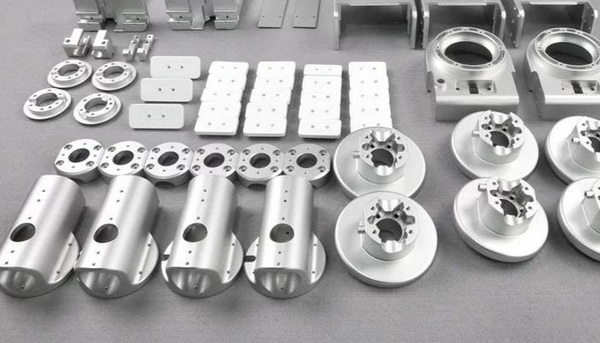
The main purpose of Rapid Prototyping is to transform digital designs into physical parts quickly so teams can evaluate shape, function and manufacturability before investing in expensive mass-production tooling. This early validation reduces risk, shortens development cycles and helps improve the final product's quality and user experience.
For metal components that require precise dimensions and strong mechanical properties, CNC machining is usually the most suitable Rapid Prototyping method. When complex internal channels, weight reduction or advanced geometries are necessary, metal 3D printing can complement or replace machining, especially in high-performance applications.
Yes, many Rapid Prototyping methods can produce end-use parts, particularly CNC machining, SLS or MJF 3D printing, metal additive manufacturing and rapid injection molding. Whether Rapid Prototyping parts are appropriate for final use depends on the chosen material, tolerances, loading conditions and regulatory requirements, so engineers should validate performance carefully.
The number of iterations in Rapid Prototyping varies by project complexity, but many teams expect at least two to five design loops before freezing the design. Early iterations focus on concept and ergonomics, while later Rapid Prototyping cycles refine mechanical performance, manufacturability and cosmetic details as the product approaches final release.
Rapid Prototyping is often very cost-effective for small businesses because it avoids large upfront tooling costs and enables fast market testing with limited quantities. By using the right mix of 3D printing, CNC machining and short-run molding for Rapid Prototyping, smaller companies can validate ideas, attract investors and respond to customer feedback without committing to full-scale production too early.

