
Views: 222 Author: Amanda Publish Time: 2025-12-23 Origin: Site


Content Menu
● Core Rapid Prototyping Technologies
>> CNC Machining and CNC Turning
>> Sheet Metal Rapid Prototyping
>> 3D Printing in Rapid Prototyping
>> Vacuum Casting, Rapid Tooling, and Low-Volume Molding
● Where Rapid Prototyping Is Used: Major Industries
>> Automotive and Transportation
>> Medical Devices and Healthcare
>> Consumer Electronics and Smart Devices
>> Industrial Equipment, Automation, and Robotics
>> New Energy, EV, and Power Systems
>> Education, Research, and Startups
● How Rapid Prototyping Supports the Product Development Cycle
● Benefits of Combining Multiple Rapid Prototyping Processes
● How Brands Use Rapid Prototyping with Chinese OEM Partners
● Why Rapid Prototyping Is Strategic for Overseas Brands
● FAQ
>> 1. How is Rapid Prototyping different from traditional prototyping?
>> 2. Which industries benefit most from Rapid Prototyping?
>> 3. What materials can be used in Rapid Prototyping?
>> 4. How does Rapid Prototyping reduce time-to-market?
>> 5. Why do overseas brands choose Chinese Rapid Prototyping factories?
Rapid prototyping is used in almost every modern industry, from concept sketches in consumer products to certified parts in aerospace and medical devices. It underpins faster design validation, CNC machining trials, sheet metal development, 3D printing iterations, and even bridge production for global OEM supply chains.[1]
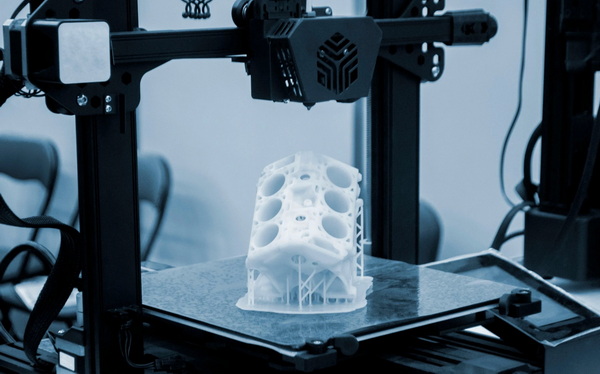
Rapid Prototyping is a group of digital manufacturing methods that quickly transform 3D CAD data into physical parts for design, engineering, and production validation. Typical Rapid Prototyping technologies include CNC machining, CNC turning, sheet metal fabrication, 3D printing, vacuum casting, and rapid tooling for injection molding.[1]
Common characteristics of Rapid Prototyping across processes include:
- Short lead times, often from a few days to 1–2 weeks for complex assemblies.[1]
- Flexibility to work in plastics, metals, elastomers, and composite materials for both visual and functional testing.[1]
- Iterative cycles: design–make–test–improve, repeated many times before mass production.[1]
- Support for low-volume or pilot runs that bridge the gap between prototype and full-scale manufacturing.[1]
In China, specialized partners such as Shangchen Rapid Manufacturing provide Rapid Prototyping, 5-axis CNC machining, CNC lathe turning, sheet metal fabrication, vacuum casting, 3D printing, and injection molding to overseas brands, wholesalers, and manufacturers.[2]
Rapid Prototyping is not a single process but a toolbox of digital manufacturing technologies. Selecting the right method depends on required material properties, dimensional accuracy, surface finish, and budget.[1]
CNC milling and CNC turning are foundation technologies in many Rapid Prototyping projects. These subtractive processes cut parts from solid blocks of metal or plastic using computer-controlled tooling, making them ideal for precise, functional prototypes.[3]
Key uses of CNC-based Rapid Prototyping include:
- High-precision functional prototypes where tight tolerances and mechanical strength are critical, such as engine brackets, housings, and jigs.[3]
- Metal and engineering-plastic prototypes used for stress, fatigue, pressure, and thermal testing before committing to mass production tooling.[3]
- Small-batch production that validates long-term reliability while using production-grade materials like aluminum, stainless steel, and titanium.[3]
Advanced 5-axis machining and CNC lathe turning enable complex geometries and rotational parts, which are widely used in aerospace, automotive, robotics, and medical devices. Chinese suppliers such as Shangchen emphasize high-precision CNC machining and CNC turning services from prototype to production for global OEM customers.[2][3]
Sheet metal Rapid Prototyping uses cutting, bending, stamping, and welding to create enclosures, brackets, and structural components from flat sheet materials. It is especially important for electronic housings, industrial frames, and automotive sub-assemblies.[4][5]
Common sheet metal Rapid Prototyping applications:
- Control boxes, racks, and panels for industrial equipment, automation systems, and robotics.[5]
- Chassis, brackets, and mounting plates for automotive, new energy, and consumer electronics assemblies.[5]
- Early design iterations of HVAC units, appliance casings, and machine guards that must be tested in real installation environments.[4]
Because tooling is minimized, sheet metal Rapid Prototyping makes it possible to adjust cutouts, mounting locations, and structural features from one iteration to the next with very little delay.[4]
3D printing (additive manufacturing) is closely associated with Rapid Prototyping because it can create complex shapes directly from CAD data without dedicated tooling. This makes it an ideal choice for visual models, ergonomic samples, and complex internal geometries.[1]
Key 3D printing Rapid Prototyping uses:
- Appearance models and concept prototypes used for design reviews, investor presentations, and marketing tests.[1]
- Functional prototypes with internal channels, lattice structures, or organic shapes that are difficult or impossible with traditional machining.[3]
- Patient-specific medical models, surgical guides, dental components, and prosthetic parts tailored to individual anatomy.[3]
3D printing materials range from common plastics like PLA and ABS to photopolymer resins and metals, each chosen based on precision, strength, or biocompatibility requirements. Combining 3D printed shells with CNC-machined functional features is a powerful hybrid Rapid Prototyping strategy.[3][1]
Vacuum casting and rapid tooling bridge the gap between prototype and mass production by replicating parts with near-production materials and finishes. In vacuum casting, a master pattern—often 3D printed—is used to create silicone molds, which can then produce tens of urethane or similar parts.[6]
Typical uses for these Rapid Prototyping techniques:
- Small runs of consumer products for user trials, trade shows, or pilot launches.[6]
- Pre-production samples for functional, assembly, and compliance testing when properties must be close to injection-molded plastics.[6]
- Rapid tooling for injection molds that can support early mass production of hundreds to a few thousand parts before investing in full-production steel molds.[6]
Chinese rapid manufacturing specialists often integrate vacuum casting and rapid tooling with CNC machining and 3D printing to deliver flexible prototype-to-production pipelines.[7]
Rapid Prototyping supports almost every industry that develops physical products. Below are some of the most important sectors, together with typical use cases.[1]
In the automotive industry, Rapid Prototyping dramatically reduces development cycles for new vehicles and components. Automakers use both 3D printing and CNC machining to validate form, fit, and performance at multiple stages of development.[5]
Key automotive Rapid Prototyping applications:
- Exterior and interior design models: 3D printed body panels, light housings, and interior trims for aesthetic and ergonomic evaluation.[5]
- Functional prototypes: CNC-machined brackets, engine components, transmission parts, and suspension elements for durability and performance testing.[3]
- Tooling and fixtures: Rapid Prototyping of assembly fixtures, jigs, and gauges to support production ramp-up and quality control.[5]
Chinese Rapid Prototyping factories, including those with services in 5-axis machining, sheet metal, and injection molding, are widely integrated into global automotive development supply chains.[7]
Aerospace places extreme demands on safety, weight, precision, and reliability, making Rapid Prototyping essential in development workflows. Engineers rely on Rapid Prototyping for both aerodynamic testing models and structural validation parts.[4]
Common aerospace Rapid Prototyping uses:
- Wind-tunnel models and aerodynamic test components made via 3D printing for fast iteration.[4]
- High-strength metal prototypes produced with CNC machining for brackets, actuators, and structural nodes used in ground tests.[3]
- Cabin interior prototypes, including seating systems, panels, and hardware, built in low volumes for ergonomic studies and certification.[4]
Global aerospace companies often work with Chinese Rapid Prototyping partners for cost-effective CNC machining and small-batch production under strict quality control.[7]
Rapid Prototyping has transformed medical device and healthcare development by supporting patient-specific treatments and fast innovation cycles. Regulatory pathways are complex, so multiple generations of prototypes are required before clinical use.[6]
Key healthcare Rapid Prototyping applications:
- Patient-specific anatomical models and surgical guides produced with 3D printing for pre-operative planning.[6]
- Implants, prosthetics, and orthotics that require precise fit and biocompatible materials, often using both 3D printing and CNC machining.[6]
- Device housings, handheld tools, and diagnostic equipment enclosures prototyped via CNC machining, sheet metal, and rapid molding for ergonomic and usability testing.[6]
Chinese Rapid Prototyping companies with experience in medical devices and ISO-based quality systems can support fast, accurate prototypes for overseas OEMs.[7]
Consumer electronics products have short life cycles and intense competition, making Rapid Prototyping a strategic necessity. Brands must validate mechanical design, user experience, thermal performance, and manufacturability at high speed.[5]
Typical consumer electronics Rapid Prototyping uses:
- Structural verification of phone housings, wearable shells, and IoT device enclosures using CNC machining and 3D printing.[6]
- Functional testing of buttons, seals, and connectors, often combining rigid and flexible materials in a single prototype.[6]
- Pre-production runs of covers, bezels, and internal brackets produced through rapid tooling and sheet metal to validate assembly lines.[6]
Chinese Rapid Prototyping suppliers serving consumer products, robotics, industrial equipment, automation, and new energy devices provide integrated CNC machining, sheet metal, and molding services for overseas electronics brands.[7]
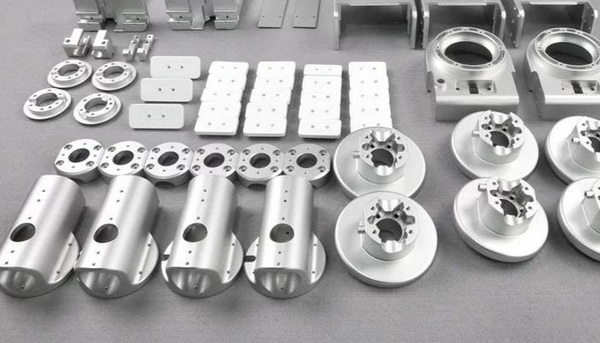
Rapid Prototyping helps industrial equipment and automation manufacturers adapt quickly to custom requirements and evolving factory environments. Complex assemblies often need functional prototypes that can be tested under real operating conditions.[4]
Key Rapid Prototyping uses in this sector:
- Robot components, end effectors, and grippers tailored to specific tasks, developed with CNC machining, 3D printing, and sheet metal.[4]
- Frames, brackets, and guards for automation lines and industrial machines created through sheet metal Rapid Prototyping.[4]
- Control boxes, sensor housings, and custom fixtures for test setups, made via CNC machining and rapid molding.[4]
Chinese Rapid Prototyping companies listing robotics, industrial equipment, and automation as core markets, such as Shangchen, are valuable partners for overseas integrators and OEMs.[2]
Rapid Prototyping is widely used in new energy applications, including electric vehicles, battery systems, and renewable-energy equipment. These systems must be tested for safety, thermal management, and long-term reliability before mass deployment.[4]
Representative Rapid Prototyping applications:
- Battery module housings and cooling components produced with CNC machining and sheet metal fabrication for thermal and vibration tests.[4]
- Connectors, busbars, and insulation parts made via rapid molding or vacuum casting for electrical performance verification.[6]
- Structural components for charging stations and power electronics enclosures, often built through sheet metal and CNC machining.[4]
Rapid Prototyping suppliers in China that focus on new energy and related fields provide overseas customers with fast, cost-effective iterations that accelerate EV and power-product launches.[7]
Rapid Prototyping also plays a vital role in education, research labs, and early-stage startups. Fast iterations allow small teams to test ideas and fail cheaply, long before large investments in tooling or marketing.[3]
Typical uses include:
- University engineering projects that rely on 3D printing and CNC machining for hands-on learning.[3]
- Research prototypes for experimental devices and instruments where designs change frequently.[3]
- Startup hardware MVPs built using hybrid Rapid Prototyping strategies: 3D printing for shells and CNC machining for critical features.[3]
Online manufacturing platforms and Chinese Rapid Prototyping partners together offer global accessibility and industrial-grade quality to small teams.[8]
Rapid Prototyping is not only about making parts; it is about supporting every stage of the product development cycle. From initial concepts to full production, Rapid Prototyping techniques provide feedback that improves design quality and reduces risk.[1]
Key stages where Rapid Prototyping is used:
- Concept validation: Designers turn sketches and early CAD models into simple physical samples, often via 3D printing, to explore form and ergonomics.[1]
- Engineering evaluation: CNC machining and sheet metal Rapid Prototyping deliver more accurate parts for strength, assembly, and thermal testing.[3]
- Design for manufacturing (DFM): Rapid tooling and low-volume molding validate draft angles, wall thicknesses, and mold-flow behavior before high-cost tooling is ordered.[6]
- Pilot production: Small batches produced with Rapid Prototyping-friendly methods are used for beta tests, certification, and market seeding.[4]
By integrating Rapid Prototyping into all of these stages, companies detect problems early, avoid expensive design changes later, and launch products more confidently.[1]
Many successful projects use a combination of Rapid Prototyping methods rather than relying on just one. Hybrid approaches allow engineers to match each part of an assembly with the process that best fits its function.[4]
Typical hybrid Rapid Prototyping strategies include:
- 3D printed exterior with CNC-machined core: A concept device with a printed outer shell and machined internal frame for realistic weight and rigidity.[3]
- Sheet metal chassis with molded plastics: Industrial electronics where a sheet metal housing is combined with low-volume plastic panels from rapid tooling.[4]
- Vacuum-cast elastomer parts in CNC-machined fixtures: Functional tests of gaskets or soft-touch components installed in precise metal assemblies.[6]
Suppliers that offer full-process Rapid Prototyping—CNC machining, CNC turning, sheet metal, 3D printing, vacuum casting, and mold production—can manage these hybrid workflows efficiently for international customers.[7]
Overseas brands, wholesalers, and manufacturers increasingly rely on Chinese Rapid Prototyping factories as end-to-end OEM partners. These suppliers combine multiple processes—Rapid Prototyping, CNC machining, CNC turning, sheet metal, vacuum casting, 3D printing, and mold production—under one roof.[7]
Typical OEM workflow with a Chinese Rapid Prototyping factory:
- Early concept and visual models: 3D printing and simple CNC machining create initial samples for internal design reviews and customer feedback.[1]
- Functional prototypes: High-precision CNC machining, CNC turning, and sheet metal fabrication deliver parts for fit, performance, and reliability testing.[3]
- Pre-production and bridge manufacturing: Vacuum casting, rapid tooling, and low-volume injection molding provide hundreds of parts for pilot runs and small-batch deliveries.[6]
- Mass production readiness: Lessons from Rapid Prototyping are used to refine molds, processes, and quality plans for long-term manufacturing.[4]
Shangchen Rapid Manufacturing, for example, highlights services like Rapid Prototyping, 5-axis machining, CNC machining, CNC lathe turning, sheet metal fabrication, vacuum casting, 3D printing, and injection molding, while serving industries such as aviation, automotive, robotics, industrial equipment, automation, medical devices, new energy, and consumer products.[2]
For overseas brands, Rapid Prototyping is more than a technical tool; it is a strategic capability. When combined with experienced Chinese OEM partners, it supports competitive advantages in quality, cost, and time-to-market.[7][4]
Key strategic benefits of Rapid Prototyping:
- Faster customer feedback: Brands can put realistic prototypes into the hands of users or distributors early, gaining insights that shape the final design.[1]
- Reduced investment risk: Multiple Rapid Prototyping iterations reveal design or manufacturing problems before committing to expensive tooling and mass production.[4]
- Flexible market testing: With low-volume production via Rapid Prototyping technologies, brands can test new variants or regional versions without large inventory commitments.[6]
Chinese partners with integrated Rapid Prototyping and production services help overseas companies turn these strategic benefits into practical, repeatable workflows.[7]
Rapid Prototyping is used across automotive, aerospace, medical, consumer electronics, industrial equipment, new energy, and many other sectors to shorten development cycles and reduce risk before mass production. By combining CNC machining, CNC turning, sheet metal fabrication, 3D printing, vacuum casting, and rapid tooling, companies can repeatedly test, refine, and validate products in real conditions. Chinese Rapid Prototyping factories such as Shangchen provide comprehensive OEM services that connect overseas brands, wholesalers, and manufacturers with fast, precise, and scalable prototype-to-production solutions.[2][1][4]
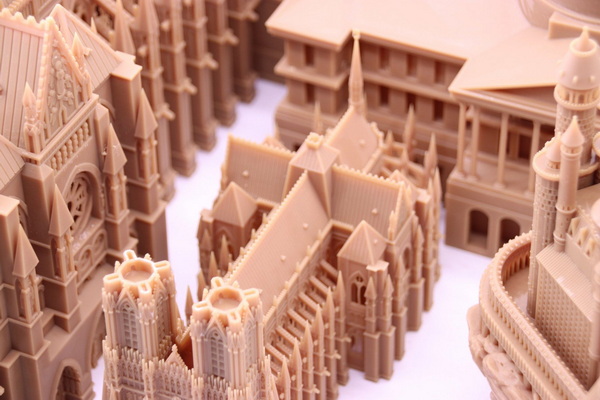
Traditional prototyping often relies on manual machining or handmade models, which can be slow, expensive, and difficult to repeat. Rapid Prototyping uses digital manufacturing methods such as CNC machining, 3D printing, and sheet metal fabrication to automatically produce parts directly from CAD data, enabling fast, consistent, and iterative development.[1]
Industries that benefit most from Rapid Prototyping include automotive, aerospace, medical devices, consumer electronics, robotics, industrial equipment, and new energy. These sectors rely on frequent design iterations and stringent performance requirements, making Rapid Prototyping essential for safe, reliable, and timely product launches.[5][4]
Rapid Prototyping supports a broad range of materials, including plastics like PLA, ABS, PC, and nylon; metals such as aluminum, stainless steel, and titanium; and elastomers like TPU and silicone. The choice depends on whether the prototype is mainly for appearance, ergonomics, or functional testing under mechanical, thermal, or chemical loads.[6]
Rapid Prototyping shortens time-to-market by compressing design–test–iteration cycles and eliminating the need for early full-production tooling. Digital workflows allow engineers to change CAD models quickly and re-order updated prototypes in days, which significantly reduces development risk and speeds up decision-making.[1][4]
Overseas brands choose Chinese Rapid Prototyping factories for their combination of cost efficiency, multi-process capability, and experience in serving global OEMs. Suppliers such as Shangchen integrate Rapid Prototyping, CNC machining, CNC turning, sheet metal fabrication, 3D printing, vacuum casting, and mold production, providing one-stop services from prototype to mass production for diverse industries.[2][7]
[1](https://formlabs.com/blog/ultimate-guide-to-rapid-prototyping/)
[2](https://www.sc-rapidmanufacturing.com)
[3](https://jlccnc.com/blog/cnc-machining-vs-3d-printing)
[4](https://xometry.pro/en/articles/rapid-prototyping-manufacturing/)
[5](https://manufactur3dmag.com/5-industries-benefit-from-rapid-prototyping/)
[6](https://www.cncprotolabs.com/blog/what-are-the-applications-of-rapid-prototyping)
[7](https://www.sunrise-metal.com/rapid-manufacturing/)
[8](https://rapidaxis.com)

