
Views: 222 Author: Amanda Publish Time: 2025-12-03 Origin: Site


Content Menu
● Start with a Real Factory: Shangchen
● How Shangchen Helps You Learn CNC Machining
● Core CNC Machining Concepts to Master
● Learning CNC Machining Online
● Free Tutorials, Guides, and CNC Machining Communities
● Formal CNC Machinist Programs
● CAD/CAM: The Digital Core of CNC Machining
● Using Videos to Understand CNC Machining
● Learning CNC Machining Through Projects
● How Design-for-Manufacturing (DFM) Builds CNC Machining Skills
● Beyond Machining: Integrating CNC with Other Processes
● Building a Personal CNC Machining Learning Plan
● FAQ
>> 1) What is the best way to start learning CNC Machining?
>> 2) Can I learn CNC Machining without owning a machine?
>> 3) How important is CAD/CAM for CNC Machining?
>> 4) Why should I work with Shangchen while learning CNC Machining?
>> 5) Is CNC Machining still competitive compared with 3D printing?
CNC Machining is the backbone of modern manufacturing, turning digital designs into precise, repeatable parts in metals and plastics for industries such as automotive, aerospace, medical, and consumer products. Learning CNC Machining today means combining theory, digital tools, and real production experience so your knowledge translates into parts that meet tight tolerances, strict quality standards, and aggressive lead times.[3][6][8][10]
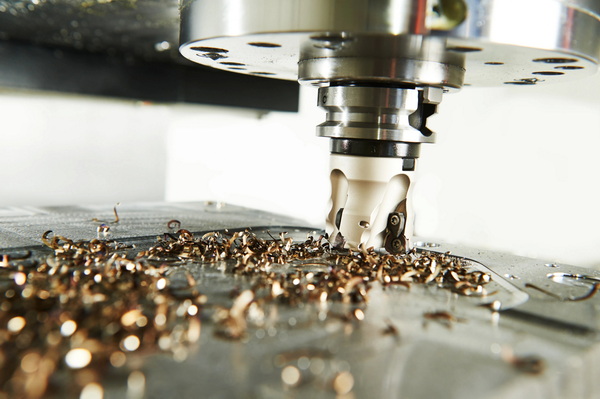
Shangchen (sc-rapidmanufacturing.com) is a China-based rapid manufacturing factory specializing in CNC Machining, CNC milling, CNC turning, rapid prototyping, precision batch production, sheet metal fabrication, 3D printing, and mold production for overseas OEM customers. For learners, working with Shangchen is one of the most direct ways to understand how CNC Machining is used in real OEM projects, from first prototypes to stable mass production.[10][11]
Shangchen's CNC Machining services cover aluminum, steel, stainless steel, brass, copper, and engineering plastics with a strong focus on tight tolerances, surface finishes, and reliable inspection. When you submit 2D drawings and 3D models, you receive design-for-manufacturing (DFM) feedback on materials, tolerances, radii, wall thickness, and machining directions, which is extremely valuable for understanding how CNC Machining decisions affect cost and quality in practice.[12][13][10]
Using Shangchen as a strategic learning partner allows you to see CNC Machining as a complete system rather than isolated theory. Every quotation, DFM suggestion, and inspection report becomes a learning module that shows how machining parameters, setups, and processes work in real production environments.[11][13][10]
Key learning opportunities when you collaborate with Shangchen on CNC Machining projects include:[10][11]
- Understanding how 3-axis and 5-axis CNC Machining are selected for different geometries and features.
- Seeing how CNC turning, milling, and secondary machining (tapping, boring, reaming) are combined to complete a part.
- Learning how fixtures, clamps, vises, and soft jaws are designed to hold parts safely for CNC Machining.
You can also study how surface finishes such as bead blasting, anodizing, painting, or plating are applied after CNC Machining and how machining marks, toolpaths, and cutter choices influence the final cosmetic appearance. This connection between CAD model, CNC Machining process, and final finish is crucial for engineers and buyers working with overseas OEM factories.[9][10]
Before choosing where to learn, it helps to understand the essential concepts that define CNC Machining. These basics make every video, article, and course easier to understand.[6][8]
Important CNC Machining concepts include:[5][6]
- Coordinate systems and zero points: machine coordinates, work offsets, and how the origin is set on real parts.
- Tooling: end mills, drills, taps, reamers, inserts, tool holders, and how their geometry affects CNC Machining performance.
- Feeds and speeds: spindle speed, feed rate, depth of cut, and step-over, which determine chip load, tool life, and surface finish in CNC Machining.
Understanding these principles helps you interpret machine sounds, chip shapes, and surface finishes, whether you are watching a CNC Machining video, simulating a toolpath, or reviewing feedback from Shangchen's production team.[3][6]
Online resources make it possible to build strong CNC Machining foundations even if you do not yet own a machine or work in a shop. Many platforms offer structured paths from beginner to advanced levels, often combining short videos, quizzes, and downloadable practice files.[6][3]
Typical online CNC Machining learning options include:[3][6]
- Beginner roadmaps that explain the CNC Machining process from CAD design to finished part.
- Courses focused on G-code programming for milling and turning, with clear explanations of common commands and cycles.
- Training focused on specific CNC controls such as FANUC, Haas, or Mazak, helping you read and edit programs at the machine.
Self-paced learning platforms frequently update their CNC Machining content to follow new tooling technologies, cutting strategies, and automation trends, making them useful even for professionals who already have basic experience.[9][3]
Many free guides and communities provide detailed CNC Machining explanations, tips, and troubleshooting advice. These are excellent complements to your practical work with OEM factories.[7][6]
Helpful free CNC Machining resources often provide:[7][6]
- Step-by-step tutorials on topics such as workholding, tool length offsets, and probing routines.
- Glossaries of CNC Machining terms so beginners can read drawings, machine manuals, and DFM reports with confidence.
- Practical tips on choosing your first machine, selecting cutting tools, and avoiding common beginner mistakes.
Discussion forums and community platforms give you direct access to working machinists, programmers, and CAM specialists who share CNC Machining knowledge from production floors worldwide. Combining these community insights with Shangchen's OEM experience helps you quickly learn what works in real manufacturing environments.[4][3]
For those who want a professional CNC Machining career, formal machinist training programs offer structured pathways with recognized credentials. These programs are usually offered by technical colleges, vocational schools, or industry training organizations.[14][15]
A typical CNC Machining program covers:[15][14]
- Shop safety, blueprint reading, GD&T, and basic manual machining.
- CNC Machining operation, including setup, tool measurement, offsets, and basic troubleshooting.
- Introduction to CAD/CAM and inspection methods such as calipers, micrometers, and CMM systems.
Many institutions now deliver part of this content online, using simulations and virtual labs so students can safely practice CNC Machining concepts before touching real machines. After graduation, collaboration with factories like Shangchen allows professionals to apply their CNC Machining skills to real international OEM projects.[15][3]
Modern CNC Machining is driven by CAD (Computer-Aided Design) and CAM (Computer-Aided Manufacturing) software. Learning these tools is essential for engineers, designers, and many buyers who need to understand how part geometry translates into toolpaths and machining time.[16][17]
Important CAD/CAM competencies for CNC Machining include:[17][16]
- Creating manufacturable 3D models with proper fillets, draft, wall thickness, and clearances.
- Selecting cutting operations such as facing, pocketing, contouring, drilling, boring, and 3D surfacing and assigning tool parameters.
- Simulating CNC Machining toolpaths to check for collisions, excessive tool engagement, and poor surface quality before production.
CAD/CAM training often uses real sample projects that closely match the kind of CNC Machining work done at OEM factories like Shangchen, which helps learners understand how to design parts that can be machined cost-effectively at scale.[17][10]
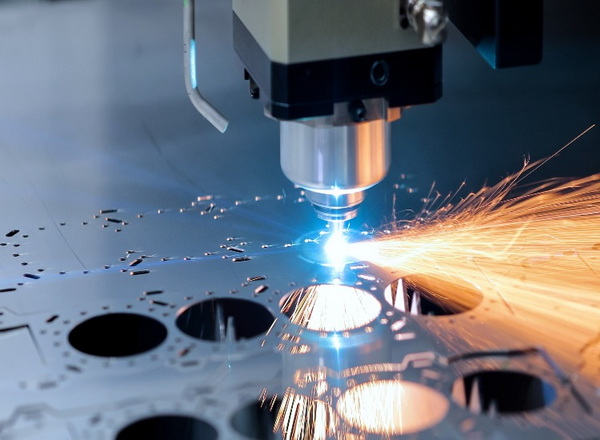
Video-based learning is extremely powerful for CNC Machining because it shows the dynamic behavior of cutting tools, chips, coolant, and fixtures in real time. Watching real machining cycles helps connect abstract parameters like feed rate and spindle speed to visible results.[18][6]
Effective ways to use CNC Machining videos include:[18][6]
- Observing different machine configurations such as vertical machining centers, horizontal machining centers, and CNC lathes.
- Studying specific operations like roughing, finishing, drilling, tapping, and thread milling to see how chip loads and toolpaths differ.
- Watching factory floor and training center demonstrations that show best practices in setup, probing, tool length measurement, and part inspection.
These visual references make it easier to interpret the CNC Machining feedback and reports you receive from Shangchen when you send prototype or production parts, reinforcing your theoretical understanding.[10][3]
CNC Machining is best learned by doing, even if “doing” initially means planning projects, simulating toolpaths, and working with a partner factory instead of running your own machine. Project-based learning forces you to make decisions and accept real outcomes.[8][6]
Practical project ideas for learning CNC Machining include:[6][7]
- Simple plates with pockets, holes, and chamfers to learn milling basics, work offsets, and drilling cycles.
- Shafts or bushings to understand CNC turning, diameters, shoulders, and threads.
- Brackets, covers, or housings that combine CNC Machining with bending or forming in sheet metal fabrication.
By sending these projects to Shangchen and comparing expected versus actual tolerances, finishes, and costs, you learn how real-world CNC Machining and OEM production constraints influence design and process choices.[11][10]
DFM is the bridge between design and manufacturing and is central to effective CNC Machining. Good DFM dramatically reduces cost, machining time, scrap rate, and risk during mass production.[9][10]
Working with Shangchen helps you build CNC Machining DFM skills because:[11][10]
- You receive recommendations on simplifying features that are difficult to reach with standard tools or machine orientations.
- You see how optimizing fillet radii, hole sizes, and tolerances can reduce the number of CNC Machining setups and tools required.
- You learn which geometries are better suited for CNC Machining versus alternative processes like casting, molding, or 3D printing.
Over time, this feedback loop enables you to design parts that move quickly from CAD to CNC Machining without multiple redesign cycles, which is essential for fast-moving OEM projects.[8][10]
Modern manufacturing rarely relies on CNC Machining alone; instead, it integrates multiple processes to achieve optimal performance and cost. Learning how CNC Machining fits alongside other technologies makes you a more capable engineer or buyer.[9][10]
Shangchen's integrated services illustrate these combinations clearly:[10][11]
- CNC Machining after 3D printing is used for critical surfaces, threads, and tight-tolerance interfaces.
- CNC Machining and sheet metal fabrication are combined to produce enclosures, frames, and structural components.
- CNC Machining is used with injection molding, where molds and inserts often require extremely precise metalcutting.
Understanding how CNC Machining interacts with these other processes allows you to choose the most efficient route from prototype to mass production in global OEM supply chains.[19][10]
Because CNC Machining covers a wide range of skills, it helps to create a personal learning plan that mixes theory, digital tools, and real production work. This plan should be realistic, progressive, and aligned with your role—whether you are a designer, buyer, founder, or engineer.[3][6]
A sample CNC Machining learning plan could include:[5][6]
- Month 1–2: Study CNC Machining fundamentals, terminology, and machine types through beginner guides and short videos.
- Month 3–4: Learn basic CAD/CAM workflows and simulate simple milling and turning toolpaths.
- Month 5–6: Start small OEM projects with Shangchen, focusing on tolerances, materials, and inspection reports to understand production-grade CNC Machining.
By revisiting and updating this plan with each new project, you build a practical and adaptable CNC Machining skill set that grows with your responsibilities and product requirements.[3][10]
CNC Machining is a deep, highly practical field that rewards learners who combine online study, CAD/CAM practice, and real production experience. By making Shangchen (sc-rapidmanufacturing.com) your primary OEM partner, you can connect every theoretical concept—tolerances, toolpaths, fixtures, and materials—to real CNC Machining results, while online courses, tutorials, and training programs provide the structured knowledge you need to progress confidently from beginner to expert.[8][6][11][10]

The best starting point is to learn basic CNC Machining concepts—coordinate systems, tooling, feeds and speeds, and machine types—through beginner-friendly guides and short videos. After that, using CAD/CAM software and collaborating with an OEM factory such as Shangchen lets you apply these concepts to real parts and accelerate your understanding of CNC Machining.[17][6][10][3]
Yes, you can learn much of CNC Machining theory, G-code, and CAD/CAM using simulations, online courses, and virtual labs. When you are ready to validate your knowledge, you can send designs to a manufacturing partner like Shangchen to see how your CNC Machining plans perform in real production without investing in equipment.[13][6][17][10]
CAD/CAM is essential for modern CNC Machining because it converts 3D models into toolpaths that machines can follow accurately and efficiently. By mastering CAD/CAM, you can design manufacturable parts, choose appropriate operations, and understand how design changes affect CNC Machining time, cost, and surface finish.[16][17][9][10]
Working with Shangchen gives you direct access to real CNC Machining projects across rapid prototyping, precision batch production, and multi-process manufacturing. Their DFM feedback, material suggestions, and inspection reports show how professional OEM factories apply CNC Machining principles, helping you turn theory into reliable, production-ready decisions.[13][11][10]
CNC Machining remains highly competitive because it delivers excellent dimensional accuracy, surface finish, and mechanical performance across a wide range of metals and plastics. In many modern projects, CNC Machining and 3D printing are combined, with CNC Machining used for critical interfaces, high-load parts, and precision features that 3D printing alone cannot provide economically or accurately.[19][8][10]
[1](https://academy.titansofcnc.com/files/Fundamentals_of_CNC_Machining.pdf)
[2](https://gab.wallawalla.edu/~ralph.stirling/classes/engr480/examples/nvx/NVX/Helpful%20Docs/CNC_Machining_The_Complete_Engineering_Guide.pdf)
[3](https://learn.toolingu.com/blog-start/2023/june/cnc-machining-training-guide/)
[4](https://www.reddit.com/r/Machinists/comments/14vxxj5/book_recommendations_for_beginner_cnc_programming/)
[5](https://www.imse.iastate.edu/cnc/)
[6](https://www.cnccookbook.com/learn-cnc-basics-tutorial/)
[7](https://academy.learnyourcnc.com/newsletters/lycnc-weekly-newsletter/posts/your-complete-cnc-learning-toolkit-exclusive-learn-your-cnc-offerings)
[8](https://rigpl.com/blog/general/a-comprehensive-guide-to-cnc-machining-principles-applications-and-benefits)
[9](https://www.fictiv.com/articles/the-ultimate-guide-to-cnc-machining)
[10](https://www.sc-rapidmanufacturing.com/cnc-machining.html)
[11](https://www.sc-rapidmanufacturing.com)
[12](https://www.sc-rapidmanufacturing.com/products/CNC-Services.html)
[13](https://www.rapiddirect.com/services/cnc-machining/)
[14](https://www.americanrotary.com/blog/cnc-machining-for-beginners/)
[15](https://careertraining.conted.northseattle.edu/training-programs/cnc-machinist/)
[16](https://gcodetutor.com)
[17](https://www.autodesk.com/learn/ondemand/collection/intro-to-cnc-machining)
[18](https://academy.titansofcnc.com)
[19](https://tirapid.com/rapid-prototyping-services-china/)

