
Views: 222 Author: Amanda Publish Time: 2025-12-26 Origin: Site


Content Menu
● From Manual Machining to Numerical Control
● The Role of John T. Parsons in CNC Machining
● The First NC Milling Machine (1952)
● CNC Machining Timeline: Key Milestones
● How CNC Machining Works Today
● Types of CNC Machining Processes
● CNC Machining vs. Traditional Manual Machining
● Why CNC Machining Matters for OEM Production
● Typical Applications of CNC Machining
● The Digital and Connected Future of CNC Machining
>> 1. When exactly was CNC Machining invented?
>> 2. Who is considered the father of CNC Machining?
>> 3. How is CNC Machining different from manual machining?
>> 4. What are the main advantages of CNC Machining for OEM production?
>> 5. How has CNC Machining evolved in recent years?
CNC Machining began to emerge from numerical control (NC) research in the late 1940s and early 1950s, with practical NC milling first demonstrated in 1952. CNC Machining, in the modern, computer-controlled sense, became established in industry from the 1960s and spread rapidly in the 1970s as digital computers entered machine shops.[1][2]
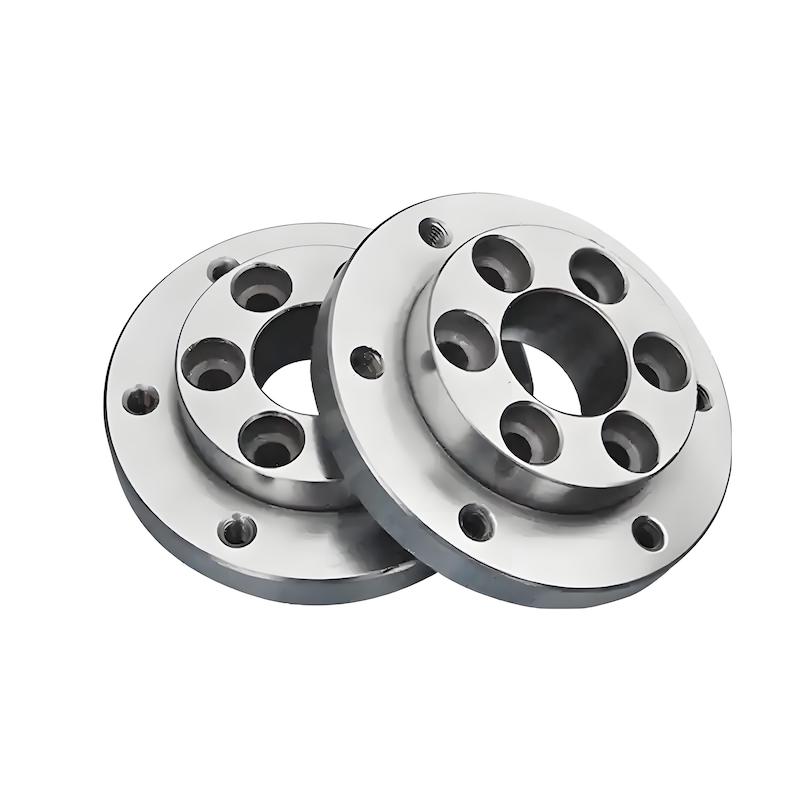
CNC Machining (Computer Numerical Control Machining) is a subtractive manufacturing process in which computer programs drive machine tools—such as mills, lathes, routers, and grinders—to shape raw material into finished parts. CNC Machining replaces manual handwheels and dials with digital instructions (typically G-code) that control position, speed, and tool movement along multiple axes.[3]
In CNC Machining, engineers first create a digital model in CAD software, then convert it into toolpaths and code using CAM systems, and finally upload that code to a CNC Machining center for production. The result is a highly repeatable and precise process that can hold tight tolerances, support complex geometries, and scale from single prototypes to high-volume production runs.[4][1]
Before CNC Machining existed, machining was entirely manual, relying on skilled operators to interpret drawings, set up workpieces, and move tools using mechanical controls. This approach worked for simple components, but it was slow, error-prone, and limited when it came to the complex 3D surfaces demanded by aerospace and advanced engineering. Numerical control emerged as a way to address these limitations by encoding motion as numerical data.[5]
The key idea behind numerical control was that machine motion—positions, feeds, and speeds—could be defined as numbers and then fed to a machine through punched cards or tape, rather than through direct manual manipulation. This early NC technology laid the conceptual and practical foundation for CNC Machining, even though computers were not yet part of the system.[6][4]
John T. Parsons, an American engineer and entrepreneur, is widely regarded as the “father” of CNC Machining because he was the first to successfully apply numerical control to machining complex aero components. Working on helicopter rotor blades and aircraft skin panels, Parsons combined coordinate calculations with punched media to drive machines automatically.[7][8]
Parsons' approach used early computing equipment to calculate a dense set of coordinate points for curved surfaces and then transferred those coordinates to a machine tool using punch cards and servo drives. This concept, which married computational methods with machine-tool positioning, directly foreshadowed CNC Machining as it is understood today. His work convinced the U.S. Air Force of the potential of numerical control and led to a pivotal collaboration with MIT.[9][10]
In 1949, the U.S. Air Force funded the Servomechanisms Laboratory at MIT to develop a practical numerically controlled machine tool based on Parsons' pioneering ideas. The result was an experimental NC milling machine built around a Cincinnati Hydrotel, which was demonstrated in 1952. This machine used a punched tape to store sequences of movements and coordinate positions, driving the axes through servomechanisms.[11][12]
This 1952 NC mill is often identified as the first major milestone in the path toward CNC Machining, because it proved that complex, precise 3D surfaces could be cut automatically using numerical data rather than manual operation. The system could machine intricate shapes, such as contoured aircraft structural components, that would have been extremely time-consuming or impossible to reproduce by hand with consistent accuracy.[2][1]
Although the 1952 NC machine was revolutionary, it was not yet CNC Machining in the modern sense, because it did not use an electronic computer as the controller. Early NC relied on hard-wired logic, relay systems, and mechanically read punched tape. As electronics and computing technology advanced in the 1950s and 1960s, engineers began to replace these early control systems with digital computers, creating true CNC Machining.[5][6]
By the early 1960s, machine tool builders started to integrate digital computers into their NC systems, allowing more complex interpolation, better memory, and flexible program storage and editing. This shift marked the birth of real CNC Machining, where a computer interpreted the part program and generated the control signals to move the machine axes. As minicomputers and microprocessors became more affordable in the 1970s, CNC Machining spread widely across industrial sectors.[12][3]
The development of CNC Machining spanned several decades and involved many incremental innovations rather than a single invention event. Key milestones include:[1][5]
- Late 1940s: John T. Parsons applies numerical methods and punched cards to control machining for helicopter and aircraft parts, pioneering NC concepts that lead to CNC Machining.[10][7]
- 1949: The U.S. Air Force sponsors MIT's research to build an NC milling machine, based on Parsons' earlier work and the need for accurate aerospace components.[9][10]
- 1952: MIT demonstrates the first NC mill using a Cincinnati Hydrotel with punched-tape control, a direct ancestor of modern CNC Machining centers.[11][12]
- 1958: Richard Kegg patents a motor-controlled positioning system for machine tools, supporting the industrial commercialization of CNC-type technology.[13][2]
- 1960s: Digital computers begin to replace purely hard-wired NC controls, creating the first true CNC Machining systems in industrial environments.[6]
- 1970s: Wider adoption of microprocessor-based controllers makes CNC Machining the new standard for precision machining; tape readers coexist with early digital interfaces.[3][12]
- 1980s–1990s: CNC Machining systems integrate with CAD/CAM, automatic tool changers, and multi-axis controls, dramatically improving flexibility and throughput.[14][1]
- 2000s–Now: CNC Machining connects with networks, sensors, cloud platforms, and automation, supporting smart factories and highly responsive OEM supply chains.[15][3]
This evolution shows that CNC Machining is best understood as a continuum: it started with NC around 1952 and matured into full CNC Machining as computers took over motion control and data management in the following decades.[5][6]
Modern CNC Machining follows a digital workflow from design to finished part. Engineers or product designers begin by modeling the part in CAD software, where geometry, tolerances, and materials are defined. This 3D model is then imported into CAM software to generate machining strategies, including tool selections, spindle speeds, feeds, depth of cut, and toolpaths.[3]
Once the CAM system outputs a G-code program, that program is loaded into a CNC Machining center, which interprets each command line and translates it into motion, spindle control, coolant activation, and tool changes. Contemporary CNC Machining equipment often includes 3-axis, 4-axis, and 5-axis machines, enabling the production of intricate shapes, undercuts, and complex surfaces in a single setup or a reduced number of setups.[14][1]
CNC Machining is also heavily supported by in-process measurement and quality systems. Probing cycles can verify workpiece position, automatically adjust tool offsets, and measure critical features while the part is still in the machine. This allows CNC Machining operations to maintain consistent tolerances and catch deviations early, which is especially valuable in high-precision OEM applications.[10][6]
CNC Machining is not limited to a single operation; it encompasses a wide family of processes that can be combined for more efficient manufacturing. Typical processes include:[15][3]
- CNC milling: A rotating cutting tool removes material as the workpiece is clamped on a table or fixture. Multi-axis CNC Machining mills can produce pockets, slots, contours, and free-form surfaces.[1][14]
- CNC turning: A workpiece rotates in a chuck or collet while cutting tools move linearly to create cylinders, cones, grooves, and threads. CNC Machining lathes are ideal for shafts, bushings, and other rotational parts.[16][15]
- CNC drilling and tapping: Dedicated or integrated stations within CNC Machining centers drill holes and cut internal threads efficiently and accurately.[15][1]
- CNC grinding and finishing: Precision grinding machines with CNC controls can refine surfaces and achieve extremely tight dimensional tolerances in hardened materials.[4][16]
By combining these processes under a unified CNC Machining workflow, manufacturers can reduce part handling, shorten lead times, and improve consistency across entire batches of components.[17][15]
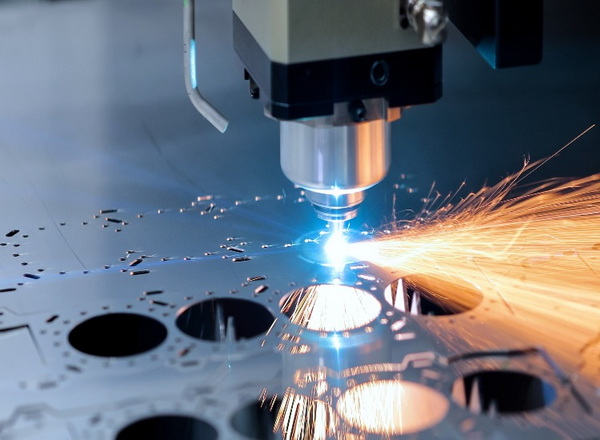
CNC Machining and manual machining share the same fundamental cutting mechanics, but the way motion is controlled and repeated is dramatically different. In manual machining, operators depend on physical dials, handwheels, gauges, and their own experience to achieve the desired geometry. CNC Machining, by contrast, automates these movements through pre-programmed digital instructions.[4]
Because CNC Machining follows an exact digital program, every part in a batch can be produced with the same toolpaths, speeds, and offsets, which enhances repeatability and reduces variability. This makes CNC Machining far superior for high-volume production, complex geometries, and tight-tolerance components. Manual machining remains useful for simple operations, one-off repair work, and tasks that rely heavily on operator feel, but CNC Machining dominates modern industrial manufacturing.[16][1]
For OEMs and brand owners, CNC Machining is crucial because it connects design flexibility with manufacturing scalability. Product teams can iterate quickly by updating CAD models and CAM strategies, then producing physical parts through CNC Machining without rebuilding tooling or fixtures for every design change. This agility is particularly valuable at the rapid-prototyping and pre-production stages.[17][15]
Once a design is validated, the same CNC Machining programs, tools, and setups can be refined and reused to support low-volume and even mid-volume production runs, ensuring consistent quality while keeping costs under control. For overseas customers sourcing in regions such as China, integrated CNC Machining factories can provide rapid prototyping, precision batch manufacturing, and complementary processes like sheet-metal fabrication, 3D printing, and mold production within a single supply chain.[2][15]
CNC Machining serves a wide range of industries, pairing its precision and reliability with materials such as aluminum, steel, stainless steel, titanium, copper alloys, and engineering plastics. Aerospace components like brackets, structural fittings, and turbine hardware depend on CNC Machining to achieve both strength and accuracy.[12][11]
In automotive and transportation sectors, CNC Machining is used to manufacture engine blocks, cylinder heads, gearbox cases, suspension parts, custom brackets, and tooling for assembly lines. Electronics and consumer product brands rely on CNC Machining to produce high-finish housings, frames, heat sinks, and internal structural components for devices, often demanding tight cosmetic and dimensional standards. Medical and dental industries also make extensive use of CNC Machining for surgical instruments, implants, prosthetic components, and laboratory equipment where reliability and traceability are critical.[16][1][3]
CNC Machining continues to evolve as part of the wider digital transformation of manufacturing. Modern CNC Machining centers can connect to shop-floor networks, collect real-time production data, and integrate with manufacturing execution systems (MES) and enterprise systems. This connectivity supports predictive maintenance, production scheduling, and traceability, helping manufacturers respond quickly to customer requirements.[10][4]
Another major development is the convergence of CNC Machining with additive manufacturing and robotics. Additive processes can build near-net-shape parts, which are then finished to final dimensions via CNC Machining, combining the design freedom of 3D printing with the precision of subtractive methods. Meanwhile, robots can handle loading, unloading, deburring, and inspection, creating flexible cells where CNC Machining operates with minimal manual intervention and high productivity.[18][1][3]
CNC Machining grew out of early numerical control experiments carried out by pioneers like John T. Parsons in the late 1940s, who first demonstrated that machine tools could follow coordinate-based instructions instead of relying solely on manual control. The 1952 NC milling machine developed at MIT marked a decisive breakthrough, showing that complex 3D surfaces for aerospace components could be produced automatically using punched-tape programs.[7][11][12]
As digital computers matured in the 1960s and 1970s, numerical control transformed into full computer numerical control, and CNC Machining became the global standard for precision machining. Today, CNC Machining provides a digital thread from CAD design to finished parts, supports multi-axis machining, and integrates with automation and smart-factory technologies. For OEMs, brand owners, and manufacturers around the world, CNC Machining remains a core technology for rapid prototyping, precision batch production, and scalable manufacturing in metals, plastics, and other engineering materials.[2][6][1][5][15]
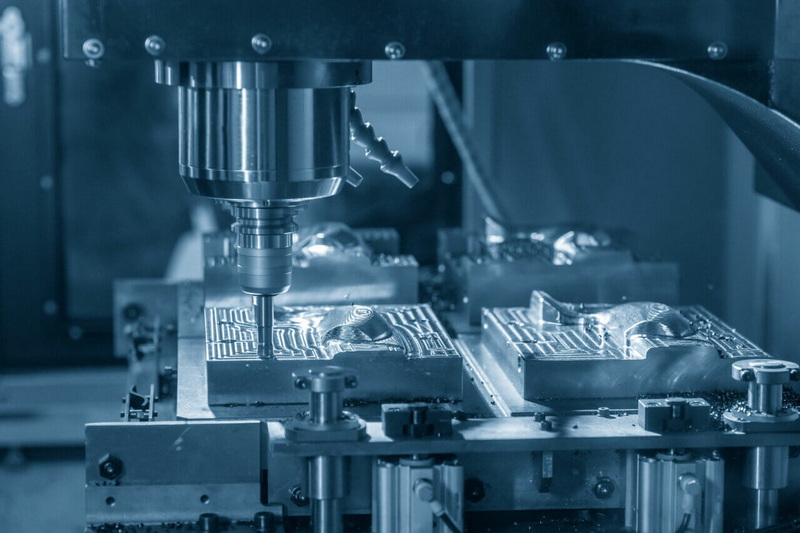
CNC Machining does not have a single, precise invention date, but its origins can be traced to the early 1950s, when MIT demonstrated the first numerically controlled milling machine for the U.S. Air Force. This NC machine, derived from John T. Parsons' earlier work, formed the basis of what would later become CNC Machining once digital computers were added as controllers in the 1960s.[6][11][12][5]
John T. Parsons is widely considered the father of CNC Machining because he pioneered the use of computed coordinate data and punched media to control machine tools for complex aircraft components. His collaboration with the U.S. Air Force and MIT's Servomechanisms Laboratory directly led to the first NC milling machine, setting the stage for modern CNC Machining systems.[8][13][7][9]
Manual machining depends on the operator to position tools and workpieces using handwheels, levers, and visual measurement, while CNC Machining uses programmed digital instructions to drive motion automatically across one or more axes. Because CNC Machining follows the same code for every part, it offers much higher repeatability, supports complex 3D geometries, and significantly increases productivity in comparison with traditional manual machining.[14][1][4][16]
For OEMs, key advantages of CNC Machining include high dimensional accuracy, stable quality across large batches, and the ability to switch quickly between designs by updating CAD/CAM data rather than rebuilding tooling. CNC Machining also handles a wide variety of metals and plastics, integrates with complementary processes such as sheet-metal fabrication and mold manufacturing, and supports both rapid prototyping and long-term production under the same digital workflow.[17][2][3][15]
Recent years have seen CNC Machining adopt multi-axis capabilities, high-speed machining strategies, in-process measurement, and connectivity to cloud-based software and factory networks. At the same time, CNC Machining is increasingly combined with additive manufacturing and robotics, enabling highly flexible, automated production cells that can handle complex OEM projects, shorter lead times, and more customized products without sacrificing precision or reliability.[18][1][3][4][10]
[1](https://www.xometry.com/resources/machining/cnc-machining-history/)
[2](https://www.rapiddirect.com/blog/cnc-history/)
[3](https://www.3erp.com/blog/computer-numerical-control/)
[4](https://en.dmgmori.com/news-and-media/blog-and-stories/blog/cnc-and-nc)
[5](https://en.wikipedia.org/wiki/History_of_numerical_control)
[6](https://engineeringtechnology.org/computer-numerical-control-cnc/history-of-cnc-technology/)
[7](https://yijinsolution.com/cnc-guides/cnc-machining-history/)
[8](https://boruimc.com/cnc-machining-history/)
[9](https://get-it-made.co.uk/resources/the-history-of-cnc-machining)
[10](https://www.americanmicroinc.com/resources/evolution-cnc-machines/)
[11](https://www.3erp.com/blog/cnc-machining-history/)
[12](https://cncmachines.com/history-of-cnc-machines-an-in-depth-look)
[13](https://en.wikipedia.org/wiki/John_T._Parsons)
[14](https://machiningconceptserie.com/history-of-cnc-machining/)
[15](https://laszeray.com/the-history-of-cnc-machinery/)
[16](https://www.james-engineering.com/history-of-cnc)
[17](https://www.assistec.cc/en/the-history-of-cnc-machines)
[18](https://www.youtube.com/watch?v=NVe8Xi0pr2M)

