
Views: 222 Author: Amanda Publish Time: 2025-11-23 Origin: Site


Content Menu
● From Manual Machines to Numerical Control
● The Birth of Numerical Control (NC)
>> Parsons and the Air Force Project
>> The First NC Milling Machine (1952)
● When Did CNC Machining Start?
>> Commercialization and Global Adoption
● Key Milestones in CNC Machining History
● How CNC Machining Transformed Manufacturing
● CNC Machining and Rapid Prototyping
● CNC Machining for Precision Batch and Mass Production
● Materials Used in CNC Machining
● Evolution of CNC Programming
● CNC Machining, Turning, and Complementary Processes
● CNC Machining in the Context of Industry 4.0
● Future Trends in CNC Machining
● Why CNC Machining Matters for Global OEM Buyers
● FAQ
>> 1. When did CNC machining actually start?
>> 2. Why was CNC machining first developed?
>> 3. What industries rely most on CNC machining today?
>> 4. How does CNC machining differ from 3D printing?
>> 5. Why should OEM buyers choose suppliers with strong CNC machining capabilities?
CNC machining has its roots in the mid‑20th century, when manufacturers first began using programmable logic to control machine tools instead of relying solely on manual operation. From early numerical control experiments in the late 1940s to today's smart, connected equipment, CNC machining has grown into one of the most important technologies in global manufacturing.[1][3][7]
Shangchen (sc-rapidmanufacturing.com) operates within this long tradition, leveraging CNC machining alongside rapid prototyping, precision batch production, turning, sheet metal fabrication, 3D printing, and mold manufacturing to support overseas brands, wholesalers, and OEM producers.
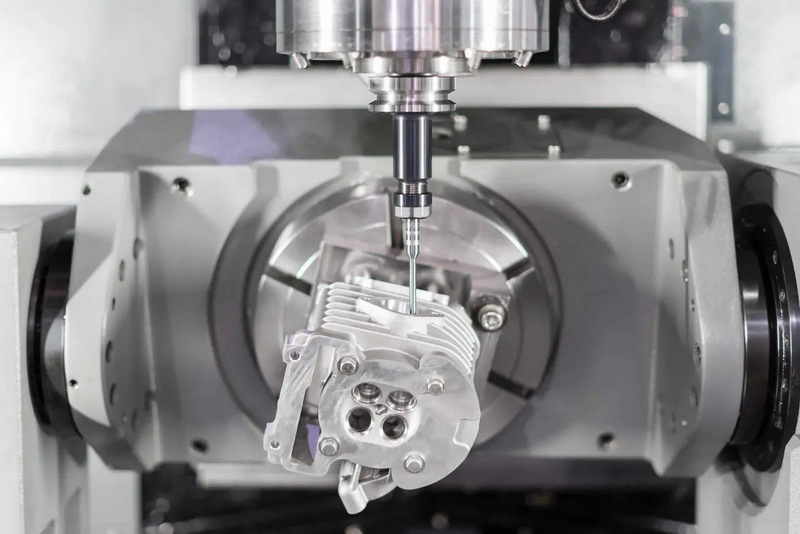
CNC machining stands for Computer Numerical Control machining, a process where computers use programmed code (often G‑code) to control the motion of cutting tools along multiple axes. Computers determine tool position, feed rate, spindle speed, and tool changes, enabling highly precise and repeatable results even for complex 3D geometries.[3][7]
Unlike manual machining, CNC machining separates the task of designing a part from the physical act of cutting it, so engineers work in CAD/CAM software while machines execute instructions automatically. This shift allows one CNC machining operator to supervise multiple machines and maintain consistent quality over long production runs.[5][6]
Before CNC machining, most parts were produced on manual lathes, milling machines, drill presses, and grinders, where skilled operators guided every movement. Manual machining was flexible but slow, and accuracy depended heavily on experience, making repeatability a challenge for large production volumes.[7]
To improve productivity, early automation relied on mechanical cams, jigs, and templates, but these devices were fixed to one pattern; changing a part design required physically replacing or reworking the mechanical control hardware. This limitation set the stage for programmable numerical control, where instructions could be changed simply by altering a code sequence rather than rebuilding a mechanism.[7]
The conceptual starting point for CNC machining appeared in 1949, when John T. Parsons worked on an Air Force research project to automate the production of complex aircraft components. Parsons recognized that by using calculated coordinate points from early computers and feeding them to servo‑driven machine axes, it would be possible to produce shapes such as helicopter blades and airframe skins more accurately and efficiently.[2][4]
This idea led to cooperation with the Massachusetts Institute of Technology (MIT) Servomechanisms Laboratory, where engineers began modifying existing machine tools to follow sequences of numerical instructions. The early system still used punch cards and punched tape to store coordinate data, but it proved that machines could follow abstract, programmable paths rather than being limited to purely mechanical guides.[1][7]
By 1952, MIT had demonstrated a working numerically controlled three‑axis milling machine, widely accepted as the first successful NC milling system. It was a modified Cincinnati Hydrotel milling machine that used motors on each axis and a punched tape reader to convert coded numbers into precise movements, allowing the machining of complex contoured surfaces required for aerospace components.[4][3][1]
This milestone showed that NC could deliver higher precision and repeatability than manual machining, especially in demanding applications where every part needed to match a tight tolerance. The demonstration drew strong interest from the US Air Force and defense contractors, who saw enormous potential for aircraft, missile, and later space‑related parts.[10][1]
Strictly speaking, NC machining began in the late 1940s and early 1950s, but CNC machining—numerical control driven by digital computers—emerged gradually during the 1960s and 1970s. Early NC systems were controlled by relatively simple electronics and punched tape, while CNC machining integrated microprocessors and digital memory, making programming more flexible and reliable.[6][3]
By the late 1950s, patents such as Richard Kegg's 1958 “Motor Controlled Apparatus for Positioning a Machine Tool” established core principles that underlie CNC machining today, including precise servo control and programmable axis movement. As computers became smaller and cheaper, manufacturers integrated full digital control units with machine tools, and by the early 1970s commercial CNC machining centers were entering factories worldwide.[3][4][5][6]
During the 1960s and 1970s, companies like Bendix and others licensed NC technology and began producing commercial control systems for mills, lathes, and other machine tools. Industry adoption accelerated as aerospace, automotive, and tooling shops recognized that CNC machining could cut lead times, improve accuracy, and simplify design changes by editing code rather than retooling hardware.[6][10][1][7]
By the 1980s, the spread of personal computers and more advanced CAD/CAM software made CNC machining programming more accessible, allowing engineers to design complex parts digitally and automatically generate toolpaths. As machine tool builders in the US, Europe, Japan, and later China refined high‑speed, multi‑axis CNC machining centers, the technology became a standard across precision manufacturing.[1][3]
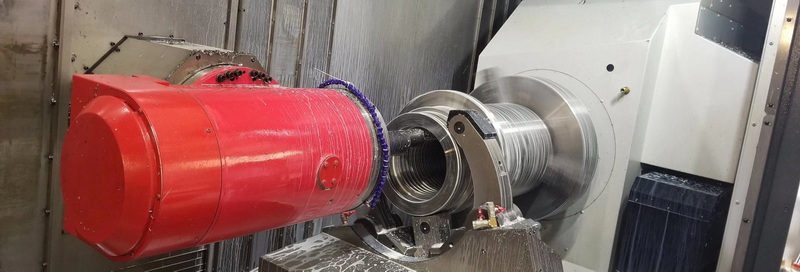
Several key events help define when CNC machining truly took shape as a modern manufacturing method:
- Late 1940s: John T. Parsons proposes using coordinate data and punch cards to control machine motion for aerospace parts.[2][4]
- 1949: An official Air Force‑funded project begins at MIT to develop numerical control for machining.[2][7]
- 1952: MIT demonstrates the first practical NC milling machine, a modified Cincinnati Hydrotel.[3][1]
- 1953–1955: Companies purchase NC rights and start building commercial NC controls; installations increase across the US.[6][7]
- 1958: Richard Kegg files a major patent that encapsulates many foundational CNC machining concepts.[4][5]
- 1960s–1970s: Digital computers and microprocessors replace analog and purely tape‑driven controllers, forming early CNC machining systems.[3][6]
- 1980s onward: Widespread use of CAD/CAM, 3D simulation, and multi‑axis CNC machining in global manufacturing plants.[5][1]
Each step made CNC machining more flexible, affordable, and powerful, turning it from an experimental defense technology into a mainstream industrial tool.
CNC machining changed manufacturing in three main ways: precision, repeatability, and flexibility. Because CNC machining follows exact numerical coordinates, machines achieve tight tolerances consistently, even for complex surfaces or deep cavities that are extremely difficult to handle manually.[6][3]
Repeatability means that once a CNC machining program is validated, the same part can be produced thousands of times with minimal deviation, allowing OEMs to guarantee fit and function across global supply chains. At the same time, flexibility comes from the ability to edit programs quickly: updating a product design is often as simple as modifying the CAD model and regenerating toolpaths rather than building new tooling from scratch.[5][1]
For rapid prototyping, CNC machining offers several advantages over purely additive methods. CNC machining can work directly from block materials such as aluminum, steel, brass, and engineering plastics, delivering prototype parts whose mechanical properties closely match final production materials.[5][6]
This makes CNC machining ideal for functional testing, fit checks, and small pilot runs where strength, heat resistance, or chemical resistance is critical. A service provider like Shangchen can combine CNC machining with 3D printing and sheet metal fabrication so that customers receive prototypes and low‑volume parts using the most appropriate process for each geometry and material.
In mass production and precision batch manufacturing, CNC machining enables OEM customers to scale from a few prototypes to thousands or tens of thousands of units without sacrificing accuracy. Multi‑axis CNC machining centers and CNC turning machines can run around the clock, with automatic tool changers and pallet systems further increasing output.[3][6]
CNC machining is especially valuable when parts feature tight tolerance fits, deep holes, threads, and complex free‑form surfaces such as turbine blades, medical implants, and injection mold cavities. In these cases, alternative processes struggle to match the combination of surface finish, accuracy, and material selection that CNC machining delivers.[1][5]
Over time, material options for CNC machining have expanded well beyond basic steels and aluminum. Today, CNC machining can process:[5][6]
- Common metals: aluminum alloys, carbon steels, stainless steels, brass, copper
- High‑performance metals: titanium alloys, nickel‑based superalloys
- Non‑metals: engineering plastics (POM, PEEK, PC, ABS, Nylon), composites, rigid foams
- Specialty materials: ceramics and certain high‑temperature alloys (with suitable tooling)
Each material requires specific cutting speeds, feeds, coolant strategies, and tool geometries, and modern CNC machining centers can store and recall optimized machining parameters for different materials. This capability allows one CNC machining facility to serve diverse sectors—from consumer electronics to aerospace—without changing its core equipment.[6]
Early NC programs were created manually using tables and handwritten coordinate listings for each tool move, a time‑consuming process that limited complexity. Over time, higher‑level languages like APT and later specialized CAM software automated many calculations, letting programmers define geometry and machining strategies while software generated detailed toolpaths.[8][9][7]
Today, CNC machining programs usually originate in CAD/CAM platforms where engineers design 3D models, choose tools, set machining operations, and simulate cuts to verify collision‑free motion. Post‑processors then turn these operations into machine‑specific G‑code, which is transferred to CNC machining centers over networks or via portable media.[3][6]
As part complexity increased, CNC machining evolved from simple three‑axis control (X, Y, Z) to four‑ and five‑axis machines that can tilt and rotate the workpiece or spindle. In five‑axis CNC machining, the tool can approach the part from almost any angle, improving access to deep features and enabling machining of intricate free‑form surfaces in fewer setups.[5][3]
These capabilities reduce fixture complexity, shorten cycle times, and improve dimensional accuracy because more surfaces can be machined in a single clamping. Advanced multi‑axis CNC machining is now standard in industries such as aerospace, energy, and high‑end mold manufacturing, and is a key differentiator for precision suppliers serving global OEMs.[1][6]
CNC machining is often used as an umbrella term that includes both CNC milling and CNC turning. CNC turning uses a rotating workpiece with a stationary cutting tool to produce cylindrical or axisymmetric parts such as shafts, bushings, and threaded components, while CNC milling uses rotating tools against a stationary or indexed workpiece.[6][3]
In a full‑service factory like Shangchen, CNC machining is typically integrated with other processes:
- Sheet metal fabrication for enclosures and brackets
- 3D printing for geometries that are difficult to machine or for fast design validation
- Injection mold and die manufacturing using CNC machining to cut the cavities and cores
- Surface finishing (anodizing, plating, painting) to deliver end‑use‑ready components
This integrated approach helps overseas customers consolidate suppliers and shorten their product development cycles.
The newest stage in CNC machining is integration into Industry 4.0 and smart manufacturing. Modern CNC machining centers can connect to factory networks, upload real‑time production data, and support predictive maintenance by tracking spindle load, vibration, and temperature trends.[9][6]
Cloud‑based platforms allow remote monitoring of CNC machining jobs, enabling customers to see order progress, review quality reports, and collaborate on engineering changes from anywhere. Some systems employ artificial intelligence to optimize feeds and speeds automatically, adjust to tool wear, and even suggest process improvements based on historical data.[1][6]
Looking ahead, CNC machining will increasingly coexist and cooperate with additive manufacturing to form hybrid manufacturing cells. Hybrid machines that both add and remove material enable new design freedoms, such as building near‑net‑shape structures and then finishing them with CNC machining for precision surfaces.[1][5]
In addition, advances in cutting tool materials, high‑speed spindles, and real‑time adaptive control will further reduce cycle times, expand workable materials, and improve reliability. For OEM customers, the result is shorter development cycles, faster market entry, and higher confidence that components from different production runs and locations will remain interchangeable.[3][6]
For overseas brands, wholesalers, and manufacturers that work with partners like Shangchen, CNC machining is central to achieving a balance between cost, speed, and quality. By choosing a supplier with strong CNC machining capabilities, buyers gain:[5][6]
- Reliable dimensional consistency across multiple batches
- Flexibility for design revisions without the cost of new hard tooling
- Access to a wide material portfolio and secondary processes
- Scalable production from prototypes to mass production
In competitive markets—whether consumer electronics, industrial equipment, or automotive—these advantages can significantly reduce risk and overall lifecycle cost.
CNC machining began as an experimental response to aerospace demands in the late 1940s and early 1950s, when engineers first used numerical data and servo systems to control machine tools. As digital computers and microprocessors matured, NC evolved into full CNC machining, which allowed programmable, repeatable, and highly accurate production of complex parts across many industries.[7][2][1][3]
Today, CNC machining stands at the heart of modern manufacturing, enabling rapid prototyping, precision batch production, and high‑volume OEM supply in metals and advanced materials alike. With the rise of Industry 4.0, hybrid processes, and AI‑assisted optimization, CNC machining will remain a key technology for companies like Shangchen and for global customers seeking dependable, high‑quality components.[6][5]

CNC machining can be traced to early numerical control work in 1949 and the first NC milling machine demonstrated in 1952, but true computer‑based CNC machining emerged during the 1960s and 1970s with the integration of digital control units and microprocessors.[1][3]
CNC machining was initially developed to meet aerospace requirements for accurate, repeatable production of complex components like helicopter blades and aircraft skins, where manual machining could not maintain the necessary tolerances at scale.[4][2]
Today, CNC machining is used in aerospace, automotive, medical devices, electronics, energy, industrial machinery, and consumer products, with almost every sector using CNC machining somewhere in its supply chain.[3][5]
CNC machining is a subtractive process that removes material from a solid block to create a part, while 3D printing is an additive process that builds parts layer by layer; CNC machining typically offers better surface finish, tighter tolerances, and a broader range of engineering materials, particularly metals.[5][6]
Suppliers with advanced CNC machining can offer stable quality, flexible engineering changes, competitive lead times, and the ability to move smoothly from prototypes to mass production, which is crucial for international brands and wholesalers managing complex product portfolios.[6][5]
[1](https://www.3erp.com/blog/cnc-machining-history/)
[2](https://laszeray.com/the-history-of-cnc-machinery/)
[3](https://www.xometry.com/resources/machining/cnc-machining-history/)
[4](https://www.rapiddirect.com/blog/cnc-history/)
[5](https://yijinsolution.com/cnc-guides/cnc-machining-history/)
[6](https://www.americanmicroinc.com/resources/evolution-cnc-machines/)
[7](https://en.wikipedia.org/wiki/History_of_numerical_control)
[8](https://www.youtube.com/watch?v=i-PwGfXjIkk)
[9](https://www.james-engineering.com/the-james-journal/tag/History+of+cnc+machining+timeline)
[10](https://www.toolcraft.com/blog/cnc-machining-a-brief-history/)

