
Views: 222 Author: Amanda Publish Time: 2025-11-11 Origin: Site


Content Menu
● Understanding Turning Lathes
● Why Prototyping Requires Specialized Lathes
● Types of Turning Lathes for Prototyping
>> Specialized & Compact Lathes
● Technical Specifications and Capabilities
● Essential Features to Consider
>> Motor Power and Speed Range
>> Tooling and Quick-Change Systems
>> Programmability and Connectivity
● Best Practices in Prototyping With Turning Lathes
>> Design Tips
>> Maintenance for Reliable Prototyping
● Advanced Features and Automation
>> Automotive
>> Aerospace
● Frequently Asked Questions (FAQ)
>> 1. What is the difference between manual and CNC turning lathes?
>> 2. What materials can a turning lathe process?
>> 3. How fast can prototypes be produced with a turning lathe?
>> 4. What are critical safety features for turning lathes?
>> 5. What upgrade options exist for turning lathes?
Selecting a turning lathe for prototyping is a vital decision for engineers, manufacturers, and designers aiming to accelerate product development. High-precision turning lathes speed up the creation and testing of prototypes, allowing innovations to move rapidly from concept to reality. This comprehensive guide explores crucial considerations, the latest technologies, and actionable selection criteria for choosing a turning lathe suited to modern rapid prototyping needs.[2][6][8]
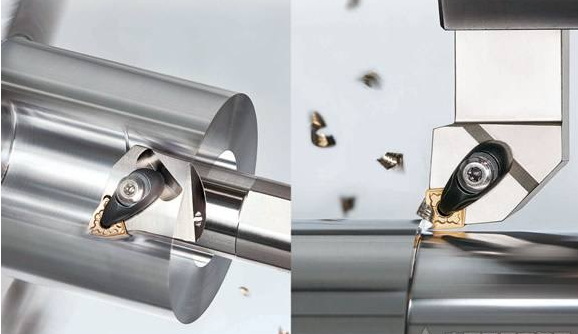
Turning lathes spin a workpiece around a fixed axis, letting cutting tools shape, refine, and finish material with exceptional precision. These machines are indispensable for cylindrical components, shafts, connectors, and housings across metals, plastics, and composite materials. By offering rapid material removal rates, repeatable accuracy, and geometric flexibility, turning lathes form the backbone of prototyping workshops and production environments.[6][9][11]
- Bed: Provides stability and vibration damping during high-speed cutting.
- Headstock and Tailstock: Anchor the workpiece, support long parts, and enable advanced drilling or boring operations.
- Chuck and Tool Post: Secure the material and hold multiple cutting or drilling tools.
- Control Systems: Range from manual handles to advanced digital controllers for CNC models.[12][6]
Prototyping depends on flexibility, speed, and highly repeatable precision. Unlike mass production, prototyping involves frequent changeovers, varied materials, and small batches. Thus, the ideal turning lathe should offer:
- Quick Set-Ups: Reduce downtime for iterative design changes.
- Material Flexibility: Compatible with metals, plastics, and composites.
- Tool Swapping: Fast tool changes for diverse part geometries.
- Programming Support: Especially for CNC lathes, integrating seamlessly with CAD/CAM platforms for minimum errors.[13][2][6]
Manual lathes suit simple prototyping work and users who need hands-on control. Best for wood and basic metals, manual machines offer direct adjustment of speed, feed, and position for foundational learning or low-budget operations.[14][15]
CNC (Computer Numerical Control) lathes automate complex operations, executing intricate geometries and delivering consistent repeatability. These are preferred for high-precision prototyping in aerospace, automotive, and medical fields, thanks to touch-screen interfaces, integrated software, and micron-level tolerances.[16][2][6]
Compact desktop CNC lathes are optimized for small-scale jobs and frequent design changes, making them ideal for R&D labs and startups needing rapid, continuous prototyping.[5][2]
- Maximum Diameter: Up to 100 mm (3.95 in.) on standard prototyping lathes.[1][5]
- Maximum Length: Up to 228 mm (9 in.), with some models accommodating longer bars.[1][5]
- Minimum Diameters: Down to 4 mm (0.16 in.), supporting intricate miniature parts.[1]
- Tolerances: CNC lathes achieve ±0.13 mm (+/-0.005 in.), but advanced models can reach ±0.05 mm (±0.00197 in.) or finer.[5]
- Wall Thickness: Minimum 0.5 mm, walls thinner may not survive machining for most rigid materials.[8][1]
- Threading and Grooving: Most CNC lathes offer robust capabilities for thread cutting, radial and axial holes, grooves, and inserts for advanced prototyping features.[6][5][1]
Ensure the lathe's swing and center length match your largest planned parts. Check for adjustable chucks or expanding mandrels for versatility in handling varied diameters.[8][1]
Higher spindle horsepower and wide speed ranges (typically 180–5000 rpm for prototyping) enable fast removal of materials, suitable for both delicate finishing and aggressive roughing.[2][8]
Advanced CNC lathes provide digital control with direct CAD/CAM integration and onboard simulation. Manual models prioritize robust, accessible dials and micrometer stops for fine-tuning.[2][6]
A flexible tool post with support for multiple insert styles, drills, and holders streamlines changeovers during iterative prototyping. Quick-change systems are invaluable for reducing set-up times.[17][6]
Modern lathes work with steel alloys, aluminum, brass, copper, engineering plastics (ABS, Delrin), and even composites or foams. Specialized models offer compatibility for ceramics, titanium, and exotic materials for advanced prototyping tasks.[7][5]
For prototyping, where the workflow changes often, prioritized safety features include:
- Shielded cutting zones
- Emergency stop buttons
- Interlock doors
- Chip guards and coolant systems[12][8][2]
Evaluate CNC interfaces for compatibility with software like SolidWorks, AutoCAD, and Fusion 360. Built-in networking enables automated quoting, order management, and remote monitoring for Industry 4.0 integration.[6][8]
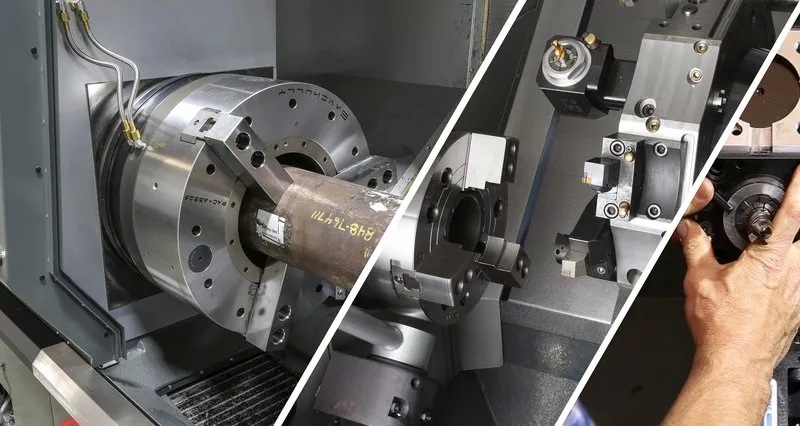
- Initial Investment: Manual lathes cost less but require more labor. CNC units command higher prices but save money on repeated tasks and advanced production.
- Operational Costs: Account for tooling, maintenance, training, and power; energy-efficient models can lower long-term expenses.
- Financing and Leasing: Vendors offer flexible payment plans, supporting growth for startups or smaller shops needing rapid prototyping capacity without a major upfront outlay.[2]
- Specify standard bar stock sizes to simplify sourcing and conserve material.
- Use recommended wall thicknesses and diameters to improve manufacturability and minimize part failure.
- Collaborate with machine operators to adjust tolerances and feature design for optimal efficiency.[8][1]
1. Import CAD models—accurately define geometries for each prototype revision.
2. Set up workpiece and tooling—ensure proper mounting and tool clearance.
3. Verify tool paths—run simulations for optimized cutting and minimized tool wear.
4. Prototype and inspect—use digital calipers and CMMs for immediate feedback.
5. Refine design—implement design feedback for next iteration.
- Clean all chips and swarf post-operation.
- Lubricate moving parts daily.
- Inspect chucks, jaws, and safety guards to keep failures at bay.
- Schedule regular calibration for CNC units to guarantee precision.[12][2]
- Multi-Axis Capabilities: Live-tool CNC lathes can perform drilling, milling, and face machining in a single setup, allowing complex prototypes with tight tolerances.[6]
- Swiss-Type Lathes: Offer unique support for long, slender parts and micromachining thanks to guide bushings and twin tool heads—ideal for medical and electronics prototyping.[6]
- Internet-Enabled Machines: Smart lathes now feature cloud controls, AI-powered quoting, digital workflow integration, and remote diagnostics for streamlined prototyping.[8]
Automotive R&D teams rely on CNC turning lathes for prototyping custom pistons, shafts, fasteners, and connectors that require rapid turnaround and repeatable accuracy. Quick tool changes and CAD integration dramatically reduce development cycles for chassis and engine components.[13][6]
In aerospace, advanced CNC lathes create flight-critical units like sensor housings and landing gear prototypes, leveraging multi-axis capabilities and sub-micron tolerances for stringent certification and testing.[9][6]
Compact CNC lathes play a vital role in prototyping test housings, connectors, and specialized surgical tools using stainless steel and specialty polymers. Regulatory environments—demanding flawless dimensions and traceability—make high-precision, quick-turnaround lathes essential for prototype verification and validation.[5][13]
Choosing the right turning lathe for prototyping drives innovation in product development. By considering workspace requirements, precision, material compatibility, tooling, automation, and safety, manufacturers and designers ensure they have the right equipment to deliver accurate prototypes quickly. The latest CNC and specialized lathes can dramatically shorten prototyping cycles, enabling agile iteration and flawless replication in industries where speed and quality matter most. A smart investment in a suitable turning lathe positions any prototyping operation for responsiveness and ongoing success.[9][13][8][2][6]
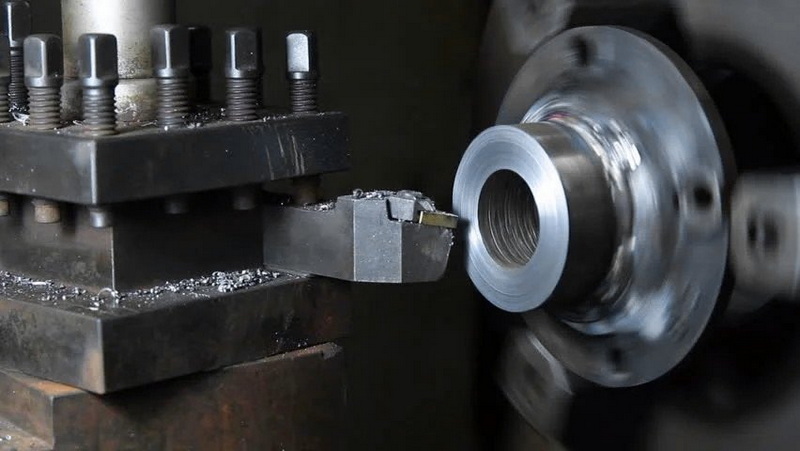
Manual turning lathes use operator-controlled handwheels and levers—ideal for simple parts and basic materials. CNC lathes use computer-driven code for automated, precise, and repeatable machining work, better suited for rapid prototyping and complex geometries.[14][16][6]
Modern lathes handle most metals (steel, aluminum, brass), engineering plastics, composites, and occasionally wood or ceramics. Always check your lathe's specifications for compatible speed ranges, tool inserts, and coolant usage according to the material.[7][13][5]
CNC turning lathes can deliver highly precise prototypes within 24–48 hours, depending on complexity and part size. Manual lathes are slower but suitable for low-volume work and early-stage design verification.[13][6]
Look for emergency stop buttons, shielded moving parts, chip guards, interlocks, and proper training for safe operation in prototyping environments. Regular inspection and maintenance are essential to avoid accidents and ensure reliability.[12][2][8]
Common upgrades include additional tool holders, automatic tool changers, digital readouts, improved coolant systems, Industry 4.0 connectivity, and advanced software compatibility. These enhancements improve workflow efficiency and high-precision production.[2][8][6]
[1](https://www.protolabs.com/services/cnc-machining/cnc-turning/design-guidelines/)
[2](https://tormach.com/machines/lathes/8l-lathe.html)
[3](https://www.pcbway.com/rapid-prototyping/CNC-machining/CNC-Turning.html)
[4](https://www.3erp.com/blog/cnc-lathe/)
[5](https://kk-inac-us.com/prototyping/cnc-turning-lathing/)
[6](https://www.xometry.com/capabilities/cnc-machining-service/cnc-turning-service/)
[7](https://prototypes.prioritydesigns.com/capabilities/machining/cnc-turning/)
[8](https://www.makerverse.com/resources/cnc-machining-guides/best-practices-designing-for-cnc-turning/)
[9](https://www.protolabs.com/resources/design-tips/cnc-turning/)
[10](https://rapidaxis.com/capabilities/production-prototype-cnc-machining/production-prototype-cnc-turning/)
[11](https://www.3erp.com/blog/lathe/)
[12](https://cncwmt.com/qa/how-does-a-lathe-work/)
[13](https://www.unitedtoolmachine.com/machining/quick-turn/)
[14](https://www.reddit.com/r/Machinists/comments/1evdf0r/cnc_vs_manual_machine_for_garage_prototyping_shop/)
[15](https://www.axminstertools.com/us/ideas-advice/buying-a-woodturning-lathe/)
[16](https://cncmachines.com/cnc-lathe/l)
[17](https://turntechprecision.com/clueless-machinist/2020/8/25/10-machining-operations-performed-on-a-lathe)

