
Views: 222 Author: Amanda Publish Time: 2025-11-04 Origin: Site


Content Menu
● The Foundation: Why Quality Matters in Moulding Production
● The Moulding Production Process: Key Stages
>> Stage 1: Design and Conceptualization
>> Stage 2: Material Selection
>> Stage 4: Process Optimization and Machine Calibration
>> Stage 6: Sample Testing and Process Validation
>> Stage 7: Mass Production and Continuous Monitoring
>> Stage 8: Final Inspection and Packaging
● Defining and Implementing Quality Standards
>> Core Quality Management Systems
>> Industry-Specific Standards
>> Compliance and Traceability
● Best Practices for Reliable Moulding Production
>> Scientific Moulding and Process Optimization
>> Material Testing and Responsible Sourcing
>> Rigorous Inspection Techniques
>> Maintenance, Tool Care, and Calibration
>> Traceability and Documentation
● Defect Management: Prevention and Rapid Correction
● Quality as a Differentiator in OEM Partnerships
● Future Trends in Moulding Production Quality
● Frequently Asked Questions (FAQ)
>> 1. What are the most important quality certifications for moulding production?
>> 2. How do you prevent common defects in moulding production?
>> 3. Why is traceability critical?
>> 4. What is the impact of surface finish standards?
>> 5. How is process control maintained during high-volume production?
Moulding production is the driving force behind countless innovations across automotive, consumer electronics, medical devices, aerospace, and many other sectors. As markets and end-users continue to demand flawless components, quality expectations rise year over year. Leading OEMs, wholesalers, and brand owners must insist on stringent, standardized QA processes to guarantee functionality, reliability, and compliance throughout every manufacturing project.[1][6]
This article gives an in-depth perspective on the quality standards, certifications, core processes, and inspection protocols that define world-class moulding production. It features industry best practices, evolving trends, and expert advice to help buyers, engineers, and purchasing managers make informed, future-proof sourcing decisions.
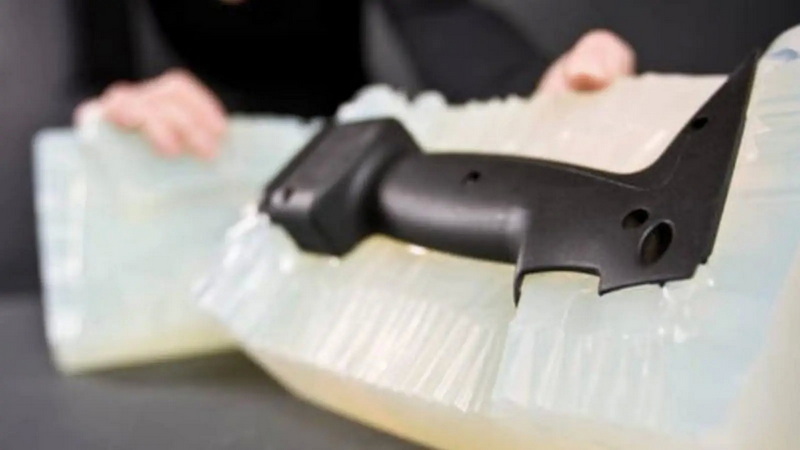
Modern moulding production extends far beyond achieving a specific part shape. Quality standards ensure all characteristics—dimensional accuracy, mechanical strength, cosmetic appearance, and physical integrity—meet or exceed both end-use requirements and regulatory expectations.[5][6]
Low-quality moulded parts can fail prematurely, cause costly recalls, result in product liability exposure, and damage a company's reputation. Consistently high-quality production, on the other hand, brings benefits such as:
- Higher product reliability and safety.
- Fewer defects and QCs rejections.
- Reduced recalls and warranty claims.
- Improved customer satisfaction and brand trust.
- Cost savings from lower scrap rates and reprocessing.
For any brand outsourcing manufacturing, knowing and enforcing quality standards is not just wise—it's essential for long-term survival.
Moulding production is a multistep journey from raw material to finished component, each phase requiring careful design and quality oversight:
A successful project starts with precise engineering analysis. CAD models are validated via simulation and collaboration between customer and supplier to clarify component requirements, critical tolerances, surface finish expectations, and manufacturability.[6]
The type of material chosen for moulding production significantly affects the downstream quality of the parts. Common criteria for material selection include:
- Mechanical properties and strength.
- Heat and chemical resistance.
- Cost effectiveness and availability.
- Regulatory compliance for the application (medical, food, aerospace, etc.).
- Environmental impact such as recyclability or use of biodegradable materials.[9]
Advanced manufacturers conduct raw material testing, verifying chemical composition, performance profiles, and suitability for specific environments or secondary finishing processes.[2]
Precision mould fabrication, typically using CNC machining, ensures dimensional accuracy and optimal flow during the injection or forming process. All core, cavity, and insert features are machined to tight tolerances, heat treated for wear resistance, and validated against 3D part files.[11][2]
The manufacturing team runs process development trials to define the optimal “process window”: the range of machine settings (temperature, pressure, injection speed, hold time, cooling rate) that result in defect-free parts. Scientific molding methodology is used to lock in parameters and guarantee repeatable outcomes from one lot to the next.[1][5]
Surface finish criteria must be precisely defined according to functional or aesthetic requirements. Industry standards such as SPI surface finish grades dictate permissible levels of gloss, texture, and tool marks. These specifications impact tool steel selection, EDM/polishing techniques, and downstream processing steps.[8]
Before mass production, sample batches of moulded parts are submitted for first article inspection (FAI). Here, dimensional and cosmetic accreditation is performed using calipers, CMMs, colorimeters, hardness testers, and other metrology devices. Production Part Approval Process (PPAP) validation is often required in automotive and other advanced sectors to confirm process stability.[1]
Full-scale production commences only after all parameters are validated. Automated in-line inspection (visual, weight, volume, and sometimes machine vision systems) and periodic audits ensure continuous adherence to quality baselines.[12][2]
The last line of defense is a comprehensive visual and functional inspection, followed by robust packaging protocols to prevent post-production contamination or damage.[4][6]
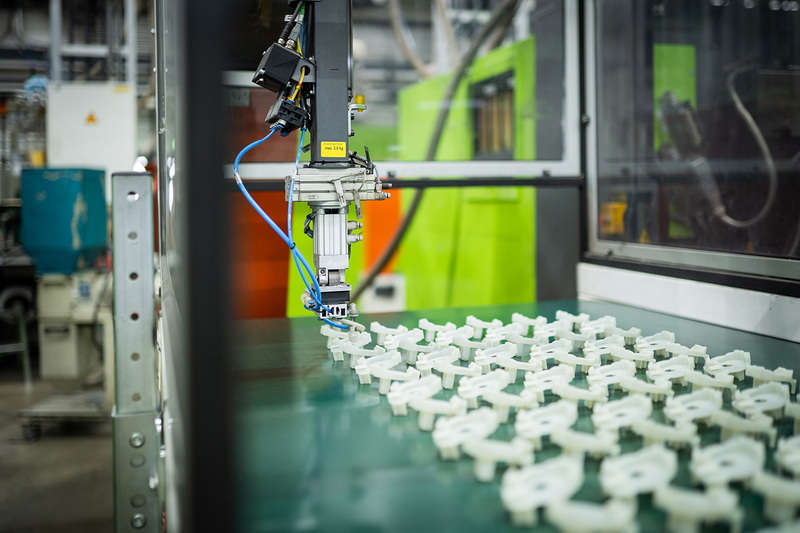
Quality in moulding production is not accidental; it is the result of rigorous standard setting, execution, and audit. The most respected factories rely on internationally recognized benchmarks:
- ISO 9001: Framework for all aspects of quality management systems.[13][14]
- IATF 16949: Automotive sector-specific controls focusing on defect prevention, traceability, and continuous improvement.
- ISO 13485: Specialized for medical device manufacturing, covering design qualification, process validation, and risk management.[1]
Manufacturers should also maintain strict procedures for calibration, equipment maintenance, document control, and continuous training.[2][6]
- ASME GD&T (Geometric Dimensioning and Tolerancing): Controls critical-to-function dimensions, aligning design intent with manufacturing capability.[1]
- SPI Mould Classifications: Class 101 to 105, designed to match mould investment to production volumes, expected tool life, and material aggressiveness. Class 101, for example, supports over 1 million cycles and demands hardened components, rigorous temperature control, and corrosion protection inside cooling channels.[7]
Surface finish grades (such as SPI grades A, B, C, D) directly determine the tool's polishing/machining approach and the process window during production. Specifications should always be documented during the RFQ and tooling development phase for optimal efficiency.[8]
Traceability underpins robust quality assurance, especially when dealing with regulatory or high-liability industries. Every production batch is assigned a unique ID, with detailed logs covering material lots, machine settings, inspection data, and operator signatures—providing a reliable pathway for root cause analysis in the rare event of field failure.[2]
Scientific moulding relies on careful data collection at every step to optimize and standardize manufacturing conditions. Through statistical process control (SPC) and design of experiments (DOE), process engineers:
- Identify critical variables (temperature, pressure, fill speed, hold times).
- Run iterative experiments to confirm the optimal process window.
- Monitor ongoing runs for deviations using control charts.
- Make real-time adjustments, minimizing human error and machine drift.[5][1]
Pre-production material testing—chemical analysis, mechanical property validation, moisture content checks—ensures incoming resin or metals meet all stated requirements and are appropriate for secondary processes (plating, painting, ultrasonic welding, etc.).[9][2]
Responsible factories are increasingly committed to sustainable sourcing by using recycled or biodegradable materials when feasible, as well as reducing floor and environmental waste.[9]
Inspections are multi-layered and include:
- Visual checks for surface defects, color mismatches, or unintended texture.
- Dimensional checks using calipers, CMMs, and optical scanners for critical-to-function features.
- Functional tests like pull, flex, or fatigue tests.
- First article inspections to validate line setup.
- Ongoing audits during production to enforce standards and record exceptions.[4][6][12]
Routine cleaning, lubrication, and periodic tool inspection extend mould life and reduce unexpected failures. Tooling logs record each maintenance cycle, major repairs, and consumable replacements, supporting both internal audits and external certifications.[5][2]
Complete documentation is crucial for certifications and customer audits. Every process—from material receipt through production, testing, and shipping—must be tracked and logged for transparency, recall readiness, and regulatory reporting.[12][2]
No process is immune to occasional nonconforming product. The best moulding production operations feature robust defect prevention and response strategies:
- Early defect detection: Integrated sensors and machine learning algorithms spot anomalies before they escalate, triggering corrective actions or line shutdowns.
- Common defect analysis: Identifying root causes of short shots, sink marks, warping, or burn marks, then introducing countermeasures (improved mould cooling, design changes, venting, or cycle adjustments).[15][4]
- Continuous improvement: Issues found during audits feed into a loop of process refinement, operator retraining, and engineering review for sustained long-term gains.[2]
Human expertise is indispensable in moulding production, especially for complex assemblies or premium surface finishes. Leading factories invest in:
- Continuous training and re-certification for operators and engineers.
- Internal skill development programs based on international best practices.
- Certification that validates technician capabilities in critical inspection, process control, and machine use.[16][6]
In a crowded landscape of global suppliers, those with documented process control and an unyielding commitment to quality can offer powerful advantages:
- Faster project onboarding through documented standards and agreed protocols.
- Reduced modification cycles due to right-first-time manufacturing.
- Fewer communication errors, especially for distributed and international teams.
- A measurable, audit-ready approach to risk management.
Driven by digital transformation and eco-regulatory pressures, the future of moulding production will see:
- Increased use of AI and machine vision for automated, real-time inline QC.
- Greater adoption of eco-friendly materials without sacrificing performance.
- Tighter coupling of design and manufacturing via integrated digital twins.
- Expansion of traceability using blockchain in regulated industries.[12][1]
High-precision, reliable, and consistent moulding production requires more than advanced machines or skilled workers: it demands a holistic culture of quality anchored in international standards, robust documentation, real-time monitoring, and a philosophy of never-ending improvement. As a buyer or OEM, always partner with suppliers whose systems, certifications, skills, and dedication to transparent process control justify your full confidence. Such partnerships safeguard product quality, speed market launches, reduce lifecycle costs, and strengthen competitiveness while future-proofing your business.

ISO 9001, IATF 16949 (automotive), and ISO 13485 (medical devices) are industry-leading standards. They address general quality management, traceability, and process validation specific to each sector.[14][13][1]
Robust process development, SPC analytics, frequent maintenance, well-trained operators, and continuous audits are key. Fast detection and root cause analysis ensure issues like sink marks, warping, or short shots are promptly eliminated.[15][4][5]
Traceability ensures that any quality issue can be rapidly isolated to specific material lots, machines, or personnel actions. It also satisfies compliance demands in high-liability or regulated industries.[2]
Surface finishes affect cosmetic appearance, part release from the mould, and sometimes even mechanical performance. Detailed specs allow suppliers to pick the right tooling, maintenance, and process settings.[8]
Process control is ensured by defining the optimal process window, applying scientific moulding, using automated sensors and cameras, running in-process checks, and calibrating all equipment to prevent drift and maintain statistical conformity.[6][1]
[1](https://www.protolabs.com/resources/guides-and-trend-reports/designing-for-moldability-fundamental-elements/)
[2](https://www.ace-mold.com/moulding-components/)
[3](https://www.ksplastic.com/blog/comprehensive-guide-to-plastic-injection-molding/)
[4](https://firstmold.com/tips/quality-and-acceptance-standards-for-injection-molded-parts/)
[5](https://rjginc.com/how-to-implement-effective-injection-molding-quality-control-measures/)
[6](https://jdiplastics.com/quality-assurance-in-plastic-injection-molding-best-practices-and-standards/)
[7](https://upmold.com/spi-mold-classifications-spi-mold-standards/)
[8](https://www.plasticdesign.com/blog/surface-finish-standards-in-injection-molding/)
[9](https://www.basilius.com/blog/the-complete-guide-to-injection-molding-materials/)
[10](https://www.kaysun.com/blog/the-types-of-spi-mold-classifications)
[11](https://www.3erp.com/blog/the-entire-process-of-mold-making/)
[12](https://www.3erp.com/blog/cnc-machining-quality-control-and-inspection/)
[13](https://www.kaysun.com/blog/top-plastic-injection-molding-certifications)
[14](https://www.midstatemold.com/what-certifications-should-your-manufacturer-have/)
[15](https://www.3erp.com/blog/injection-molding-defects/)
[16](https://www.traininteractive.com/training/certification/injection/professional/)

