
Views: 222 Author: Amanda Publish Time: 2025-12-23 Origin: Site


Content Menu
● Understanding Rapid Prototyping
● What Is Rapid Prototyping Software?
● Main Types of Rapid Prototyping Software
>> CAD: Digital Geometry for Rapid Prototyping
>> CAE: Simulation-Driven Rapid Prototyping
>> CAM: CNC Programming for Rapid Prototyping
>> Additive Manufacturing Preparation
>> Collaboration, PLM, and Cloud Platforms
● Key Features to Look for in Rapid Prototyping Software
● How Rapid Prototyping Connects to Physical Manufacturing
>> CNC Machining and Turning in Rapid Prototyping
>> Sheet Metal Rapid Prototyping
>> 3D Printing for Rapid Prototyping
● Benefits of Rapid Prototyping Software for Product Development
>> Reduced Cost and Development Risk
>> Better Communication and Stakeholder Alignment
● Rapid Prototyping for OEMs and Global Supply Chains
● Typical Rapid Prototyping Workflow with a Professional Partner
● FAQ About Rapid Prototyping Software
>> 1. What is rapid prototyping software used for?
>> 2. How does rapid prototyping differ from traditional prototyping?
>> 3. Which industries rely most on rapid prototyping software?
>> 4. Do small companies and startups also need rapid prototyping software?
>> 5. How can OEMs choose the right rapid prototyping partner?
Rapid prototyping software is a set of digital tools that helps engineers, designers, and manufacturers transform ideas into testable models at high speed, using technologies such as CNC machining, 3D printing, sheet metal fabrication, and molding. It connects virtual design data directly to manufacturing workflows so that physical prototypes can be produced, evaluated, and refined in short, iterative cycles before full-scale production.[1][2][3][4]
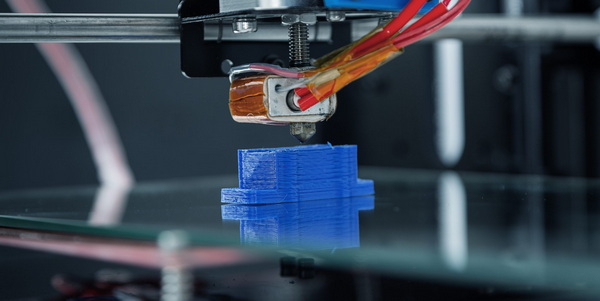
Rapid prototyping is a development strategy focused on quickly creating physical or virtual models to validate form, fit, and function early in the lifecycle. Instead of relying on one or two “final” prototypes, teams use rapid prototyping to run many small experiments, each informed by user feedback and engineering data.[5][6][7][8]
In manufacturing, rapid prototyping sits between concept design and mass production, serving as the bridge that reduces risk and compresses time to market. The combination of rapid prototyping software and advanced equipment such as CNC machines and industrial 3D printers enables high-quality results even at low volumes.[9][10][3][5]
Rapid prototyping software is a collection of applications—CAD, CAE, CAM, additive preparation, and collaboration tools—designed to support fast and iterative design-to-manufacturing workflows. It manages geometry creation, performance simulation, toolpath programming, data exchange, and version control across the entire rapid prototyping process.[2][11][9][1]
Key characteristics of modern rapid prototyping software include:
- End-to-end integration from concept modeling to CNC machining, sheet metal cutting, 3D printing, and rapid molding.[9][1]
- High iteration speed so design changes can be implemented, simulated, and manufactured in days or even hours.[12][5]
- Manufacturing-aware design rules that reduce errors and make rapid prototyping parts easier to produce accurately.[3][2]
Different categories of software collaborate to deliver a complete rapid prototyping environment, especially in OEM and precision manufacturing scenarios.[2][9]
Computer-Aided Design (CAD) tools create the detailed 2D and 3D models used as the digital master for rapid prototyping. They define everything from external shape to internal features, tolerances, and assemblies.[11][2]
- Popular CAD platforms used for rapid prototyping include SolidWorks, CATIA, Siemens NX, Inventor, Fusion 360, and Shapr3D.[13][9]
- Parametric modeling in these systems allows fast edits to dimensions, patterns, and configurations, which is crucial when rapid prototyping requires many design variations.[14][13]
Computer-Aided Engineering (CAE) tools perform structural, thermal, and fluid simulations on CAD models to predict real-world behavior before physical prototypes are produced. This virtual rapid prototyping reduces the number of physical trials while improving the quality of each iteration.[4][11]
- Finite Element Analysis and Computational Fluid Dynamics help evaluate stiffness, strength, fatigue, temperature, and flow.[6][4]
- CAE integrated into rapid prototyping enables quick design adjustments when simulations reveal weak points, excessive deformation, or poor thermal performance.[6][2]
Computer-Aided Manufacturing (CAM) tools translate CAD models into machine instructions for CNC mills, lathes, routers, and multi-axis centers. CAM is a core pillar of rapid prototyping when high precision and production-grade materials are required.[15][11]
- CAM systems generate toolpaths, optimize cutting strategies, and simulate machining operations to avoid collisions and tool breakage.[15][9]
- Integrated CAD/CAM platforms used for rapid prototyping reduce file translation issues and allow engineers to update toolpaths immediately after a design change.[16][1]
For 3D printing-based rapid prototyping, specialized software slices CAD models into layers, adds supports, and sets machine parameters. These tools are essential for turning design data into printable builds that balance speed, quality, and material usage.[8][4]
- Build preparation software manages orientation, infill, support density, and layer height, which all influence the outcome of rapid prototyping parts.[4][8]
- Many platforms now combine CAD with additive preparation, so designers can tweak geometry and instantly see how it affects build time and material consumption in rapid prototyping runs.[1][9]
Collaboration and Product Lifecycle Management systems tie the whole rapid prototyping ecosystem together. They manage access, revisions, approvals, and traceability across internal teams and external suppliers.[13][1]
- Cloud-based review tools allow OEM engineers to comment on 3D models, record decisions, and drive rapid prototyping cycles in parallel.[12][13]
- PLM solutions store the digital thread—from concept to prototype to production—so that successful rapid prototyping data can be reused in later phases.[17][13]
Choosing the right rapid prototyping software stack is crucial for efficiency, especially for overseas OEM projects that involve CNC machining, sheet metal, and molding.[18][9]
Important features include:
- Fast iteration and branching
- Version control and branching make it easy to explore alternative designs in parallel during rapid prototyping.[7][14]
- Change tracking helps teams understand the impact of each iteration on performance and manufacturability.[14][12]
- DFM and process awareness
- Built-in checks for wall thickness, draft angles, undercuts, and minimum feature sizes reduce failed prototypes and scrap.[3][2]
- Process-specific templates for CNC machining, sheet metal fabrication, and 3D printing make rapid prototyping more predictable.[18][9]
- Automation and templates
- Macros, parametric models, and process templates help standardize repeat rapid prototyping tasks such as enclosure variations or bracket families.[16][14]
- Automation reduces manual programming time and shortens lead times for each new prototype batch.[9][15]
- Measurement and feedback integration
- Integration with inspection data (CMM, 3D scanning) closes the loop between rapid prototyping outputs and design adjustments.[10][3]
- Measurement feedback ensures the next rapid prototyping iteration converges more quickly to the required tolerances.[19][10]
Rapid prototyping only delivers full value when digital workflows are tightly linked to physical processes such as CNC machining, turning, sheet metal fabrication, 3D printing, and rapid molding.[20][3]
CNC machining offers excellent precision, repeatability, and material flexibility, making it ideal for rapid prototyping of functional parts that mirror production components. Turning is particularly efficient for cylindrical and rotational parts.[19][15]
- Rapid prototyping with CNC allows fine surface finishes, tight tolerances, and robust materials including stainless steels, aluminum alloys, copper, and engineering plastics.[15][19]
- Advanced CAD/CAM integration supports fast design updates, adaptive machining strategies, and parametric programming to keep rapid prototyping cycles short even when requirements change.[16][15]
Sheet metal rapid prototyping uses laser cutting, punching, bending, and welding to build enclosures, brackets, chassis, and structural parts directly from CAD data.[18][3]
- Specialized sheet metal modules in rapid prototyping software generate flat patterns, calculate bend allowances, and simulate forming steps to avoid collisions and cracks.[2][18]
- Rapid sheet metal prototypes allow OEMs to validate component stacking, connector locations, cooling paths, and assembly access early in the design.[17][3]
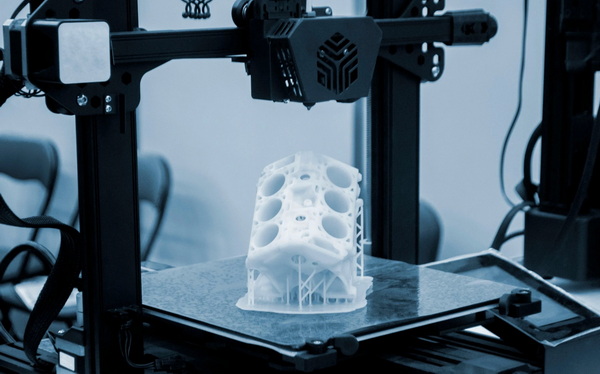
3D printing is one of the most recognizable technologies associated with rapid prototyping, known for its ability to produce complex shapes without tooling. It is especially useful for early concept models, ergonomic studies, and internal geometry that would be difficult to machine.[3][4]
- Rapid prototyping with 3D printing supports plastics, resins, metals, and elastomers, offering a wide range of mechanical and aesthetic properties.[8][4]
- For OEMs, additive rapid prototyping enables fast design validation while keeping tooling investments low until the design is stable.[20][4]
Rapid tooling extends rapid prototyping principles into short-run molds, typically made from aluminum, soft steel, or 3D-printed inserts.[8][3]
- Molding-oriented rapid prototyping software analyzes draft, wall thickness, gates, runners, and cooling channels to reduce the risk of defects.[2][8]
- Short-run molds used in rapid prototyping help OEMs get production-grade parts in small quantities for compliance testing, pilot builds, and early market trials.[21][3]
The combination of rapid prototyping software and advanced manufacturing services creates significant strategic value for product development teams.[5][14]
Rapid prototyping compresses the time between idea and market introduction by enabling frequent, low-risk iterations. By relying on digital workflows that connect design, simulation, and manufacturing, teams avoid long delays associated with traditional tooling and change management.[5][12]
- Prototypes can move from CAD to CNC or 3D printing in days, allowing overlapping design, testing, and marketing activities.[20][3]
- Early detection of design errors prevents late-stage rework that would otherwise delay product launches.[6][5]
While rapid prototyping itself adds direct costs, it often reduces the total development budget by preventing expensive failures later.[14][5]
- Early functional prototypes highlight usability, reliability, and manufacturability problems before large investments in tooling and inventory are made.[5][6]
- Rapid prototyping encourages small, incremental decisions instead of committing to a single, untested design path.[12][14]
Physical prototypes produced via rapid prototyping are easier for non-technical stakeholders to understand than abstract drawings or slides.[17][5]
- Tangible models improve collaboration among engineers, management, marketing, and end users by giving everyone a shared reference.[6][5]
- Rapid prototyping supports on-site and remote reviews where decision-makers can evaluate components and assemblies in real time.[22][17]
When rapid prototyping is used consistently, design flaws and performance issues can be addressed before they become systemic.[12][6]
- Functional rapid prototyping allows rigorous mechanical, thermal, and environmental testing on realistic units rather than approximations.[15][6]
- Feedback from these tests helps refine materials, tolerances, and geometries, resulting in more robust and reliable products at launch.[10][15]
OEM brands working with international manufacturing partners rely heavily on rapid prototyping software and services to keep projects on track across time zones and languages.[21][22]
- Digital rapid prototyping workflows allow OEMs to submit CAD data, receive design-for-manufacturing feedback, and approve revised models without physical travel.[21][17]
- Suppliers that combine CNC machining, sheet metal, 3D printing, and molding under one roof can offer unified rapid prototyping solutions and smoother transitions from prototype to low-volume production.[23][24]
By using standardized file formats and clear DFM feedback loops, OEMs and manufacturing partners can co-create rapid prototyping strategies that balance speed, cost, and performance for each project.[22][21]
While every project is different, a common rapid prototyping workflow in OEM manufacturing follows a consistent pattern.[21][3]
1. Requirement definition and data submission
- OEM teams share CAD files, target materials, quantities, and performance goals suited to rapid prototyping.[3][21]
- Non-geometric requirements such as standards, certifications, and test conditions are also communicated.[22][17]
2. Design-for-manufacturing review
- Manufacturing engineers run DFM checks in rapid prototyping software to detect thin walls, tight radii, or difficult-to-machine features.[9][3]
- Recommendations may include changing fillets, increasing draft angles, or modifying wall thickness to optimize rapid prototyping yield.[18][2]
3. Process selection and quotation
- Based on geometry and requirements, the partner proposes CNC machining, turning, sheet metal, 3D printing, molding, or a hybrid rapid prototyping route.[20][3]
- Pricing and lead time reflect both digital preparation work and physical production steps.
4. Programming and simulation
- CAM programmers generate toolpaths for CNC rapid prototyping, while additive specialists prepare sliced builds and supports.[9][15]
- Simulations verify that machining, printing, or molding operations are collision-free and within tolerance windows.[15][9]
5. Prototype manufacturing and finishing
- Parts are produced using selected rapid prototyping technologies, then deburred, polished, coated, or assembled as required.[18][15]
- Surface finishes and cosmetic details are refined to match or approximate production intent.
6. Inspection, testing, and iteration
- Dimensional inspections and functional tests feed back into CAD models and rapid prototyping parameters.[10][19]
- If necessary, the cycle repeats with updated designs until the prototype meets all targets.
Rapid prototyping software combines CAD, CAE, CAM, additive preparation, and collaboration tools into a unified ecosystem that moves products from idea to physical reality with exceptional speed. By linking directly to CNC machining, sheet metal fabrication, 3D printing, and rapid molding, it enables frequent, low-risk iterations that improve product quality and cut time-to-market for OEMs and manufacturers worldwide. When supported by experienced manufacturing partners, rapid prototyping becomes more than a technical method—it becomes a strategic capability that drives innovation, reduces development risk, and gives companies a durable competitive advantage.[1][14][5][2][3][9]
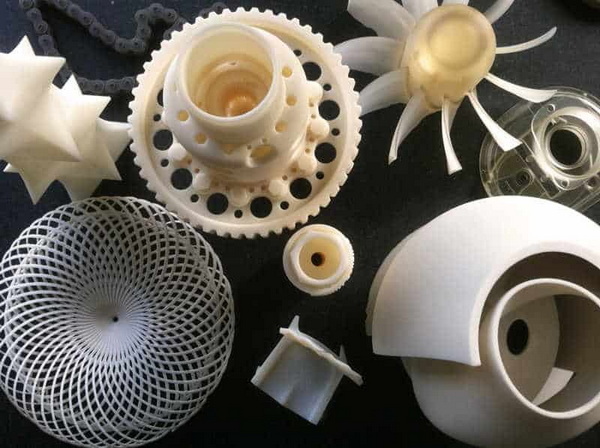
Rapid prototyping software is used to design, simulate, and prepare parts for fast manufacturing through CNC machining, sheet metal processes, 3D printing, and rapid molding. It helps teams create, test, and refine prototypes quickly so that design problems are solved before large-scale production begins.[1][5][2][3]
Traditional prototyping often involves long cycles, expensive tooling, and limited iterations, while rapid prototyping emphasizes frequent, low-cost iterations using digital workflows. Rapid prototyping software allows teams to modify CAD models and regenerate manufacturing data in hours or days instead of waiting weeks for new tools.[14][5][12][3]
Industries that commonly use rapid prototyping include automotive, aerospace, consumer electronics, medical devices, industrial equipment, and IoT hardware. These sectors benefit from rapid prototyping when validating complex geometries, tight tolerances, and strict regulatory requirements before full production.[4][14][6][3]
Yes, rapid prototyping is especially useful for startups and small companies that must validate ideas quickly with limited budgets. By using rapid prototyping services and flexible software tools, smaller teams can access professional-grade CNC machining, sheet metal, and 3D printing without owning their own equipment.[25][5][21][20]
OEMs should look for partners that combine robust rapid prototyping software workflows with diverse manufacturing capabilities like CNC, sheet metal, and molding. Important criteria include DFM support, clear communication, predictable lead times, quality certifications, and the ability to scale from rapid prototyping to low-volume and bridge production.[24][21][18]
[1](https://www.autodesk.com/solutions/rapid-prototyping)
[2](https://www.scan2cad.com/blog/cad/rapid-prototyping/)
[3](https://www.fictiv.com/articles/rapid-prototyping-guide)
[4](https://bigrep.com/posts/rapid-prototyping-3d-printing/)
[5](https://www.nordell.co.uk/news/advantages-of-rapid-prototyping/)
[6](https://www.monarch-innovation.com/rapid-prototyping-in-product-development)
[7](https://www.productplan.com/glossary/rapid-prototyping/)
[8](https://formlabs.com/blog/ultimate-guide-to-rapid-prototyping/)
[9](https://www.autodesk.com/products/fusion-360/fusion-for-manufacturing)
[10](https://www.datron.com/industries/research-development/)
[11](https://encycam.com/articles/understanding-the-difference-between-cad-cam-and-cae-a-comprehensive-guide/)
[12](https://www.sei.com/insights/article/achieving-faster-better-product-development-with-rapid-prototyping/)
[13](https://www.shapr3d.com/content-library/cad-software-comparison-2025-complete-analysis-of-11-leading-platforms-for-manufacturing)
[14](https://americanchase.com/advantages-of-rapid-prototyping/)
[15](https://frigate.ai/cnc-machining/cnc-machining-in-rapid-prototyping-and-product-development/)
[16](https://us.arrk.com/a-powerful-fusion-cnc-machining-rapid-prototyping-method/)
[17](https://www.creationtech.com/solutions-backup-2023/prototyping-and-npi/rapid-prototyping/)
[18](https://www.zintilon.com/blog/guide-on-rapid-prototypes/)
[19](https://robersontool.com/prototype-machining/)
[20](https://fathommfg.com/rapid-prototyping)
[21](https://quickparts.com/rapid-manufacturing-services-for-oem/)
[22](https://www.labsphere.com/capabilities/responsive-manufacturing/)
[23](https://www.protolabs.com)
[24](https://www.pcbway.com/rapid-prototyping/)
[25](https://prototaluk.com/blog/advantages-of-rapid-prototyping/)
[26](https://www.bdeinc.com/blog/cnc-rapid-prototyping-trends-and-innovations-transforming-the-industry/)
[27](https://uptivemfg.com/rapid-prototyping-companies/)
[28](https://revpart.com)

