
Views: 222 Author: Amanda Publish Time: 2025-12-23 Origin: Site


Content Menu
● Understanding Rapid Prototyping
● How the Rapid Prototyping Model Works
>> Core Steps in a Rapid Prototyping Model
● Common Rapid Prototyping Technologies
>> 3D Printing for Rapid Prototyping
>> CNC Machining and Lathe Turning
>> Molding, Vacuum Casting, and Soft Tooling
● Extended Benefits of Rapid Prototyping Models for OEMs
>> Better Communication Across the Supply Chain
>> Support for Customization and Small Batches
● Role of a Chinese OEM Partner in Rapid Prototyping
● Example Rapid Prototyping Services for OEM Clients
● How to Choose a Rapid Prototyping Model Strategy
>> Practical Tips for OEM Buyers
● FAQ About Rapid Prototyping Models
>> 1. What is a rapid prototyping model in manufacturing?
>> 2. How does rapid prototyping differ from traditional prototyping?
>> 3. Which technologies are best for rapid prototyping metal parts?
>> 4. Why should OEM brands use a Chinese rapid prototyping factory?
>> 5. How many iterations are typical in a rapid prototyping project?
Rapid prototyping is a product development strategy that uses fast, iterative models of parts and assemblies to validate design, function, and manufacturability before full production. A rapid prototyping model is the physical or virtual prototype created in these short cycles using processes like CNC machining, 3D printing, sheet metal fabrication, and molding.
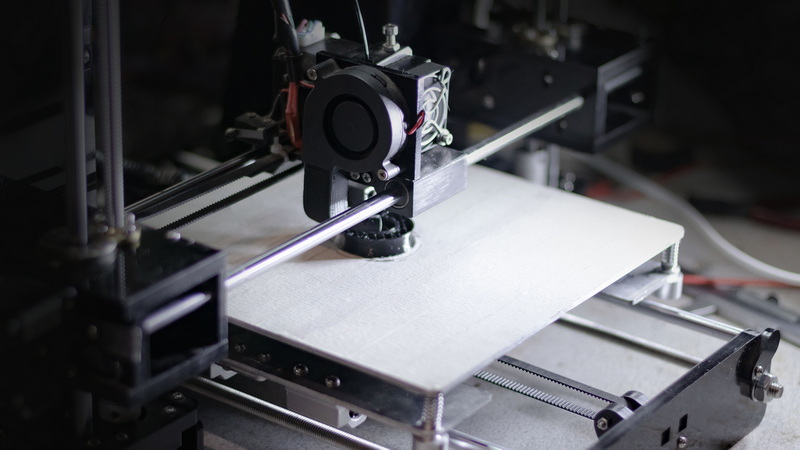
Rapid prototyping is a set of techniques that quickly produces a model or prototype of a part or product using 3D CAD data. The aim is to explore form, fit, and function early so design teams can iterate quickly and reduce time-to-market.
A rapid prototyping model can be conceptual (for basic shape), functional (for mechanical testing), or pre-production (very close to final product). These models are manufactured using 3D printing, CNC machining, vacuum casting, or sheet metal processes depending on the application.
In modern product development, rapid prototyping also includes virtual simulation and digital twins to predict performance before any physical parts are made. This combination of digital and physical rapid prototyping models gives teams more confidence and reduces the number of physical iterations required.
The rapid prototyping model follows an agile, iterative loop driven by CAD design and fast manufacturing technologies. Each loop produces a prototype that informs the next design step, so every iteration reduces risk and uncertainty before tooling investment.
Instead of waiting for a single “final” prototype, teams schedule multiple rapid prototyping rounds, each focused on specific questions about the design. One iteration may focus on ergonomics and appearance, while the next might target assembly, durability, or compliance requirements.
- CAD design and data preparation: Engineers build a 3D CAD model, set tolerances, choose materials, and export files such as STEP or STL.
- Process selection: Depending on geometry, quantity, and function, teams choose CNC machining, 3D printing, sheet metal fabrication, or molding.
- Prototype manufacturing: The part is produced quickly, often within days, using digital manufacturing equipment.
- Testing and validation: Teams check dimensions, assembly, performance, and end-use conditions to validate the design.
- Design refinement: Feedback and test data drive CAD updates, starting the next rapid prototyping iteration.
In practice, this loop supports close collaboration between designers, engineers, and manufacturing partners. Rapid prototyping enables early design-for-manufacturing (DFM) feedback, so critical issues like wall thickness, draft angles, and assembly clearances can be corrected long before production.
Rapid prototyping is not a single technology; it is a combination of digital design and multiple flexible manufacturing methods. Choosing the right process depends on geometry, materials, cost, and the stage of product development.
In many projects, several rapid prototyping technologies are used in sequence. A concept design might start with 3D printing, move to CNC machining for functional verification, and finally use soft tooling to produce pre-production samples. This blended strategy maximizes speed while keeping overall costs under control.
3D printing (additive manufacturing) creates rapid prototyping models layer by layer directly from CAD files without hard tooling. This makes it ideal for complex shapes, internal channels, lightweight structures, and early development concepts.
- Suitable for visual and functional rapid prototyping of plastic parts, housings, fixtures, and medical or consumer products.
- Supports multiple materials such as resins, nylons, and metal powders, enabling realistic prototypes with end-use properties.
Beyond simple models, advanced 3D printing processes can produce lattice structures, conformal cooling channels, and organic forms that are impossible to make with traditional subtractive methods. This gives designers more freedom during rapid prototyping, allowing them to test innovative ideas quickly.
3D printing is also excellent for rapid prototyping of multiple design variants. Instead of committing to a single geometry, teams can print several options at once—for example, three different grip shapes or two alternative hinge concepts—and evaluate them in parallel.
CNC machining uses computer-controlled mills and turning centers to cut material away from metal or plastic blocks, producing highly accurate rapid prototyping models. This method is ideal when parts must match production materials or tight tolerances, or when prototypes will be used in demanding environments.
- CNC rapid prototyping delivers precise parts in metals like aluminum, steel, brass, and titanium, and in engineering plastics such as ABS, PEEK, and nylon.
- CNC turning on lathes is well suited for cylindrical or rotational parts like shafts, bushings, and connectors within a rapid prototyping strategy.
Because CNC machining uses production-grade materials, it is a critical technology for functional testing and reliability validation. Rapid prototyping models made by CNC can be subjected to high loads, elevated temperatures, and long-term wear in ways that many 3D printed parts cannot easily withstand.
CNC rapid prototyping is also valuable in the transition to production. Once a design is frozen, the same machining centers can support bridge manufacturing or low-volume batches, allowing OEM customers to enter the market before full tooling is ready.
Sheet metal fabrication is a key rapid prototyping method for enclosures, brackets, chassis, and structural frames. Using cutting, bending, and forming, manufacturers can produce fully functional sheet metal rapid prototyping models that match production design.
- Works well for low-volume pilot builds, functional tests, and early certification samples in industries such as electronics, automation, and robotics.
- Supports quick design updates for hole locations, bending angles, and mounting features during rapid prototyping iterations.
With modern laser cutting and CNC bending, sheet metal rapid prototyping achieves short lead times and high repeatability. Designers can optimize stiffness, weight, and assembly features while still changing dimensions or mounting details between iterations.
Sheet metal rapid prototyping is particularly useful for system-level verification. Complete frames, brackets, and panels can be assembled, wired, and tested, giving OEMs a realistic view of how the final product will behave in the field.
For parts that must simulate injection-molded production, casting and soft tooling methods support rapid prototyping of small batches. Silicone molds or low-cost aluminum tools are used to create multiple parts quickly without committing to full steel tooling.
- Ideal for rapid prototyping of consumer product housings, automotive interior parts, and medical components requiring near-production appearance and feel.
- Enables color, texture, and finishing trials while the rapid prototyping model still evolves.
Vacuum casting is widely used to produce small series of parts using polyurethane resins that imitate ABS, rubber, or translucent plastics. This approach is perfect for demonstration units, field tests, or marketing samples that must look very close to the final product.
Soft tooling for injection molding offers another level of realism in rapid prototyping. While not as durable as full production tooling, these tools can produce hundreds or sometimes thousands of parts, enabling extensive testing, certification, and early market entry.
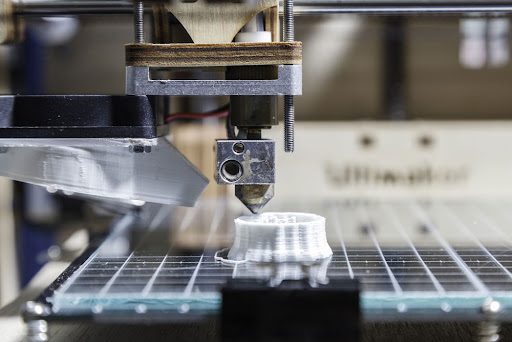
Rapid prototyping models deliver strategic advantages for brands, wholesalers, and manufacturers who need reliable OEM partners. Beyond speed and flexibility, rapid prototyping supports better decision-making and innovation throughout the product lifecycle.
Rapid prototyping compresses the traditional development cycle by enabling fast build–test–learn loops. Design changes are confirmed on physical rapid prototyping models instead of waiting for final tooling or field failures.
- Teams can evaluate ergonomics, assembly, and user experience early.
- Design freezes occur with higher confidence, accelerating tooling launch and mass production.
In highly competitive markets, the ability to launch even a few months earlier can make a major commercial difference. Rapid prototyping helps companies respond quickly to customer feedback, new standards, or emerging technologies, without being constrained by slow traditional prototyping methods.
By validating form, fit, and function with rapid prototyping models, companies avoid expensive late-stage rework and tooling corrections. Problems discovered at the prototype stage are far cheaper to correct than issues found after production launch.
- Early failure modes, interference issues, and tolerance stack-up problems are exposed through rapid prototyping tests.
- OEM buyers gain clearer visibility of manufacturability and quality before committing to large purchase orders.
Rapid prototyping also reduces the risk of launching a product that fails to meet user expectations. Teams can test usability, ergonomics, and aesthetics with real users, collecting feedback that guides the next rapid prototyping iteration and ultimately leads to a more successful product.
Physical rapid prototyping models make it easier for OEMs, suppliers, and stakeholders to discuss design intent and quality expectations. Instead of abstract drawings, teams can evaluate a concrete prototype, review issues, and make decisions quickly.
- Sales, marketing, and investors can use rapid prototyping models for presentations and trade shows before final production.
- Quality and engineering teams at the factory can base process design on realistic rapid prototyping samples.
Rapid prototyping encourages a more collaborative culture. When everyone can see and handle the same prototype, misunderstandings decrease and alignment improves. This is especially important in cross-border projects where OEM brands and manufacturing partners operate in different time zones and languages.
For many brands, personalization and small-batch products are now essential. Rapid prototyping technologies, especially 3D printing and CNC machining, are well suited to low-volume, high-mix production.
- Customized versions of a base product can be produced using the same rapid prototyping workflows, with only minor changes in CAD data.
- Rapid prototyping allows OEMs to test niche markets or limited editions without large upfront tooling investment.
This flexibility makes rapid prototyping a powerful tool not only in R&D but also in ongoing business strategy. Companies can quickly validate new variants, regional configurations, or special editions while keeping risk under control.
China-based OEM factories that combine rapid prototyping and precision production help overseas brands move from idea to mass manufacturing seamlessly. A multi-process partner integrates CNC machining, lathe turning, sheet metal fabrication, 3D printing, and molding into one rapid prototyping and production workflow.
A factory like Shangchen focuses on high-precision CNC machining, rapid prototyping, and low-volume production from prototype to batch manufacturing, serving applications such as aviation, automotive, robotics, medical devices, and consumer products. OEM customers can develop rapid prototyping models and then scale to volume in the same facility, ensuring consistent quality and traceability.
Such partners typically support international communication, engineering collaboration, and standardized quality systems. For overseas brands and wholesalers, this combination of rapid prototyping capability and OEM production strength simplifies project management and shortens the path from concept to shipment.
The following service types commonly appear in a complete rapid prototyping model strategy for international OEM customers.
- General rapid prototyping: Fast concept, functional, and pre-production prototypes across multiple technologies, used for early design validation and investor demonstrations.
- CNC machining and turning: High-precision rapid prototyping in metals and plastics with tight tolerances, ideal for structural and mechanical components.
- Sheet metal fabrication: Rapid prototyping of enclosures, brackets, and frames for electronics, automation, and industrial systems.
- 3D printing: Complex-geometry rapid prototyping without tooling, suitable for lattice structures, internal channels, and ergonomic models.
- Vacuum casting and soft tooling: Near-production rapid prototyping with small series, enabling market testing, certification, and early customer feedback.
A typical OEM project might begin with quick 3D printed rapid prototyping samples to confirm basic geometry, followed by CNC and sheet metal prototypes for functional testing, and finally pilot batches from soft tooling to prepare for full production.
Selecting the right rapid prototyping approach for your product depends on design stage, materials, and business objectives. OEM buyers should evaluate both technology and supplier capability before committing to a specific rapid prototyping model.
- Design stage: Concept phase may rely more on 3D printing rapid prototyping, while later stages favor CNC machining and sheet metal for functional tests.
- Required properties: High-strength metals or engineering plastics necessitate CNC or casting-based rapid prototyping instead of basic modeling methods.
- Volume and timeline: Small pilot series can use soft tooling or sheet metal rapid prototyping, while single parts are well suited to CNC machining and 3D printing.
- Cost constraints: A good rapid prototyping model balances unit cost with risk reduction, often mixing methods over the project life.
Another important factor is the complexity of the supply chain. If a project requires multiple technologies, choosing a partner that can handle the entire rapid prototyping process in-house simplifies coordination and reduces lead time.
- Share complete 3D models and critical tolerances early so the rapid prototyping supplier can recommend suitable processes and materials.
- Define clear goals for each rapid prototyping iteration, such as “check assembly fit”, “validate strength”, or “confirm user interface layout”.
- Use feedback from rapid prototyping models to update design standards, inspection requirements, and production documentation before mass production.
By treating rapid prototyping as a strategic tool rather than just a technical step, OEM brands can gain better control over quality, cost, and schedule throughout the entire product lifecycle.
A rapid prototyping model is the practical link between digital design and real-world manufacturing, enabling fast, iterative validation of parts and products before mass production. By leveraging technologies such as 3D printing, CNC machining, lathe turning, sheet metal fabrication, and molding within a unified rapid prototyping strategy, OEM brands reduce risk, accelerate time-to-market, and improve final product quality.
For overseas brands, wholesalers, and manufacturers, partnering with a Chinese OEM factory that specializes in high-precision rapid prototyping and scalable CNC production makes it possible to move from idea to stable batch manufacturing with confidence and speed. When rapid prototyping models are integrated into every stage of development, companies can innovate more freely, respond faster to market changes, and deliver better products to their customers.
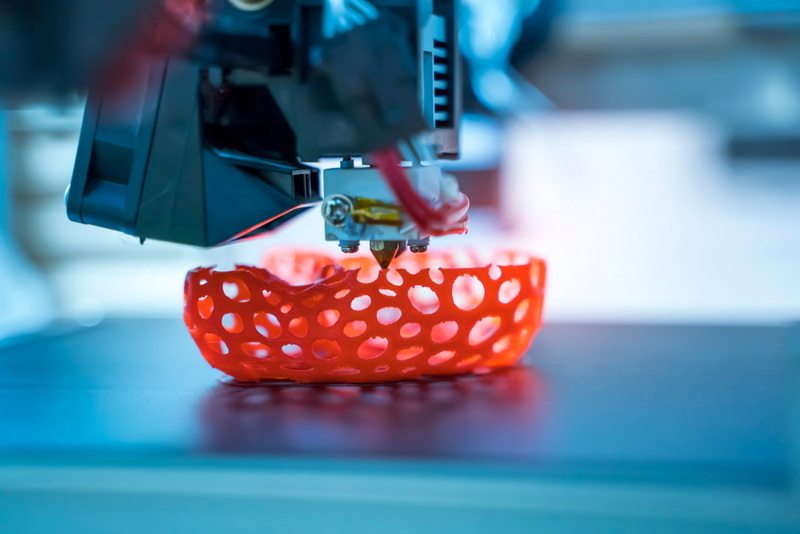
A rapid prototyping model in manufacturing is a quickly produced part or assembly that represents the design, function, or appearance of a future product. It is created using fast processes such as 3D printing, CNC machining, sheet metal fabrication, or casting to support iterative design and testing before volume production.
Rapid prototyping relies on digital workflows and flexible processes to create prototypes in days instead of weeks or months. Traditional prototyping often depends on manual machining and full-scale tooling, which increases time, cost, and risk before design validation.
For metal parts, CNC machining, CNC lathe turning, and certain metal 3D printing processes are the primary rapid prototyping technologies. CNC rapid prototyping is especially suitable for high-precision components that must match production materials and tolerances in demanding applications.
Chinese OEM factories that focus on rapid prototyping and CNC machining offer competitive pricing, diverse capabilities, and strong experience from prototype to production. Working with a single partner for rapid prototyping and mass manufacturing simplifies communication, shortens lead times, and improves quality consistency for overseas brands and wholesalers.
The number of rapid prototyping iterations depends on product complexity, regulatory requirements, and risk tolerance, but many projects include several rounds of prototypes from concept to pre-production. Each rapid prototyping loop refines design, manufacturability, and performance until the team reaches a confident production-ready model.

