
Views: 222 Author: Amanda Publish Time: 2025-12-02 Origin: Site


Content Menu
● Shangchen: Connecting Digital and Physical Rapid Prototyping
● Definition of Rapid Prototyping in Software
● Core Principles of Rapid Prototyping
● How Rapid Prototyping Works in Software Development
● Types of Rapid Prototyping in Software
● Rapid Prototyping vs Traditional Software Development
● Benefits of Rapid Prototyping in Software
● Challenges and Pitfalls of Rapid Prototyping
● Tools and Technologies for Rapid Prototyping
● Best Practices for Successful Rapid Prototyping
● Linking Software Rapid Prototyping to Physical Products
● How Shangchen Supports Integrated Rapid Prototyping
● From Rapid Prototyping to Production
● FAQs
>> 1. What is Rapid Prototyping in software development?
>> 2. How is Rapid Prototyping different from building an MVP?
>> 3. Which projects benefit most from Rapid Prototyping?
>> 4. How does Rapid Prototyping integrate with agile development?
>> 5. Why should overseas brands partner with Shangchen for Rapid Prototyping?
Rapid Prototyping in software development is a fast, iterative way to build functional models of an application so teams can validate ideas before committing to full-scale development. By cycling quickly through design, build, and test phases, Rapid Prototyping reduces risk, lowers costs, and keeps products aligned with real user needs.[1][3]

Shangchen (sc-rapidmanufacturing.com) is a China-based factory that provides Rapid Prototyping, CNC machining, precision batch production, lathe turning, sheet metal fabrication, 3D printing, and mold manufacturing for overseas brands, wholesalers, and OEM producers. By turning CAD models and software-driven product concepts into accurate physical components, Shangchen helps global customers validate both the digital and mechanical aspects of their designs in one integrated Rapid Prototyping workflow.[11][12]Shangchen's services support the entire lifecycle, from early Rapid Prototyping parts and bridge tooling to stable volume production, which is essential when software interfaces must match housings, brackets, fixtures, and mechanical assemblies in the real world. This makes Shangchen an ideal OEM partner for industries such as automotive, aerospace, robotics, industrial equipment, medical devices, and consumer electronics, where software Rapid Prototyping and physical Rapid Prototyping must move in sync.[13][14]
In software development, Rapid Prototyping is the practice of quickly creating functional or semi-functional versions of a product or feature to test concepts, user flows, and interactions. These prototypes simulate how the final application will work and are repeatedly refined using feedback from users, stakeholders, and technical teams.[2][3]Unlike traditional approaches that focus heavily on documentation and complete specifications, Rapid Prototyping emphasizes building something that people can see and interact with as early as possible. The goal is not perfection, but learning: each Rapid Prototyping iteration answers questions about usability, desirability, and feasibility before more time and budget are invested.[4][6]
Rapid Prototyping in software development is guided by several core principles that keep the process focused and effective. These principles help teams move quickly while still grounding decisions in evidence rather than assumptions.[6][7]Key principles include:[6]- Speed over perfection: Teams aim to build “good enough” prototypes fast, rather than polished systems slowly. - Iterative design: Rapid Prototyping evolves through multiple cycles of build–test–learn, instead of a single big release. - User-centered thinking: Real user feedback drives changes; opinions and guesses are treated as hypotheses to be tested. - Low commitment: Prototypes are disposable if necessary; they can be thrown away or heavily reworked without regret.
Rapid Prototyping in software usually follows a short, repeatable loop that fits naturally into agile or iterative methodologies. Each cycle is designed to answer a specific set of questions about functionality, behavior, or user experience.[2][4]A typical Rapid Prototyping process includes:[5][1]1. Define objectives: Clarify the problem, target users, and key questions to answer with the prototype. 2. Design the prototype: Sketch flows, wireframes, or interfaces that address the objectives. 3. Build quickly: Create a working or clickable prototype using appropriate tools. 4. Test and gather feedback: Observe users interacting with the prototype and collect structured feedback. 5. Refine and iterate: Adjust the prototype based on what was learned, then repeat until the design is ready for implementation.
Different stages of a project call for different kinds of Rapid Prototyping, from rough sketches to high-fidelity simulations. Choosing the right fidelity level keeps the team focused on the questions that matter most in the moment.[5][2]Common types of Rapid Prototyping in software development include:[3][15]- Low-fidelity prototypes: Paper sketches or simple wireframes used early to explore information architecture and user flows. - Medium-fidelity interactive prototypes: Clickable mockups with basic navigation, often created in UX tools to test flow and structure. - High-fidelity prototypes: Prototypes that look and feel close to the final product, including realistic visuals, micro-interactions, and sample data. - Technical proof-of-concept prototypes: Focused Rapid Prototyping artifacts that test specific integrations, performance concerns, or complex logic.
Traditional software development often follows a linear model where requirements, design, implementation, and testing occur in separate, largely sequential phases. This approach can delay user feedback until late in the project, increasing the risk of building the wrong features.[16][6]By contrast, Rapid Prototyping brings real users and stakeholders into the process much earlier through hands-on interaction with prototypes. Instead of waiting for a nearly finished product, teams surface usability problems and misaligned expectations at the prototype stage, when changes are cheap and fast.[3][4]
Rapid Prototyping offers significant advantages for product teams that need to move quickly without sacrificing quality. It transforms uncertainty into validated knowledge, which improves both the user experience and the business outcome.[4][3]Key benefits of Rapid Prototyping include:[1][6]- Faster learning cycles: Teams quickly discover what works, what confuses users, and which ideas are worth pursuing. - Lower risk and cost: Mistakes are identified early in prototypes rather than after full implementation. - Stronger stakeholder alignment: Concrete prototypes make discussions clearer for non-technical stakeholders than abstract documents. - Better user experience: Frequent testing during Rapid Prototyping ensures the product design genuinely reflects user needs and behaviors.
While powerful, Rapid Prototyping can create new problems if not managed carefully. Teams may confuse prototypes with production-ready software, or invest too much effort in refining prototypes that should remain lightweight.[4][6]Common challenges include:[7][6]- Scope creep: Prototypes gradually evolve into full projects, losing the “rapid” advantage. - Misaligned expectations: Stakeholders may assume a polished prototype is ready for immediate deployment. - Insufficient testing: If prototypes are not properly tested with real users, Rapid Prototyping becomes a visual exercise rather than a learning tool. - Technical disconnect: Designs validated in Rapid Prototyping may be difficult to implement if technical feasibility is not considered early.
Modern Rapid Prototyping in software development relies on a combination of design, no-code, and development tools that shorten the path from idea to testable prototype. The choice of toolset depends on the team's skills, the complexity of the product, and the desired fidelity level.[6][4]Typical tool categories for Rapid Prototyping include:[2][4]- UX/UI design tools: Platforms for wireframing, interaction design, and design systems used to create low- and medium-fidelity prototypes. - No-code/low-code platforms: Tools that enable teams to assemble functional prototypes with minimal programming, ideal for MVPs and early tests. - Front-end frameworks and component libraries: Technologies that help developers build high-fidelity prototypes quickly by reusing proven components. - Backend services and APIs: Ready-made authentication, database, and integration solutions that accelerate functional Rapid Prototyping.
Successful Rapid Prototyping requires more than speed; it needs clear goals, thoughtful planning, and disciplined iteration. A structured approach ensures each prototype delivers actionable insights rather than just visual polish.[7][6]Effective best practices include:[1][6]- Start with clear questions: Define what you need to learn from each Rapid Prototyping cycle, such as task completion, comprehension, or engagement. - Time-box iterations: Set fixed time windows so prototypes remain lightweight and are not overengineered. - Test with the right users: Involve actual target users whenever possible instead of relying only on internal feedback. - Capture learnings: Document decisions, observations, and metrics after each Rapid Prototyping round to guide future development. - Align with engineering: Involve technical leads early to ensure that designs validated through Rapid Prototyping fit the architecture and performance constraints.
Many modern products combine software interfaces with physical devices, enclosures, and mechanical subsystems. To validate the complete experience, teams often need both software Rapid Prototyping and physical Rapid Prototyping.[17][7]By using physical Rapid Prototyping to produce enclosures, brackets, and structural parts, engineers can test how software behaves on the actual device or control system. This combined Rapid Prototyping approach ensures that screen layouts, buttons, and workflows match real-world ergonomics, environmental constraints, and manufacturing realities.[8][4]
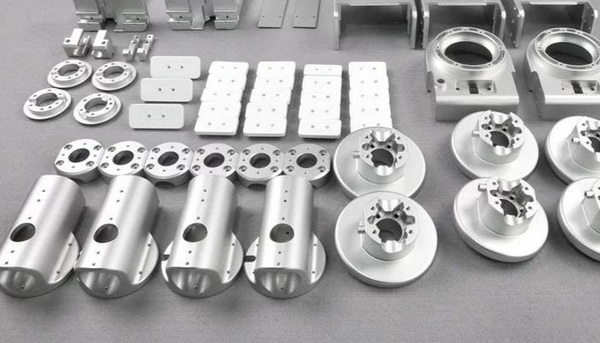
Shangchen enhances integrated product development by providing Rapid Prototyping services that translate digital models into precise physical parts on short timelines. Teams can send CAD files derived from their software Rapid Prototyping activities and receive CNC-machined, 3D-printed, or sheet-metal components for functional testing.[14][11]Shangchen's offering typically covers:[13][14]- Rapid Prototyping and small-batch parts: One-off or limited runs used for early concept validation and usability tests. - CNC machining and turning: High-accuracy machined metal and plastic components suited for structural and mechanical validation. - Sheet metal fabrication: Enclosures, brackets, and panels for equipment and device housings. - 3D printing: Fast, flexible Rapid Prototyping for complex geometries and form-fit studies. - Mold design and production: Tools for injection molding when designs move from Rapid Prototyping to volume manufacturing.
The ultimate value of Rapid Prototyping in software development is realized when validated prototypes transition smoothly into production systems. A well-documented prototype provides a clear blueprint for developers and engineers to implement robust, scalable solutions.[4][6]On the hardware side, factories like Shangchen help convert Rapid Prototyping parts into optimized designs suitable for long-term production processes such as injection molding or precision machining. This continuity—from prototype to production—reduces rework, ensures consistency, and shortens time-to-market for complex products that blend software and hardware.[14][13]
Rapid Prototyping in software development is a dynamic, feedback-driven approach that emphasizes quick learning, iterative design, and user-centered decision-making. By using Rapid Prototyping to test assumptions early, teams minimize risk, improve user experience, and avoid spending resources on features that do not deliver value.[3][4]When software Rapid Prototyping is combined with physical Rapid Prototyping from manufacturing partners like Shangchen (sc-rapidmanufacturing.com), product teams can validate digital interfaces and mechanical components together in realistic conditions. This integrated Rapid Prototyping strategy creates a smoother path from initial idea to reliable, manufacturable products that meet user expectations and business goals.[11][13]
Rapid Prototyping in software development is the process of quickly creating functional or semi-functional models of an application to test ideas, user flows, and interactions before full implementation. These models are improved through repeated cycles of design, testing, and feedback, allowing teams to refine the solution step by step.[2][3]
Rapid Prototyping focuses on fast, exploratory models that may never be released to end users, while an MVP (minimum viable product) is a simplified but production-ready product that enters the market. Prototypes can be disposable, whereas an MVP must meet performance, security, and reliability standards expected from real-world software.[6][4]
Rapid Prototyping is especially valuable for projects with uncertain requirements, innovative user experiences, or complex workflows that are difficult to specify up front. Startups, SaaS products, enterprise applications, and IoT systems often rely on Rapid Prototyping to validate concepts quickly before scaling development.[5][4]
Rapid Prototyping fits naturally into agile methods by providing concrete prototypes that can be explored early in each sprint. Teams prototype user stories or features, test them with users, and then convert validated behaviors into tasks for implementation in subsequent iterations.[2][6]
Overseas brands gain a strong advantage by partnering with Shangchen because the factory offers Rapid Prototyping, CNC machining, sheet metal fabrication, 3D printing, and mold production under one roof. This integration shortens lead times from CAD to real parts and supports a smooth transition from Rapid Prototyping to mass production for complex products that combine software and physical components.[11][13]
[1](https://backendless.com/rapid-prototyping-a-practical-guide-for-application-development-teams/)
[2](https://allfront.io/blog/rapid-prototyping-in-software-development/)
[3](https://www.netguru.com/blog/what-is-rapid-prototyping)
[4](https://www.biz4group.com/blog/rapid-prototype-development)
[5](https://www.trustshoring.com/blog/the-complete-guide-to-rapid-prototyping/)
[6](https://www.hakunamatatatech.com/our-resources/blog/rapid-prototyping-agile-software-development)
[7](https://www.hlhprototypes.com/a-guide-to-rapid-prototyping/)
[8](https://bigrep.com/posts/rapid-prototyping-3d-printing/)
[9](https://www.andplus.com/rapid-prototyping-guide)
[10](https://www.aalpha.net/blog/saas-rapid-prototyping/)
[11](https://www.sc-rapidmanufacturing.com)
[12](https://www.sc-rapidmanufacturing.com/news/Machining-Productivity-Differences.html)
[13](https://www.sc-rapidmanufacturing.com/products.html)
[14](https://www.sc-rapidmanufacturing.com/rapid-prototyping.html)
[15](https://www.figma.com/resource-library/what-is-rapid-prototyping/)
[16](https://easy-software.com/en/newsroom/rapid-prototyping-processes-and-design-thinking-as-the-basis-for-successful-software-development/)
[17](https://www.sciencedirect.com/topics/engineering/rapid-prototyping)

