
Views: 222 Author: Amanda Publish Time: 2025-12-17 Origin: Site


Content Menu
● Understanding Rapid Prototyping
● What Is Rapid Prototyping in Python?
● Why Python Is Ideal for Rapid Prototyping
● How Rapid Prototyping in Python Supports Manufacturing
● Typical Use Cases of Rapid Prototyping in Python
● Workflow for Rapid Prototyping in Python
● Best Practices for Python Rapid Prototyping
● Challenges and Limitations of Python Rapid Prototyping
● Integrating Python Rapid Prototyping with OEM Manufacturing Partners
● Rapid Prototyping in Python and Digital Twins
● Scaling from Prototype to Production
● FAQ
>> 1. What is the main goal of rapid prototyping in Python?
>> 2. How does Python rapid prototyping help in manufacturing projects?
>> 3. Is Python fast enough for production systems after prototyping?
>> 4. Can rapid prototyping in Python work with existing factory equipment?
>> 5. Why involve an OEM partner like Shangchen in Python-based rapid prototyping?
Rapid prototyping in Python refers to using the Python programming language to build quick, functional versions of applications, algorithms, and control systems so that concepts can be validated early. It focuses on speed, learning, and iteration rather than final performance or optimization, giving teams room to explore different designs before committing to full-scale engineering.
Python-based rapid prototyping fits naturally into modern product development workflows that also rely on CAD, simulation tools, CNC machining, and 3D printing. In this context, Python rapid prototyping supports data processing, automation, user interfaces, and integration between digital models and physical prototypes, enabling more informed design decisions.
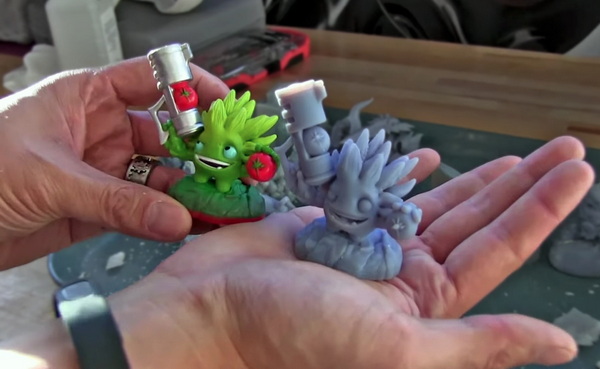
Rapid prototyping is an iterative, experiment-driven approach where early versions of a product are built, tested, and refined quickly to reduce risk and shorten time-to-market. Instead of waiting for a “perfect” design, teams produce multiple prototype rounds, each focused on validating assumptions about usability, performance, or manufacturability.
This concept applies to both software and hardware. In software, rapid prototyping might involve building a minimal version of an app or API; in hardware, it often means CNC-machined parts, 3D printed models, or sheet metal components. When Python is used alongside these physical methods, it becomes the glue that connects data, control logic, analysis, and reporting.
Rapid prototyping in Python is about turning requirements into working Python code rapidly so stakeholders can see and test a real system instead of just discussing diagrams or slides. Python's straightforward syntax makes it easy for developers to write clear, concise code that closely follows business logic or engineering calculations.
These Python prototypes often include basic user interfaces, command-line tools, or small web services that mimic the key flows of the final system. In some projects, the Python prototype becomes the foundation of the production system; in others, it serves as a reference implementation for teams who later reimplement certain parts in other languages.
Python is highly suitable for rapid prototyping because it emphasizes readability and simplicity. A smaller number of lines can express complex ideas, making it easier to maintain and adjust prototypes when new requirements appear or test results suggest changes.
The language also provides a very rich ecosystem of libraries for web development, numerical computing, machine learning, visualization, automation, and hardware integration. Instead of building everything from scratch, engineers can combine existing libraries to assemble prototypes quickly, focusing on unique logic and product-specific features.
In manufacturing environments, rapid prototyping typically uses CNC machining, sheet metal fabrication, and 3D printing to produce functional parts for testing fit, assembly, and performance. Python rapid prototyping complements these steps with software tools that analyze test data, control equipment, and streamline communication between engineering and production.
For example, a Python script can calculate optimized machining feeds and speeds from material properties and geometry data, then export configuration files for CNC machines. Similarly, Python-based data collection systems can capture measurements from rapid prototyping runs and create dashboards that show dimensional deviations, surface roughness trends, or fatigue test outcomes.
One common use case is machine learning and data science, where Python rapid prototyping enables fast experimentation with models, feature engineering, and evaluation metrics. Engineers can modify code quickly, run multiple experiments, and visualize results to decide whether a model concept is worth taking further.
Another key area is web and API development. Frameworks such as Flask and Django let teams design and test user flows, data models, and integration points with minimal overhead. In manufacturing contexts, these prototypes might expose real-time status of CNC jobs, inventory levels, or quality metrics to engineers and customers.
Python is also widely used for scripting hardware-related workloads. With appropriate libraries and interfaces, it can control microcontrollers, industrial equipment, and test benches. Engineers can rapidly prototype control algorithms and safety logic, then refine them before embedding the final logic into more constrained devices.
A typical Python rapid prototyping workflow begins with clarifying the problem and defining a minimal set of features that demonstrate the core value. Instead of designing all details up front, the team identifies the most important questions that the prototype must answer, such as “Will this control strategy stabilize the system?” or “Does this user flow make sense?”
Next, developers choose the appropriate Python tools, frameworks, and libraries that best fit the prototype's goals. They then implement the first iteration of the prototype, keeping the design modular and flexible. Once the prototype is running, stakeholders test it, collect feedback, and identify improvements or new requirements.
The process cycles through multiple iterations, each time refining the Python code and, if physical products are involved, refining the mechanical or electronic design as well. By aligning software and hardware rapid prototyping, teams can make decisions based on real test data rather than assumptions, improving the final product.
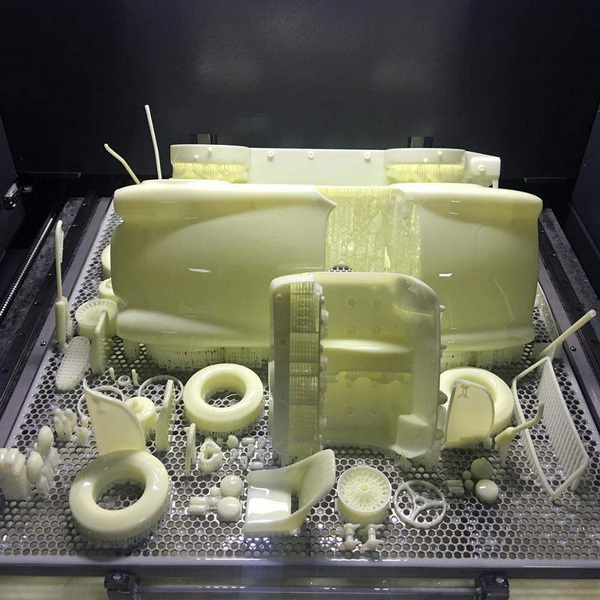
Good structure is important even in rapid prototyping. Breaking the code into small, independent modules makes it easier to replace components, experiment with different implementations, and later extract reusable pieces for production systems.
Version control and environment management are also essential. Using tools like Git and virtual environments helps track changes, manage dependencies, and allow multiple developers to collaborate without conflicts. Even in early prototypes, lightweight documentation and clear naming conventions help avoid confusion.
Automated tests, even simple ones, can save time when prototypes evolve quickly. Basic unit tests or integration tests help ensure that core behavior remains intact as new ideas are tried. This prevents regressions and keeps the rapid prototyping process productive instead of chaotic.
Python's main limitation is performance in highly demanding scenarios, such as low-latency control loops or very large-scale data processing. While this does not prevent Python from being used in rapid prototyping, it does mean that some parts of the final system may later need to be rewritten in more performance-focused languages.
Another challenge is the temptation to treat prototype code as production-ready without sufficient refactoring. Rapid prototyping prioritizes speed and learning, not long-term maintainability or robustness. Converting a successful prototype into a stable production system requires additional design, testing, and optimization effort.
Finally, rapid prototyping can create alignment issues if expectations are not managed carefully. Non-technical stakeholders may assume that a working Python prototype is “almost done,” even when significant work remains to address security, scalability, and compliance. Clear communication about the prototype's purpose and limitations is therefore critical.
When companies collaborate with an OEM manufacturing partner like Shangchen (sc-rapidmanufacturing.com), Python rapid prototyping can help bridge the gap between engineering intent and shop-floor reality. Engineers use Python tools to generate data for machining, simulate process steps, or analyze inspection results from CNC and 3D printing operations.
Shangchen can then use this information to optimize fixtures, tolerances, and process parameters for each rapid prototyping build. The feedback loop between Python-driven software prototypes and physical prototypes allows faster discovery of design constraints and manufacturability issues, leading to a more efficient transition into precision batch production and tooling.
For multinational brands, Python scripts can also integrate with enterprise systems, converting design inputs into production-ready information and formatting reports for global teams. This makes rapid prototyping not just a technical practice, but a coordinated business process that connects design, engineering, procurement, and manufacturing.
Another powerful application is the creation of digital twins using Python rapid prototyping. A digital twin is a virtual representation of a physical system that mirrors its behavior under different operating conditions, using real data and mathematical models.
Python is ideal for building these models quickly, because it can combine simulation libraries, data analysis tools, and visualization frameworks. During rapid prototyping, engineers can experiment with different design parameters in the digital twin before committing to physical prototypes, saving time and cost.
Once the physical prototype exists, Python code can sync real sensor data back into the digital twin, allowing continuous comparison between predicted and actual performance. This ongoing feedback improves both the prototype and the models, leading to more reliable products when mass production begins.
When rapid prototyping in Python has produced a well-validated solution, the next step is scaling it toward production. Sometimes this means simply hardening the existing Python code with better error handling, security features, and scalability improvements, especially for backend services or data pipelines.
In other situations, the Python prototype becomes a reference architecture that guides implementation in other environments. For example, time-critical control algorithms might be recoded in C or embedded firmware, while Python remains responsible for configuration tools and monitoring dashboards.
In all cases, the knowledge gained during rapid prototyping is invaluable. The prototype demonstrates what works, what does not, and which factors most influence performance, quality, and cost. This insight helps manufacturing partners like Shangchen refine tooling strategies, choose optimal materials, and plan precision batch production.
Rapid prototyping in Python provides a fast, flexible path from concept to validated solution, connecting software experimentation with real-world hardware and manufacturing. Python's readable syntax, extensive libraries, and versatility make it ideal for building early versions of applications, algorithms, and control systems that can be tested and refined quickly.
When Python rapid prototyping is integrated with CNC machining, 3D printing, sheet metal fabrication, and mold production from specialized OEM partners such as Shangchen (sc-rapidmanufacturing.com), the result is a complete innovation pipeline. Brands, wholesalers, and manufacturers gain the ability to evaluate multiple design options rapidly, resolve technical risks early, and move into precision batch production and mass manufacturing with greater confidence.
The main goal of rapid prototyping in Python is to turn ideas into working models quickly so teams can test concepts, gather feedback, and refine designs before investing heavily in full-scale development.
Python rapid prototyping helps manufacturing projects by providing tools for automation, analysis, and control that connect CAD models, CNC machining, 3D printing, and testing, making it easier to optimize designs and processes early.
Python can be used in many production systems, especially for web services and data pipelines, but extremely performance-critical parts may need optimization or reimplementation in lower-level languages while Python remains for orchestration and tooling.
Yes, rapid prototyping in Python can interface with many types of factory equipment through APIs, communication protocols, and data acquisition systems, allowing engineers to monitor, control, and analyze rapid prototyping runs directly from Python tools.
An OEM partner like Shangchen brings expertise in CNC machining, 3D printing, sheet metal, and mold production so that Python-driven rapid prototyping is backed by real manufacturing capability, enabling faster, smoother transitions from digital prototypes to physical products.

