
Views: 222 Author: Amanda Publish Time: 2025-12-17 Origin: Site


Content Menu
● Core Concept of Rapid Prototyping
● How Rapid Prototyping Fits into the Product Development Cycle
● Key Rapid Prototyping Technologies
>> 3D Printing for Rapid Prototyping
>> CNC Machining as a Rapid Prototyping Tool
>> Sheet Metal Rapid Prototyping
● Strategic Benefits of Rapid Prototyping for OEM Brands
>> Acceleration of Time‑to‑Market
>> Improved Design Quality and Reliability
>> Lower Project Risk and Better Cost Control
>> Enhanced Communication Across Teams
● Rapid Prototyping vs Traditional Prototyping
● Choosing the Right Rapid Prototyping Method
● From Rapid Prototyping to Mass Production
● FAQs
>> 1: What exactly is rapid prototyping in manufacturing?
>> 2: Why do companies rely on rapid prototyping instead of going straight to tooling?
>> 3: Is rapid prototyping only useful in early design stages?
>> 4: Can rapid prototyping deliver production‑grade materials and tolerances?
>> 5: How does rapid prototyping affect overall project cost?
Rapid prototyping in manufacturing is a set of digital fabrication methods that quickly turn 3D CAD designs into physical parts for design review, functional testing, and validation before mass production. Rapid prototyping allows product teams to move from concept to real parts in days rather than weeks, enabling more iterations, better decisions, and smoother transitions into full‑scale manufacturing.
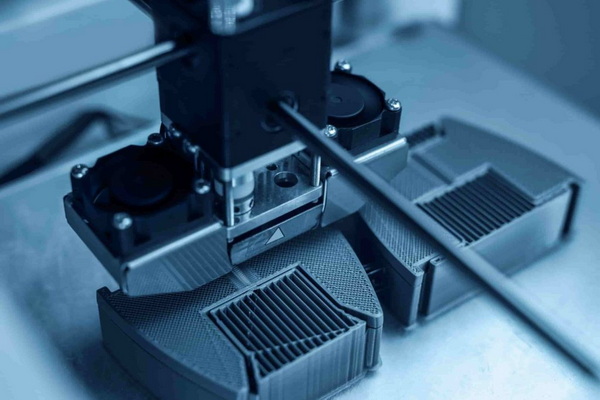
Rapid prototyping in manufacturing combines software, digital workflows, and flexible production technologies to build parts directly from CAD data with minimal manual intervention. Instead of relying on slow, highly customized tooling from the beginning, rapid prototyping emphasizes speed, iteration, and learning, so that problems are solved while changes are still cheap. For global OEM brands, rapid prototyping is not just a technical option but a strategic tool for reducing risk and accelerating innovation.
Rapid prototyping covers early visual mock‑ups, functional prototypes, engineering validation units, and low‑volume production runs. The same digital model can be used across multiple rapid prototyping processes such as 3D printing, rapid CNC machining, sheet metal fabrication, and rapid molding, each chosen to match the specific design stage and performance requirements.
In a modern product development cycle, rapid prototyping starts as soon as basic CAD geometry is ready. During the concept phase, rapid prototyping produces physical models that help designers check proportions, ergonomics, and overall appearance. At this stage, rapid prototyping focuses more on form and user experience than on ultimate strength or durability.
As the project moves into engineering and validation phases, rapid prototyping shifts toward functional parts that closely match final materials and tolerances. Engineers rely on rapid prototyping to test assembly fit, thermal behavior, mechanical loads, and manufacturability. Before committing to expensive production tooling, decision‑makers use data from rapid prototyping to confirm that the design is robust, reliable, and ready for scale.
Toward the end of development, rapid prototyping supports pilot runs and bridge production. Instead of jumping directly from prototype to full mass production, teams use rapid prototyping to make small batches for field testing, marketing samples, or initial customer shipments. This staged approach reduces launch risk and provides real‑world feedback that can be fed back into the design.
3D printing is one of the most visible rapid prototyping technologies in manufacturing. It builds parts layer by layer from digital models, using plastics, resins, or metals, depending on the process. For early stages of rapid prototyping, polymer 3D printing is widely used to create visual models, ergonomic samples, and basic functional parts at low cost and high speed.
For more demanding rapid prototyping tasks, advanced 3D printing methods create detailed parts with fine features, smooth surfaces, and good dimensional accuracy. Functional prototypes made with engineering resins or high‑performance thermoplastics can simulate production behavior closely enough for serious testing. Metal 3D printing extends rapid prototyping into applications where metal strength, temperature resistance, or specific alloys are required.
CNC machining is a core technology for rapid prototyping when parts must be made from real engineering metals or high‑performance plastics. Using 3‑axis, 4‑axis, or 5‑axis machines, rapid prototyping teams convert CAD data into accurate toolpaths that cut components directly from solid stock. This form of rapid prototyping delivers production‑grade mechanical properties and tight tolerances, making it suitable for components that must perform like final parts.
For rapid prototyping of metal housings, brackets, precision shafts, and structural components, CNC machining is often the first choice. It allows engineers to test assembly fit, evaluate heat dissipation, verify thread performance, and simulate real‑world loading. Because CNC machining equipment is flexible, the same machines used for rapid prototyping can often be used later for small‑batch production, linking prototypes and initial production within a single workflow.
Sheet metal rapid prototyping focuses on enclosures, frames, brackets, and panels. Laser cutting, punching, and bending are applied to quickly convert flat sheet metal into three‑dimensional parts. In the context of rapid prototyping, this is particularly valuable for electronics housings, industrial equipment covers, and structural components that must combine strength with relatively low weight.
By using easily adjustable cutting programs and bending setups, sheet metal rapid prototyping allows multiple design variants to be tested without the need for hard tooling. Rapid prototyping in sheet metal makes it possible to refine mounting hole locations, ventilation patterns, reinforcement ribs, and cable routing before large volumes are produced. When combined with surface treatments such as powder coating or plating, the prototypes can closely resemble final production parts.
Rapid injection molding and vacuum casting extend rapid prototyping into the realm of low‑volume production. Instead of full‑scale steel tools, rapid molding uses simplified or soft molds that can be produced quickly and at lower cost. These tools still allow real injection molding processes to be used, making rapid prototyping very close to final production.
For plastics, rapid prototyping with molding is ideal when engineers want to test part behavior with specific resins, wall thicknesses, and gating strategies. It also supports regulatory testing, reliability studies, and assembly trials. Vacuum casting, often used with silicone molds, provides another rapid prototyping route for small batches of detailed parts, allowing design teams to test snap fits, overmolding concepts, and cosmetic finishes without large investments.
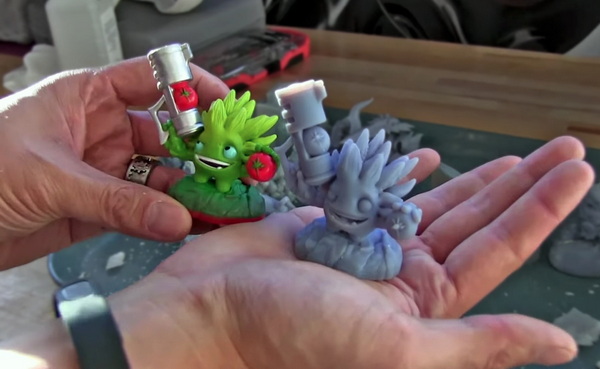
Rapid prototyping dramatically compresses the time required to validate ideas, refine designs, and prepare for production. Instead of waiting weeks for one round of samples, teams can run multiple rapid prototyping cycles in the same period. Faster iterations mean problems are detected and solved earlier, and strong concepts reach launch sooner.
For overseas OEM brands that compete globally, this time advantage from rapid prototyping can be decisive. When rapid prototyping is integrated with a responsive manufacturing partner, updated CAD files can flow directly into machines, and new samples can be dispatched quickly for review. The entire development pipeline becomes more agile, supporting faster product refreshes and more daring innovations.
Rapid prototyping allows design teams to confront reality early. Instead of relying only on simulations and digital mock‑ups, they can hold and test real parts. This deepens understanding of how a product is assembled, used, and stressed in service. Through rapid prototyping, subtle issues like interference fits, difficult assembly steps, or awkward user interactions are revealed while changes are still easy to make.
Multiple rapid prototyping cycles raise overall design quality. Each iteration surfaces new insights, whether related to structural strength, thermal behavior, ergonomics, or aesthetics. Over time, rapid prototyping builds confidence that the final design is robust, manufacturable, and aligned with customer expectations. Fewer surprises appear during mass production, and warranty or reliability problems are reduced.
While each rapid prototyping round has a cost, the overall project risk and total budget are usually reduced. Discovering a dimensional problem or assembly issue after hard tooling has been built can be extremely expensive. Rapid prototyping shifts problem discovery to an earlier stage, where modifications are far less costly.
Rapid prototyping also helps set realistic expectations for manufacturing costs. By working with rapid prototyping suppliers, teams get early feedback on feasible tolerances, preferred materials, and process constraints. This avoids designing products that are theoretically beautiful but practically uneconomical. In many projects, rapid prototyping makes the difference between a risky launch and a controlled, predictable ramp‑up.
Physical prototypes created through rapid prototyping give all stakeholders a shared reference. Designers, engineers, purchasing staff, marketing teams, and end‑customers can touch and examine the same object. This reduces misunderstanding that often arises from purely digital presentations. Rapid prototyping makes technical discussions concrete, clarifying expectations and exposing hidden assumptions.
In cross‑border projects, rapid prototyping is especially valuable for aligning overseas OEM customers and manufacturing partners. Language and cultural differences can complicate communication, but a clear rapid prototyping sample speaks for itself. With each updated prototype, feedback becomes more precise, and the final design reflects the true intent of all involved parties.
Traditional prototyping relied heavily on manual skills and long lead times. Model makers, toolmakers, and skilled machinists created parts with limited automation and limited ability to accept rapid design changes. Each new iteration required significant time and cost, so the number of cycles was typically small. Under these conditions, errors discovered late in the process were very painful.
Rapid prototyping transforms this picture by using digital models, automated equipment, and standardized workflows. Once a CAD model is ready, it can be sent directly to a 3D printer, CNC machine, or rapid molding line with minimal manual translation. This flexibility makes it realistic to run many rapid prototyping iterations, each one fine‑tuning details and eliminating risk. Instead of avoiding changes, teams embrace them, knowing that rapid prototyping can keep up.
Selecting an appropriate rapid prototyping technology requires balancing multiple factors:
- Geometry complexity and feature size
- Required accuracy and tolerances
- Material type and mechanical properties
- Expected loads, temperatures, or environmental exposure
- Surface finish and cosmetic requirements
- Budget and target lead time
For highly complex internal geometries or lightweight lattice structures, additive manufacturing is often the most suitable rapid prototyping method. For tight‑tolerance metal parts that must match final behavior, CNC machining usually takes priority. Sheet metal rapid prototyping is best for planar structures and enclosures, while rapid molding and casting are chosen when actual molding behavior and resin performance must be evaluated.
Many teams combine these options within the same project. A polymer 3D printed model might be used to validate ergonomics, a CNC‑machined metal prototype might be used for mechanical testing, and rapid molding might be used for pilot batches. This hybrid approach uses rapid prototyping strengths at each stage.
A key advantage of modern rapid prototyping is its continuity with mass production. Because CAD data is central, there is no need to rebuild geometry when moving from prototype to production. Instead, the same model is adapted to different processes and tooling strategies. Lessons learned from rapid prototyping directly inform mold design, machining setups, and process parameters.
In a typical journey, a product may pass through several rapid prototyping stages: initial 3D printed concepts, CNC‑machined functional samples, rapid molded pilot runs, and finally full production in hardened tools. At each stage, measured data and user feedback refine the design and production plan. By the time the product reaches high‑volume manufacturing, most major problems have already been resolved thanks to rapid prototyping.
Rapid prototyping in manufacturing has become a central strategy for global OEM brands, providing a fast, flexible bridge between digital designs and real‑world products. By integrating 3D printing, CNC machining, sheet metal fabrication, and rapid molding, rapid prototyping supports frequent iterations, deeper learning, and better decisions at every stage of development. When used strategically, rapid prototyping reduces risk, shortens time‑to‑market, and improves design quality, transforming the entire product development cycle from concept to mass production.
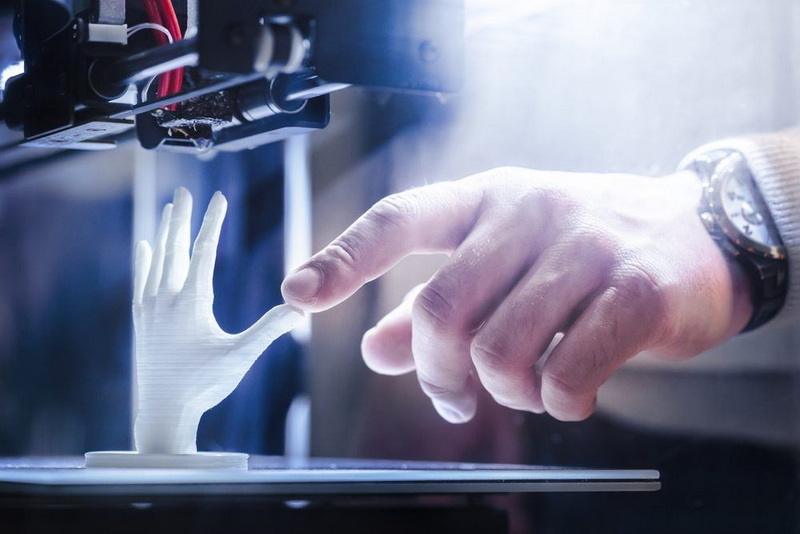
Rapid prototyping in manufacturing is the use of fast, digitally driven processes such as 3D printing, rapid CNC machining, sheet metal fabrication, and rapid molding to build physical parts directly from CAD models. It focuses on speed and flexibility so teams can test designs, gather feedback, and refine products before committing to full‑scale production.
Companies rely on rapid prototyping because it reveals design issues early, when changes are cheap and flexible. Going straight to tooling can lock in mistakes that are expensive to correct later, while rapid prototyping allows several rounds of learning and improvement before investing in long‑life production tools.
Rapid prototyping is critical in early stages, but it also plays important roles in engineering validation, pilot production, and even low‑volume manufacturing. Teams use rapid prototyping to test assembly processes, validate materials, build marketing samples, and provide short‑run parts while full production ramps up.
Many rapid prototyping methods can deliver production‑grade performance, especially CNC machining, metal 3D printing, and rapid molding. By choosing the right materials and processes, teams can produce rapid prototyping parts that closely match final components in strength, durability, and dimensional accuracy, making them suitable for demanding functional tests.
Rapid prototyping adds some up‑front cost for samples, but it usually lowers total project cost by preventing tooling rework, launch delays, and field failures. By uncovering issues early and enabling informed decisions about materials and manufacturing methods, rapid prototyping keeps projects on schedule and reduces the risk of costly surprises later.

