
Views: 222 Author: Amanda Publish Time: 2025-11-22 Origin: Site


Content Menu
● How 3D Printing Enables Rapid Prototyping
● Main 3D Printing Technologies for Rapid Prototyping
>> Fused Deposition Modeling (FDM)
>> Selective Laser Sintering (SLS)
>> Direct Metal Laser Sintering (DMLS) and Other Metal Processes
● The Rapid Prototyping Workflow in 3D Printing
>> Step 1: Define Prototype Objectives
>> Step 3: File Preparation and Slicing
>> Step 4: 3D Printing the Prototype
>> Step 6: Testing and Evaluation
>> Step 7: Iteration and Refinement
● Benefits of Rapid Prototyping with 3D Printing
>> Better Communication and Decision-Making
● Types of Rapid Prototyping by Purpose
>> Engineering or Pre-Production Prototypes
● Rapid Prototyping in Different Industries
>> Consumer Electronics and Appliances
>> Industrial Equipment and OEM Components
● Integrating Rapid Prototyping with CNC, Sheet Metal, and Molding
● Materials for Rapid Prototyping in 3D Printing
>> Resins
>> Metals
>> Composites and Filled Materials
● Best Practices for Successful Rapid Prototyping
>> Design for Additive Manufacturing
>> Match Materials to Testing Needs
>> Document Changes and Feedback
● How an OEM-Oriented Factory Uses Rapid Prototyping
● FAQ
>> What is the difference between Rapid Prototyping and traditional prototyping?
>> Can Rapid Prototyping be used for end-use parts?
>> How accurate are Rapid Prototyping parts from 3D printers?
>> Is Rapid Prototyping only useful in early design stages?
>> How should a company choose a Rapid Prototyping partner?
Rapid Prototyping in 3D printing is the fast, iterative creation of physical parts directly from digital 3D models, usually without tooling, to validate design, fit, and function before full-scale production. Rapid Prototyping helps reduce development risk, shorten time to market, and improve product quality by enabling fast design feedback and continuous refinement.
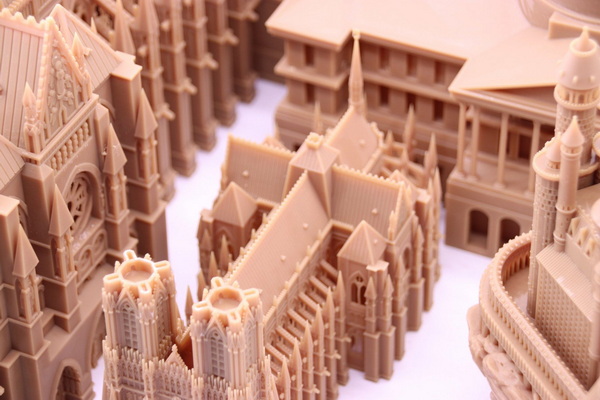
Rapid Prototyping is a family of technologies and workflows that turn CAD designs into physical parts in a short time, often within hours or days instead of weeks. It focuses on quickly building one or a small number of parts for evaluation, rather than large-volume production.
In the context of 3D printing, Rapid Prototyping uses additive manufacturing processes to build parts layer by layer from materials such as plastics, resins, metals, and composites. This approach removes the need for complex molds and tools in early stages, making it ideal for design exploration and proof-of-concept parts.
3D printing is the most flexible and accessible way to implement Rapid Prototyping. A digital CAD model is prepared, sliced into thin layers by software, and then produced as a physical part by depositing, curing, or sintering material layer by layer. This connects the virtual design environment to a real, testable component.
Because 3D printers can create complex geometries with internal channels, lattices, and organic shapes, Rapid Prototyping can explore design options that would be difficult or impossible using only subtractive or forming processes. This design freedom is one of the core reasons Rapid Prototyping and 3D printing are widely adopted across industries.
FDM uses thermoplastic filaments such as PLA, ABS, or PETG, which are melted and extruded through a heated nozzle to build the prototype layer by layer. This Rapid Prototyping method is popular for functional, low-cost prototypes and quick visual samples.
SLA relies on a liquid photopolymer resin cured by a laser or projector. For Rapid Prototyping, SLA is ideal when high resolution, smooth surfaces, and fine features are required, such as in miniature mechanical parts, casings, or medical models.
SLS uses a laser to fuse powdered materials like nylon. In Rapid Prototyping, SLS produces strong, functional parts with good mechanical performance, often used for snap-fit features and complex assemblies without support structures.
Metal Rapid Prototyping processes like DMLS build metal parts from powders such as aluminum, stainless steel, or titanium. They enable the production of functional prototypes that closely mimic or match final metal components in demanding sectors like aerospace and automotive.
Every Rapid Prototyping project should begin with clear goals: what needs to be tested, which functions are critical, what tolerances are acceptable, and what environment the prototype will face. This clarity guides material selection, print technology, and design decisions.
Engineers and designers create a detailed digital model using CAD software. For effective Rapid Prototyping, models must reflect realistic wall thicknesses, clearances, and assembly conditions so that the prototype can reveal real-world issues.
The CAD file is exported (commonly as STL or OBJ) and imported into slicing software. The model is sliced into layers, and parameters such as layer height, print speed, infill density, supports, and orientation are configured. In Rapid Prototyping, these parameters are often tuned to balance speed and quality.
The 3D printer builds the part according to the sliced file. For Rapid Prototyping, build orientation, support strategies, and print settings are optimized to minimize time while maintaining sufficient accuracy to evaluate the design's form, fit, and function.
Post-processing may include support removal, cleaning, sanding, polishing, curing (for resin parts), or simple machining for critical surfaces. For Rapid Prototyping, the level of finishing is chosen to match the testing needs, from rough concept models to near-production appearance models.
The printed prototype is checked for dimensional accuracy, assembly behavior, ergonomics, and performance under expected loads or conditions. This testing is the core of Rapid Prototyping—feedback from this stage drives improvements and next design iterations.
Rapid Prototyping focuses on repeating the cycle quickly. Engineers refine the CAD model based on feedback, then generate a new prototype. Multiple versions can exist in parallel, enabling wide design exploration before locking in final geometry for tooling or mass production.
Rapid Prototyping significantly compresses development timelines by allowing teams to evaluate real parts early and often. Problems can be discovered when changes are still inexpensive to implement, avoiding late-stage redesigns.
Traditional tooling and machining for early prototypes can be expensive and slow. Rapid Prototyping with 3D printing often removes the need for temporary molds or jigs at early stages, cutting both direct costs and engineering overhead.
By supporting multiple design cycles, Rapid Prototyping helps refine ergonomics, appearance, and performance. Many design errors that would otherwise appear only after tooling are detected earlier and corrected in the prototype stage.
Complex organic surfaces, lattice structures, conformal cooling channels, and integrated assemblies are all practical to test with Rapid Prototyping in 3D printing. This freedom encourages more innovative designs and functions.
Physical prototypes improve communication between designers, engineers, marketing teams, management, and customers. Rapid Prototyping makes it easier for non-technical stakeholders to understand concepts, provide feedback, and approve decisions.
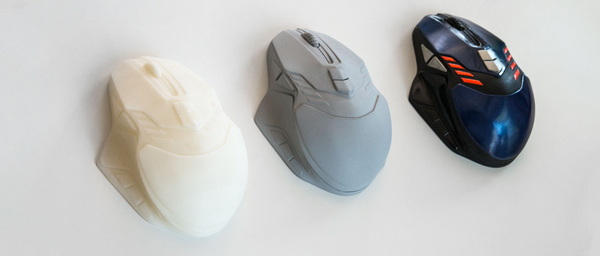
Visual Rapid Prototyping models focus on appearance and overall shape rather than mechanical strength. These prototypes are useful for reviewing aesthetics, branding, and ergonomics, and are often finished with painting or surface treatments.
Functional Rapid Prototyping uses materials and designs that can withstand loads and motion similar to the final product. These parts are used for fit checks, mechanical tests, and basic performance verification before investment in production tooling.
These Rapid Prototyping models closely approximate final materials, tolerances, and manufacturability. They are used to validate complex assemblies, test manufacturing approaches, and fine-tune details like snap-fits, threads, and sealing surfaces.
Automotive companies rely on Rapid Prototyping to develop interior components, brackets, housings, and even under-the-hood parts for thermal and mechanical evaluation. 3D printing-based Rapid Prototyping supports wind tunnel models, ergonomic studies, and assembly-line planning.
Aerospace applications use Rapid Prototyping to explore lightweight structures, optimize airflow, and validate complex metal components before certifying production versions. With 3D printed Rapid Prototyping, engineers can test multiple geometries quickly and verify safety-critical designs.
In healthcare, Rapid Prototyping produces anatomical models, surgical planning guides, dental models, and individualized prosthetics. The combination of imaging data with 3D printing enables highly personalized solutions, which is a strong use case for Rapid Prototyping.
For consumer products, Rapid Prototyping helps refine user interfaces, enclosure designs, mounting points, and internal component layouts. Realistic prototypes enable usability testing and marketing validation before committing to injection molding tools.
Industrial manufacturers and OEM suppliers use Rapid Prototyping to create small batches for pilot runs, evaluate new features, and propose design improvements to customers. This accelerates collaboration and reduces risk in complex engineering projects.
Although 3D printing is central to Rapid Prototyping, the strongest results come from combining it with traditional processes such as CNC machining, sheet metal fabrication, and mold making. Early concept Rapid Prototyping may start with 3D printing, while later stages blend in machined or formed parts.
For example, a company can 3D print housings and ergonomic shells while machining critical metal shafts or bushings, building a hybrid prototype that more closely represents the final assembly. Once Rapid Prototyping validates the design, the same supplier can transition to precision batch production, die casting, or injection molding based on the approved geometry.
Common plastics in Rapid Prototyping include PLA, ABS, PETG, nylon, and polycarbonate. These materials cover a wide range of mechanical properties, from rigid to flexible, and are suitable for concept models and functional parts.
Photopolymer resins used in SLA and related processes offer smooth surfaces and high detail. In Rapid Prototyping, resins are often chosen for visual models, dental applications, small mechanical parts, and components that require tight tolerances.
Metal Rapid Prototyping materials like aluminum, stainless steel, and titanium deliver high strength and heat resistance. They are used for functional prototypes in demanding conditions, tooling inserts, and end-use parts that require real-world mechanical behavior.
Fiber-reinforced polymers and filled materials (such as glass-filled nylon) extend Rapid Prototyping into higher-performance applications. These materials allow prototypes that must resist impact, bending, or elevated temperatures while staying relatively lightweight.
Effective Rapid Prototyping considers build orientation, support strategies, wall thicknesses, and allowable overhangs in the design stage. Adapting designs for additive manufacturing improves print reliability and reduces post-processing.
Rapid Prototyping works best when early models focus on key functions or critical dimensions rather than perfection. Starting with simpler prototypes makes it easier to test assumptions and gradually add complexity as the design matures.
For Rapid Prototyping, choose materials that realistically represent the properties needed for each test. Visual reviews can use basic plastics, while mechanical or thermal tests may require engineering polymers or metals.
Each Rapid Prototyping cycle should be documented with test results, feedback, and design changes. This ensures that knowledge is retained, prevents repeated mistakes, and supports clear communication between teams and OEM partners.
A factory that offers Rapid Prototyping, CNC machining, precision batch production, turning, sheet metal fabrication, 3D printing, and mold manufacturing can support customers from first concept to mass production. For overseas brand owners, wholesalers, and manufacturers, such a partner provides a unified workflow.
Rapid Prototyping in this setting may begin with small 3D printed samples for concept validation, followed by CNC-machined prototypes with tighter tolerances, and finally pilot batches using soft tooling or bridge molds. This staged approach lowers risk, improves coordination, and aligns every step with the customer's quality and schedule requirements.
Rapid Prototyping in 3D printing is a powerful method to convert ideas into physical parts quickly, test them thoroughly, and refine designs before committing to expensive production tools. By enabling fast iteration, Rapid Prototyping reduces time to market, lowers development costs, and enhances product performance across industries from automotive and aerospace to medical and consumer goods. When integrated with CNC machining, sheet metal fabrication, and mold production, Rapid Prototyping becomes a complete, flexible pathway from digital design to reliable mass manufacturing for global OEM partners.
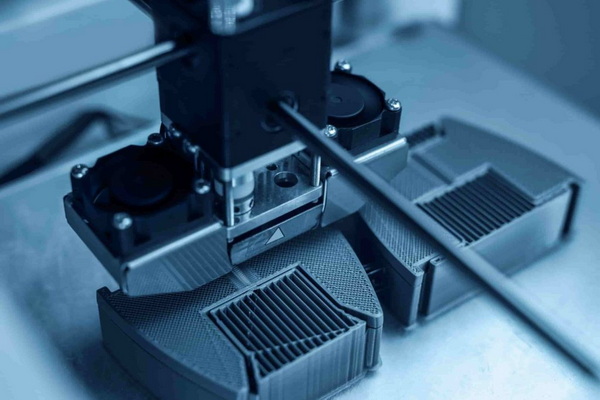
Traditional prototyping often relies on manual fabrication, machining, or temporary tooling, which can take weeks and cost significantly more per iteration. Rapid Prototyping, especially with 3D printing, automates most of the build process and allows multiple design versions to be produced quickly from CAD data, making iteration faster and more economical.
Yes, in many cases Rapid Prototyping processes and materials are suitable for low-volume or specialized end-use parts. Engineering plastics, metal 3D printing, and composite materials allow some Rapid Prototyping components to move directly into service, particularly for customized or time-critical applications.
Accuracy depends on the technology, material, printer calibration, and design. Many professional Rapid Prototyping systems achieve tolerances suitable for functional fit checks and engineering evaluations, while highly precise technologies like SLA and certain metal processes can approach or match traditional machining tolerances on key features.
Rapid Prototyping is most visible in early design phases, but it is also valuable in later stages for tooling verification, production jig design, packaging tests, and service or spare parts. The ability to quickly generate new or modified parts means Rapid Prototyping remains useful throughout the product lifecycle.
Companies should look for a partner with multiple technologies (3D printing, CNC machining, sheet metal, molds), proven experience with international OEM work, clear communication, and strong quality control. A capable Rapid Prototyping partner can guide material selection, suggest design optimizations, and smoothly transition from prototypes to small and then large batch production.
[1](https://bigrep.com/posts/rapid-prototyping-3d-printing/)
[2](https://www.stratasys.com/en/resources/blog/guide-to-rapid-prototyping/)
[3](https://rapidmade.com/3d-printing-guide/)
[4](https://formlabs.com/blog/ultimate-guide-to-rapid-prototyping/)
[5](https://www.monarch-innovation.com/rapid-prototyping-3d-printing-guide)
[6](https://ultimaker.com/learn/rapid-prototyping-how-to-use-3d-printing-for-your-rapid-prototyping-needs/)
[7](https://lodestar3d.com/step-by-step-guide-rapid-prototyping-with-3d-printing-in-2024/)
[8](https://www.snapmaker.com/blog/rapid-3d-printing-prototyping-guide/)
[9](https://www.xometry.com/resources/3d-printing/what-is-rapid-prototyping-in-3d-printing/)

