
Views: 222 Author: Amanda Publish Time: 2025-12-01 Origin: Site


Content Menu
● About Shangchen (sc-rapidmanufacturing.com)
● What Is Rapid Prototyping 3D Printing?
● How Rapid Prototyping 3D Printing Works
● Key Rapid Prototyping Technologies
● Shangchen's Rapid Prototyping Services
● Advantages of Rapid Prototyping 3D Printing
● Applications of Rapid Prototyping 3D Printing
● Material Choices in Rapid Prototyping
● Rapid Prototyping Process in OEM Projects
● Best Practices for Using Rapid Prototyping 3D Printing
● Why Overseas OEM Customers Choose Shangchen
● FAQ
>> 1. What is rapid prototyping 3D printing?
>> 2. How does Shangchen help overseas OEM customers with rapid prototyping?
>> 3. Which materials can be used for rapid prototyping at Shangchen?
>> 4. How fast can rapid prototyping parts be delivered?
>> 5. Can rapid prototyping parts be used directly in small-batch production?
Rapid prototyping 3D printing is a fast, flexible way to turn digital designs into physical parts so engineers and product teams can validate ideas before mass production. It combines additive manufacturing with other rapid prototyping methods like CNC machining and sheet metal processing to shorten development cycles and reduce risk.
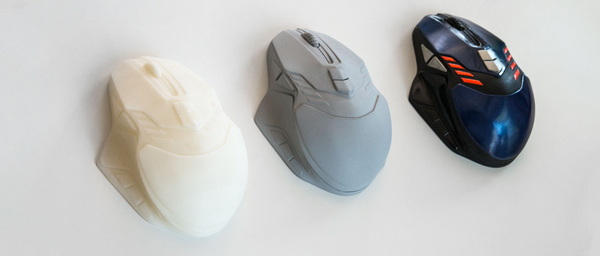
Shangchen (sc-rapidmanufacturing.com) is a professional China-based factory focused on rapid prototyping, CNC machining services, precision batch production, turning, sheet metal fabrication, 3D printing services, and mold manufacturing for overseas OEM customers. The company works closely with foreign brand owners, wholesalers, and manufacturers to deliver high-quality parts and assemblies from early product concepts through to stable mass production.
With advanced 3-axis and 5-axis CNC machining centers, industrial 3D printers, sheet metal lines, and in-house tooling capabilities, Shangchen provides an integrated rapid prototyping and OEM production platform. Experienced engineers support design review, material selection, and DFM optimization so that rapid prototyping parts can smoothly transition into repeatable series production.
Rapid prototyping is a family of techniques that rapidly produces physical models or parts directly from 3D CAD data. Instead of waiting weeks for traditional prototypes, teams can obtain functional or visual parts in days or even hours, evaluate them, and then refine their designs in short, iterative cycles.
The core goal of rapid prototyping is to reduce uncertainty. Designers and engineers use prototypes to verify form, fit, and function, discover issues early, and gather feedback from stakeholders or end users. This highly iterative process minimizes late-stage design changes and lowers the overall cost of product development.
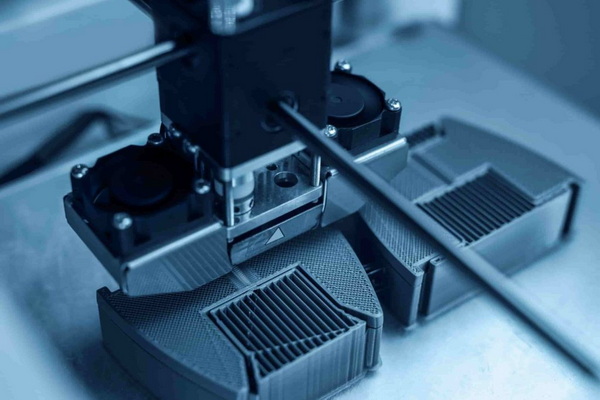
Rapid prototyping 3D printing applies additive manufacturing technologies specifically for fast, iterative prototype creation. Layer by layer, a printer builds parts from materials such as plastics, resins, or metals using data generated from 3D CAD models. Because no hard tooling is required, modifying a design usually means only updating the digital file and reprinting.
This approach is especially powerful when combined with other rapid prototyping processes. 3D printing shines in producing complex geometries, internal channels, and customized parts, while CNC machining is ideal for tight tolerances and production-grade materials. Together, they form a flexible rapid prototyping toolkit that supports early concept models and later engineering validation stages.
The rapid prototyping 3D printing workflow follows a clear sequence:
1. CAD design
Engineers or designers create a detailed 3D model using CAD software. The model includes the geometry, dimensions, and critical features required for a prototype.
2. File preparation and slicing
The CAD file is exported to a printable format such as STL or OBJ. Slicing software then divides the model into thin layers and generates the machine instructions that the 3D printer will follow.
3. Printing
The 3D printer builds the part layer by layer according to the slicing data. During this step, parameters like layer thickness, infill density, and printing speed influence part strength, surface quality, and build time.
4. Post-processing
After printing, parts may require support removal, cleaning, sanding, polishing, painting, or other surface treatments. If functional testing is needed, additional machining or fitting operations can be applied.
5. Testing and iteration
The rapid prototyping part is measured, assembled, and tested. Feedback is used to refine the CAD model, and a new rapid prototyping cycle begins until the design meets all requirements.
Throughout this loop, rapid prototyping enables fast learning and incremental improvement, providing a solid foundation for eventual mass production.
Rapid prototyping is not limited to 3D printing. In modern manufacturing, several complementary technologies are used together:
- 3D printing (FDM, SLA, SLS, DMLS, etc.) for complex shapes, internal features, and fast visual or functional samples.
- CNC milling and turning for high-precision metal and plastic prototypes that closely resemble final production parts.
- Sheet metal fabrication for brackets, enclosures, housings, and structural components produced quickly from metal sheets.
- Mold manufacturing and low-volume molding for bridge production, short runs, and pre-production verification in near-production materials.
By combining these processes within one rapid prototyping strategy, teams can pick the best method for each part based on speed, accuracy, material, and cost.
Shangchen (sc-rapidmanufacturing.com) positions rapid prototyping at the center of its OEM service model. The factory offers:
- Rapid prototyping 3D printing for visual models, ergonomic samples, and functional parts.
- Rapid prototyping CNC machining for high-tolerance prototypes and small batches in metals and engineering plastics.
- Rapid prototyping sheet metal fabrication for fast production of enclosures and structural parts.
- Rapid prototyping tooling and molds for pre-series runs and pilot builds.
Because these capabilities are integrated in one facility, overseas customers can move from rough concept to functional prototypes and then to pilot and mass production without changing suppliers. This continuity reduces communication gaps, shortens lead times, and improves overall project control.
Rapid prototyping 3D printing delivers several strategic advantages to product developers and OEMs:
- Speed
Rapid prototyping drastically shortens the time between idea and physical sample. Early prototypes can be produced within days, enabling faster design validation and quicker decision-making.
- Cost savings
Without hard tooling, the cost of a single or small batch of rapid prototyping parts is relatively low, especially in the early stages when changes are frequent. This encourages experimentation and reduces the risk of investing in the wrong design.
- Design freedom
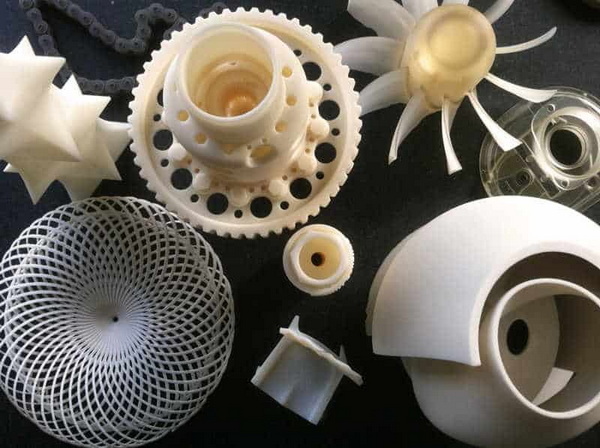
Rapid prototyping 3D printing supports complex geometries that are difficult or impossible with conventional manufacturing. Designers can explore organic forms, lattice structures, and optimized internal channels while maintaining rapid prototyping speed.
- Improved communication
Tangible rapid prototyping samples help align understanding between designers, engineers, marketing teams, and customers. Issues that might be hidden in digital models become visible when people can handle real parts.
- Lower risk in mass production
By resolving design and engineering issues during rapid prototyping, companies reduce the number of tooling modifications, avoid expensive rework, and stabilise production faster after launch.
Rapid prototyping 3D printing is used across many industries:
- Consumer electronics and appliances
Rapid prototyping helps validate housings, buttons, covers, and internal brackets for devices that must be both functional and aesthetically appealing.
- Automotive and transportation
Rapid prototyping supports ergonomic studies of interior parts, fixtures for assembly, and functional components for airflow, cooling, and structural testing.
- Aerospace and defense
Lightweight yet strong parts with complex shapes benefit from rapid prototyping 3D printing, especially during early design and wind tunnel testing.
- Medical and healthcare
Rapid prototyping enables custom medical devices, surgical guides, dental models, and patient-specific components that require precise geometry.
- Industrial equipment and robotics
Rapid prototyping simplifies the creation of jigs, fixtures, grippers, housings, and machine components for fast integration into automated systems.
In all these sectors, rapid prototyping accelerates innovation, makes small-batch customization practical, and supports continuous improvement.
Successful rapid prototyping 3D printing depends heavily on the right materials. Common categories include:
- Plastics and resins
PLA, ABS, PETG, nylon, and photopolymer resins are frequently used in rapid prototyping for visual models, ergonomic tests, or moderate-load functional parts.
- Engineering plastics
High-performance materials like PC, PA with glass fiber, or high-temperature resins serve more demanding rapid prototyping applications that require better strength, stiffness, or heat resistance.
- Metals
Aluminum, stainless steel, and tool steels are used in rapid prototyping when strength, durability, and thermal performance must be close to final production levels. Metals may be produced via 3D printing or CNC machining as part of a rapid prototyping workflow.
- Elastomers
Flexible materials enable rapid prototyping of seals, gaskets, soft-touch elements, or wearable components where comfort and deformation need evaluation.
Shangchen supports a wide range of plastics and metals to make sure rapid prototyping parts match final performance targets as closely as possible.
In a typical OEM project handled by Shangchen, rapid prototyping is embedded in several stages:
1. Concept validation
Early rapid prototyping 3D printing creates simple visual and ergonomic models so teams can judge overall shape, style, and basic usability.
2. Engineering verification
As designs mature, rapid prototyping CNC machining and more advanced 3D printing produce parts closer to production materials, allowing mechanical and assembly tests.
3. Pilot build and small-batch production
Rapid prototyping tooling and molds enable small runs that simulate mass production processes. Any remaining issues are fixed before full tooling investments.
4. Transition to mass production
Once the rapid prototyping phases have stabilized the design, Shangchen uses the same engineering data, process knowledge, and quality standards to ramp up consistent large-volume production.
By repeating rapid prototyping cycles at each level, risk is reduced, and performance is improved step by step.
To get the most value from rapid prototyping 3D printing, product teams can follow several best practices:
- Define clear goals for each prototype
Decide whether the current rapid prototyping cycle is focused on appearance, ergonomics, mechanical strength, assembly, or user feedback.
- Design for manufacturability from the start
Even in early rapid prototyping phases, consider draft angles, wall thickness, and tolerances so designs can eventually be manufactured efficiently using mass-production methods.
- Iterate quickly
Take full advantage of rapid prototyping by planning multiple iterations. Small, frequent adjustments often lead to better products than one or two large redesigns.
- Keep records of changes
Track each rapid prototyping revision, test result, and feedback note. This documentation simplifies communication and supports continuous improvement throughout the product lifecycle.
- Work closely with the manufacturing partner
Collaborating with a factory like Shangchen that understands rapid prototyping, CNC machining, and production technology ensures design decisions align with realistic manufacturing capabilities.
For overseas brand owners, wholesalers, and manufacturers, choosing the right rapid prototyping partner is critical. Shangchen offers several advantages:
- Integrated services
Rapid prototyping 3D printing, CNC machining, sheet metal, mold manufacturing, and batch production are all available in one place.
- OEM orientation
Processes, documentation, and quality systems are designed for OEM customers who need consistent supply, technical support, and long-term cooperation.
- Flexible quantities
The same facility can produce single rapid prototyping samples, small batches, and large recurring orders, minimizing supplier changes and coordination costs.
- Engineering and quality support
From DFM suggestions to rigorous inspection reports, Shangchen helps ensure that rapid prototyping results seamlessly match the requirements of serial production.
- Competitive lead times and cost
With efficient production management and a focus on rapid prototyping, the factory can deliver parts quickly and cost-effectively to global markets.
By relying on Shangchen for rapid prototyping and production, overseas customers reduce development risk and accelerate their path to market.
Rapid prototyping 3D printing has become a core technology in modern product development, allowing companies to turn ideas into physical prototypes quickly and refine designs through frequent iterations. Combined with CNC machining, sheet metal fabrication, and rapid tooling, rapid prototyping greatly improves design quality and shortens time-to-market.
Shangchen (sc-rapidmanufacturing.com) specializes in providing rapid prototyping and OEM manufacturing services to overseas brand owners, wholesalers, and manufacturers. With integrated 3D printing, CNC machining, sheet metal, mold production, and precision batch manufacturing, Shangchen enables customers to move smoothly from CAD concept to validated prototypes and, finally, to reliable mass production.
Rapid prototyping 3D printing is the use of additive manufacturing technologies to quickly create physical models from digital designs so that engineers can evaluate form, fit, and function before mass production. It supports fast iterations, allowing teams to modify the CAD model and reprint improved versions within short time frames.
Shangchen helps overseas OEM customers by combining rapid prototyping 3D printing with CNC machining, sheet metal fabrication, and mold manufacturing in a single factory. The team provides engineering advice, material recommendations, and quality inspection so that rapid prototyping parts are suitable for functional tests and can transition to stable mass production.
Shangchen supports a wide range of rapid prototyping materials, including common plastics and resins for visual and ergonomic models, engineering plastics for higher mechanical performance, and metals like aluminum and steel for functional parts. Material selection is based on the target application, required strength, heat resistance, and similarity to final production materials.
Lead time for rapid prototyping parts depends on design complexity, quantity, and chosen process, but many projects can move from CAD data to finished samples within several days to a couple of weeks. By coordinating 3D printing, CNC machining, and finishing processes efficiently, Shangchen works to provide short, reliable delivery times for overseas clients.
Yes, in many cases rapid prototyping parts can be used directly for small-batch or bridge production, especially when produced with CNC machining or robust 3D printing materials. Shangchen offers rapid prototyping combined with precision batch manufacturing so customers can test markets with limited quantities before committing to full-scale tooling and large-volume production.
[1](https://bigrep.com/posts/rapid-prototyping-3d-printing/)
[2](https://www.stratasys.com/en/resources/blog/guide-to-rapid-prototyping/)
[3](https://www.snapmaker.com/blog/rapid-3d-printing-prototyping-guide/)
[4](https://rapidmade.com/3d-printing-guide/)
[5](https://www.monarch-innovation.com/rapid-prototyping-3d-printing-guide)
[6](https://lodestar3d.com/step-by-step-guide-rapid-prototyping-with-3d-printing-in-2024/)
[7](https://formlabs.com/blog/ultimate-guide-to-rapid-prototyping/)
[8](https://www.additive-x.com/blog/rapid-prototyping-guide-2022)
[9](https://www.allpcb.com/blog/pcb-manufacturing/mastering-3d-printed-pcbs-a-comprehensive-guide-for-rapid-prototyping.html)

