
Views: 222 Author: Amanda Publish Time: 2025-12-17 Origin: Site


Content Menu
● Introduction to Rapid PCB Prototyping
● Core Elements of Rapid PCB Prototyping
● Design and Engineering for Rapid Prototyping
>> Design Rule Checks and Simulation
● Fabrication in Rapid PCB Prototyping
>> Quick‑Turn Production of Bare Boards
>> Material and Stack‑Up Choices
● Assembly and Testing in Rapid Prototyping
>> Prototype Assembly Strategies
>> Inspection and Functional Testing
● Supporting Technologies for Rapid Prototyping
>> CNC Machining for Boards and Fixtures
>> 3D Printing for Rapid Prototyping of Enclosures
● Benefits of Rapid PCB Prototyping for OEMs
>> Improved Product Quality and Innovation
● Typical Use Cases for Rapid PCB Prototyping
● From Rapid Prototyping to Mass Production
>> Transferring Designs to Volume Manufacturing
>> Continuous Improvement After Launch
● FAQ About Rapid PCB Prototyping
>> 1. What is rapid PCB prototyping?
>> 2. How long does rapid PCB prototyping normally take?
>> 3. Why is rapid PCB prototyping important for OEMs?
>> 4. How does rapid prototyping relate to 3D printing and CNC machining?
>> 5. When should rapid PCB prototyping be used in a project?
Rapid PCB prototyping is the fast design, fabrication, assembly, and testing of printed circuit boards so engineers can validate ideas and move to mass production in days instead of weeks. For global OEMs and brand owners, rapid prototyping transforms PCB development into an agile, low‑risk process that supports faster launches and higher product quality.
Rapid PCB prototyping focuses on shortening the time between a PCB concept and a working physical board ready for electrical and functional tests. Instead of waiting through long traditional lead times, teams use rapid prototyping to iterate layouts, materials, and assembly options until performance and manufacturability are optimized.
To support this, suppliers combine quick‑turn fabrication, fast component sourcing, and flexible assembly so that even complex multilayer prototypes can be delivered in a few days. For OEM customers, rapid prototyping means real hardware on the bench early, so design decisions are based on measurable performance, not only simulations or assumptions.
Rapid PCB prototyping is not a single step but a full loop that compresses every stage of PCB development. A typical rapid prototyping cycle includes:
- Fast, manufacturable PCB design
- Efficient data preparation and engineering checks
- Quick‑turn fabrication of bare boards
- Flexible assembly of small batches
- Focused testing and feedback
Each loop of rapid prototyping feeds lessons into the next design spin, so the PCB improves steadily until it is ready for mass production. By planning several rapid prototyping cycles from the beginning, OEM customers avoid last‑minute surprises when production quantities become large and changes are costly.
The rapid prototyping workflow starts with robust schematic capture and PCB layout using professional CAD tools. Engineers define components, net connections, layer stack‑up, and design rules in a way that balances electrical performance with manufacturing reality. Clear documentation and clean data are essential for successful rapid prototyping.
During layout, designers apply design‑for‑manufacturability (DFM) principles: appropriate trace widths and spacing, sensible via choices, and realistic component footprints. When rapid prototyping is the goal, engineers also try to minimize exotic or hard‑to‑source parts so that prototype builds are not delayed by supply chain bottlenecks.
Before fabrication, design rule checks and simulations help catch problems that could derail rapid prototyping cycles. Automated checks verify clearances, trace widths, and high‑speed routing rules, while signal and power integrity simulations highlight potential noise or voltage‑drop issues.
By resolving these issues before the first rapid prototyping run, teams increase the chance that early prototypes will work well enough to validate key ideas. This does not remove the need for multiple iterations, but it ensures that each rapid prototyping loop focuses on meaningful refinements instead of reworking basic mistakes.
In rapid PCB prototyping, fabrication uses streamlined workflows that convert design files directly into tooling data for drilling, imaging, and etching. Digital front‑end processes handle CAM checks, panelization, and toolpath generation with minimal manual intervention, which is critical for short lead times.
The core fabrication stages in a rapid prototyping environment usually include:
- Material cutting and preparation
- High‑speed drilling and routing with CNC equipment
- Copper plating and via formation
- Imaging and etching of traces
- Solder mask and legend application
- Surface finish (such as ENIG, HASL, or others)
Quick‑turn lines are optimized to set up and run small batches efficiently, so simple prototypes can be ready in 24–48 hours and more complex multilayer designs in a few days. This speed is the foundation on which all other rapid prototyping benefits are built.
Rapid PCB prototyping still requires thoughtful material selection. For many designs, FR‑4 is sufficient, but high‑frequency or high‑power boards may need specialized laminates. During early rapid prototyping cycles, teams often use cost‑effective materials that approximate final performance, then refine the stack‑up in later iterations.
Layer counts, copper thickness, and controlled‑impedance requirements are also defined as part of the rapid prototyping strategy. A design that is difficult to fabricate may slow down every iteration, so engineers often adjust stack‑up and routing strategy to keep rapid prototyping cycles manageable and repeatable.
After fabrication, rapid PCB prototyping continues with component placement and soldering. Depending on quantity and complexity, assembly may be done manually, with semi‑automatic equipment, or on full SMT lines configured for small batches. The goal is always the same: high‑quality assembly with minimal delay.
Rapid prototyping assemblies often include a mix of surface‑mount and through‑hole components, and sometimes hand‑soldered parts for flexibility. Clear assembly drawings, bills of materials, and pick‑and‑place files make it easier for the assembly team to work quickly and accurately, which is crucial when several rapid prototyping spins are scheduled.
Once assembled, prototypes are inspected and tested to confirm whether design goals have been met. Visual inspection, AOI, and X‑ray can detect solder defects, polarity issues, and hidden problems under BGAs or fine‑pitch components. Basic checks at this stage increase the value of every rapid prototyping build.
Functional testing—such as powering up, running firmware, and exercising key interfaces—then verifies whether the PCB behaves as expected in real operating conditions. The feedback from these tests guides the next round of rapid prototyping, helping teams refine routing, component choices, and thermal management.
High‑speed CNC machining plays multiple roles in rapid PCB prototyping. It is used for precise drilling of vias and holes, cutting board outlines, and machining panels or special substrates. CNC routing equipment can also create cutouts and mechanical features that are essential for integration with housings and connectors.
Beyond the boards themselves, CNC machining is vital for making fixtures, test jigs, and prototype enclosures. When rapid prototyping is extended to the full product, CNC‑made parts ensure that PCBs fit properly inside mechanical structures, that connectors align with openings, and that assembly operations can be carried out safely and consistently.
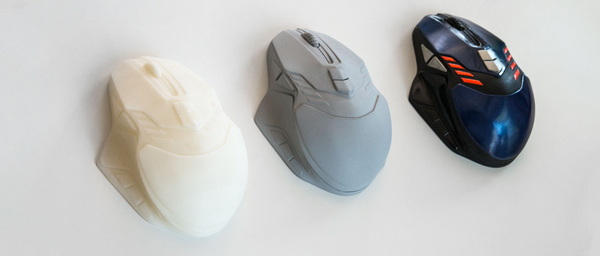
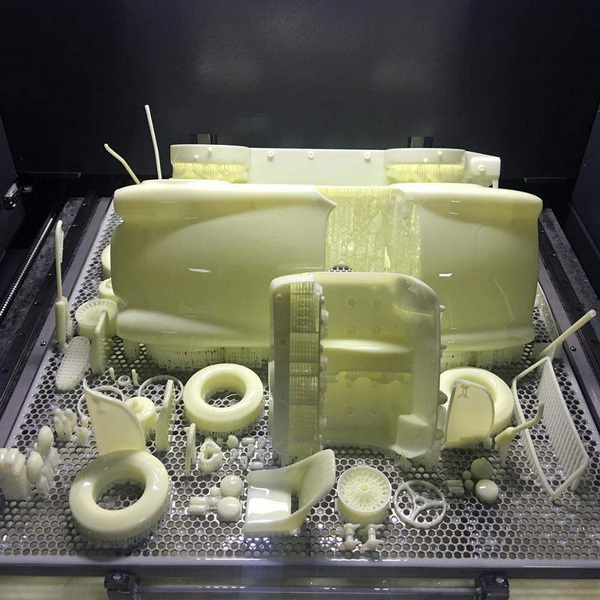
3D printing complements rapid PCB prototyping by producing housings, brackets, and functional models straight from CAD data. This allows engineers to evaluate mechanical fit, ergonomics, and cable routing while PCB layouts are still evolving.
By combining rapid prototyping of electronics and mechanics, teams can test complete assemblies early in the project. Enclosure prototypes can reveal thermal hotspots, interference with mounting bosses, or misaligned connectors that might not be obvious in digital models alone. Each discovery feeds back into both PCB design and mechanical design, strengthening the overall rapid prototyping process.
The most visible benefit of rapid PCB prototyping is speed. Instead of waiting weeks for each hardware revision, teams can move from design release to tested boards within a few days. This acceleration compresses the entire product development timeline and improves time‑to‑market.
Faster cycles also enable more decision points. When managers and engineers can evaluate several rapid prototyping builds within a short timeframe, they gain better insight into trade‑offs between cost, performance, and manufacturability. This leads to stronger product strategies and more competitive offerings.
Rapid PCB prototyping reduces risk by uncovering problems while quantities are still small and changes are still affordable. Each prototype is an opportunity to validate assumptions about electrical performance, mechanical integration, component availability, and user experience.
Rather than discovering critical issues during pilot production or after launch, teams use repeated rapid prototyping loops to strengthen the design step by step. This systematic approach cuts the likelihood of expensive rework, missed deadlines, or field failures, making projects more predictable and easier to manage.
Because rapid PCB prototyping makes iteration cheap and fast, it encourages experimentation. Engineers can try new routing strategies, components, or form factors without fearing that one mistake will delay the project by months. This freedom supports innovation at the electrical, mechanical, and system level.
At the same time, rapid prototyping promotes continuous improvement. Each prototype run refines thermal behavior, signal integrity, EMC performance, and user‑interface details. Over multiple rapid prototyping cycles, these improvements accumulate into higher product quality and stronger brand reputation.
Rapid PCB prototyping is used wherever electronics products must be developed quickly and refined through real‑world testing. Common scenarios include:
- Proof‑of‑concept builds for new product ideas
- Engineering validation and design verification runs
- Pre‑production samples for customer demos or certifications
- Redesigns of existing products to add features or reduce cost
In consumer electronics, rapid prototyping helps teams follow fast market trends and respond quickly to user feedback. In automotive and medical sectors, rapid prototyping supports rigorous testing and certification by providing stable, repeatable hardware early in the schedule.
Once a PCB design has passed through several rapid prototyping cycles and meets all performance and reliability requirements, it is ready to move into mass production. The data gathered during rapid prototyping—process settings, test results, common failure modes—becomes a valuable input for production planning.
Manufacturing engineers use this information to define tooling, panelization, assembly methods, and quality controls for volume runs. Because rapid prototyping was handled with production‑oriented processes in mind, the transition is smoother and the first production batches behave much like the final prototypes.
Even after launch, rapid PCB prototyping remains useful. Field feedback, component obsolescence, and cost‑reduction opportunities can all trigger new design revisions. Rapid prototyping allows these changes to be evaluated quickly, with updated boards tested and qualified before rolling them into the main production line.
This ongoing use of rapid prototyping supports a culture of continuous improvement. Products can evolve throughout their lifecycle while risk remains controlled, and OEM customers can respond flexibly to market or regulatory changes without disruptive delays.
Rapid PCB prototyping is a complete approach to electronics development that compresses design, fabrication, assembly, and testing into fast, repeatable cycles. By using rapid prototyping, teams validate ideas early, uncover problems when they are still inexpensive to fix, and refine products through multiple hardware iterations.
For OEMs, brand owners, and manufacturers, rapid PCB prototyping delivers shorter development cycles, lower project risk, and higher product quality. When combined with technologies such as CNC machining and 3D printing for mechanical parts and fixtures, rapid prototyping supports full product validation from circuit performance to final assembly. In a competitive global market, integrating rapid prototyping into the development process is no longer optional; it is a key strategy for bringing better products to market faster.
Rapid PCB prototyping is the fast, small‑batch fabrication and assembly of printed circuit boards to verify and refine designs before moving into mass production. It emphasizes very short lead times, flexible iteration, and close cooperation between design and manufacturing teams.
Lead time depends on board complexity and technology, but simple prototypes can often be produced in 24–48 hours, while more complex multilayer designs may take a few days. The exact timing is influenced by material availability, surface finish requirements, and whether assembly is included.
Rapid PCB prototyping helps OEMs discover design flaws early, optimize for manufacturability, and prove performance before committing to tooling and large‑volume orders. This reduces project risk, improves product quality, and accelerates time‑to‑market, which is crucial in competitive industries.
Rapid prototyping of PCBs often works alongside 3D printing and CNC machining, which provide enclosures, brackets, jigs, and fixtures for complete product testing. When electronics and mechanical rapid prototyping are combined, teams can evaluate full assemblies early and ensure that everything fits and functions correctly.
Rapid PCB prototyping is most valuable at concept validation, design verification, and pre‑production stages, and it can also support post‑launch improvements. Whenever a design change needs hardware confirmation, rapid prototyping provides a fast and reliable way to test and refine the solution before it affects mass production.

