
Views: 222 Author: Amanda Publish Time: 2025-12-26 Origin: Site


Content Menu
● Understanding Precision CNC Machining
● How Precision CNC Machining Works
● Core Technologies in Precision CNC Machining
● Tolerances, Accuracy, and Surface Finish
● Materials Used in Precision CNC Machining
● Advantages of Precision CNC Machining
● Limitations and Design Considerations
● Applications Across Key Industries
● CNC Machining vs Other Manufacturing Processes
● Precision CNC Machining and OEM Services
● Quality Control in Precision CNC Machining
● Design Tips to Get the Most from CNC Machining
● FAQ About Precision CNC Machining
>> 1. What is the difference between CNC Machining and precision CNC Machining?
>> 2. What tolerances can precision CNC Machining achieve?
>> 3. Which industries benefit most from precision CNC Machining?
>> 4. How does precision CNC Machining compare with 3D printing?
>> 5. How can OEMs reduce costs when using precision CNC Machining?
Precision CNC Machining is a computer-controlled manufacturing process that removes material from a workpiece to produce highly accurate, repeatable, and complex parts with very tight tolerances. It is widely used for rapid prototyping, low-volume and mass production across industries such as automotive, aerospace, electronics, and medical devices.[1][2][3][4]

Precision CNC Machining combines CNC Machining automation with process optimization to achieve much tighter dimensional tolerances than standard machining. In many industrial applications, standard CNC Machining may work around ±0.1–0.25 mm, while precision CNC Machining often pushes tolerances down to ±0.01 mm or even finer on high-end equipment.[5][6][7][1]
In practice, this means CNC Machining centers, lathes, and multi-axis machines follow digital instructions (G-code) to cut, mill, drill, and turn parts with extremely consistent results across large batches. Precision CNC Machining is especially valuable when parts must fit together perfectly, withstand high loads, or ensure safety and reliability in demanding environments.[3][7][8][1]
The precision CNC Machining workflow starts from a CAD model and ends with inspected, ready-to-use parts. Each stage is controlled and monitored to minimize error, vibration, and thermal deformation, all of which affect tolerances.[9][6][1][5]
Key stages in a typical precision CNC Machining process include:[10][1][9]
- CAD modeling and design for manufacturability
- CAM programming and toolpath generation
- Machine setup, fixturing, and workholding
- Cutting operations (milling, turning, drilling, boring, tapping, etc.)
- In-process inspection and tool compensation
- Deburring, surface finishing, and quality inspection
Precision CNC Machining relies on advanced machine tools, cutting strategies, and control systems working together. Multi-axis CNC Machining and high-precision spindles allow complex 3D surfaces and tiny features to be machined efficiently with minimal setups.[2][7][4][1]
Common CNC Machining equipment and technologies include:[7][8][1]
- 3-axis and 5-axis CNC Machining centers for complex milling
- CNC turning centers and Swiss-type lathes for high-precision shafts and pins
- CNC grinding machines for ultra-smooth finishes and micron-level accuracy
- High-speed spindles, advanced cutting tools, and tool presetters
- Closed-loop controls, probing systems, and automatic tool changers
The hallmark of precision CNC Machining is the ability to hold demanding tolerances over repeated runs and across multiple machines. Many precision CNC Machining operations work comfortably within ±0.01–0.02 mm, while specialized setups and grinding can reach tolerances on the order of ±0.005 mm or better.[6][8][1][2][5]
Besides dimensional accuracy, surface roughness is closely controlled, often reaching Ra values in the 0.8–3.2 μm range for precision-machined surfaces and even smoother when grinding or polishing is added. Engineers must balance the benefits of tight tolerances with higher machining time, more tool wear, and increased cost when specifying CNC Machining requirements.[8][11][1][5][6]
Precision CNC Machining is compatible with a broad range of metals, plastics, and specialty materials, making it ideal for OEM customers with diverse product lines. Different materials demand tailored cutting parameters, tool geometries, and coolants to maintain stable tolerances and tool life.[1][3][5][6]
Typical materials for CNC Machining include:[3][8][1]
- Aluminum alloys for lightweight structural and housing components
- Stainless steels for corrosion-resistant and hygienic parts
- Tool steels and titanium for high-strength and high-temperature applications
- Copper and brass for electrical and electronic components
- Engineering plastics (POM, PEEK, PC, ABS) for insulating and lightweight parts
Precision CNC Machining offers a combination of accuracy, speed, and flexibility that is difficult for many other processes to match, especially for complex geometries. Once programs and fixtures are validated, CNC Machining can run unattended for long periods, increasing throughput and consistency.[2][10][1][3]
Key advantages of precision CNC Machining include:[8][1][3]
- High accuracy and repeatability for tight-tolerance components
- Excellent scalability from prototypes to mass production
- Wide material compatibility and versatile part geometries
- Reduced scrap and efficient material usage
- Strong dimensional stability and mechanical performance
Despite its strengths, precision CNC Machining is not always the best solution for very high-volume commodity items or extremely simple shapes where other processes may be more economical. Very tight tolerances can significantly increase machining cycles, tooling, and inspection costs, particularly in mass production.[11][5][6]
Designers working with CNC Machining should consider:[12][5][10]
- Avoiding unnecessarily tight tolerances on non-critical features
- Designing parts with sufficient tool access and clearance
- Allowing reasonable corner radii rather than sharp inside corners
- Standardizing features and hole sizes where possible
- Coordinating tolerances across mating components
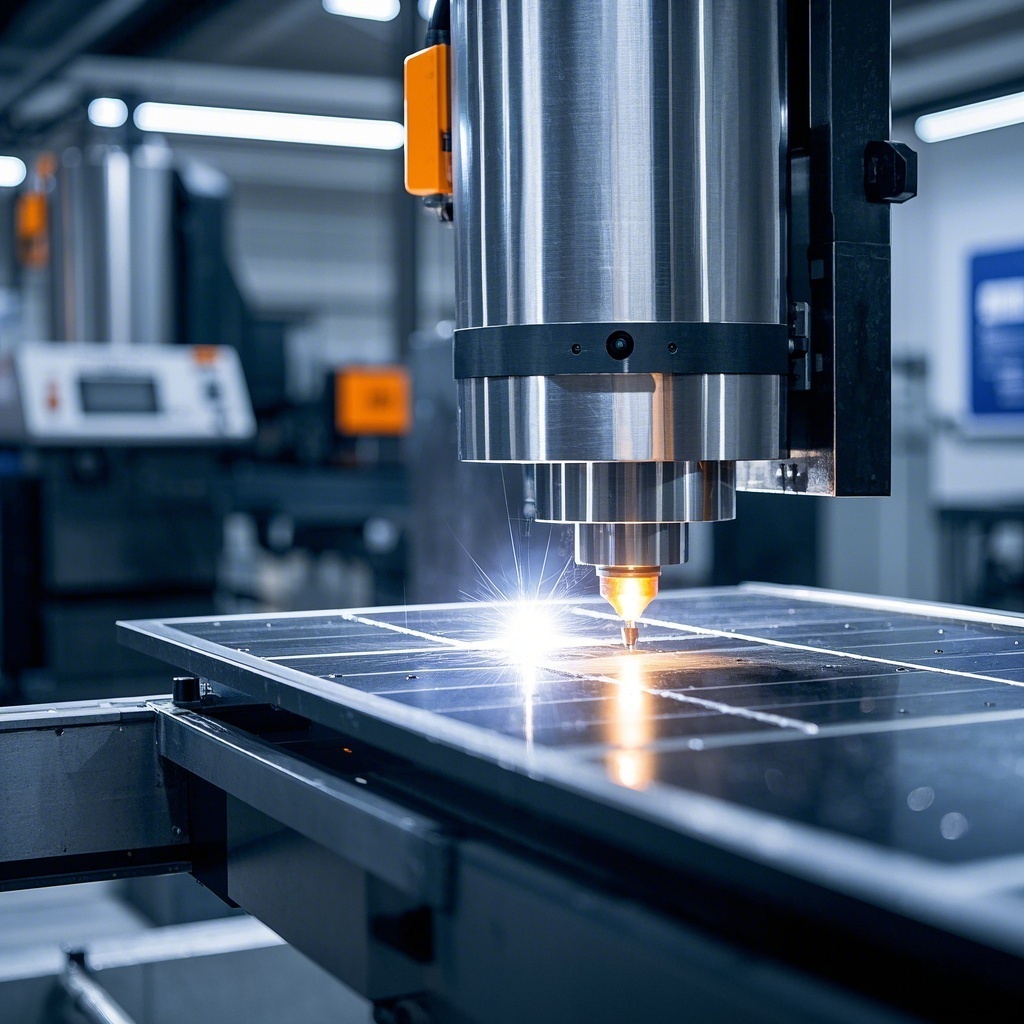
Precision CNC Machining underpins many of the products used daily in automotive, aerospace, electronics, and medical applications. Its flexibility makes it ideal for OEMs requiring customized components, engineering changes, and iterative improvements without investing in new tooling for every revision.[13][4][14][3]
Typical applications of CNC Machining include:[4][14][3]
- Aerospace engine components, brackets, housings, and landing gear parts
- Automotive powertrain parts, suspension elements, and structural fittings
- Medical surgical instruments, orthopedic implants, and dental components
- Industrial automation parts, precision gears, and motion components
- Consumer electronics housings, heatsinks, and connector hardware
When deciding how to make a part, engineers often compare CNC Machining with processes like casting, injection molding, stamping, or additive manufacturing. Precision CNC Machining stands out for its balance of accuracy, flexibility, and lead time, particularly in low to medium volumes.[4][1][3][8]
Below is a practical comparison focused on key OEM concerns:[1][3][4]
Method | Best Volume Range | Geometry Complexity | Typical Tolerance Range | Upfront Tooling Cost |
CNC Machining | Low to medium, flexible | Very high, multi axis forms | Tight (down to ±0.01 mm or better) | Low to moderate (fixtures only) |
Injection molding | High volume | Moderate to high | Moderate tightness | High (molds required) |
Die casting | Medium to high | Moderate | Moderate | High (dies required) |
Stamping | Very high | Simple to moderate profiles | Moderate to loose | High (progressive tools) |
Additive manufacturing | Low to medium | Very high internal geometry | Moderate, often requires finishing | Low to moderate |
For international OEM brands, wholesalers, and manufacturers, partnering with a capable precision CNC Machining supplier can compress lead times and reduce engineering risk. A well-equipped CNC Machining factory can combine rapid prototyping, low-volume validation builds, and precision mass production under one roof.[13][3][1]
A comprehensive CNC Machining and manufacturing partner typically offers:[14][3][1]
- Precision CNC Machining for metals and plastics
- CNC turning and Swiss-type turning for complex shafts and pins
- Sheet metal fabrication, bending, and welding
- Mold making and low-volume injection production
- 3D printing for design validation and complex internal features
High-precision work in CNC Machining demands robust inspection strategies and traceable documentation. Quality control is integrated from incoming material checks to final inspection, ensuring every batch meets design and regulatory requirements.[10][3][8][1]
Typical quality tools used alongside CNC Machining include:[5][8][1]
- Coordinate Measuring Machines (CMMs) for dimensional verification
- Optical and vision systems for tiny geometries and micro-features
- Surface roughness testers to confirm Ra values
- Gauge blocks, plug gauges, and custom fixtures
- Statistical process control (SPC) and capability analysis
To fully leverage precision CNC Machining, OEM designers should build process knowledge into their CAD models and drawings. Thoughtful design reduces cost, shortens lead time, and improves quality, especially when parts rely heavily on high-tolerance CNC Machining features.[6][12][11][5]
Practical design tips for CNC Machining:[12][11][5]
- Use standard hole sizes and thread forms where possible
- Relax tolerances on non-critical dimensions to reduce cost
- Keep wall thicknesses consistent and avoid extremely thin features
- Provide clear GD&T and datum schemes on drawings
- Consult your CNC Machining supplier early for DFM feedback
Precision CNC Machining is a highly accurate, computer-controlled method for producing complex parts with tight tolerances and consistent quality, making it essential for modern OEM production. By combining multi-axis CNC Machining technology, smart design, and strong quality control, manufacturers can move efficiently from prototype to mass production while maintaining reliability and controlling costs.[2][3][8][1]
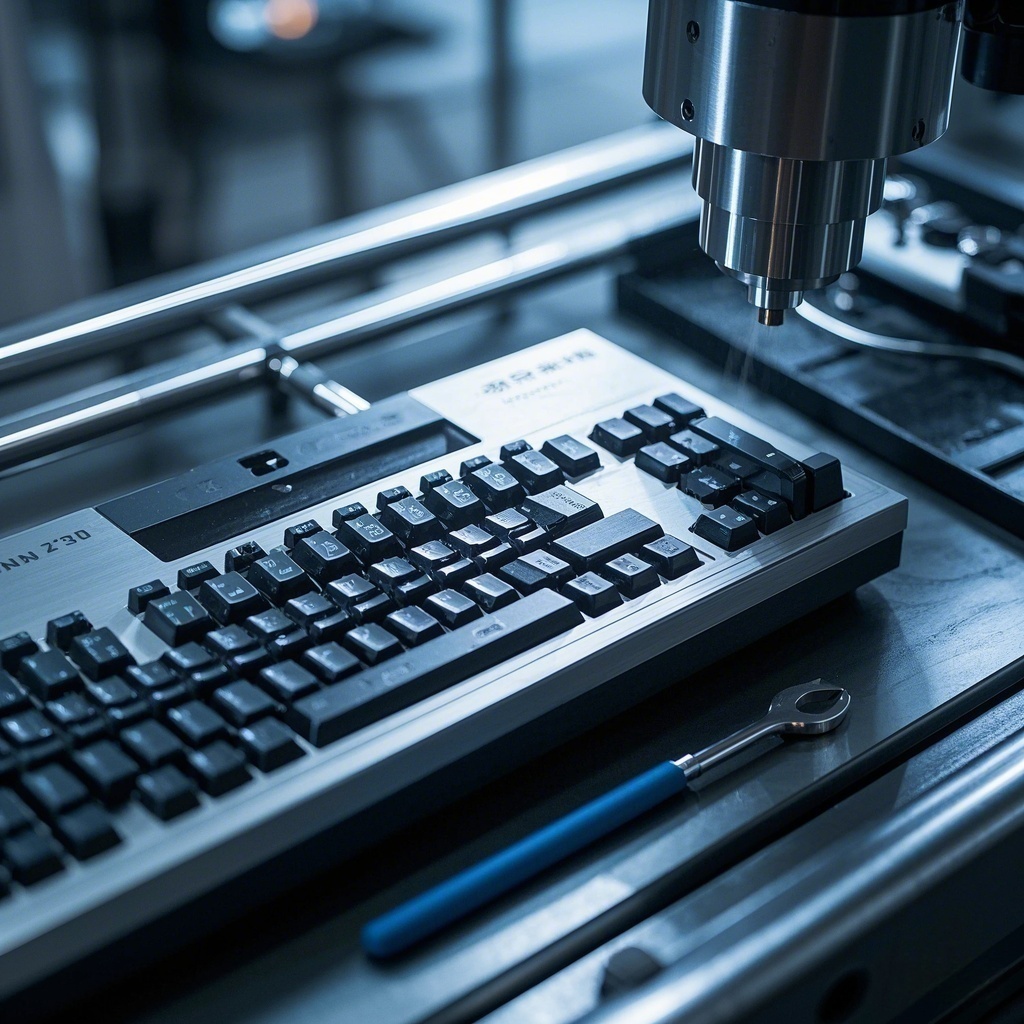
Standard CNC Machining focuses on automating cutting operations, while precision CNC Machining adds tighter process control to achieve much smaller tolerances and higher repeatability. Precision CNC Machining typically uses more advanced machines, optimized tooling, and stricter inspection to meet demanding dimensional and surface requirements.[7][8][1][2]
Many CNC Machining operations work within ±0.1–0.25 mm as a baseline, but precision CNC Machining can often deliver tolerances of ±0.01–0.02 mm, and in some cases even finer. With specialized setups, high-end machines and processes like grinding, tolerances can reach around ±0.005 mm for critical components.[5][6][8][1][2]
Industries that require safety-critical or high-performance parts rely heavily on precision CNC Machining, including aerospace, automotive, and medical devices. Electronics, industrial automation, robotics, and energy equipment manufacturers also depend on CNC Machining for housings, brackets, and precision mechanisms.[14][3][13][4]
Precision CNC Machining typically offers better mechanical properties, dimensional accuracy, and surface finish than many 3D printing processes, especially for metals. Additive manufacturing excels at intricate internal channels and very low-volume prototypes, while CNC Machining is often more economical and robust for functional production parts.[3][4][8][1]
OEMs can reduce CNC Machining costs by relaxing non-critical tolerances, minimizing unnecessary tight fits, and designing parts with accessible features. Standardizing hole sizes, reusing proven features, and involving CNC Machining suppliers early in DFM reviews also helps optimize cycle time, scrap rates, and material usage.[11][12][10][5]
[1](https://www.rapiddirect.com/blog/cnc-precision-machining/)
[2](https://kinmore.com/articles/what-is-cnc-precision-machining/)
[3](https://www.3ds.com/make/solutions/industries/cnc-machining-medical-sector)
[4](https://www.fictiv.com/articles/cnc-machining-for-aerospace)
[5](https://www.modusadvanced.com/the-complete-guide-to-machining-tolerances)
[6](https://www.rapiddirect.com/blog/cnc-machining-services-tolerances/)
[7](https://mccormickind.com/what-is-precision-machining/)
[8](https://metalcutting.com/knowledge-center/precision-cnc-machining/)
[9](https://radmot.com/blog/cnc-precision-machining)
[10](https://www.fictiv.com/articles/guide-to-cnc-machining-tolerances)
[11](https://www.xometry.com/resources/machining/what-every-designer-needs-to-know-about-cnc-part-tolerances/)
[12](https://www.wshampshire.com/understanding-cnc-machining-tolerances-maximize-part-quality-reduce-cost-and-navigate-design-challenges-using-standardized-tolerances-on-machined-parts/)
[13](https://rapidaxis.com/blog/8-applications-of-cnc-machined-parts-in-the-medical-industry/)
[14](https://www.acemicromatic.net/applications-of-cnc-machines-in-the-medical-industry/)
[15](https://www.3erp.com/blog/precision-machining/)
[16](https://www.partmfg.com/precision-cnc-machining/)
[17](https://www.goodwin.edu/enews/what-is-precision-machining/)
[18](https://www.ltc-proto.com/blog/cnc-machining-services-and-its-application-in-aerospace/)
[19](https://develop-llc.com/knowledge-base/what-is-precision-cnc-machining/)
[20](https://cncpartsxtj.com/what-is-cnc-precision-machinestypes-and-application/)

