
Views: 222 Author: Amanda Publish Time: 2025-12-26 Origin: Site


Content Menu
● What Is a Dry Run in CNC Machining?
● Why Dry Run Matters in CNC Machining
● How Dry Run Works on a CNC Machine
● Step-by-Step Guide: Performing a Dry Run in CNC Machining
>> Prepare the CNC Machine Setup
>> Load and Verify the CNC Program
>> Activate Dry Run / Machine Lock
>> Run the Program and Observe
● Benefits of Dry Run for CNC Machining Quality and Cost
● Dry Run in Different CNC Machining Scenarios
>> CNC Milling
>> CNC Turning
>> Multi-Axis and Complex CNC Machining
● Best Practices for Safe Dry Run in CNC Machining
● How Dry Run Supports OEM Customers and Mass Production
● FAQ – Dry Run in CNC Machining
>> 1. What is the main purpose of dry run in CNC machining?
>> 2. Is dry run always necessary for CNC machining?
>> 3. How is dry run different from software simulation in CNC machining?
>> 4. Can dry run help optimize cycle time in CNC machining?
>> 5. Is dry run safe for new CNC machining operators?
Dry run in CNC machining is a controlled “air cutting” procedure where the CNC machine executes the full program without actually cutting material, allowing operators to validate toolpaths, setups, and safety before real production. Dry run greatly reduces scrap, prevents crashes, and improves reliability for OEM partners that rely on precise CNC machining across rapid prototyping, small batches, and mass production.

In CNC machining, a dry run means executing the programmed movements of the machine while keeping the tool safely away from the workpiece so that no material is removed. The machine runs through all motions—axis moves, spindle speeds, tool changes, coolant commands, and positioning—exactly as in real CNC machining, but everything happens in “air.”
During a dry run, operators verify that the CNC machining program behaves as expected, that clearances are sufficient, and that there are no risk points for collision or overtravel. This makes dry run a core verification step in professional CNC machining shops handling complex parts, tight tolerances, multi-axis machining, and large batch production for demanding customers.
Dry run is critical because CNC machining is highly automated and a small programming or setup mistake can cause very costly damage in seconds. A single collision can damage the spindle, break multiple tools, scrap the workpiece, and even deform fixtures or machine components.
By checking everything without cutting, a CNC machining factory protects machines, tools, fixtures, and customer parts while maintaining high productivity. For a shop that serves international OEMs and brand owners, dry run builds trust because it shows that CNC machining processes are controlled, repeatable, and robust.
Key reasons dry run is essential in CNC machining include:
- It prevents collisions between tool, workpiece, fixtures, and machine structure before real cutting begins.
- It verifies the logic of the G-code and the sequence of CNC machining operations, including tool changes, coolant on/off, and approach paths.
- It helps estimate CNC machining cycle time, which is important for quoting, scheduling, and production planning across multiple jobs.
- It increases operator confidence and process repeatability in long-term CNC machining projects and multi-shift production.
For high-mix, low-volume CNC machining, where programs change frequently, dry run safeguards every new job. For high-volume projects, it is vital when releasing a new product or engineering change into stable CNC machining lines.
In modern CNC machining centers, dry run is implemented through a combination of special modes and control functions such as “dry run,” “machine lock,” “single block,” “block skip,” “rapid override,” and “feed override.” The CNC machining operator uses these controls to make machine motion slow, predictable, and easy to observe.
Common methods used during dry run in CNC machining:
- Dry run or machine lock mode: The control reads and processes every program block but prevents real axis moves or spindle cutting action, depending on the control design.
- Single-block mode: The machine executes one line of code at a time, letting the operator confirm each CNC machining move step by step.
- Rapid and feed overrides: These dials reduce axis speed so long rapid moves and feed motions become slow enough to watch and evaluate.
By combining these, operators can safely verify complex CNC machining routines such as 5-axis positioning, deep cavity milling, and multi-tool drilling cycles.
A structured approach ensures that every dry run truly protects CNC machining operations and reveals problems early rather than becoming just a routine click of a button.
Before starting the dry run, the CNC machining operator must complete the physical setup with full attention to detail.
- Install and check all tools with correct tool numbers, lengths, and diameters in the CNC machining tool magazine, turret, or tool post.
- Mount the workholding (vise, chuck, fixture, clamps, soft jaws) exactly as planned, sometimes using a dummy block instead of the actual workpiece for the first dry run.
- Set and verify work coordinate systems (such as G54–G59), probe or measure reference points, and confirm that tool length and radius offsets are correctly entered in the CNC control.
Good setup discipline ensures that the dry run in CNC machining reflects real production conditions and not an idealized or incomplete scenario.
The CNC machining program must match the drawing, 3D model, and process plan before any motion occurs.
- Load the G-code program from DNC, USB, or network into the CNC control and select it for execution.
- Review key sections, including the header, tool change lines, coordinate system calls, cutter compensation, and canned cycles for drilling, tapping, or boring.
- Check that the units (inch or metric), machine zero, and work offsets used in the CNC machining program are consistent with the actual setup on the machine.
- If available, use CAM simulation or verification software to run the program virtually and catch obvious errors before reaching the physical CNC machining stage.
By combining software simulation with an on-machine dry run, CNC machining teams create a layered safety approach that is much more robust than relying on a single check.
Most CNC controls provide one or more safety features dedicated to dry run in CNC machining.
- Turn on the dry run mode, path simulation mode, or machine lock so the control processes the CNC machining code but either limits or disables real axis motion and spindle cutting.
- Set rapid override to a very low percentage (for example 5–25%) so that long axis moves can be monitored safely while still following the real CNC machining path.
- Adjust feed override to limit feed motions, even if the G-code contains aggressive CNC machining parameters intended for efficient production.
- If needed, use block skip codes and markers to temporarily bypass non-critical or already verified sections during repeated dry runs.
These settings transform the machine from a high-speed production system into a safe teaching and validation tool for CNC machining programs.
Now the CNC machining operator can execute the program while remaining ready to stop the machine instantly if anything looks suspicious.
- Press cycle start and keep a hand near the emergency stop or feed hold buttons, especially during the first passes, first-part CNC machining checks, and critical Z-axis moves.
- Closely watch clearances between tool, spindle, workpiece envelope, fixtures, clamps, vises, and machine guards as the machine follows the programmed CNC machining paths.
- Pay particular attention to retract heights, approach moves, tool change positions, and any fast moves around tight areas or tall fixtures.
- Note unusual behaviors such as unnecessary axis oscillations, long air cuts, unexpected pauses, or moves that approach machine travel limits in any axis.
Thorough observation during this stage turns dry run from a simple “no cutting” operation into a powerful diagnostic and optimization tool in CNC machining.
After the dry run, the CNC machining team must interpret what was observed and refine both program and setup where needed.
- Correct any errors in coordinates, depths, tool numbers, spindle speed commands, or coolant usage discovered during the dry run.
- Modify lead-in and lead-out moves, stepovers, and stepdowns in the CNC machining toolpaths to improve safety and surface finish.
- Adjust feed and speed parameters and optimize rapid movements and approach paths to reduce cycle time while preserving safety margins.
- Perform another partial or full dry run if major changes were made, or if the CNC machining process is especially critical or high value.
For complex 3D surfaces, multi-axis CNC machining, or expensive materials, running multiple dry runs is normal and often much cheaper than risking a single serious crash.
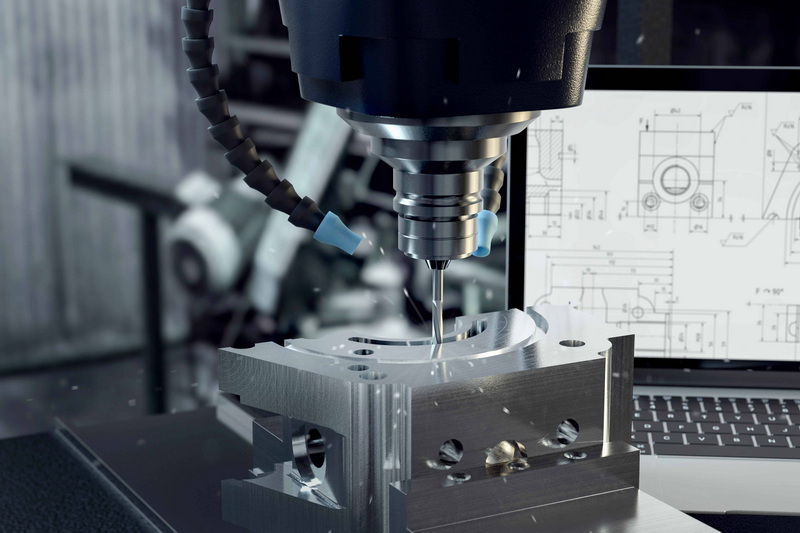
Dry run is a relatively small investment of time that brings large process and cost advantages in CNC machining. In competitive global supply chains, these advantages directly support better pricing, faster delivery, and more stable quality for OEM and brand customers.
Main benefits for CNC machining projects include:
- Reduced scrap and rework, because toolpaths, clearances, and sequences are validated before real cutting.
- Protection of high-value CNC machining centers, spindles, toolholders, and cutting tools from crash damage that can stop production for days.
- Better planning of CNC machining cycle times and machine utilization, which helps with accurate quotations and realistic delivery schedules.
- Higher and more consistent part quality through early detection of programming errors, incorrect offsets, or setup deviations.
- Increased operator confidence and smoother shift handovers, because the CNC machining program has already been proven in a safe environment.
For a factory that provides CNC machining services to international customers, robust dry run procedures can be a key differentiator when customers evaluate risk, reliability, and total cost of ownership.
Dry run is useful across almost every machine type and process found in a modern CNC machining workshop.
In CNC milling, dry run is used on vertical machining centers, horizontal machining centers, and 5-axis machines.
- It helps verify that toolpaths for pockets, contours, holes, slots, and 3D surfaces stay clear of clamps, vises, and fixture plates.
- It reveals issues like insufficient clearance above tall workpieces, unsuitable tool lengths, or wrong Z-zero positions that could otherwise damage the CNC machining spindle or workpiece.
In CNC turning, dry run is vital for lathes and turning centers, especially with live-tooling and sub-spindle configurations.
- It ensures that tools move along safe paths near chucks, tailstocks, and steady rests, and that they do not collide with the rotating workpiece envelope.
- It confirms that CNC machining sequences for roughing, finishing, threading, drilling, and part cutoff happen in the correct order with adequate clearance.
For 4-axis and 5-axis CNC machining, tool orientation and rotary motion add complexity.
- Dry run allows operators to see simultaneous movements of linear and rotary axes and to confirm that the tool is always oriented safely relative to the workpiece and fixtures.
- It is especially important for aerospace, medical, and mold components produced by advanced CNC machining strategies with deep cavities and complex surfaces.
Dry run itself must be treated as a disciplined CNC machining procedure, not just a quick informal check.
Recommended best practices include:
- Always clear loose tools, measuring instruments, and unnecessary items from around the machine table and inside the enclosure before any CNC machining movement.
- Keep enclosure doors closed during motion and ensure safety interlocks, light curtains, and emergency stop buttons are functioning correctly.
- Make sure operators are trained to use feed override, rapid override, and single-block mode together with dry run for maximum CNC machining control.
- Use standardized checklists so that every operator, shift, and machine follows the same dry run routine, improving consistency across the CNC machining workshop.
- Document issues discovered during dry run and feed them back into programming and process planning so similar problems are prevented in future CNC machining jobs.
When these best practices are followed, dry run becomes part of a culture of safety and continuous improvement in CNC machining rather than just an isolated step.
For OEM customers, especially those in automotive, industrial equipment, robotics, and consumer products, stable and repeatable CNC machining is more important than ever. Dry run directly supports these expectations.
In rapid prototyping, dry run enables fast iteration because CNC machining programs can be checked and corrected quickly without the cost and delay of scrapped prototype parts. In low- to medium-volume batches, dry run protects complex fixtures and ensures that each setup switch is verified carefully before restarting CNC machining.
In full-scale mass production, dry run is crucial when:
- Introducing a new part number or version into an existing CNC machining line.
- Transferring a project between machines, plants, or suppliers.
- Implementing engineering changes, design modifications, or process optimizations.
By integrating dry run into standard operating procedures, a CNC machining supplier can lower risk, improve on-time delivery, and maintain consistent quality across thousands or even millions of parts.
Dry run in CNC machining is the controlled simulation of a program on the machine, where the tool follows its intended path without cutting material and often with reduced speeds and special safety modes. This live verification step allows operators and programmers to confirm toolpaths, offsets, clearances, and cycles before any material is removed.
By validating CNC machining parameters in real machine conditions, dry run protects expensive equipment, reduces scrap and rework, and improves process stability for everything from rapid prototypes to high-volume OEM parts. When combined with good training, standardized checklists, and offline simulation, dry run becomes a cornerstone of safe, precise, and efficient CNC machining operations that meet the demands of global customers.
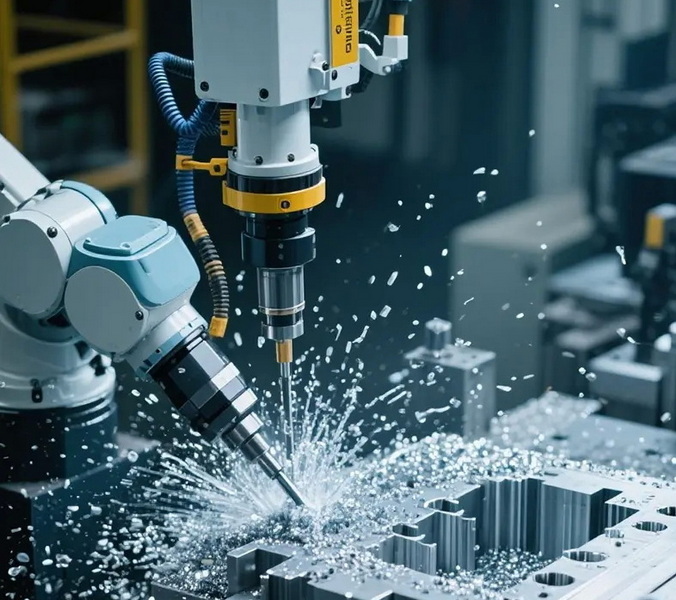
The main purpose of dry run in CNC machining is to verify that the CNC program, tooling, and setup are all correct before real cutting begins. By running the sequence without removing material, operators can detect programming errors, wrong offsets, or dangerous moves early and avoid collisions, tool breakage, and scrap parts.
Dry run is strongly recommended for any new CNC machining program, any major revision, and any complex or high-value setup. For very simple, well-proven programs that run constantly in stable production, some shops may reduce the frequency of full dry runs but still rely on them when jobs, fixtures, or machines change or when risk is higher than normal.
Software simulation runs CNC machining toolpaths in a virtual environment on a computer, checking for syntax errors, basic collisions, and unrealistic moves. Dry run, however, executes the same program on the actual CNC machine with real tools, offsets, and fixtures but without cutting material, making it the final, real-world verification step before production.
Yes, dry run is very useful for optimizing cycle time in CNC machining because it makes all non-cutting motions visible. Operators and programmers can observe rapid moves, approach paths, retract heights, and tool change positions, then adjust the CNC machining program to eliminate unnecessary travel, shorten air cuts, and fine-tune feed and speed overrides for better overall efficiency.
Dry run is one of the safest and most educational procedures for new CNC machining operators because it removes cutting forces and reduces running speeds. With proper supervision, beginners can learn how a CNC machining program behaves, where tools move, and how overrides and single-block modes affect motion, all while having extra time to recognize and react to unexpected behavior.

