
Views: 222 Author: Amanda Publish Time: 2025-12-26 Origin: Site


Content Menu
● Understanding CNC Swiss Machining
● How CNC Swiss Machining Works
● Key Features of Swiss CNC Machining
● Benefits of CNC Swiss Machining
● Typical Materials in Swiss CNC Machining
● Swiss CNC Machining vs Conventional CNC Turning
● Design Tips for Swiss CNC Machining
● FAQ
>> 1. What is CNC Swiss machining in simple terms?
>> 2. How is Swiss CNC machining different from standard CNC Machining lathes?
>> 3. Which industries benefit most from CNC Swiss machining?
>> 4. What materials can be used for Swiss CNC Machining?
>> 5. When should I choose CNC Swiss machining over other CNC Machining processes?
CNC Swiss machining is a specialized form of CNC Machining that uses a sliding-headstock lathe and guide bushing to produce very small, precise, often long and slender turned parts at high volume and tight tolerances. It has become a core CNC Machining process for industries such as medical, aerospace, automotive, electronics, and high-end industrial equipment that require complex geometries and ultra-stable dimensional accuracy.[1][2]

As a China-based OEM CNC Machining manufacturer, Shangchen (sc-rapidmanufacturing.com) combines CNC Swiss machining with multi-axis CNC Machining centers, CNC turning, milling, sheet metal fabrication, rapid prototyping, and precision molding to supply complete part solutions for overseas brands, wholesalers, and manufacturers. This integration allows customers to move smoothly from prototype CNC Machining to full-scale production within a single, quality-focused supply chain.[3][4]
CNC Swiss machining is a CNC Machining process performed on a Swiss-type automatic lathe, also called a Swiss CNC lathe or Swiss screw machine. Unlike conventional CNC Machining lathes with a fixed headstock, the Swiss CNC machine uses a sliding headstock and a guide bushing so the bar stock moves and is always supported very close to the cutting tools.[5][1]
This unique mechanical design allows CNC Swiss machining to maintain exceptional rigidity even when turning very slender components, reducing deflection and vibration compared with standard CNC Machining turning centers. As a result, CNC Swiss machining is ideal for parts where diameters are small, length-to-diameter ratios are high, and tolerances need to reach micrometer levels across long production runs.[6][7]
Because the entire process is controlled by a CNC program, CNC Swiss machining also offers the flexibility of modern CNC Machining: programs can be adjusted for new part revisions, tool paths can be optimized, and different bar materials can be introduced quickly with minimal hardware changes. This makes Swiss-type CNC Machining suitable for both repeat mass production and iterative engineering development cycles.[8][9]
In CNC Swiss machining, long bar stock is fed through a precision guide bushing mounted directly in front of the tooling zone. Only a short section of material protrudes past the bushing at any time, and the sliding headstock moves the bar in the Z-axis while stationary or gang-mounted tools perform turning, drilling, boring, knurling, and milling operations in multiple axes.[10][1]
The guide bushing supports the bar extremely close to the cutting edge, so CNC Swiss machining can remove material in small segments while keeping the workpiece stable and minimizing bending. Modern Swiss-type CNC Machining centers often include secondary spindles and up to 8–13 controlled axes, enabling complete machining of complex parts—including cross-holes, flats, slots, and threads—in a single setup.[7][9]
During a typical CNC Machining cycle on a Swiss machine, front-working tools rough and finish the external profile while live tools create radial or axial features such as drilled holes and milled flats. At the same time, a sub-spindle can pick off the part, allowing back-working tools to machine the rear face so the component exits the CNC Machining cell fully finished and ready for cleaning and inspection.[9][10]
Because the entire sequence is automated, CNC Swiss machining can run continuously with bar feeders, allowing long unattended CNC Machining shifts that are ideal for cost-effective mass production. Many factories optimize tool layouts and cycle times to reduce non-cutting motions, further improving CNC Machining throughput.[11][8]
Swiss CNC machining integrates several advanced features that distinguish it from conventional CNC Machining turning centers. These features allow Shangchen and other precision OEM factories to deliver stable quality and competitive lead times for demanding overseas projects.[12]
- Sliding headstock and guide bushing: The workpiece moves through a guide bushing rather than being held only by a chuck, keeping machining operations very close to the support point and enabling superior rigidity for slim parts.[1]
- Multi-axis CNC Machining capability: Swiss machines commonly offer multiple linear and rotary axes, allowing simultaneous milling, drilling, and turning operations around the part circumference and on both ends.[9]
- High tool capacity: Advanced Swiss-type CNC Machining centers can mount many tools at once—often more than twenty—so roughing, finishing, threading, grooving, and cross-machining can all be performed without frequent tool changes.[8]
- Automation and bar feeding: Automatic bar feeders continuously supply material, and the control executes pre-programmed CNC Machining cycles, making Swiss machining ideal for unattended, high-volume production.[11]
- Micron-level tolerances: Because the cutting zone is always close to the support bushing, Swiss CNC Machining can hold extremely tight tolerances and fine surface finishes, even on long shafts and miniature components.[2]
In addition, modern Swiss machines feature advanced CNC controls with user-friendly interfaces, allowing programmers to create complex CNC Machining tool paths, synchronize spindles, and manage multiple channels of motion for front and back operations. This digital capability forms the core of Industry 4.0-ready CNC Machining environments where monitoring, data collection, and optimization are continuous.[8][9]
CNC Swiss machining delivers a combination of precision, throughput, and cost efficiency that is difficult to achieve with other CNC Machining processes for small turned parts. For global buyers sourcing from China, this means more predictable quality and lower total manufacturing cost.[13]
- Exceptional precision and repeatability: The stable cutting configuration allows CNC Swiss machining to achieve extremely tight dimensional tolerances and consistent concentricity across large batches.[2]
- High productivity in CNC Machining: Swiss-type lathes can perform multiple CNC Machining operations in one cycle, reducing setups, shortening cycle times, and supporting lights-out production.[11]
- Reduced secondary operations: With live tools and back-working stations, many features such as cross-holes, flats, and slots can be completed in-machine, minimizing extra CNC Machining or manual rework.[10]
- Superior performance on long, slender parts: The guide bushing eliminates most deflection issues found on conventional CNC Machining lathes when producing thin shafts, pins, and tubes.[6]
- Material and cost savings: Efficient bar usage, reduced scrap, and lower labor content per piece make CNC Swiss machining cost-effective for high-volume and medium-volume runs.[13]
From an OEM perspective, combining CNC Swiss machining with other CNC Machining services such as milling and grinding also reduces logistical complexity because more work is completed in-house, shortening supply chains and compressing lead times. This integrated approach helps international customers better manage inventory and react faster to market demand changes.[4][3]
CNC Swiss machining supports a wide range of metals and engineering plastics that are commonly processed in advanced CNC Machining workshops. This material flexibility is important for overseas OEMs working across multiple industries and performance requirements.[2]
- Stainless steels: Grades such as 303, 304, 316, and 17-4PH are frequently used for medical, food-grade, and corrosion-resistant CNC Machining components.[10]
- Carbon and alloy steels: Medium-carbon and alloy steels are popular for automotive, hydraulic, and mechanical CNC Machining parts that require strength and wear resistance.[10]
- Aluminum alloys: Light-weight aluminum is widely machined for aerospace, electronics housings, and general industrial CNC Machining parts where low mass and high machinability are critical.[2]
- Copper and brass: These materials offer excellent conductivity and machinability, making them common for electrical connectors and fluid fittings produced via CNC Swiss machining.[10]
- Engineering plastics: Polymers such as PEEK, PTFE, and acetal can be CNC-machined on Swiss lathes for lightweight, non-metallic precision components in medical and instrumentation applications.[10]
When selecting materials for CNC Machining, engineers must balance function, regulatory requirements, machinability, and cost. The close collaboration between design teams and manufacturing engineers ensures that chosen materials run efficiently on Swiss CNC Machining equipment while still meeting mechanical and environmental performance targets.[14][9]
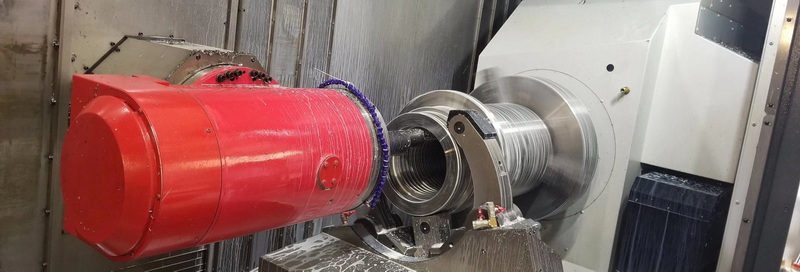
Because of its ability to generate complex, high-precision parts at scale, CNC Swiss machining is now a cornerstone CNC Machining solution across multiple high-value industries. Shangchen and similar OEM factories leverage Swiss-type CNC Machining to serve global customers in these sectors.[15]
- Medical devices and dental: Surgical instruments, implants, bone screws, dental abutments, and minimally invasive device components rely on the small-diameter and tight-tolerance capabilities of CNC Swiss machining.[15]
- Aerospace and defense: Critical flight-control pins, fuel system components, miniature valves, and precision fasteners are often produced on Swiss-type CNC Machining centers for stability and reliability in extreme environments.[16]
- Automotive and new mobility: Fuel injector bodies, transmission parts, valve components, and precision bushings are typical automotive parts where CNC Swiss machining delivers performance and high-volume efficiency.[11]
- Electronics and communications: Terminals, pins, micro-connectors, sensor housings, and threaded inserts use Swiss CNC Machining to achieve consistent dimensions at very small scales.[16]
- Hydraulics, pneumatics, and industrial: Spools, custom fittings, shafts, and actuator components benefit from the controlled surface finish and dimensional stability of Swiss-type CNC Machining processes.[14]
In many of these industries, parts must also pass strict validation and regulatory approval processes, which further increases the value of reliable CNC Machining. Stable Swiss machining programs, documented process controls, and traceable materials help OEM customers satisfy these compliance requirements.[15][16]
The choice between Swiss CNC machining and standard CNC Machining turning depends on part geometry, tolerance requirements, volume, and budget. Understanding the differences helps engineers and purchasing managers specify the most suitable CNC Machining route.[6]
Aspect | Swiss CNC Machining | Conventional CNC Turning |
Workholding | Sliding headstock feeds bar through guide bushing for continuous support near the cutting zone. | Fixed headstock holds workpiece in chuck or collet at one or both ends. |
Best part type | Small-diameter, long, slender parts with high length-to-diameter ratio. | Shorter, larger-diameter parts or components with more radial bulk. |
Precision level | Excellent for micrometer-level tolerances and fine finishes over long lengths. | High precision, but more limited for very long slender parts due to deflection. |
Operations per setup | Multiple turning and milling operations completed in one CNC Machining cycle using live tooling. | Often requires additional setups or secondary CNC Machining for complex geometries. |
Volume suitability | Highly efficient for medium-to-high-volume runs with bar feeders and automation. | Flexible for prototypes to high volume; best for larger components and general CNC Machining. |
Typical industries | Medical, aerospace, electronics, high-precision automotive and industrial components. | General machinery, large automotive parts, heavy equipment, and structural components. |
In practice, many OEM projects combine both technologies: CNC Swiss machining is used for highly precise inserts, pins, or shafts, while standard CNC Machining centers produce housings, brackets, or larger mating parts. This hybrid approach allows each CNC Machining process to play to its strengths and provides the best overall cost-performance ratio.[3][4]
As a professional Chinese factory, Shangchen integrates CNC Swiss machining into a broader CNC Machining and manufacturing ecosystem to support international OEM projects end-to-end. This integrated capability allows overseas brands, wholesalers, and producers to consolidate suppliers and accelerate new product introduction.[3]
Key OEM-oriented services centered around CNC Machining include:
- Rapid prototyping: CNC Machining, 3D printing, and soft tooling enable quick validation of part geometry and function before investing in mass-production tooling.[4]
- CNC Machining for mass production: Multi-axis machining centers, conventional turning, and Swiss CNC machining lines handle complex parts from prototype to high-volume production with consistent quality.[3]
- Lathe turning and milling: Precision CNC Machining turning and milling operations create housings, brackets, and structural components that complement Swiss-machined inserts and micro-parts.[4]
- Sheet metal fabrication: Bending, laser cutting, and welding produce enclosures and mechanical structures that work together with CNC Machining components in assemblies.[4]
- Mold design and manufacturing: Injection molds and die-casting tools are engineered to suit high-volume requirements, with inserts and precision cores frequently produced by CNC Machining processes.[4]
For overseas customers, working with a single supplier that can perform Swiss CNC machining and a wide range of CNC Machining and fabrication operations simplifies communication, quality control, and logistics. It also opens the door to value-engineering suggestions where the supplier proposes alternative CNC Machining approaches or materials to reduce cost and improve manufacturability.[3][4]
To get the best value from CNC Swiss machining and general CNC Machining, part designers should consider manufacturability early in the product development process. Good design practices reduce risk, shorten lead time, and lower unit cost.[18]
- Match geometry to process: Select CNC Swiss machining for thin shafts, long pins, and small precision parts; use traditional CNC Machining centers for larger blocks and plates.[5]
- Specify realistic tolerances: Extremely tight tolerances increase CNC Machining cost; keep critical dimensions tight and relax non-critical features where possible.[18]
- Optimize features for tooling: Align holes, flats, and grooves with standard tool sizes and positions that Swiss-type and conventional CNC Machining equipment can reach easily.[9]
- Consider material machinability: Highly machinable alloys reduce cycle time and tool wear, improving CNC Machining productivity without sacrificing performance.[14]
- Plan for inspection: Ensure that critical surfaces and internal features can be measured reliably to validate CNC Machining quality and functional performance.[18]
By engaging with an experienced CNC Machining partner early in the design phase, engineers can receive feedback about tolerances, tool access, and material choices that strongly influence cost and lead time. This collaborative approach is especially valuable when projects depend on repeatable Swiss CNC machining and multi-process CNC Machining strategies.[9][3]
CNC Swiss machining is a highly specialized branch of CNC Machining that uses a sliding headstock and guide bushing to machine long, slender, and miniature parts with exceptional accuracy and efficiency. By combining this capability with multi-axis CNC Machining, turning, milling, sheet metal, 3D printing, and mold manufacturing, Shangchen provides comprehensive OEM solutions for overseas customers who require reliable precision component supply across medical, aerospace, automotive, electronics, and industrial markets.[1][3]
For engineers and buyers, understanding when to choose CNC Swiss machining instead of conventional CNC Machining turning is essential to achieving the right balance of performance, cost, and lead time in global supply chains. Partnering with an experienced Chinese CNC Machining factory that offers both Swiss and conventional capabilities allows projects to scale smoothly from rapid prototype to precision mass production.[4][6]
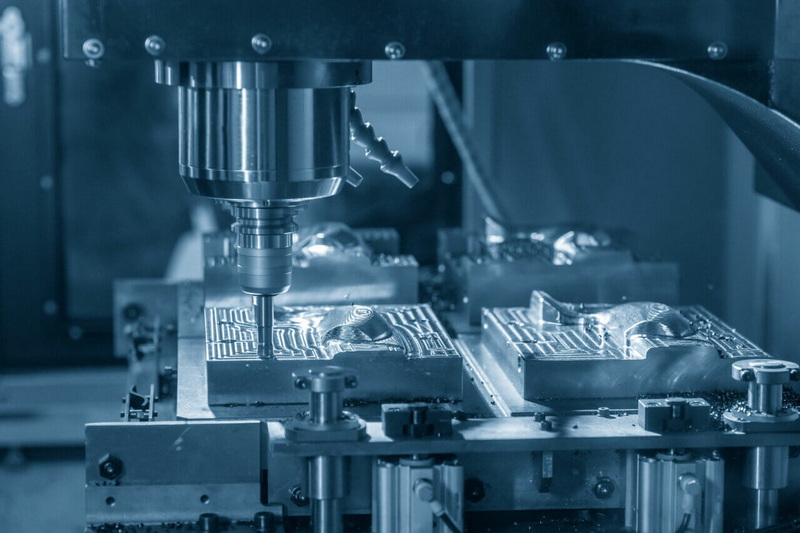
CNC Swiss machining is a type of CNC Machining where bar stock is fed through a guide bushing on a Swiss-type lathe so cutting always happens near a support point, enabling very precise, slender parts. It is especially effective for small-diameter components that need tight tolerances and high-volume production in demanding industries.[1][2]
The main difference is that Swiss CNC machines use a sliding headstock and guide bushing, while standard CNC Machining lathes use a fixed headstock and hold parts in a chuck or collet. This configuration lets Swiss-type CNC Machining maintain stability on long, thin parts, whereas standard turning is better for shorter and larger components.[17][6]
Industries that need extremely precise small parts—such as medical devices, aerospace, automotive, electronics, and hydraulics—benefit the most from CNC Swiss machining. These sectors rely on Swiss-type CNC Machining to repeatedly produce complex micro-components that must perform reliably in demanding environments.[16][15]
Swiss CNC machining can process stainless steels, carbon and alloy steels, aluminum, brass, copper, and many engineering plastics commonly used in CNC Machining applications. The choice of material depends on requirements for strength, corrosion resistance, conductivity, biocompatibility, and cost.[14][2]
Choose CNC Swiss machining when parts are long, slender, or very small and require tight tolerances, excellent surface finish, and high production volume. For larger blocks, plates, or short heavy components, traditional CNC Machining centers and standard turning may provide a more economical solution.[4][6]
[1](https://www.ultramc.com/news/what-is-swiss-cnc-machining/)
[2](https://www.fictiv.com/articles/what-is-swiss-cnc-machining)
[3](https://readerprecision.com/capabilities/cnc/swiss-cnc/)
[4](https://emcprecision.com/capabilities/cnc-machining/)
[5](https://fractory.com/swiss-machining-explained/)
[6](https://www.hoggeprecision.com/conventional-cnc-turning-vs-swiss-cnc-turning/)
[7](https://turntechprecision.com/clueless-machinist/2020/6/11/5-key-differences-between-conventional-cnc-turning-and-swiss-type-turning)
[8](https://resources.hartfordtechnologies.com/blog/the-difference-between-cnc-swiss-machines-and-standard-cnc-machinery)
[9](https://sybridge.com/complete-guide-cnc-swiss-machining/)
[10](https://www.improprecision.com/cnc-swiss-lathe-machining-uses-and-applications/)
[11](https://resources.hartfordtechnologies.com/blog/cnc-swiss-machining-and-automotive-industry-from-parts-to-performance)
[12](https://dacruzmfg.com/resources/guide-to-swiss-cnc-machining/)
[13](https://www.madearia.com/blog/swiss-cnc-machining-process-advantages-and-applications/)
[14](https://cassprecisionmachining.com/industry-blog/applications-of-swiss-machining-in-various-industries/)
[15](https://avantiengineering.com/swiss-screw-machining-benefits-applications/)
[16](https://sheldonprecision.com/real-world-applications-of-cnc-swiss-machining-in-challenging-environments/)
[17](https://vesciomfg.com/swiss-cnc-machining-vs-conventional-cnc-lathe-turning-services/)
[18](https://resources.hartfordtechnologies.com/blog/faqs-about-cnc-swiss-machining)

