
Views: 222 Author: Amanda Publish Time: 2025-12-04 Origin: Site


Content Menu
● Shangchen: Your CNC Machining Partner in China
● Understanding CNC Precision Machining
● CNC Milling in Precision Machining
● CNC Turning and Lathe Machining
● Multi-Axis CNC Machining and 5-Axis Capability
● Materials Used in CNC Precision Machining
● Advantages of CNC Precision Machining
● Typical Applications of CNC Precision Machining
● Shangchen's CNC Machining Services
● Process Flow with Shangchen for CNC Machining
● Quality Control in CNC Precision Machining
● Design Tips for CNC Machining
● When to Choose CNC Machining over Other Processes
● FAQs
>> 1. What is the difference between CNC machining and CNC precision machining?
>> 2. Why is CNC machining important for OEM manufacturers?
>> 3. Which industries benefit most from CNC precision machining?
>> 4. How does Shangchen ensure quality in CNC machining projects?
>> 5. When should a designer choose CNC machining over other manufacturing methods?
CNC precision machining is a digital manufacturing process that uses computer-controlled machine tools to cut, mill, drill, or turn raw material into high-accuracy components with tight tolerances needed for demanding applications. It combines advanced hardware, intelligent programming, and rigorous quality control to produce repeatable CNC Machining results from prototype through mass production.[1][4][6][8]
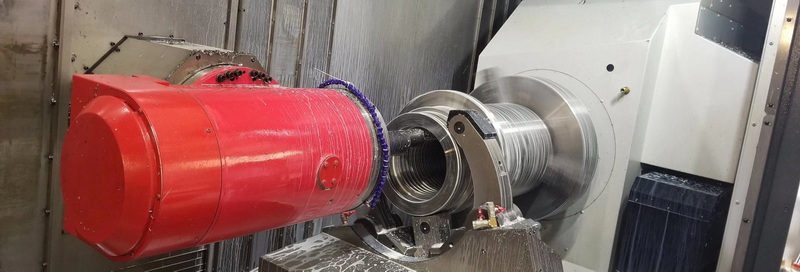
Shangchen (sc-rapidmanufacturing.com) is a China-based factory focused on rapid prototyping, CNC machining services, precision batch production, CNC lathe turning, sheet metal fabrication, 3D printing services, and mold making for overseas brands, wholesalers, and manufacturers. By integrating CNC machining, 5-axis machining, turning, sheet metal, and tooling under one roof, Shangchen provides OEM customers with a one-stop solution from early design validation to long-term mass production.[11][12][13][14]
The factory offers flexible CNC machining capacity for low-volume prototypes as well as high-volume production orders, with a strong emphasis on stable quality, on-time delivery, and competitive pricing for global clients. Shangchen also supports multiple international industries, including automotive, electronics, medical, industrial equipment, and consumer products, ensuring that its CNC machining capabilities align with diverse technical requirements.[14][15][16]
CNC precision machining is a subset of CNC machining where the primary focus is on extremely accurate dimensions, tight tolerances, and high-quality surface finishes. In these projects, every part of the process—CAD modeling, toolpath programming, machine setup, tool selection, cutting parameters, and inspection—is optimized to deliver consistent, repeatable CNC machining results.[5][1]
Typical precision machining applications demand dimensional tolerances measured in hundredths or thousandths of a millimeter, along with controlled surface roughness and geometric accuracy. Such performance is essential in components used in aerospace, medical devices, precision instruments, and mechanical systems where even minor deviations can compromise function or safety.[4][8][1][5]
Every CNC machining project begins with a digital design, usually built in CAD software as a detailed 2D drawing or 3D model of the required part. This model is then passed to CAM software, where programmers generate toolpaths and convert them into machine-readable code that defines each CNC machining operation.[3][6][7][9]
Once the CNC machine receives the program, the controller coordinates tool movements along defined axes, controlling spindle speed, feed rate, depth of cut, coolant flow, and other parameters. Throughout the CNC machining cycle, the machine follows the programmed paths to remove material layer by layer until the final geometry, features, and tolerances are achieved.[6][7][8][4]
CNC precision machining uses several main processes, often combined in a single workflow to achieve complex designs efficiently. Each process contributes different capabilities for shaping and finishing parts, allowing CNC machining to handle an extensive range of geometries and materials.[9][10][4]
The core CNC machining processes include:
- CNC milling
- CNC turning
- CNC drilling and boring
- CNC grinding and finishing
- Multi-axis CNC machining (including 5-axis)
Together, these processes make CNC machining suitable for creating prototypes, functional parts, tooling, and high-volume production components.[8][4]
CNC milling uses rotating cutting tools to remove material from a fixed or moving workpiece, creating flat surfaces, slots, pockets, threads, and 3D contours. In precision CNC machining, milling is often used to produce complex housings, brackets, molds, and structural parts with detailed features.[2][10][4]
Three-axis CNC milling allows movement along X, Y, and Z, while 4-axis and 5-axis machines add rotational axes that enable the tool or workpiece to tilt and rotate. This additional flexibility lets CNC machining handle intricate geometries in a single setup, improving accuracy, surface quality, and productivity.[4][9]
CNC turning, often performed on lathes, rotates the workpiece while a stationary or controlled cutting tool removes material to create cylindrical shapes. It is ideal for shafts, pins, sleeves, bushings, and threaded components that require precise diameters, concentricity, and surface finishes.[7][2][8]
Modern CNC turning centers often integrate drilling, tapping, and milling capabilities, enabling multiple CNC machining operations on a single machine. This reduces handling, increases accuracy, and allows high-volume production of complex rotational parts with tight tolerances.[10][2][8][4]
Multi-axis CNC machining expands beyond standard 3-axis movement to allow tools and workpieces to rotate and tilt during cutting. Five-axis CNC machining, in particular, enables simultaneous motion along three linear axes and two rotational axes, allowing the tool to approach the part from almost any direction.[9][4]
This flexibility simplifies the manufacturing of complex parts such as turbine blades, impellers, orthopedic implants, and intricate molds that would otherwise require multiple setups. With 5-axis CNC machining, manufacturers can reduce cycle times, eliminate manual repositioning, improve accuracy, and achieve superior CNC machining results in demanding applications.[4][9]
CNC machining supports a wide variety of materials, including aluminum, steel, stainless steel, titanium, brass, and copper, as well as many engineering plastics. Material selection depends on mechanical properties, corrosion resistance, weight, thermal conductivity, and environmental conditions the final part will face.[1][6][8][4]
In CNC precision machining, high-performance alloys and advanced polymers are often used for high-stress or high-precision applications such as aerospace and medical devices. The CNC machining process must be tuned for each material, accounting for hardness, machinability, and heat generation to achieve stable, accurate results.[6][8][1][4]
CNC precision machining provides high dimensional accuracy and repeatable quality, which are critical for parts that must fit and function consistently across many units. Because CNC machining is controlled by digital programs, once a process is optimized, it can be reproduced reliably for large production runs.[8][1][4]
Another key advantage is the ability to move smoothly from prototype to production without changing the underlying manufacturing method. Designers can refine a part through multiple CNC machining iterations and then scale up volume while retaining the same core parameters, saving time and cost.[1][8][9][4]

CNC precision machining is used in aerospace for structural elements, engine parts, and brackets that must withstand high loads, vibration, and temperature changes. It also plays a central role in producing satellite components and instrumentation where weight and accuracy are crucial.[8][9][1][4]
In the medical industry, CNC machining produces implants, surgical instruments, and device housings that demand biocompatible materials and impeccable dimensional control. Electronics and high-tech sectors use CNC machining for enclosures, heat sinks, connectors, and precision mechanical assemblies that integrate with PCBs and sensors.[9][1][4]
Shangchen offers a complete CNC machining service portfolio that covers rapid prototyping, small-batch manufacturing, and high-volume production. The company's capabilities include CNC milling, CNC turning, 5-axis CNC machining, precision machining of complex components, and the integration of secondary operations such as finishing and assembly.[13][17][11][14]
Beyond CNC machining, Shangchen provides sheet metal fabrication, vacuum casting, injection mold design and manufacturing, and various 3D printing processes to support comprehensive product development. This combination allows OEM customers to validate designs, adjust geometries, and then lock down production-ready CNC machining solutions in a single supply chain.[15][16][13][14]
A typical project with Shangchen starts with RFQ and design review, where engineers assess CAD data, tolerances, and material specifications to ensure CNC machining feasibility. They may suggest design modifications to improve manufacturability, reduce cost, or enhance performance while maintaining the intent of the original design.[16][18][15]
After the design is confirmed, the CAM team generates toolpaths and selects suitable tools, fixtures, and CNC machining strategies for prototypes or production. When machining begins, process parameters are validated through first-article inspection, and then full production ramps up with consistent in-process and final inspections.[12][3][15][8]
Precision machining requires rigorous quality control to ensure that every part meets specifications. Typical methods include dimensional inspection with calipers, micrometers, and coordinate measuring machines (CMMs), surface roughness measurements, and functional tests.[5][1]
Shangchen uses documented procedures and trained inspectors to verify critical features, tolerances, and finishes during and after CNC machining. For OEM customers, this may include detailed inspection reports, material certificates, and traceability records that support compliance with industry standards and regulatory requirements.[12][15][16]
Good design practices can significantly improve CNC machining efficiency, cost, and quality. Engineers are encouraged to use consistent wall thicknesses, avoid unnecessarily deep pockets, and choose tolerances that reflect functional needs rather than defaulting to the tightest values.[4][8][9]
Designers should also consider tool access, fixturing, and minimum feature sizes when planning parts for CNC machining, especially for multi-axis operations. By collaborating early with a CNC machining partner like Shangchen, OEMs can avoid costly redesigns and achieve smoother transitions from concept to production.[10][15][16][4]
CNC machining is often the best choice when parts require high precision, complex geometries, and relatively low to medium production volumes. It is particularly appropriate for prototypes, custom components, and assemblies where tooling for processes like die casting or stamping would be too expensive or inflexible.[1][8][9][4]
For high-volume production of simpler geometries, other methods such as injection molding or casting might be more economical, but CNC machining remains valuable for tooling, fixtures, and critical features. Many OEMs use CNC machining alongside other technologies to achieve the optimal combination of cost, speed, and performance across their product lines.[8][4]
CNC precision machining is a cornerstone of modern manufacturing, transforming digital designs into real-world parts with accuracy, repeatability, and high-quality finishes. From aerospace and medical devices to electronics and industrial equipment, CNC machining enables engineers to develop reliable products with complex geometries and demanding performance requirements.[9][1][4]
As a dedicated OEM-focused factory in China, Shangchen (sc-rapidmanufacturing.com) integrates CNC machining, 5-axis machining, turning, sheet metal fabrication, 3D printing, and mold making into a single, efficient supply chain. This combination of technical capability and service scope helps overseas brands, wholesalers, and manufacturers bring better products to market faster while maintaining tight control over quality, cost, and delivery.[11][14][15][16]
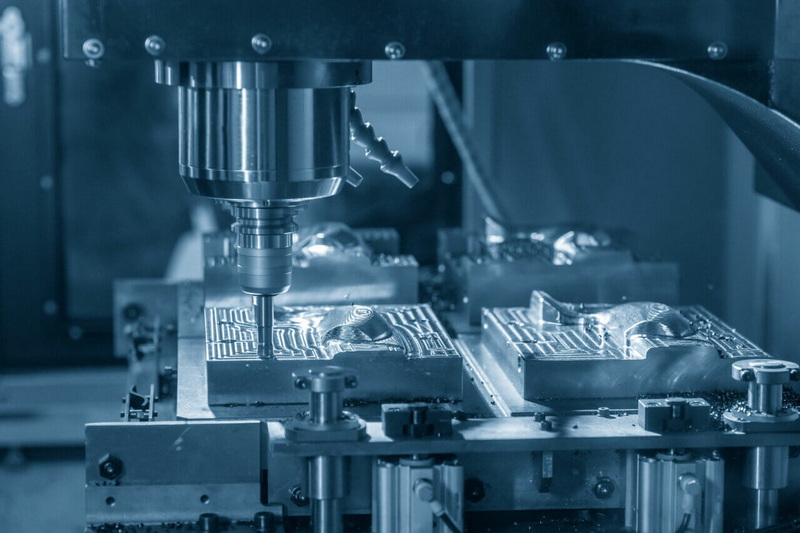
CNC machining refers broadly to any manufacturing process where computer-controlled machines shape materials according to programmed toolpaths. CNC precision machining is a more specialized term that emphasizes extremely tight tolerances, detailed process control, and advanced inspection practices to ensure high accuracy and repeatability.[7][5][6][1]
OEM manufacturers rely on CNC machining to turn complex designs into reliable, consistent components that meet functional and regulatory requirements. CNC precision machining allows them to scale from prototype to mass production while maintaining stable quality, which is critical for brand reputation and product performance.[1][4][8][9]
Industries such as aerospace, automotive, medical devices, electronics, robotics, and industrial machinery benefit heavily from CNC precision machining. These sectors often require lightweight designs, complex shapes, and tight tolerances that only advanced CNC machining processes can provide consistently.[4][9][1]
Shangchen combines experienced engineers, standardized procedures, and modern inspection equipment to maintain control over each stage of CNC machining. The factory performs in-process checks and final inspections, and it can provide measurement reports and material documentation to support OEM requirements and audits.[15][16][12]
Designers typically choose CNC machining when they need high precision, good surface finish, and flexibility for design changes or moderate volumes. CNC machining is also preferred when working with metals or engineering plastics that require detailed features, tight fits, and reliable mechanical properties without the long lead time and cost of hard tooling.[8][1][4]
[1](https://www.premiumparts.com/blog/what-is-cnc-precision-machining-a-comprehensive-technical-guide)
[2](https://shamrockprecision.com/precision-machining-guide-cnc-turning-to-milling/)
[3](https://academy.titansofcnc.com/files/Fundamentals_of_CNC_Machining.pdf)
[4](https://sybridge.com/ultimate-cnc-machining-guide/)
[5](https://www.in-housecnc.com/2023/10/09/a-comprehensive-guide-to-cnc-precision-machining-techniques/)
[6](https://www.cadrex.com/cnc-machining-starter-guide)
[7](https://casttechnologies.net/a-beginners-guide-to-cnc-machining/)
[8](https://www.rotec-ltd.com/a-comprehensive-guide-to-cnc-production-machining)
[9](https://www.fictiv.com/articles/the-ultimate-guide-to-cnc-machining)
[10](https://www.hlhprototypes.com/types-of-cnc-machines/)
[11](https://www.sc-rapidmanufacturing.com/cnc-machining.html)
[12](https://www.sc-rapidmanufacturing.com)
[13](https://www.sc-rapidmanufacturing.com/products/3D-CNC-Machining.html)
[14](https://www.sc-rapidmanufacturing.com/products.html)
[15](https://www.sc-rapidmanufacturing.com/top-10-cnc-milling-services-manufacturers-in-china.html)
[16](https://www.sc-rapidmanufacturing.com/aboutus.html)
[17](https://www.sc-rapidmanufacturing.com/5-axis-machining.html)
[18](https://www.sc-rapidmanufacturing.com/news/Industrial-CNC-Machining-Services.html)

