
Views: 222 Author: Amanda Publish Time: 2025-12-04 Origin: Site


Content Menu
● About Shangchen (sc-rapidmanufacturing.com)
● Why OEMs Choose CNC Machining
● CNC Machining in Rapid Prototyping
● CNC Machining for Low‑Volume and Bridge Production
● Automotive and Mobility Applications
● Aerospace and Defense Components
● Electronics, Robotics, and Industrial Equipment
● Energy, Marine, Agriculture, and More
● Shangchen's CNC Machining Capabilities for Overseas OEMs
● Benefits of CNC Machining in OEM Supply Chains
● FAQ
>> 1. What is CNC Machining in simple terms?
>> 2. Which materials are commonly used in CNC Machining?
>> 3. When should OEMs choose CNC Machining instead of 3D printing?
>> 4. How does Shangchen support overseas CNC Machining projects?
>> 5. What information is needed to start a CNC Machining order?
CNC Machining is used to manufacture accurate, repeatable metal and plastic parts for everything from rapid prototypes to high‑precision batch and serial production across industries such as automotive, aerospace, medical, electronics, robotics, industrial equipment, and consumer products. It is chosen wherever tight tolerances, complex geometries, and consistent quality are critical to safe operation and product performance.[1][2][5][9]

Shangchen (sc‑rapidmanufacturing.com) is a China‑based factory providing CNC Machining, rapid prototyping, precision batch production, CNC turning, sheet metal fabrication, 3D printing, and mold production for overseas OEM brands, wholesalers, and manufacturers. Acting as a single manufacturing partner, Shangchen combines CNC Machining with other processes so customers can progress smoothly from concept design through prototyping and into stable, repeatable mass production.[10][11][12]
Shangchen's CNC Machining services include 3‑axis, 4‑axis, and 5‑axis milling, CNC turning, and related secondary operations, all supported by quality control and inspection suitable for demanding international projects. The factory supports a broad industry mix, including aviation, automotive, robotics, industrial automation, consumer electronics, medical‑related parts, and new‑energy equipment, giving overseas buyers a flexible OEM platform in China.[11][12][13]
CNC Machining (Computer Numerical Control Machining) is a subtractive manufacturing method in which computer‑controlled cutting tools remove material from a solid workpiece to form the final shape. The toolpaths, speeds, and feeds are driven by a digital program, so the same CNC Machining job can be repeated with very high consistency and minimal manual adjustment.[5][14][15][16]
Typical CNC Machining equipment includes milling machines, lathes, machining centers, Swiss‑type lathes, and multi‑axis platforms that can machine several faces of a part in a single setup. Because CNC Machining works with aluminum, steel, stainless steel, titanium, copper alloys, and many engineering plastics, it fits a wide range of technical and commercial applications, from simple brackets to highly complex aerospace structures.[14][15][17][5]
The CNC Machining workflow usually begins with a 3D CAD model of the part, which is then transferred into CAM software to generate toolpaths and machining strategies. These toolpaths are post‑processed into machine‑readable code that defines all CNC Machining operations, including tool changes, spindle speeds, feed rates, and cutting sequences.[15][16][18][14]
On the shop floor, operators fixture the raw stock, set reference points, and run the CNC Machining program, often with in‑process checks to verify key dimensions. After CNC Machining, parts may undergo deburring, surface finishing, heat treatment, and final inspection, ensuring they meet all tolerance and performance requirements specified by the OEM customer.[13][19][5]
OEM brands use CNC Machining because it provides a strong combination of precision, flexibility, and scalability that is difficult to match with purely manual methods. Once a CNC Machining process is dialed in, it can be repeated reliably for future orders, which helps maintain stable quality and reduces production risk.[2][4][19][15]
CNC Machining is particularly valuable in projects that demand tight tolerances, controlled surface finishes, and functional prototypes that behave like final parts. For overseas companies, a partner like Shangchen can combine CNC Machining with other technologies to optimize cost and lead time for each stage of the product lifecycle.[18][20][10][11]
CNC Machining is a crucial technology for rapid prototyping when engineering teams need prototypes in real production materials. Because CNC Machining removes material from metal or plastic blocks, mechanical properties and surface quality can closely match those of mass‑produced parts, making it easier to validate designs under realistic conditions.[20][21][5][18]
Compared with tooling‑heavy processes, CNC Machining allows quick design changes: engineers only adjust the CAD model and CAM program instead of building new molds or dies. Providers such as Shangchen can combine CNC Machining with 3D printing and low‑volume molding, giving customers a menu of options for speed, cost, and performance in early development.[16][10][11][20]
CNC Machining is widely used for low‑to‑medium‑volume production where full‑scale tooling would be too expensive or risky. This includes pilot runs before large investments, customized versions of standard products, and replacement parts with limited annual demand.[6][1][5][15]
In bridge manufacturing, CNC Machining fills the gap between prototype and mass production, enabling OEMs to ship early units while molds or dedicated equipment are still being prepared. Shangchen's focus on precision batch production means it can run recurring CNC Machining orders for overseas customers, maintaining consistent quality over time even as designs evolve.[19][10][11][16]
The automotive sector relies heavily on CNC Machining for engine, drivetrain, chassis, and interior components across both traditional and electric vehicles. Examples include engine blocks, cylinder heads, transmission housings, suspension brackets, steering components, and precision housings for sensors and control systems.[1][5][6]
In electric and new‑energy vehicles, CNC Machining is used for battery trays, cooling plates, motor mounts, inverter enclosures, and structural parts that must combine strength with reduced weight. Suppliers like Shangchen can integrate CNC Machining, turning, and sheet‑metal processes to produce complete subassemblies that drop directly into OEM production lines.[12][17][5][11]
Aerospace and defense industries use CNC Machining to produce lightweight yet strong structures in aluminum, titanium, and specialty alloys. Typical CNC Machining parts include brackets, ribs, housings, manifolds, and complex 5‑axis components where geometric accuracy and surface integrity are safety‑critical.[4][17][22][5]
CNC Machining is also essential in aerospace prototyping and test rigs, enabling engineers to iterate designs quickly while still meeting strict dimensional and quality standards. Advanced multi‑axis CNC Machining, of the type implemented in facilities like Shangchen, allows intricate shapes to be machined in fewer setups, improving efficiency and reducing alignment errors.[17][22][11][18]
In medical and healthcare applications, CNC Machining is used to make surgical instruments, orthopedic implants, dental components, diagnostic housings, and precision fixtures. These parts often use materials such as stainless steel, titanium, and high‑temperature plastics that must meet demanding biocompatibility and cleanliness requirements.[2][4][5]
Because patient safety depends on part quality, CNC Machining offers the high accuracy, repeatability, and documentation control needed for regulated environments. Custom or patient‑specific devices can also be produced economically using CNC Machining in small batches, which is difficult with many mass‑production techniques.[4][5][18][2]
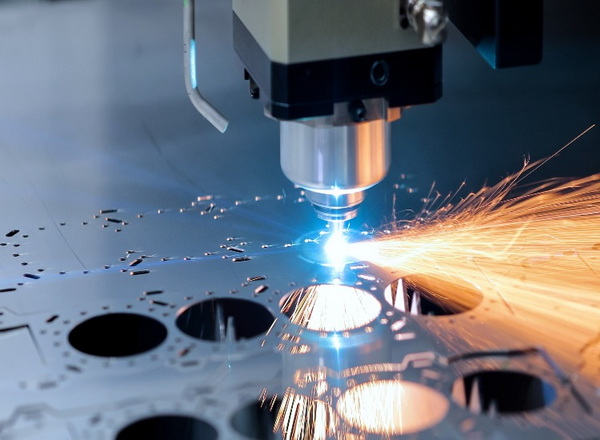
In electronics and robotics, CNC Machining is used for heatsinks, housings, structural frames, RF shields, and precision brackets. These components often require tight tolerance control, controlled flatness, and good thermal performance, which CNC Machining can achieve consistently.[3][5][2]
Industrial machinery and automation systems depend on CNC Machining for shafts, gears, rollers, valve bodies, manifolds, and custom fixtures. Manufacturers like Shangchen support these sectors by combining CNC Machining with sheet‑metal fabrication, turning, and welding to deliver complete mechanical solutions rather than isolated parts.[9][10][12][1]
The energy industry uses CNC Machining for turbine components, valve bodies, pump housings, heat‑exchanger elements, and structural parts in both renewable and traditional systems. CNC Machining ensures that these components meet demanding pressure, temperature, and corrosion requirements in oil, gas, wind, hydro, and solar applications.[5][6][1]
Marine, construction, and agricultural equipment also rely heavily on CNC Machining for structural and moving parts such as frames, brackets, drive components, and precision hydraulic elements. Because machines in these sectors often operate in harsh environments, the strength and durability offered by CNC‑machined components are crucial to reliable operation.[6][1][5]
Shangchen positions its CNC Machining services around long‑term cooperation with overseas OEM brands and manufacturers, from start‑up hardware teams to established industrial companies. The factory provides engineering support, including DFM feedback, material suggestions, and process routing to align CNC Machining choices with performance and budget targets.[10][11][12]
With a mix of CNC milling, turning, 5‑axis machining, and complementary processes, Shangchen can take projects from prototype CNC Machining runs through to stable batch production without requiring customers to change suppliers. Quality assurance covers incoming materials, in‑process checks, and final inspections, which helps international buyers maintain consistent standards across repeated CNC Machining orders.[11][13][10]
In modern OEM supply chains, CNC Machining plays a strategic role by shortening development cycles and stabilizing production quality. It enables fast design iterations while giving engineers confidence that validated CNC Machining processes can be scaled to future volumes with minimal redesign.[16][18][19][20]
For purchasing and supply‑chain teams, CNC Machining simplifies sourcing because one capable supplier can produce parts for multiple product lines and stages of maturity. When that supplier also offers sheet metal, molding, and 3D printing, as Shangchen does, it becomes easier to manage cost, time, and risk across complex international projects.[1][5][10][11]
CNC Machining is a versatile, high‑precision manufacturing technology used to create critical components for industries such as automotive, aerospace, medical, electronics, robotics, industrial machinery, energy, marine, agriculture, and consumer products. Its ability to deliver tight tolerances, high repeatability, and production‑grade materials makes CNC Machining essential from early prototypes through bridge production and long‑term batch manufacturing.[20][4][5][1]
For overseas OEM brands, wholesalers, and manufacturers, Shangchen (sc‑rapidmanufacturing.com) offers an integrated service platform centered on CNC Machining, complemented by CNC turning, sheet metal fabrication, 3D printing, and mold making. By partnering with a specialized CNC Machining factory in China, customers can reduce time‑to‑market, stabilize quality, and streamline global sourcing across multiple product lines and industries.[12][10][11]
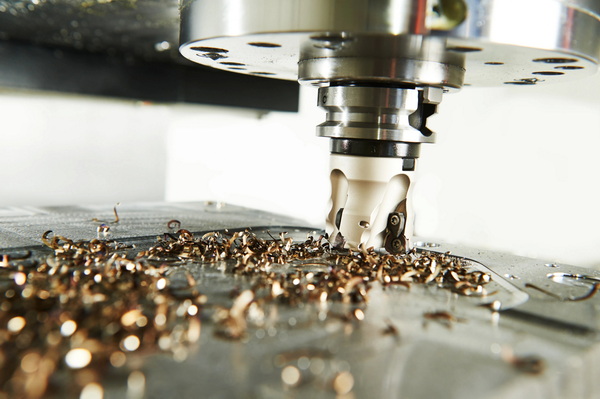
CNC Machining is a computer‑controlled manufacturing process where cutting tools remove material from a solid block to form a part with the desired shape and dimensions. Because tool movement is controlled digitally, CNC Machining can produce the same geometry many times with very high precision and consistency.[14][15][5][16]
CNC Machining commonly uses aluminum, carbon and alloy steels, stainless steels, titanium, brass, copper alloys, and many engineering plastics such as PEEK, nylon, acetal, and polycarbonate. This material range allows CNC Machining to support everything from lightweight aerospace structures to durable industrial components and medical‑related parts.[17][4][5]
OEMs usually choose CNC Machining instead of 3D printing when they need production‑grade materials, superior surface finish, tight tolerances, and mechanical strength close to final parts. CNC Machining is especially suitable for functional prototypes, bridge production, and small‑to‑medium batches where parts will be tested or used in demanding environments.[21][18][20]
Shangchen supports overseas projects by providing engineering review, quoting, and full CNC Machining production under organized quality systems. Overseas customers can send CAD files, drawings, and requirements, and Shangchen will handle CNC Machining, turning, sheet metal, 3D printing, and molding as needed to deliver finished parts or assemblies.[10][11][12]
To start a CNC Machining order, OEM buyers typically provide 3D models, 2D drawings with critical dimensions and tolerances, material and surface finish requirements, and expected quantities and delivery schedules. With this information, a manufacturer like Shangchen can evaluate the project, choose appropriate CNC Machining processes, and issue a quotation with lead times and quality commitments.[13][15][11][10]
[1](https://durexinc.com/top-industries-using-cnc-machining/)
[2](https://www.americanmicroinc.com/resources/industries-use-cnc-machinery/)
[3](https://qviro.com/blog/what-industries-use-cnc-machines/)
[4](https://millenniumprecision.com/7-key-industries-benefit-cnc-machining/)
[5](https://www.3erp.com/blog/cnc-machining-applications-and-uses/)
[6](https://mountainmachineworks.com/what-are-examples-of-cnc-machined-parts-comprehensive-guide/)
[7](https://www.reddit.com/r/MechanicalEngineering/comments/1953x9j/which_industrys_uses_cnc_milling_the_most_for/)
[8](https://www.makerverse.com/resources/insights-and-trends/how-cnc-machining-is-used-across-industries/)
[9](https://astromachineworks.com/cnc-machine-industries/)
[10](https://www.sc-rapidmanufacturing.com)
[11](https://www.sc-rapidmanufacturing.com/cnc-machining.html)
[12](https://www.sc-rapidmanufacturing.com/cnc-machining-industry.html)
[13](https://www.rapiddirect.com/services/cnc-machining/)
[14](https://karkhana.io/cnc-and-its-applications/)
[15](https://www.rapidmfgco.com/services/cnc-machining)
[16](https://frigate.ai/cnc-machining/the-benefits-of-high-speed-cnc-machining-for-rapid-prototyping/)
[17](https://venttup.com/cnc-machining-industries-applications/)
[18](https://www.americanmicroinc.com/resources/understanding-influence-cnc-machining-rapid-prototyping/)
[19](https://prototek.com/article/exploring-the-benefits-of-cnc-machining/)
[20](https://asia.arrk.com/how-cnc-machining-enhances-prototyping/)
[21](https://nabell.com/blog/why-cnc-rapid-prototyping-matters-in-industrial-applications/)
[22](https://www.mmeincmn.com/blog/benefits-of-cnc-prototyping/)

