
Views: 222 Author: Amanda Publish Time: 2025-12-26 Origin: Site


Content Menu
>> CNC Turning (Lathe Machining)
>> Multi-Tasking and Other CNC Equipment
● Core CNC Machining Processes
● Advantages of CNC Machining for OEM Brands
● CNC Machining for Rapid Prototyping and Low-Volume Production
● Combining CNC Machining with 3D Printing and Sheet Metal
● Design Tips for CNC Machining
● Quality Control in CNC Machining
● Automation and Future Trends in CNC Machining
>> 1. What is CNC Machining in simple terms?
>> 2. What are the main CNC Machining processes?
>> 3. Which materials are best for CNC Machining?
>> 4. Why do OEM brands choose CNC Machining?
>> 5. How does CNC Machining compare with 3D printing?
CNC Machining is a computer-controlled subtractive manufacturing technology that produces highly accurate metal and plastic parts by cutting material away from a solid workpiece. CNC Machining supports everything from rapid prototyping to precision mass production, making it a core process for global OEM brands across automotive, aerospace, medical, electronics, and consumer products.[1]
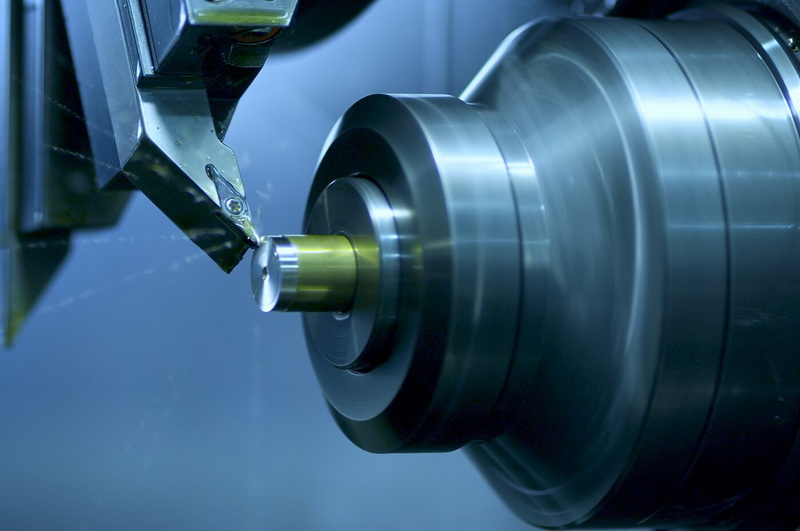
CNC Machining stands for Computer Numerical Control machining, a process in which digital instructions (G-code) guide the movements of machine tools to cut, drill, and shape components. Instead of manual operation, CNC Machining relies on software and servo-driven axes to produce parts that match the original design within tight tolerances.[1]
In CNC Machining, the machine interprets toolpaths generated from CAD/CAM software and automatically coordinates spindle speed, feed rate, and tool position. This automation improves repeatability, reduces operator error, and enables efficient production of complex parts that would be impractical to manufacture manually.[2]
CNC Machining follows a digital workflow that connects design, programming, and production into one continuous process. A part starts as a 3D CAD model, is converted into machine code, and is then cut from raw material on CNC equipment.[3]
A typical CNC Machining workflow includes:
- Design: Engineers build a precise 3D model with defined dimensions, tolerances, and surface requirements.[3]
- CAM programming: CAM software selects tools, creates toolpaths, and outputs G-code optimized for CNC Machining.[1]
- Setup: Operators fix the workpiece, load cutting tools, set zero points, and confirm CNC Machining parameters.[4]
- Machining: The CNC machine executes the program, automatically carrying out milling, turning, or drilling operations.[2]
- Inspection: Finished parts are measured and checked to ensure CNC Machining has achieved the specified tolerances.[3]
Throughout this process, CNC Machining combines high-speed cutting, controlled movement, and continuous feedback from the control system to maintain accuracy and productivity.
Different machine platforms support different CNC Machining operations, geometries, and production scales. A well-equipped CNC Machining factory often integrates several machine types to cover a wide range of customer needs.[1]
CNC milling is a versatile CNC Machining process where a rotating cutting tool removes material from a stationary or slowly moving workpiece. Vertical and horizontal machining centers can handle flat surfaces, pockets, slots, holes, and 3D contours.[2]
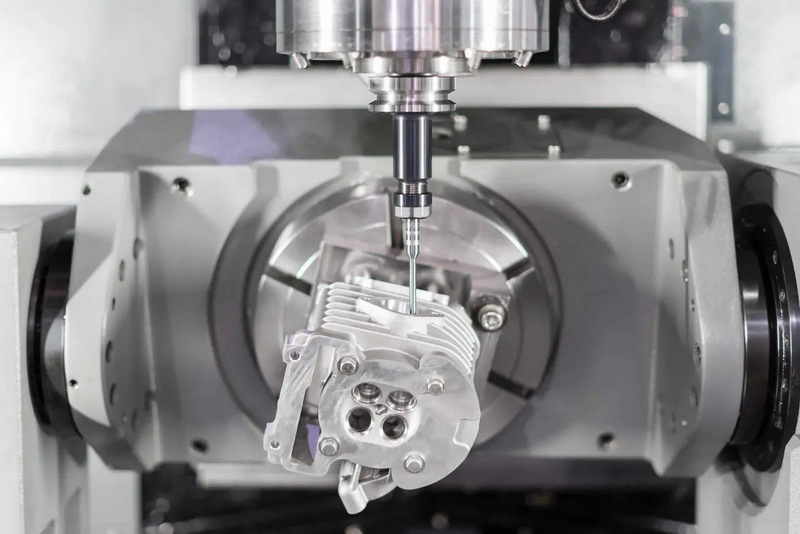
Advanced 4-axis and 5-axis CNC Machining centers can rotate the workpiece or the tool head, enabling access to multiple faces and complex undercuts in a single setup. This improves accuracy and reduces cycle time, especially for aerospace, automotive, and precision mechanical parts.[5]
CNC turning is a CNC Machining method that produces cylindrical parts by rotating the workpiece while a stationary tool cuts along the diameter or length. Shafts, sleeves, bushings, pins, and threaded components are typically produced on CNC lathes.[6]
Modern turning centers often integrate live tooling, Y-axes, and sub-spindles, enabling both turning and basic milling operations in one machine. This type of integrated CNC Machining reduces the number of setups and improves throughput for OEM customers.[7]
CNC drilling uses rotating drill bits to create precise, repeatable holes at specific locations defined in the program. It is an essential step in many CNC Machining cycles, especially for parts that require arrays of tapped or clearance holes.[6]
Boring and reaming are used to refine hole dimensions and surface finish, allowing CNC Machining to achieve tight tolerances on critical bores such as bearing seats or alignment features.[8]
To expand capability, many factories adopt multi-tasking machines that combine turning, milling, and drilling in one CNC Machining platform. These machines can complete complex parts in a single clamping, improving accuracy and efficiency.[9]
Other equipment often integrated into a CNC Machining environment includes routers for composites and plastics, EDM machines for hard or intricate cavities, and CNC laser or plasma systems for quick cutting of sheet materials. Together, these technologies form a flexible manufacturing cell around CNC Machining.[10]
CNC Machining uses a range of specific cutting operations to create precise features and surfaces. Combining these processes intelligently allows engineers to achieve both functional performance and attractive finishes.[2]
Common CNC Machining processes include:
- Facing: Producing flat reference surfaces on the ends or faces of a part.[7]
- Contouring and profiling: Following complex 2D or 3D paths to shape outer profiles and curved surfaces.[1]
- Pocketing and slotting: Removing material inside boundaries to create pockets, slots, and channels.[2]
- Threading and tapping: Forming internal and external threads for mechanical fastening within CNC Machining workflows.[6]
- Reaming and boring: Improving hole accuracy and finish after initial drilling.[8]
Each of these operations is precisely controlled by the CNC program, enabling CNC Machining to deliver consistent results across single prototypes and large production runs.
One of the biggest advantages of CNC Machining is compatibility with a wide variety of engineering materials. This flexibility allows OEM brands to choose the best material for performance, cost, and appearance.[1]
Typical metals for CNC Machining include:
- Aluminum alloys for lightweight, corrosion-resistant parts in electronics housings, automotive components, and aerospace structures.[1]
- Stainless steels for medical devices, food-grade equipment, and corrosion-resistant industrial components.[10]
- Carbon steels for structural and mechanical parts that require high strength after heat treatment.[10]
- Brass and copper alloys for electrical connectors, decorative hardware, and precision fittings.[1]
- Titanium alloys for high-strength, low-weight CNC Machining parts in aerospace and high-end products.[10]
Common plastics for CNC Machining include ABS, POM (acetal), nylon, PEEK, PC, and other engineering polymers used in functional prototypes, jigs, fixtures, and end-use parts. The ability to machine both metals and plastics means CNC Machining can support complete product platforms with matching components.[3]
CNC Machining delivers a unique blend of precision, flexibility, and speed that is especially valuable to OEM brands, wholesalers, and global manufacturers.[11]
Key advantages of CNC Machining include:
- High precision and repeatability: CNC Machining systems routinely hold tight tolerances, reducing rework and assembly problems.[10]
- Short lead times: Once the program is ready and the setup is complete, CNC Machining can rapidly produce high-quality parts.[3]
- Flexible batch sizes: The same CNC Machining setup can handle prototypes, small batches, and mass production with minimal changes.[12]
- Consistent quality: Automated control and standardized processes help maintain stable quality across repeated orders.[11]
- Lower tooling investment: Compared with processes that need dedicated molds, CNC Machining often requires only cutting tools and fixtures.[3]
For overseas OEM brands, partnering with an experienced CNC Machining factory in China combines these technical advantages with competitive cost structures and strong export capabilities.[12]
CNC Machining is one of the most effective technologies for rapid prototyping because it uses production-grade materials and delivers functional parts with accurate geometry. Prototypes produced by CNC Machining can be tested under real operating conditions.[3]
Once a prototype is validated, the same CNC Machining setup can be used for low-volume or bridge production while other tooling, such as die casting or injection molds, is still under development. This reduces time-to-market and allows OEM brands to start selling earlier while ramping up to higher volumes.[3]
CNC Machining is also ideal for custom products, high-mix low-volume orders, and engineering changes. Program adjustments, different fixtures, and alternative materials can be implemented quickly, supporting the dynamic needs of modern OEM supply chains.[11]
In many projects, CNC Machining works alongside 3D printing and sheet metal fabrication to create complete assemblies. Each process contributes unique strengths, and a well-coordinated manufacturing strategy can reduce cost and development time.[13]
3D printing is excellent for internal structures, complex channels, and lightweight lattice designs, while CNC Machining delivers precision on critical surfaces, interfaces, and bearing or sealing areas. This hybrid approach allows designers to take advantage of both additive and subtractive technologies in a single part.[14]
Sheet metal fabrication complements CNC Machining by providing enclosures, brackets, frames, and covers for machined components. When all three services—CNC Machining, sheet metal, and 3D printing—are available under one roof, OEM customers benefit from streamlined communication and consistent quality standards.[15]
Good design practices help engineers get the best cost and performance from CNC Machining. Small changes to geometry can significantly impact machining time, tool life, and overall manufacturability.[3]
Useful design tips for CNC Machining include:
- Avoid extremely thin walls that may vibrate or deform during cutting; stable features improve accuracy and surface finish.[3]
- Use internal radii compatible with standard tool diameters, reducing the need for tiny tools that slow down CNC Machining.[16]
- Keep part geometry as simple as possible while meeting functional needs to shorten programs and cycle times.[3]
- Apply tight tolerances only where necessary; many surfaces can use standard CNC Machining tolerances without affecting performance.[1]
- Consider how the part will be clamped and oriented during CNC Machining, and design surfaces that allow secure fixturing.[8]
By following these guidelines, designers can take advantage of the full capability of CNC Machining while keeping costs competitive for both prototypes and large production runs.
Reliable quality control is essential for CNC Machining, especially when serving international OEM customers with strict standards. A robust system combines in-process checks with final inspection.[15]
Typical CNC Machining quality practices include:
- First article inspection to verify the initial part against drawings and specifications.[15]
- In-process measurements using gauges, micrometers, and sometimes probing systems integrated into CNC Machining centers.[9]
- Statistical sampling and control charts for mass production orders to monitor process stability.[11]
- Full documentation of material certificates, inspection reports, and traceability for critical components.[12]
These practices help ensure CNC Machining output remains consistent over time and provides OEM brands with confidence in the parts they receive.
CNC Machining technology continues to evolve with increasing levels of automation, connectivity, and intelligence. Networking machines, robots, and inspection equipment creates a more efficient, data-driven production environment.[9]
Key trends shaping the future of CNC Machining include:
- Automated loading and unloading using robots and pallet systems, enabling longer unattended machining cycles.[5]
- Real-time monitoring of CNC Machining performance, tool wear, and spindle loads for predictive maintenance.[9]
- Hybrid additive–subtractive platforms that combine 3D printing and CNC Machining in a single machine to handle complex parts.[14]
- AI-assisted programming and optimization of toolpaths, helping programmers find faster and more reliable CNC Machining strategies.[5]
These developments make CNC Machining even more attractive for global OEM brands seeking stable capacity, high quality, and competitive lead times.
CNC Machining is a computer-controlled subtractive manufacturing technology that transforms digital designs into precise metal and plastic parts through milling, turning, drilling, and related operations. It supports the full product lifecycle, from rapid prototyping and validation to low-volume runs and high-volume OEM production.[1]
By combining CNC Machining with sheet metal fabrication, 3D printing, and other advanced processes, manufacturers can deliver complete solutions to overseas brands and wholesalers. Reliable quality control, flexible materials, and efficient automation make CNC Machining a cornerstone of modern global manufacturing. For OEM customers looking for accuracy, repeatability, and scalability, CNC Machining remains one of the most powerful and versatile options available.[3]

CNC Machining is a way of making parts where a computer controls cutting tools to remove material from a block and shape it into the required design. The process replaces manual hand operations with automated movements, improving accuracy and repeatability for both prototypes and production parts.[1]
The main CNC Machining processes are milling, turning, and drilling, supported by operations such as tapping, boring, and reaming. Milling handles flat surfaces and complex contours, turning produces cylindrical parts, and drilling creates precise holes, together covering most geometric requirements in modern products.[6]
CNC Machining works well with many metals and plastics, including aluminum, steels, stainless steels, brass, titanium, ABS, POM, nylon, and PEEK. The best material depends on the application's strength, weight, temperature, and corrosion needs, as well as cost and surface finish requirements.[10]
OEM brands choose CNC Machining for its tight tolerances, consistent quality, and flexibility across prototypes, small runs, and mass production. It also integrates easily with global supply chains and offers shorter lead times than many tooling-intensive processes, which helps brands launch and update products more quickly.[11]
CNC Machining removes material from a solid block, while 3D printing builds parts layer by layer from powder or filament. CNC Machining typically offers better dimensional accuracy, smoother surfaces, and a broader range of structural materials, while 3D printing is strong in complex internal geometries and highly customized, low-tooling applications.[13]
[1](https://www.xometry.com/resources/machining/what-is-cnc-machining/)
[2](https://www.hubs.com/knowledge-base/cnc-machining-manufacturing-technology-explained/)
[3](https://www.protolabs.com/resources/guides-and-trend-reports/cnc-machining-for-prototypes-and-low-volume-production-parts/)
[4](https://astromachineworks.com/what-is-cnc-machining/)
[5](https://www.autodesk.com/products/fusion-360/blog/cnc-machining-101-a-comprehensive-guide/)
[6](https://www.timaycnc.com/blog/cnc-machining-drilling-milling-turning-differences/)
[7](https://www.pendarvismanufacturing.com/blog/cnc-machining-techniques-milling-vs.-turning-vs.-grinding/)
[8](https://www.trade-tech.com/an-intro-to-the-cnc-machining-process/)
[9](https://www.protolabs.com/en-gb/resources/blog/an-a-z-guide-to-cnc-machining-technology/)
[10](https://yijinsolution.com/cnc-guides/what-is-cnc-machining/)
[11](https://www.sunfastusa.com/offshore-industry-precision-machining)
[12](https://www.partmfg.com/cnc-machining-services/)
[13](https://trimantec.com/blogs/t/machining-processes-overview)
[14](https://en.wikipedia.org/wiki/Computer_numerical_control)
[15](https://www.hxcmold.com/cnc-machining-services/)
[16](https://academy.titansofcnc.com/files/Fundamentals_of_CNC_Machining.pdf)

