
Views: 222 Author: Amanda Publish Time: 2025-12-25 Origin: Site


Content Menu
>> CAM Programming and Toolpath Generation
>> Machine Setup and Workholding
>> Inspection and Quality Control
● Main CNC Machining Processes
>> CNC Milling
>> CNC Turning
>> CNC Drilling, Boring, and Tapping
>> Specialized CNC Machining Methods
● Applications of CNC Machining
● CNC Machining for Rapid Prototyping and Production
● CNC Machining vs Other Manufacturing Methods
● Best Practices for CNC Machining Design
● FAQ About CNC Machining Process
>> 1. What is the basic CNC Machining workflow?
>> 2. How accurate is CNC Machining?
>> 3. Which materials are most suitable for CNC Machining?
>> 4. Is CNC Machining cost-effective for low volumes?
>> 5. How does CNC Machining compare to 3D printing?
CNC Machining is a computer-controlled manufacturing process that removes material from a solid block to create precise metal or plastic parts for prototypes and production. CNC Machining combines CAD design, CAM programming, and automated cutting operations to deliver tight-tolerance components for industries such as automotive, aerospace, electronics, and consumer products.
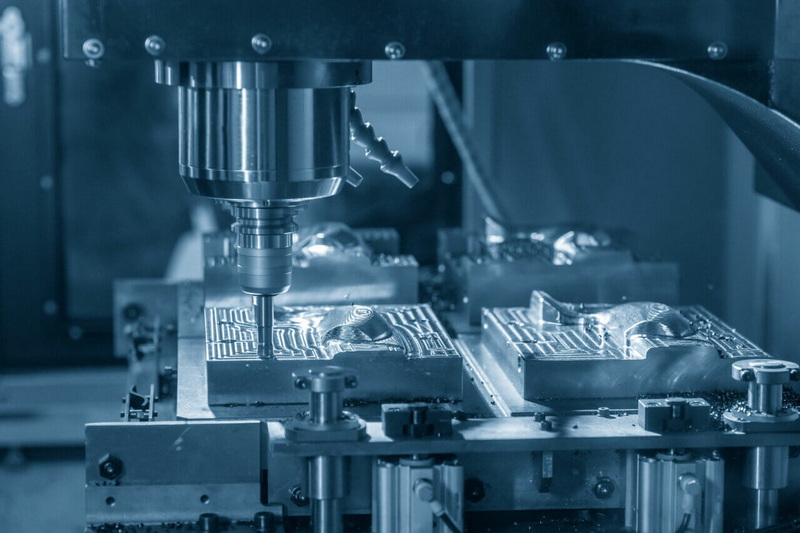
CNC Machining (Computer Numerical Control Machining) is a subtractive manufacturing method where cutting tools remove material from a workpiece according to programmed instructions. These instructions are generated from a digital 2D or 3D model and executed by CNC equipment like mills, lathes, routers, and drilling machines.
Unlike manual machining, CNC Machining uses servo motors, controllers, and code (such as G-code) to control motion, spindle speed, and tool changes automatically. This automation makes CNC Machining ideal for rapid prototyping, small-batch runs, and precision mass production with repeatable quality.
CNC Machining transforms a digital design into a physical part through a sequence of engineering and production stages. Each stage has a direct influence on lead time, cost, quality, and scalability for OEM customers.
The CNC Machining process starts with creating a detailed 2D or 3D CAD (Computer-Aided Design) model of the desired component. Engineers specify dimensions, tolerances, threads, radii, surface finishes, and critical areas that must be controlled tightly during CNC Machining.
Good engineering practices also include design for manufacturability (DFM), where features are adjusted to suit CNC Machining constraints. Designers consider minimum wall thickness, tool access, radiused internal corners, hole depths, and stock sizes to ensure that parts can be machined efficiently and reliably.
After CAD, the geometry is transferred into CAM (Computer-Aided Manufacturing) software. CAM is used to generate toolpaths for CNC Machining, choose tool types, and define cutting parameters such as spindle speed, feed rate, stepover, and depth of cut.
The CAM environment simulates the CNC Machining process in a virtual space. Programmers check for collisions, tool over-travel, missed material, or excessive tool engagement that might cause chatter or tool breakage. Once the program is validated, it is post-processed into machine-ready G-code, which controls all movements and operations on the CNC Machining center.
Before any material is cut, the CNC Machining center must be set up correctly. Machinists select and mount appropriate workholding solutions such as vises, chucks, clamps, soft jaws, or custom fixtures to keep the workpiece stable.
Tooling is prepared and loaded into the tool magazine or turret, including drills, end mills, face mills, chamfer tools, taps, and probes. Work coordinate systems, tool length offsets, and origin positions are established, often with the help of touch probes or edge finders. Accurate setup is critical to achieving repeatable CNC Machining results and minimizing scrap.
Once the program and setup are ready, the CNC Machining cycle can begin. The control reads the G-code, the spindle accelerates to the programmed speed, and the cutting tools start removing material along precise toolpaths.
Typical CNC Machining operations include:
- Roughing: High material removal to form the basic shape quickly.
- Semi-finishing: More accurate passes to approach final dimensions while leaving a small allowance.
- Finishing: Light, precise cuts to achieve the required tolerance and surface finish.
Coolant systems are used to manage heat, lubricate the cutting area, and clear chips away from the tool and workpiece. The combination of controlled motion, high-speed spindles, and appropriate tooling enables CNC Machining to produce complex shapes consistently.
After CNC Machining, parts move into inspection to verify they meet the drawing and specification requirements. Operators and quality technicians use tools such as calipers, micrometers, height gauges, pin gauges, thread gauges, and coordinate measuring machines (CMMs).
For demanding OEM projects, quality control may include full dimensional reports, material certificates, hardness tests, and surface roughness measurements. Feedback from inspection is used to adjust CNC Machining offsets, compensate for tool wear, and refine processes for stable, long-term production.
Different CNC Machining processes are selected according to part geometry, material, and quantity. Many projects require a combination of these methods to produce the complete part.
CNC milling is one of the most widely used CNC Machining methods. A rotating multi-point cutting tool removes material from a stationary or moving workpiece to create flat surfaces, pockets, slots, contours, and 3D forms.
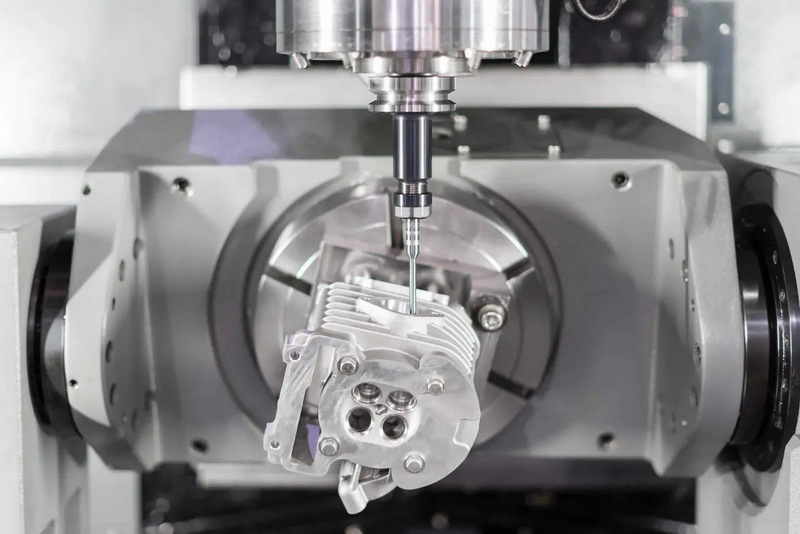
Vertical and horizontal machining centers can operate with 3, 4, or 5 axes. Multi-axis CNC Machining allows the tool to approach the workpiece from many angles, reducing setups and improving accuracy on complex geometries. This makes CNC milling ideal for brackets, housings, molds, cavities, and structural components.
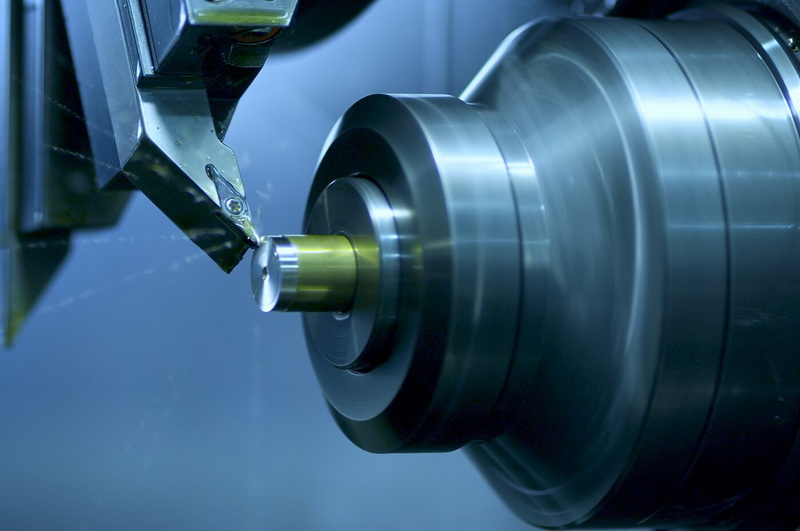
CNC turning is a CNC Machining process in which the workpiece rotates at high speed while a stationary cutting tool moves along linear axes. This method is perfect for producing round or tubular components such as shafts, bushings, collars, and fasteners.
Advanced lathes and turn-mill centers combine turning with milling, drilling, and tapping. This integrated CNC Machining capability means that complex parts with flats, grooves, cross-holes, and threads can be completed in one setup, improving consistency and reducing cycle time.
Drilling is essential for creating accurate holes that serve as mounting points, fluid paths, alignment features, or threaded connections. Boring operations enlarge and improve the accuracy of existing holes, while reaming improves hole finish and size consistency.
Tapping or thread milling operations add internal threads that match screws, bolts, and other fasteners. When these operations are integrated into one CNC Machining program, positional accuracy and process efficiency improve significantly compared to manual secondary operations.
In addition to milling and turning, various specialized CNC Machining-related technologies address specific requirements:
- Swiss-type CNC lathes for small, slender, and high-precision turned parts.
- Grinding for high-accuracy, fine-surface components such as shafts and tooling.
- Electrical discharge machining (EDM) and wire EDM for hardened materials and intricate profiles that are difficult to machine conventionally.
These processes extend the capability of CNC Machining and support demanding industries such as aerospace, medical, and high-end industrial equipment.
One of the major strengths of CNC Machining is its compatibility with a very broad range of materials. This flexibility lets engineers select the most suitable material for mechanical performance, appearance, and cost.
Common metals in CNC Machining include:
- Aluminum alloys for lightweight structures, heat sinks, and housings.
- Carbon steels for strength-critical mechanical parts.
- Stainless steels for corrosion-resistant components in medical and food equipment.
- Brass and copper for electrical connectors and decorative hardware.
- Titanium alloys for high strength-to-weight requirements in aerospace and medical devices.
Popular plastics in CNC Machining include ABS, PC, POM (Delrin), Nylon, PEEK, acrylic, and others. These materials are often used for functional prototypes, jigs and fixtures, electrical insulators, transparent covers, and low-volume end-use parts.
CNC Machining provides multiple advantages compared with manual machining and many other manufacturing technologies. These benefits are particularly important for OEM customers and international buyers that demand reliability and consistency.
Key advantages include:
- Precision: Very tight tolerances and excellent dimensional control for critical components.
- Repeatability: Once a process is dialed in, CNC Machining can reproduce parts consistently over long runs.
- Flexibility: Easy to switch between different parts simply by changing programs and setups.
- Speed: Fast turnaround from design to physical parts, especially for prototyping and urgent projects.
- Material range: Ability to machine a wide variety of metals and plastics without new tooling.
- Scalability: Smooth transition from single prototype to low-volume and higher-volume production.
For global OEM customers, these advantages mean that CNC Machining can support product development, pilot runs, and mass production within a unified process.
CNC Machining is deeply integrated into modern manufacturing. It plays a central role in building components and systems across many industries.
Typical applications include:
- Automotive: Engine blocks, brackets, transmission components, steering parts, and interior structural frames.
- Aerospace: Structural brackets, turbine and compressor parts, landing gear components, avionics housings, and 5-axis machined parts.
- Medical: Implants, surgical instruments, orthopedic devices, dental components, and laboratory equipment.
- Electronics: Enclosures, heat sinks, precision connectors, and mechanical parts for communication and computing devices.
- Industrial equipment: Machine frames, automation fixtures, custom tooling, and replacement parts for production lines.
Because CNC Machining can meet strict tolerance and documentation requirements, it is often chosen for regulated sectors where reliability and traceability are crucial.
CNC Machining is ideal not only for mass production but also for rapid prototyping and engineering validation. Product designers can iterate multiple design versions quickly, using CNC Machining to check fit, feel, performance, and manufacturability.
Once a design is finalized, the same CNC Machining programs and setups can be refined for higher efficiency and used to support batch or continuous production. This ability to move from prototype to production with minimal disruption is very attractive for overseas brands, wholesalers, and manufacturers who need stable supply and predictable lead times.
OEM customers can work with a specialized CNC Machining factory that provides:
- Engineering support for DFM and material selection.
- Flexible order quantities from single units to large batches.
- Short lead times for development parts and pre-production runs.
- Stable, repeatable quality for long-term production.
When choosing a production method, CNC Machining is often compared with processes like 3D printing, injection molding, and sheet metal fabrication. Each has its own strengths and ideal use cases.
Compared with 3D printing, CNC Machining generally offers better mechanical properties, surface finish, and dimensional precision, especially in metals. 3D printing is strong for complex internal features and low mechanical loads, but CNC Machining remains the preferred solution for many functional and structural components.
Compared with injection molding, CNC Machining shines at low to medium quantities where hard tooling would be too expensive or slow to build. Injection molding is more efficient for very high volumes, but CNC Machining provides flexibility and avoids costly mold changes when designs are still evolving.
Compared with pure sheet metal forming, CNC Machining can produce solid, thick, or highly contoured components that cannot be formed from flat sheet. Many products combine sheet metal parts with CNC Machining parts, especially in enclosures, frames, and assemblies.
To get the most from CNC Machining, designers should follow basic guidelines that balance performance with cost. Good design habits can reduce machining time, extend tool life, and make production more stable.
Helpful practices include:
- Using filleted internal corners instead of sharp 90-degree corners to match milling cutter geometry.
- Avoiding extremely deep, narrow pockets that are hard to reach with standard tools.
- Keeping very thin walls to a reasonable minimum thickness to prevent vibration or distortion.
- Standardizing hole sizes where possible to align with standard drills and taps.
- Tolerancing only critical features tightly and relaxing non-critical features to reduce CNC Machining time.
When designers collaborate closely with a CNC Machining supplier, many of these optimizations can be identified early, minimizing changes later in the project.
CNC Machining is a digitally driven, subtractive manufacturing process that converts precise CAD models into real parts through a combination of CAM programming, controlled cutting, and structured quality control. By using advanced milling, turning, drilling, and specialized operations, CNC Machining can produce complex geometries, tight tolerances, and excellent surface finishes in a wide variety of metals and plastics.
For OEM customers, CNC Machining offers a powerful combination of flexibility, precision, and scalability, supporting rapid prototyping, low-volume builds, and long-term mass production. With proper engineering, material selection, and process optimization, CNC Machining helps overseas brands, wholesalers, and manufacturers bring high-quality products to market quickly and reliably.
The basic CNC Machining workflow consists of CAD model creation, CAM programming, machine setup, automated machining, and final inspection. Each stage converts digital design information into a stable, repeatable CNC Machining process capable of supporting both prototypes and production parts.
CNC Machining can typically achieve tolerances on the order of a few hundredths of a millimeter when machines are well maintained and setups are carefully controlled. High-end equipment and optimized fixturing can reach even tighter tolerances for demanding aerospace, medical, and precision engineering applications.
Metals such as aluminum, steel, stainless steel, brass, copper, and titanium, as well as plastics like ABS, PC, POM, Nylon, and PEEK, are widely used in CNC Machining. The best material choice depends on strength, weight, corrosion resistance, temperature performance, and budget for the specific CNC Machining project.
CNC Machining is highly cost-effective for low to medium volumes because it does not require dedicated molds or dies. Once the CAD data and program are ready, CNC Machining can produce single parts or small batches efficiently, and then scale up in quantity without major process changes.
CNC Machining is subtractive and generally delivers better surface finish, accuracy, and structural performance, especially in metals and engineering plastics. 3D printing is additive and useful for complex internal structures or very early concept models, but CNC Machining is usually preferred when robust, production-ready parts are required.

