
Views: 222 Author: Amanda Publish Time: 2025-12-25 Origin: Site


Content Menu
>> CAM Programming and Tool Paths
>> Machine Setup and Workholding
>> Cutting Operations in CNC Machining
>> Inspection and Quality Control
● Main CNC Machining Processes
>> CNC Milling
>> CNC Turning and Lathe Machining
>> Drilling, Boring, Tapping and Reaming
>> Grinding and Finishing Operations
● Materials Used in CNC Machining
>> Metals
● Tolerances, Surface Finish and Quality
>> Typical Tolerances in CNC Machining
>> Surface Finish Considerations
● Applications of CNC Machining
>> Automotive and Transportation
>> Medical, Electronics and Industrial Equipment
● CNC Machining in Modern Manufacturing
>> Automation and Lights-Out CNC Machining
>> Digital Integration and Smart Factories
>> Global CNC Machining Services and OEM Support
>> 1. What does CNC mean in CNC Machining?
>> 2. Is CNC Machining suitable for both prototypes and production?
>> 3. Which materials can be used for CNC Machining?
>> 4. How accurate is CNC Machining compared with other processes?
>> 5. What are the main advantages of CNC Machining?
CNC Machining is a computer-controlled subtractive process that removes material from solid stock to create precise, repeatable parts for both prototypes and production. CNC Manufacturing expands this concept into an integrated workflow that links digital design, automation, and quality control to deliver consistent components for global industries such as automotive, aerospace, medical, and electronics.[1][2]

CNC Machining stands for Computer Numerical Control Machining, where cutting tools and machine motions are governed by programmed instructions instead of manual handwheels. These instructions, usually in the form of G-code, control tool position, speed, and feed so CNC Machining can achieve tightly controlled tolerances and consistent part quality.[3][1]
In CNC Machining, a block, bar, or billet of material is clamped to the machine and shaped by rotating tools or a rotating workpiece until the final geometry is achieved. Because the process follows a digital program, CNC Machining can repeat the same cycle for dozens, hundreds, or thousands of parts with minimal variation.[2][4]
CNC Machining connects engineering design with automated cutting operations through a structured workflow. Each step—from CAD modeling to inspection—plays a role in accuracy, efficiency, and cost in CNC Manufacturing.[5][6]
The CNC Machining process begins with a CAD (Computer-Aided Design) model that defines geometry, dimensions, and critical features of the part. Engineers specify tolerances, material type, and surface finish so that CNC Machining can be planned around functional requirements and assembly interfaces.[7][5]
Good design for CNC Machining avoids unnecessary complexity, minimizes very thin walls, and respects tool access directions to keep machining stable and economical. Once the CAD model is finalized, it becomes the digital reference for all subsequent CNC Manufacturing steps.[6][8]
The CAD model is imported into CAM (Computer-Aided Manufacturing) software that generates the tool paths used in CNC Machining. CAM programmers choose tools, cutting strategies, spindle speeds, and feed rates, then translate these decisions into G-code for the specific CNC Machining center.[1][5]
Tool paths for CNC Machining may include roughing passes to remove most of the material quickly, semi-finishing passes to refine geometry, and finishing passes to achieve final dimensions and surface quality. The better these strategies are optimized, the faster and more stable the CNC Manufacturing cycle becomes, often reducing scrap and machine time.[4][8]
Before CNC Machining begins, the operator sets up the machine with appropriate workholding, such as vises, chucks, fixtures, or vacuum tables. Datums and zero points are defined so the CNC Machining program knows exactly where the part is located in the machine's coordinate system.[4][6]
Tool length offsets, diameter data, and coolant settings are also prepared during setup to match the CAM program. A robust setup ensures that the CNC Machining process runs safely, avoids collisions, and keeps the part stable against cutting forces.[2][4]
Once setup is complete, the CNC Machining cycle can start with roughing operations to remove bulk material efficiently. Roughing uses aggressive cutting parameters and larger tools, while finishing operations switch to smaller tools and lighter passes to refine dimensions and surface finishes.[2][4]
CNC Machining centers use servo motors and ball screws to move the axes with high precision, following the programmed tool path. During CNC Machining, coolant and chip evacuation are managed carefully to maintain tool life, dimensional accuracy, and surface quality.[1][4]
After machining, parts go through inspection processes such as caliper checks, micrometer measurements, and CMM (Coordinate Measuring Machine) verification. Quality control is essential to confirm that CNC Machining has met design tolerances, form accuracy, and surface finish requirements.[9][4]
In a mature CNC Manufacturing environment, inspection data is recorded to track process capability and support continuous improvement. This feedback loop allows programmers and engineers to fine-tune CNC Machining strategies and reduce variability over time.[10][4]
Modern CNC Machining includes multiple processes that are often combined in a single production workflow. Choosing the right process or combination of processes depends on part geometry, material, and volume.[4][2]
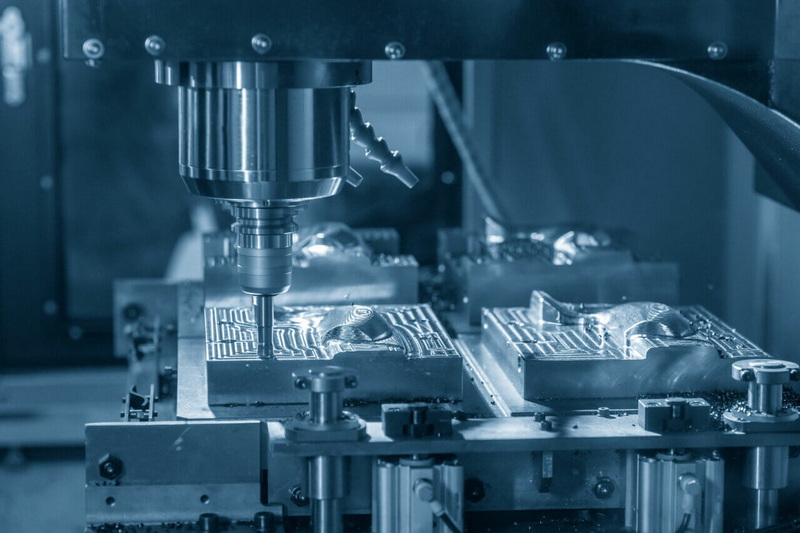
CNC milling is a core CNC Machining process where a rotating cutter removes material from a stationary or repositioned workpiece. Three-axis milling moves the tool in X, Y, and Z, while 4-axis and 5-axis CNC Machining can tilt or rotate either the tool or the part to access more complex surfaces.[2][4]
Milling is suitable for pockets, slots, contours, holes, and 3D surfaces, making it highly flexible for prototypes and production parts. With multi-axis CNC Machining, many features can be completed in one setup, reducing errors from repeated clamping and repositioning.[4][2]
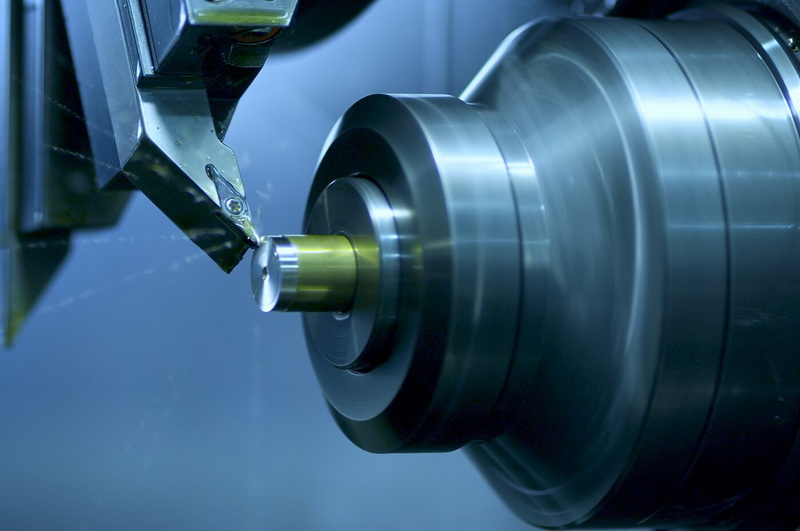
CNC turning is another major branch of CNC Machining focused on rotational parts such as shafts, bushings, pins, and sleeves. In turning, the workpiece rotates in a chuck or collet while the tool moves linearly to generate cylindrical surfaces and profiles.[5][2]
CNC lathes and turning centers can also integrate live tooling, allowing drilling, milling, and tapping operations in a single CNC Machining cycle. This reduces handling time and streamlines CNC Manufacturing for parts that require both rotational and prismatic features.[11][4]
Drilling is common in almost every CNC Machining project because many components require precise holes for fasteners, pins, and fluid passages. Boring enlarges and refines existing holes to tight internal diameters, while tapping and thread milling create internal threads.[2][4]
Reaming is used when very smooth hole surfaces and accurate diameters are needed, often as a finishing step after drilling. Combining these operations within CNC Machining helps maintain alignment, minimizes runout, and ensures reliable assembly.[4][2]
For parts that demand exceptionally fine surface finishes or extremely tight tolerances, grinding may be added to the CNC Machining route. Grinding uses abrasive wheels rather than traditional cutting edges and is often applied to hardened steels, bearing surfaces, and precision guides.[12][4]
Finishing processes in CNC Manufacturing can also include deburring, polishing, bead blasting, anodizing, plating, and coating. These secondary processes complement CNC Machining by providing corrosion resistance, aesthetic appeal, and improved wear performance.[13][9]
The strength of CNC Machining lies partly in its ability to handle a wide variety of materials. By pairing the right material with the right CNC Manufacturing strategy, designers can meet mechanical, thermal, and cost targets.[10][2]
Metals are the most common materials in CNC Machining, ranging from aluminum and steels to titanium and copper alloys. Aluminum alloys are popular because they are lightweight, relatively easy to machine, and offer good corrosion resistance and strength-to-weight ratio in CNC Machining applications.[13][2]
Carbon steels and alloy steels are widely used where high strength and durability are required, such as gears, shafts, and structural elements machined by CNC Machining. Stainless steels provide corrosion resistance and are common in medical, food processing, and marine CNC Manufacturing projects.[13][2]
Engineering plastics like ABS, POM, PEEK, PC, and nylon are frequently used in CNC Machining for housings, insulators, and lightweight structural components. These materials can often be machined faster than metals and allow CNC Machining to create parts with excellent chemical resistance or electrical insulation.[7][13]
Composites and fiber-reinforced materials are also compatible with CNC Machining when tool selection and cutting conditions are optimized. Correct fixturing and dust extraction are important in CNC Manufacturing with composites due to abrasive fibers and fine particles.[12][4]
Precision is one of the key reasons engineers choose CNC Machining over less controlled processes. Tolerance capability and repeatability directly influence how well parts fit together and perform in demanding environments.[2][4]
For many industrial applications, CNC Machining can routinely achieve tolerances around ±0.05 mm, and often tighter on critical features when machines, tools, and setups are optimized. Achievable tolerances depend on material, part size, geometry, and overall stability of the CNC Machining system.[9][4]
More demanding applications such as aerospace and medical components may require even tighter tolerances, which are possible with high-end CNC Machining centers and robust quality control. However, extremely tight tolerances can raise costs, so designers aim to balance CNC Manufacturing precision with budget and function.[13][2]
Surface finish from CNC Machining is influenced by feed rate, tool sharpness, tool path strategy, and material properties. Finishing passes with smaller stepovers and higher spindle speeds can significantly improve surface quality in CNC Machining.[4][2]
Post-processing steps like grinding, polishing, or blasting can further refine finish where necessary. By using a combination of optimized CNC Machining parameters and secondary operations, manufacturers can match both functional and cosmetic expectations.[13][4]
CNC Machining is widely used across multiple industries because it offers a combination of precision, flexibility, and scalability. From single prototypes to high-volume production runs, CNC Manufacturing adapts easily to different project sizes and requirements.[10][2]
In automotive and transportation sectors, CNC Machining is used for engine components, brackets, housings, fixtures, and custom parts for performance upgrades. The ability to hold tight tolerances ensures that CNC Machining can support safety-critical parts and accurate assemblies in vehicles.[10][2]
Prototype development, motorsports, and aftermarket customization all rely heavily on CNC Machining to quickly turn design ideas into functional parts. This agility helps shorten product development cycles and enables rapid experimentation.[9][13]
Aerospace and defense industries require high-performance materials and precise geometries, making CNC Machining a central technology. Components such as structural brackets, actuators, housings, and tooling are often produced by CNC Machining using aluminum, titanium, and high-strength alloys.[10][2]
Traceability, documentation, and quality assurance are critical in these sectors, so CNC Manufacturing processes are combined with strict standards and certifications. This combination delivers parts that meet both mechanical and regulatory demands.[2][4]
In the medical field, CNC Machining is used for surgical instruments, orthopedic implants, diagnostic equipment parts, and custom fixtures. Stainless steels, titanium, and specialized plastics are commonly machined to support biocompatibility and sterilization requirements.[13][2]
Electronics and industrial equipment producers depend on CNC Machining for housings, heat sinks, precision mounts, and machine components. CNC Manufacturing enables short lead times and custom configurations for OEMs serving global markets.[9][2]
CNC Machining in modern factories is more than a single machine cutting metal; it is part of a connected ecosystem. Digital tools, automation, and data analysis all contribute to more efficient CNC Manufacturing.[5][4]
Automation technologies such as robot arms, pallet changers, and automatic tool changers support lights-out CNC Machining where machines run unattended for extended periods. This approach increases machine utilization and reduces labor cost per part in CNC Manufacturing.[6][4]
Integrated probing systems, tool condition monitoring, and adaptive control help CNC Machining maintain stable conditions even when operators are not present. As a result, manufacturers can deliver consistent output during nights and weekends, improving responsiveness for customers.[7][4]
In smart factories, CNC Machining machines are linked to production management software for scheduling, monitoring, and maintenance planning. Data from sensors and controllers is used to measure performance, detect anomalies, and prevent unplanned downtime in CNC Manufacturing operations.[5][4]
This digital integration also supports traceability, where each CNC Machining batch can be tracked with process parameters, material certificates, and inspection results. Such transparency is valuable for OEMs that must satisfy regulatory and quality standards across global supply chains.[9][4]
Many specialized providers offer CNC Machining services to international OEMs, brand owners, and wholesalers. These companies combine CNC Machining, turning, sheet metal fabrication, and sometimes 3D printing and molding to deliver complete manufacturing solutions.[14][11]
Selecting a partner with advanced CNC Manufacturing capabilities, quality certifications, and experience in export logistics helps ensure reliable supply. By outsourcing CNC Machining to capable factories, overseas customers can reduce investment in equipment while accessing high-quality components on demand.[15][9]
CNC Machining is a digitally controlled subtractive manufacturing process that transforms CAD designs into precise, repeatable parts across metals, plastics, and composites. Within a modern CNC Manufacturing environment, this process is closely integrated with CAM programming, automation, and quality control to provide reliable results from prototype to production.[1][4]
By choosing appropriate materials, optimizing tool paths, and maintaining robust inspection routines, CNC Machining can deliver tight tolerances, excellent surface finishes, and predictable lead times. When combined with global service providers and smart factory principles, CNC Machining becomes a powerful tool for OEMs seeking speed, flexibility, and consistent quality in competitive markets.[9][2]
CNC in CNC Machining stands for Computer Numerical Control, describing the use of computer programs to direct machine tools and cutting conditions. This digital control allows CNC Machining to execute complex motions with high precision and repeatability compared with manual machining.[3][1]
Yes, CNC Machining is highly suitable for one-off prototypes, small batches, and medium-volume production runs. Once a program is proven, CNC Machining can run the same part repeatedly with stable quality, making it efficient for scaling from development to production.[10][13]
CNC Machining works with metals such as aluminum, steels, stainless steels, brass, copper, and titanium, as well as many engineering plastics like ABS, POM, and PEEK. Material choice for CNC Machining depends on strength, weight, cost, and environmental conditions in the final application.[13][2]
CNC Machining can typically achieve tolerances around ±0.05 mm or better for many applications, with even tighter limits possible on high-end equipment. This level of control often exceeds what is achievable by manual machining and provides more predictable results than many less precise processes.[4][9]
Key advantages of CNC Machining include high precision, good surface finish, wide material compatibility, and strong suitability for both low and medium volumes. CNC Machining also offers fast setup for new designs and straightforward repeatability, helping manufacturers reduce lead time and maintain consistent quality.[2][13]
[1](https://en.wikipedia.org/wiki/Computer_numerical_control)
[2](https://www.aerostarmfg.com/industry-news-blog/what-is-cnc-machining-definition-processes-components-more/)
[3](https://www.uti.edu/blog/cnc/what-is-cnc-machining)
[4](https://www.fastems.com/cnc-machining/)
[5](https://www.pickenstech.org/blog/what-is-a-cnc-machine/)
[6](https://yijinsolution.com/processes/)
[7](https://www.3ds.com/make/guide/process/cnc-machining)
[8](https://waykenrm.com/blogs/what-is-cnc-machining/)
[9](https://yijinsolution.com)
[10](https://www.xometry.com/resources/machining/what-is-cnc-machining/)
[11](https://www.xometry.com/capabilities/china-cnc-machining/)
[12](https://trevisanusa.com/blog/what-is-cnc-machining)
[13](https://geomiq.com/cnc-machining-guide/)
[14](https://www.partmfg.com/cnc-machining-services/)
[15](https://m.hongsinn.com)

