
Views: 222 Author: Amanda Publish Time: 2025-12-03 Origin: Site


Content Menu
● Introduction to CNC Machining
● Shangchen: Your CNC Machining OEM Partner
● What Exactly Is CNC Machining?
● How CNC Machining Works: From Design to Part
>> CAM Programming and Toolpath Creation
>> Machine Setup and Workholding
>> Execution of CNC Machining Operations
>> Inspection, Finishing, and Delivery
● Main Components of a CNC Machining System
● Types of CNC Machining Processes
>> CNC Milling
>> CNC Turning
● Materials Commonly Used in CNC Machining
● Industries That Depend on CNC Machining
● Limitations and Design Considerations
● CNC Machining Compared to Other Methods
● How Educational Media Support CNC Machining Understanding
● Why Choose Shangchen for CNC Machining OEM Services
● FAQs
>> 1. What does CNC Machining mean?
>> 2. How accurate is CNC Machining?
>> 3. Is CNC Machining better than 3D printing?
>> 4. What types of parts are best suited for CNC Machining?
>> 5. How do I start a CNC Machining project with an OEM supplier?
CNC Machining, short for Computer Numerical Control machining, is a subtractive manufacturing process in which computer-controlled tools remove material from a solid workpiece to create precise parts. By following digital instructions rather than manual hand movements, CNC Machining can achieve tight tolerances, repeatable quality, and complex geometries in metals, plastics, and other engineering materials.[2][3][4]
In modern manufacturing, CNC Machining is a core technology for rapid prototyping, custom components, and small to medium production runs across industries such as aerospace, automotive, medical devices, and electronics. From simple brackets to intricate aerospace components, CNC Machining transforms digital designs into functional parts quickly and reliably.[1][10][11]

Shangchen (sc-rapidmanufacturing.com) is a China-based factory focused on CNC Machining services, rapid prototyping, precision batch production, CNC turning, sheet metal fabrication, 3D printing, and mold manufacturing for overseas brands, wholesalers, and producers. With a one-stop OEM service model, Shangchen supports customers from concept and design through to finished parts ready for assembly.[10][12][1]
By combining advanced CNC Machining equipment, professional programming, and quality assurance, Shangchen delivers prototypes and production parts in metals and plastics with high accuracy and consistent quality. International customers benefit from flexible order quantities, competitive pricing, and technical guidance tailored to CNC Machining and related processes.[3][11][12][1]
CNC Machining is a family of computer-controlled machining processes where cutting tools remove material following numerically coded instructions. These instructions, usually in the form of G-code and M-code, control tool paths, spindle speeds, feed rates, and auxiliary functions like coolant and tool changes.[4][2][3]
Unlike manual machining, where operators directly control the machine, CNC Machining separates design, programming, and execution into distinct stages. This separation allows for repeatable production runs, easier adjustments, and rapid scaling once a program has been optimized.[5][7][9][3]
The CNC Machining process follows a structured workflow that connects digital design to physical components. Understanding these steps helps designers and buyers plan projects more effectively and optimize for cost and quality.[7][1][3][4]
Every CNC Machining project starts with a digital model, typically a 3D CAD file that defines geometry, dimensions, and critical tolerances. Engineers use tools such as SolidWorks, Fusion 360, or similar CAD platforms to build parts that can be reliably produced by CNC Machining.[1][4][7]
Detailed drawings may accompany the 3D model to specify fits, surface finishes, and geometric tolerances that the CNC Machining process must achieve. Early collaboration with a CNC Machining supplier like Shangchen enables design-for-manufacturing (DFM) improvements before production.[9][12][7][1]
Once design is complete, CAM (Computer-Aided Manufacturing) software converts the CAD model into toolpaths and generates the G-code used by CNC Machining equipment. CAM systems select tools, cutting parameters, and strategies for roughing, semi-finishing, and finishing operations.[3][4][1]
Simulation features in CAM software help detect potential collisions and inefficiencies before CNC Machining begins, reducing risk and setup time. The resulting program is then post-processed for a specific CNC Machining center, ensuring compatibility with its controller and configuration.[4][7][1][3]
For physical setup, machinists prepare the CNC Machining center by loading the correct tools, fixtures, and raw material. Workpieces are mounted using vises, clamps, or custom fixtures that hold them securely against cutting forces during CNC Machining operations.[7][1][4]
Critical steps include setting work offsets, aligning the coordinate system, and calibrating tool lengths and diameters so that CNC Machining follows the programmed positions accurately. Proper setup directly influences dimensional accuracy, surface finish, and cycle times.[1][4][7]
After setup, the CNC machine runs the G-code program, automatically controlling axis motion, spindle rotation, and feed rates. Servo motors and closed-loop feedback systems enable CNC Machining to hold tolerances down to thousandths of an inch, depending on machine capabilities.[3][4][7]
During execution, CNC Machining may include multiple operations: roughing to remove bulk material quickly, semi-finishing to refine geometry, and finishing passes to achieve final dimensions and surface quality. Automated tool changers allow CNC Machining centers to switch tools without stopping, improving efficiency and enabling more complex parts in one setup.[4][1]
Once CNC Machining is complete, parts undergo inspection to verify critical dimensions and tolerances using calipers, micrometers, CMMs, or other metrology tools. Any discrepancies may prompt program adjustments, tool changes, or fixture improvements for subsequent runs in the CNC Machining process.[11][1][4]
After inspection, parts can receive secondary operations such as deburring, sanding, anodizing, painting, plating, or heat treatment, depending on performance and cosmetic requirements. Shangchen integrates these post-processing steps with CNC Machining to deliver finished components ready for assembly or sale.[12][10][1]
A CNC Machining system integrates mechanics, electronics, and software to deliver precise cutting and shaping. Each component plays a specific role in ensuring accuracy, reliability, and productivity.[13][14][2][11]
- Machine Frame and Structure: The rigid frame and base of a CNC Machining center support all moving components and absorb cutting forces to minimize vibration and deflection.[11][13]
- Spindle: The spindle drives the cutting tools at controlled speeds and is central to material removal during CNC Machining.[2][1]
- Axes and Motion System: Linear axes (X, Y, Z) and sometimes rotary axes (A, B, C) allow precise multidirectional motion in CNC Machining operations.[13][4]
- CNC Controller: The controller interprets G-code, synchronizes tool movement, and manages auxiliary functions essential to CNC Machining.[14][11]
- Tooling and Holders: Cutting tools and their holders influence surface finish, tool life, and the overall effectiveness of CNC Machining.[3][4]
- Coolant and Chip Management: Coolant systems and chip conveyors help control heat and remove debris, improving stability in CNC Machining.[15][4]
CNC Machining encompasses several different processes tailored to particular geometries and applications. Choosing the right mix of CNC Machining operations helps balance performance and cost.[16][17][11][3]
CNC milling uses rotating cutting tools that move along multiple axes to remove material from a fixed or moving workpiece. This CNC Machining method is ideal for flat surfaces, pockets, slots, contours, and 3D shapes.[7][11][1]
Multi-axis CNC milling, including 4-axis and 5-axis configurations, allows complex parts to be produced in fewer setups by tilting or rotating the part relative to the tool. Such CNC Machining capability is especially useful for aerospace, medical, and mold components with intricate features.[1][4][3]
CNC turning rotates the workpiece while cutting tools move linearly to remove material, making it ideal for cylindrical shapes such as shafts and bushings. This CNC Machining approach excels at producing symmetrical parts with consistent roundness and surface finish.[2][4][1]
Modern turning centers often include live tooling and sub-spindles, allowing combined milling and drilling operations within the same CNC Machining setup. This integration reduces handling and improves dimensional consistency across complex, multi-feature parts.[4][1][3]
Drilling and tapping are common CNC Machining operations for creating holes and internal threads in metal or plastic parts. Automated positioning ensures accurate hole patterns, consistent depths, and repeatable thread quality.[9][11][7][1]
These operations are often integrated into milling or turning programs, allowing a single CNC Machining cycle to produce all critical features in one pass. This approach is particularly valuable for parts requiring multiple threaded holes or intricate fluid passages.[9][7][1][4]
Multi-axis CNC Machining extends traditional three-axis cutting by adding rotational axes, enabling the tool or part to tilt and rotate. This facilitates machining of undercuts, complex surfaces, and multi-sided features without repeated manual repositioning.[1][3][4]
Advanced multi-axis CNC Machining can reduce setup time, improve accuracy, and allow more organic or optimized geometries, which are often required in aerospace components and high-performance mechanical parts.[4][1]

CNC Machining supports a broad range of materials, offering flexibility across industries and applications. The choice of material influences strength, weight, machining characteristics, and finishing options in CNC Machining projects.[10][12][11][3]
- Metals: Aluminum, steel, stainless steel, brass, copper, and titanium are widely used in CNC Machining for structural and high-performance components.[12][10]
- Engineering Plastics: ABS, nylon, POM (acetal), PC, PMMA, and PEEK are popular plastics that machine well and provide good mechanical properties.[10][12]
- Other Materials: Some composites and specialty alloys can also be processed by CNC Machining with suitable tooling and parameters.[15][11]
Shangchen helps customers select suitable materials for CNC Machining based on application requirements, strength, cost, and required surface treatments.[12][1]
CNC Machining is an enabling technology across many sectors where precision and reliability are critical. Its ability to handle everything from prototypes to production parts makes CNC Machining attractive for both startups and established manufacturers.[17][11][15][10]
- Aerospace and Defense: Complex brackets, housings, and engine components rely on CNC Machining for tight tolerances and traceability.[17][10]
- Automotive and Transportation: Engine parts, transmission components, fixtures, and custom accessories frequently use CNC Machining.[15][10]
- Medical and Dental: Surgical instruments, implants, and diagnostic equipment benefit from the precision and repeatability of CNC Machining.[17][10]
- Electronics and Telecommunications: Housings, heat sinks, mechanical supports, and tooling for assembly lines are often made by CNC Machining.[18][10]
- Industrial and Energy: Valves, pumps, turbine components, and machine elements use CNC Machining to ensure robust performance.[10][15]
With its combination of CNC Machining, turning, sheet metal, 3D printing, and molding, Shangchen can support product lifecycles from early prototypes to regular production releases in all of these sectors.[10][1]
CNC Machining offers multiple advantages when compared with manual machining or some alternative manufacturing processes. These benefits make CNC Machining a go-to solution for high-precision components.[11][12][3][1]
- Precision and Consistency: CNC Machining can achieve extremely tight tolerances and repeat the same geometry over many parts.[2][4]
- Complex Geometry Capability: Multi-axis CNC Machining enables intricate surfaces, deep pockets, and challenging contours.[3][4]
- Efficiency and Automation: Once programmed and set up, CNC Machining runs with minimal human supervision, improving throughput and reducing labor cost.[11][4]
- Flexible Volumes: CNC Machining is economical for prototypes, small batches, and, in many cases, mid-volume production without investing in molds.[9][12]
- Broad Material Range: Metals and plastics can be handled in the same CNC Machining environment with appropriate tooling.[12][10]
Shangchen takes advantage of these strengths to deliver reliable CNC Machining solutions aligned with customer lead times, budgets, and performance goals.[1][10]
Despite its versatility, CNC Machining has constraints that designers and buyers must consider. Accounting for these factors early leads to better parts and more cost-effective CNC Machining projects.[11][12][3][10]
- Material Waste: As a subtractive process, CNC Machining generates chips from the starting stock, which can affect cost for expensive materials.[11][1]
- Geometric Restrictions: Very sharp internal corners, deep narrow channels, and some internal cavities may not be feasible with standard CNC Machining tools.[12][11]
- Setup and Programming Costs: For very high-volume simple plastic parts, processes like injection molding may be more economical than repeating CNC Machining.[17][3]
Shangchen provides DFM feedback to adjust radii, wall thickness, and other features so that CNC Machining remains efficient while preserving functionality.[12][1]
When selecting a manufacturing process, CNC Machining is often compared to 3D printing and injection molding. The right choice depends on part geometry, material, quantity, and cost targets.[10][1][11][12]
CNC Machining, as a subtractive method, excels in producing strong, precise metal and plastic parts, especially for functional testing or end-use components. Additive processes like 3D printing are better for highly complex or lattice structures and very low volumes, while injection molding excels at high-volume plastic production after tooling investment.[9][11][12]
Short technical clips and demonstrations help explain CNC Machining by showing machines in operation, tool changes, and chip formation in real time. Such media often walk through the basic sequence of CAD design, CAM programming, and machine execution, helping newcomers visualize the CNC Machining workflow.[6][7][1]
For engineers, purchasing managers, and students, seeing CNC Machining processes clearly illustrated deepens understanding of cycle times, part orientation, workholding, and achievable finishes. These insights are valuable when discussing feasibility and lead times with service providers like Shangchen.[19][5][9][1]
Choosing the right CNC Machining partner is essential for maintaining quality and controlling lead times in global supply chains. Shangchen focuses on CNC Machining and complementary technologies to provide comprehensive OEM services to overseas clients.[17][1][10]
Key reasons to work with a factory like Shangchen include:
- Integrated Capabilities: CNC Machining, CNC turning, sheet metal fabrication, 3D printing, and mold production enable one-stop solutions from prototype to mass production.[1][10]
- Flexible Production: CNC Machining capacity supports low-volume custom parts as well as repeat production with stable quality.[9][12]
- Engineering Support: DFM reviews and process selection guidance help align designs with CNC Machining capabilities and cost constraints.[11][12]
- Quality and Traceability: Robust inspection processes and documentation ensure that CNC Machining results meet customer specifications and regulatory requirements.[17][11]
By offering CNC Machining alongside other manufacturing processes, Shangchen helps international customers reduce supplier complexity, shorten development cycles, and maintain consistent part quality.[10][1]
CNC Machining is a powerful subtractive manufacturing process that uses computer-controlled tools to convert digital models into precise metal and plastic parts. Through a structured workflow of CAD design, CAM programming, machine setup, automated cutting, and inspection, CNC Machining delivers high accuracy, repeatable quality, and versatility across a wide range of applications.[7][3][4]
From aerospace brackets and automotive components to medical instruments and electronics housings, CNC Machining remains one of the most important technologies in modern manufacturing. By combining CNC Machining with turning, sheet metal, 3D printing, and tooling, Shangchen (sc-rapidmanufacturing.com) offers overseas brands and manufacturers a reliable OEM partner that can support projects from early prototypes to ongoing production runs.[17][1][10]
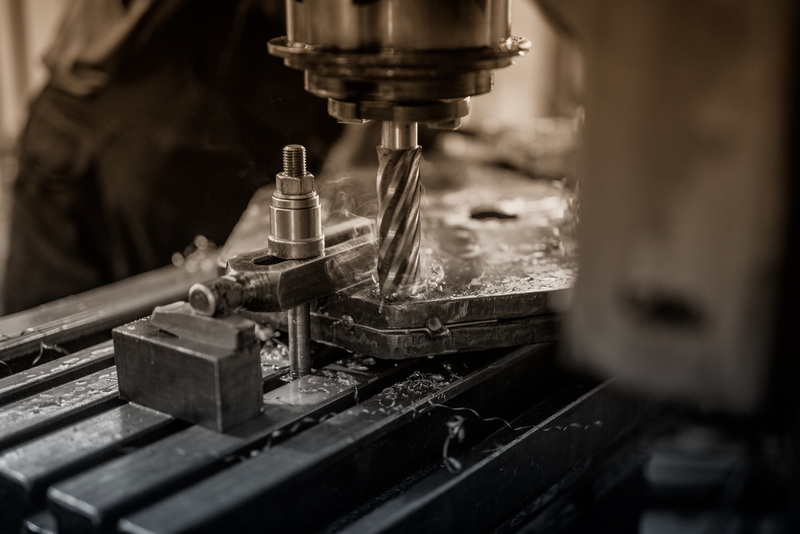
CNC Machining stands for Computer Numerical Control machining, which is a process where pre-programmed computer software controls machine tools to cut and shape material. Instead of relying on manual adjustments, CNC Machining uses G-code and related commands to direct toolpaths, spindle speeds, and other operations automatically.[5][2][3][4]
Modern CNC Machining centers can routinely achieve tolerances on the order of thousandths of an inch, and high-end systems reach even tighter levels for demanding applications. Actual accuracy depends on machine type, tooling, workholding, and environmental factors, but CNC Machining typically meets the requirements of aerospace, medical, and precision industrial components.[2][3][4]
CNC Machining is usually better when strong, dimensionally accurate metal or plastic parts are required, especially for functional testing or end use. 3D printing is often preferred for highly complex shapes, internal channels, or very low production volumes, but CNC Machining tends to offer superior surface finish, mechanical properties, and material options.[9][12][11]
Parts with precise dimensions, critical fits, or demanding mechanical loads are excellent candidates for CNC Machining. Typical examples include brackets, gears, shafts, manifolds, sensor housings, fixtures, and custom tooling in industries such as automotive, aerospace, electronics, and industrial equipment.[10][11][17]
To start a CNC Machining project, you typically submit 3D CAD files, 2D drawings with key dimensions and tolerances, the required material, surface finish, and quantity. An OEM supplier like Shangchen reviews the design for CNC Machining feasibility, provides a quotation, and then proceeds with programming, setup, machining, inspection, and shipping once the order is approved.[7][12][9]
[1](https://www.3erp.com/manufacturing-technology/cnc-machining/)
[2](https://astromachineworks.com/what-is-cnc-machining/)
[3](https://www.xometry.com/resources/machining/what-is-cnc-machining/)
[4](https://yijinsolution.com/processes/)
[5](https://avantiengineering.com/cnc-machining-types-processes-costs/)
[6](https://www.youtube.com/watch?v=lEyNWtM6MW4)
[7](https://geomiq.com/cnc-machining-guide/)
[8](https://academy.titansofcnc.com/files/Fundamentals_of_CNC_Machining.pdf)
[9](https://www.protolabs.com/resources/guides-and-trend-reports/cnc-machining-for-prototypes-and-low-volume-production-parts/)
[10](https://www.3erp.com/blog/cnc-machining-applications-and-uses/)
[11](https://www.cadrex.com/cnc-machining-starter-guide)
[12](https://www.hubs.com/guides/cnc-machining/)
[13](https://marklindsaycnc.com/the-cnc-process-for-the-absolute-beginner/)
[14](https://www.cnccookbook.com/learn-cnc-basics-tutorial/)
[15](https://www.shopsabre.com/5-applications-of-cnc-machines/)
[16](https://www.goodwin.edu/enews/what-is-cnc/)
[17](https://millenniumprecision.com/7-key-industries-benefit-cnc-machining/)
[18](https://qviro.com/blog/what-industries-use-cnc-machines/)
[19](https://www.youtube.com/watch?v=cj0-wSGGe6g)

