
Views: 222 Author: Amanda Publish Time: 2025-12-25 Origin: Site


Content Menu
● Understanding CNC Machining Centers
● Key Components of a CNC Machining Center
>> Automatic Tool Changer (ATC) and Tool Magazine
>> Worktable, Pallets, and Fixturing
>> CNC Controller and Servo System
>> Coolant, Chip Removal, and Safety Enclosure
● Types of CNC Machining Centers
>> Vertical Machining Centers (VMC)
>> Horizontal Machining Centers (HMC)
>> Turning Centers and Mill-Turn Centers
>> Specialized Machining Centers
● How a CNC Machining Center Works
>> CAD Modeling and CAM Programming
>> Setup, Fixturing, and Tool Preparation
>> Automated CNC Machining Cycle
>> In-Process Monitoring and Inspection
>> Deburring, Finishing, and Secondary Processes
● CNC Machining Center vs. CNC Milling Machine
● Applications of CNC Machining Centers
>> Automotive and Transportation
>> Industrial Equipment and Energy
● Advantages of CNC Machining Centers for OEM Buyers
>> High Accuracy and Repeatability
>> Multi-Process Capability in One Setup
>> Shorter Lead Times and Better Flexibility
>> Lower Per-Part Cost at Scale
>> Material and Process Versatility
● Shangchen's CNC Machining and OEM Capabilities
● FAQ
>> 1. What is the main difference between a CNC machining center and standard CNC machining?
>> 2. Why are CNC machining centers important for rapid prototyping?
>> 3. Which industries benefit most from CNC machining centers?
>> 4. How should overseas buyers choose a CNC machining supplier in China?
>> 5. What materials can be processed on a CNC machining center?
A CNC machining center is an advanced computer-controlled machine that performs multiple CNC machining operations—such as milling, drilling, boring, and tapping—on a single setup with high precision and automation. Compared with a basic CNC milling machine, a CNC Machining center integrates an automatic tool changer and often a pallet system to boost CNC machining productivity and reduce manual intervention.[1][2]
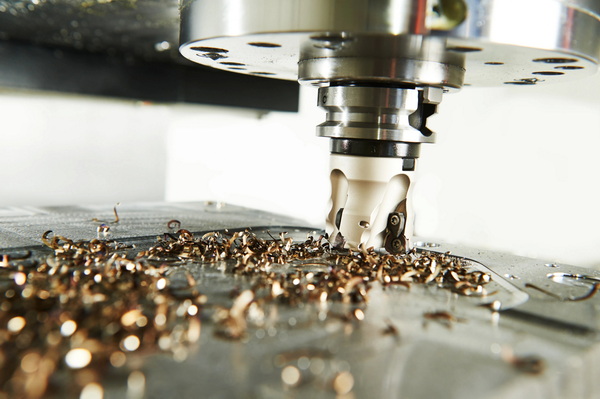
This article is written for international buyers, brand owners, wholesalers, and manufacturers looking to understand CNC machining centers and how a professional Chinese OEM factory like Shangchen (sc-rapidmanufacturing.com) can support their projects through CNC machining and related manufacturing services. By understanding the principles, structure, and advantages of CNC machining centers, overseas customers can better manage cost, quality, and lead time in global supply chains.[3][4]
A CNC machining center is a type of CNC machining equipment in which a computer numerical control (CNC) system drives servo motors to move the cutting tool and workpiece along multiple axes according to a pre-programmed toolpath. In most modern CNC machining centers, at least three linear axes (X, Y, Z) are available, and many machines also include rotary axes for more complex CNC machining tasks.[5][6]
Unlike simple CNC machining setups or manual machines, a CNC machining center usually integrates an automatic tool changer (ATC), a tool magazine, and auxiliary systems that allow continuous CNC machining with minimal operator input. This makes the CNC machining center a core platform for rapid prototyping, precision batch production, and complex part manufacturing in metals and plastics.[1][3]
From an OEM perspective, a CNC machining center is not just a single machine but part of a broader digital manufacturing system that includes CAD/CAM software, inspection equipment, and process control. When combined with experienced engineers and standardized workflows, CNC machining centers can repeatedly produce high-precision parts that meet international standards and certification requirements.[4][7]
A CNC machining center is an integrated CNC machining system composed of mechanical, electrical, and control modules that must work together with high rigidity and accuracy. Understanding its major components helps buyers evaluate machine capability when choosing an OEM CNC machining partner such as Shangchen.[8][5]
The base and column provide structural stiffness, vibration damping, and geometric stability for precision CNC machining under heavy cutting loads. High-quality cast iron or polymer concrete structures improve the machine's resistance to deformation, which is essential for repeatable CNC machining in long production runs.[6][5]
The spindle rotates cutting tools at controlled speeds, while tapered tool holders and retention knobs secure the tool during CNC machining operations. Modern spindles support a wide RPM range and may include through-spindle coolant to improve chip evacuation and surface finish during high-speed CNC machining.[7][5]
The ATC stores multiple tools in a carousel or chain magazine and automatically swaps tools according to the CNC machining program, eliminating manual changes and reducing cycle time. The size of the tool magazine directly affects how many CNC machining operations can be combined in one setup, which is critical for complex OEM parts.[9][1]
The workpiece is clamped on a table or pallet; some CNC machining centers use dual pallets so one part is machined while another is loaded, significantly increasing CNC machining throughput. Flexible fixturing systems such as modular clamps, vacuum fixtures, and tombstones enable quick changeovers and multi-side CNC machining of multiple parts at once.[5][8]
The controller interprets G-code programs and coordinates servo motors on each axis, ensuring accurate positioning and repeatability during CNC machining. Advanced controllers also support tool compensation, 5-axis interpolation, high-speed machining functions, and real-time monitoring, all of which enhance CNC machining quality and efficiency.[6][5]
Coolant systems improve tool life and surface finish, while chip conveyors and enclosed guarding help maintain clean and safe CNC machining conditions. Full enclosures protect operators from chips and coolant spray, and integrated chip management systems reduce downtime between CNC machining cycles.[10][11]
Different types of CNC machining centers are optimized for specific part geometries, materials, and CNC machining strategies. Selecting the right configuration is essential for productivity and cost control in OEM CNC machining projects.[11][12]
In a vertical CNC machining center, the spindle is oriented vertically (Z-axis), and the worktable moves in the X and Y directions. This layout is ideal for flat parts, cavity milling, die work, and general-purpose CNC machining of aluminum, steel, and plastics.[12][13]
Vertical CNC machining centers are widely used for face milling, pocketing, drilling, and tapping on prismatic components. They are common in automotive components, consumer electronics housings, and industrial fixtures where high flexibility and moderate cycle times are needed from CNC machining operations.[13][4]
Horizontal CNC machining centers mount the spindle horizontally, typically combined with a rotary table or pallet changer. This configuration allows chips to fall away from the cutting zone, improving chip evacuation during deep or heavy CNC machining.[11]
HMCs are preferred in high-volume CNC machining of engine blocks, hydraulic manifolds, and other complex parts requiring multiple faces to be machined in one setup. The combination of tombstone fixtures and pallet pools can make horizontal CNC machining extremely efficient for batch production and OEM manufacturing.[4][11]
5-axis CNC machining centers add two rotary axes to the traditional three linear axes, enabling the tool to reach almost any surface orientation. This advanced CNC machining capability reduces the number of setups and improves accuracy on complex geometries.[6]
5-axis CNC machining is crucial in aerospace, medical implants, and high-end mold manufacturing where organic surfaces, undercuts, and multi-angle features are common. By machining multiple sides of a part in one clamping, 5-axis CNC machining minimizes repositioning errors and shortens production lead times.[6]
CNC turning centers, or CNC lathes, rotate the workpiece while stationary tools cut along different axes. Mill-turn CNC machining centers combine turning and milling capabilities, enabling complex parts to be fully machined in one machine.[3]
Such CNC machining centers are ideal for shafts, flanges, valves, and precision cylindrical components that require both turning and secondary milling or drilling. For international buyers, consolidating operations into a single mill-turn CNC machining center reduces logistics, fixturing cost, and tolerance stack-ups.[3][4]
Some manufacturers offer specialized CNC machining centers for particular materials or processes, such as high-speed graphite machining for EDM electrodes or dedicated aluminum CNC machining lines for lightweight components. These specialized CNC machining centers integrate tailored spindles, dust extraction, and tooling to achieve optimal performance in narrow applications.[14][11]
The workflow of a CNC machining center is a digital process that starts from CAD design and ends with finished parts. Each stage of CNC machining can be optimized to reduce cost and improve quality.[10][5]
Engineers create a 3D model of the part, then use CAM software to generate CNC machining toolpaths and post-process them into G-code for the machine controller. Tool selection, cutting parameters, and machining strategies are all defined in this stage, directly affecting the efficiency and quality of CNC machining.[15][5]
The operator installs workholding fixtures, loads tools into the ATC magazine, and sets workpiece zero and tool offsets to ensure accurate CNC machining. Good setup practices reduce vibration and deflection, which is essential for high-precision CNC machining and long tool life.[7][9]
After program verification, the CNC machining center runs automatically, changing tools, adjusting feeds and speeds, and following programmed paths to remove material. Modern CNC machining centers may incorporate probing cycles, in-cycle tool breakage detection, and adaptive control to keep machining stable and efficient.[13][10]
Probing systems, torque monitoring, and operator checks help control dimensions and surface quality during CNC machining, especially in critical industries. For demanding OEM work, in-process inspection reduces scrap rates and ensures that CNC machining consistently meets customer drawings and standards.[4][6]
After CNC machining, parts may undergo deburring, surface treatments, heat treatment, or assembly to meet final product requirements. Integrating CNC machining with processes such as anodizing, plating, and painting allows suppliers to deliver ready-to-use components to overseas customers.[16][4]
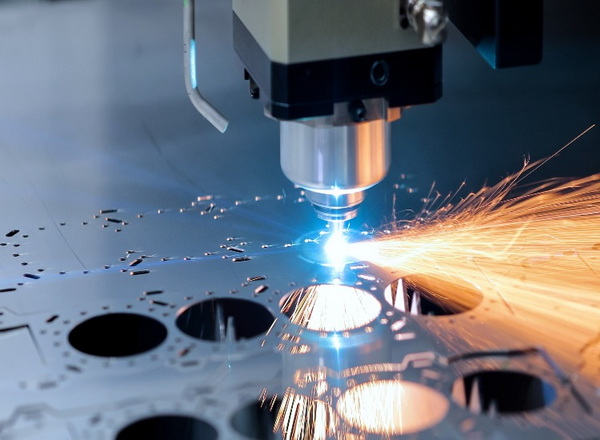
A CNC machining center is often described as an advanced CNC milling machine with extra automation and functionality. The key differences affect how efficiently CNC machining can be performed in an industrial environment.[2][9]
CNC milling machines typically rely on manual tool changes by the operator, which slows down CNC machining cycles and introduces more opportunities for human error. In contrast, CNC machining centers integrate automatic tool changers, larger tool magazines, and sometimes pallet changers, enabling more continuous and unattended CNC machining.[2][1]
Standard CNC milling machines are suitable for simple parts, small batches, and educational or toolroom work, where flexibility and low initial investment are the main priorities. CNC machining centers, however, are designed for professional OEM production, combining multiple CNC machining operations and sophisticated toolpaths to deliver higher throughput and consistency.[2][13]
Because CNC machining centers combine precision, flexibility, and automation, they serve as a universal manufacturing platform across many industries. This makes them ideal for OEM CNC machining services offered by Chinese manufacturers.[14][4]
CNC machining centers produce structural parts, turbine components, and complex brackets where high strength and tight tolerances are critical. Multi-axis CNC machining allows weight-optimized shapes and complex internal features that are difficult or impossible to achieve with traditional methods.[4][6]
Engine blocks, transmission housings, brake components, and custom performance parts are widely manufactured using CNC machining centers. In this sector, CNC machining supports both mass production and small-batch customization for specialized models and aftermarket components.[16][4]
Implants, surgical instruments, and diagnostic equipment housings rely on precise CNC machining in biocompatible materials. CNC machining centers enable smooth surfaces, tight tolerances, and traceable production records, all of which are important in regulated medical markets.[16][4]
CNC machining is used for heat sinks, enclosures, connectors, and prototypes for consumer electronics and communication hardware. With CNC machining centers, suppliers can quickly respond to design changes and produce small batches for validation before full-scale launch.[14][4]
Valves, pump bodies, gears, and renewable energy components such as wind turbine and solar system parts depend on CNC machining centers for accuracy and repeatability. High-power and heavy-duty CNC machining centers make it possible to handle large, heavy components safely and efficiently.[11][14]
When foreign brand owners and wholesalers outsource to a professional Chinese CNC machining factory, the choice of CNC machining centers directly influences cost and quality. Several advantages are especially relevant for OEM projects.[15][3]
Closed-loop servo control and rigid machine structures ensure that CNC machining can hold tight dimensional tolerances over long production runs. This repeatability is essential for assemblies where components sourced from different batches or suppliers must fit together perfectly.[5][6]
A CNC machining center performs several operations without re-clamping, reducing errors and improving alignment in CNC machining. Fewer setups mean fewer fixtures, shorter lead times, and lower overall CNC machining cost per part.[13][11]
Automatic tool changing and quick program switching allow rapid CNC machining transitions between new part designs and product iterations. This flexibility is especially valuable for foreign customers who frequently update models or require multiple versions of the same part from CNC machining.[9][3]
As batch volumes increase, the preparation and programming effort of CNC machining centers is distributed across many pieces, reducing unit cost for OEM production. Combined with the labor and supply-chain advantages of Chinese manufacturing, CNC machining becomes highly competitive for global brands.[14][4]
CNC machining centers can process aluminum, steel, stainless steel, brass, copper, titanium, and many engineering plastics, supporting diverse product portfolios. Surface finishes from roughing to fine finishing and even hard-machining are possible within the same CNC machining center with appropriate tooling and strategies.[16][4]
Shangchen is a Chinese factory focused on rapid prototyping, CNC machining services, precision batch production, turning, sheet metal manufacturing, 3D printing, and mold production for overseas brand owners, wholesalers, and manufacturers. By integrating these services around modern CNC machining centers, the company offers a complete one-stop solution for product development and mass production.[3][4]
Within CNC machining, Shangchen can handle 3-axis, 4-axis, and 5-axis CNC machining projects in metals and plastics for industries such as automotive, consumer electronics, industrial equipment, and medical devices. Experienced engineers support DFM (design for manufacturability), material selection, and process optimization to ensure each CNC machining project balances quality, cost, and lead time.[14][16]
For long-term OEM cooperation, Shangchen can combine CNC machining with injection molding, die casting, sheet metal, and surface finishing to deliver complete assemblies or sub-assemblies directly to foreign factories or fulfillment centers. This integration reduces the need to manage multiple suppliers and simplifies quality control for international buyers who rely heavily on stable CNC machining supply chains.[4][14]
A CNC machining center is a highly automated, computer-controlled machine tool that integrates milling, drilling, boring, tapping, and other operations into one platform for efficient CNC machining. By combining multi-axis motion, automatic tool changing, and advanced control systems, CNC machining centers deliver the precision, flexibility, and productivity required for today's demanding OEM manufacturing projects.[1][13]
For foreign brands, wholesalers, and manufacturers seeking a reliable Chinese partner, working with a factory like Shangchen that operates modern CNC machining centers—along with CNC turning, sheet metal fabrication, 3D printing, and mold making—ensures fast response, stable quality, and scalable production for global markets. With the right CNC machining partner, international customers can turn innovative designs into high-quality products while maintaining competitive pricing and dependable delivery.[4][14]
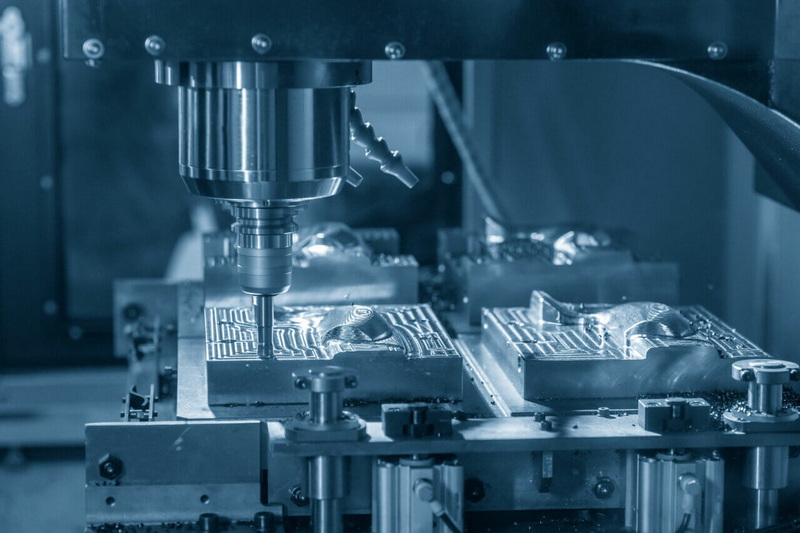
The main difference is that a CNC machining center integrates an automatic tool changer, a tool magazine, and often pallet systems, enabling multiple CNC machining operations in one setup with minimal manual intervention. Standard CNC machining on basic mills usually requires manual tool changes and more operator involvement, limiting efficiency and automation.[1][2]
CNC machining centers can switch tools automatically and run complex programs, allowing engineers to move quickly from CAD models to functional prototypes in metal or plastic. This capability makes CNC machining ideal for validating dimensions, assembly, and performance before committing to mass production tooling.[15][3]
Industries such as aerospace, automotive, medical, electronics, and energy rely heavily on CNC machining centers to produce high-precision parts and complex geometries. OEM buyers in these sectors use CNC machining to secure consistent quality, tight tolerances, and reliable supply across global markets.[16][4]
Buyers should evaluate whether the supplier operates modern CNC machining centers (including 3-axis, 4-axis, or 5-axis), has quality certifications, and can provide samples and inspection reports. Factories like Shangchen that combine CNC machining with turning, sheet metal, and 3D printing offer better integration and project control for OEM customers.[14][4]
CNC machining centers commonly process aluminum alloys, carbon and stainless steels, brass, copper, titanium, and engineering plastics such as POM, PC, and PA. This material flexibility allows CNC machining to support everything from lightweight housings to high-strength structural components across diverse product lines.[16][4]
[1](https://www.setco.com/blog/what-is-a-cnc-machining-center/)
[2](https://boruimc.com/cnc-milling-machine-vs-cnc-machining-center/)
[3](https://www.3erp.com/blog/machining-center/)
[4](https://www.3erp.com/blog/cnc-machining-applications-and-uses/)
[5](https://www.hirung.com/what-is-a-cnc-machining-center-the-ultimate-guide/)
[6](https://www.ycmalliance.com/the-differences-between-3-axis-and-5-axis-cnc-machining/)
[7](https://www.steckermachine.com/blog/cnc-machining-101)
[8](https://www.lzcncmachine.com/news/85-85.html)
[9](https://www.zintilon.com/blog/cnc-milling-vs-cnc-milling-center-differences-and-similarities/)
[10](https://www.vurcon.com/en/blogs/news/what-is-and-how-does-a-cnc-machining-center-work)
[11](https://www.mmsonline.com/topics/machining-centers)
[12](https://www.steckermachine.com/blog/types-of-cnc-machines)
[13](https://www.stylecnc.com/blog/cnc-mill-cnc-machining-center-cnc-router.html)
[14](https://venttup.com/cnc-machining-industries-applications/)
[15](https://trevisanusa.com/blog/what-is-cnc-machining)
[16](https://automechgroup.com/applications-of-cnc-machines-across-industries)

