
Views: 222 Author: Amanda Publish Time: 2025-12-25 Origin: Site


Content Menu
● Is CNC Machining An Industry Or A Process?
● Core Characteristics Of CNC Machining
● Key Industries Using CNC Machining
>> Automotive And Transportation
>> Electronics And Consumer Products
>> Energy, Oil & Gas, And Renewables
>> Industrial Machinery And Robotics
● Where CNC Machining Fits In The Manufacturing Chain
● CNC Machining Services From A China-Based OEM Factory
● How CNC Machining Supports OEM And International Brands
● Advantages Of CNC Machining Compared With Other Processes
● Design Considerations For CNC Machining
● Applications Of CNC Machining Across Product Life Cycle
>> 1. What industry is CNC Machining in?
>> 2. Which industries use CNC Machining the most?
>> 3. Is CNC Machining suitable for low-volume production?
>> 4. Why choose CNC Machining instead of 3D printing?
>> 5. How does a CNC Machining factory support overseas OEM clients?
CNC Machining is a core manufacturing process that serves many modern industries, including aerospace, automotive, medical, electronics, energy, and consumer products. It functions as a flexible digital technology that supports rapid prototyping, low-volume production, and high-precision mass production in both metals and plastics.
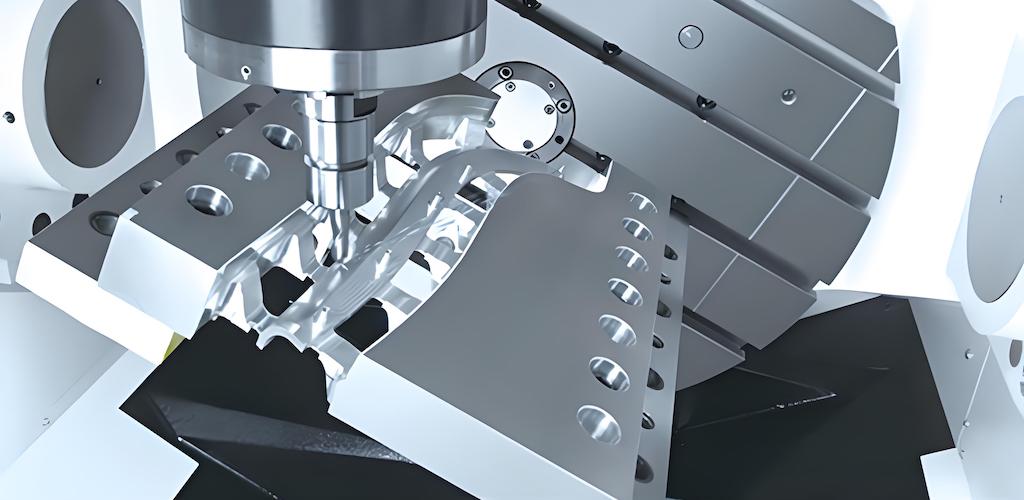
CNC Machining (Computer Numerical Control Machining) is a subtractive manufacturing process where computer programs control cutting tools, mills, and lathes to shape solid material into finished parts. The process begins with a digital 3D CAD model, which is converted into toolpaths and machine code that guide the movement of the cutting tools.
Common CNC Machining operations include CNC milling, CNC turning, drilling, boring, tapping, and multi-axis machining for complex geometries. Because CNC Machining is computer controlled, it offers high repeatability, tight tolerances, and consistent quality, making it suitable for both functional prototypes and end-use components. CNC Machining can handle materials such as aluminum, steel, stainless steel, brass, copper, titanium, and many engineering plastics.
CNC Machining is also known for its ability to produce complex shapes in a single setup by using multi-axis machines. This reduces the need for multiple fixtures, shortens production time, and improves overall dimensional accuracy. As a result, CNC Machining has become a standard process in precision engineering and high-value manufacturing.
In strict classification terms, CNC Machining is a manufacturing process within the broader industrial manufacturing and precision engineering sectors. It is not a separate industry on its own, but it is central to machine shops, contract manufacturers, and OEM suppliers that provide machining services to other industries.
From a business perspective, there is a global CNC Machining service sector made up of specialized machining companies and factories. These companies provide CNC Machining as a service for OEM and ODM customers, often covering design review, process optimization, manufacturing, and quality inspection. They serve clients in many downstream industries such as aerospace, automotive, medical devices, consumer electronics, industrial automation, and more.
Therefore, CNC Machining can be understood in two ways:
- As a technical process: A digital, automated machining method used to remove material and produce precision parts.
- As a service sector: A network of CNC Machining shops and factories offering production capacity and engineering expertise to other companies.
Both views are correct, and together they explain why CNC Machining is so important in modern global manufacturing.
Several characteristics distinguish CNC Machining from traditional manual machining and other manufacturing processes.
- High precision and tight tolerances
CNC Machining can consistently achieve tight dimensional tolerances and excellent surface finishes. This makes it suitable for critical components in aerospace, medical, automotive, and other high-performance applications.
- Flexibility in design changes
Because CNC Machining is driven by digital programs, design modifications only require updating the CAD/CAM files rather than building new hard tooling. This enables rapid iteration, engineering changes, and product customization.
- Broad material compatibility
CNC Machining works with metals, plastics, and composite materials. It is often chosen when designers need strong, durable, and heat-resistant parts that are difficult to achieve with other processes.
- High repeatability
Once the cutting program and setup are validated, CNC Machining can reproduce the same part again and again with minimal variation. This repeatability is essential for both prototypes and batch production.
- Integration with digital manufacturing
CNC Machining fits naturally into digital workflows that include CAD design, CAM programming, simulation, quality measurement, and data tracking. This integration supports Industry 4.0 and smart factory strategies.
CNC Machining is used across many sectors, making it one of the most widely adopted manufacturing technologies.
The aerospace and aviation sector depends heavily on CNC Machining for structural, mechanical, and engine components. These parts must be lightweight yet strong, often requiring aluminum, titanium, or high-temperature alloys.
CNC Machining is used for:
- Engine casings, turbine parts, and compressor components
- Structural brackets, ribs, frames, and landing gear components
- Interior mechanisms, hinges, latches, and seat hardware
Strict quality standards and certifications apply in aerospace, so the precision and repeatability of CNC Machining are particularly valuable. Multi-axis CNC Machining allows complex, weight-optimized geometries that help improve fuel efficiency and performance.
In the automotive industry, CNC Machining is used at every stage, from concept prototypes to mass-production tooling and end-use parts. Automakers and Tier-1 suppliers rely on CNC Machining for:
- Engine blocks, cylinder heads, pistons, and connecting rods
- Gear housings, transmission cases, and drivetrain components
- Suspension parts, steering components, and brake system parts
- Custom trims, interior metal parts, and aftermarket performance components
CNC Machining is also essential for electric vehicle components, including motor housings, cooling plates, battery system hardware, and precision brackets. In addition to cars, CNC Machining supports trucks, buses, motorcycles, rail, marine vessels, and construction machinery.
The medical sector uses CNC Machining for high-quality, biocompatible, and precise components. Typical CNC Machining applications include:
- Surgical instruments, clamps, forceps, and tool handles
- Orthopedic implants such as bone plates, screws, and joint components
- Dental components, custom abutments, and prosthetic parts
- Housings and fixtures for diagnostic equipment and laboratory instruments
Medical CNC Machining often uses stainless steel, titanium, cobalt-chrome, and medical-grade plastics. Surface finish, cleanliness, and traceability are critical, and CNC Machining can meet these demanding requirements.
Electronics and consumer product manufacturers use CNC Machining for both internal structures and external enclosures. CNC Machining is commonly used to make:
- Device housings and frames for phones, tablets, laptops, and wearables
- Heat sinks, thermal management components, and precision mounting plates
- Connectors, sockets, and mechanical interface parts
- High-end consumer product shells for premium feel and appearance
Because consumer products often combine aesthetics with tight dimensional requirements, CNC Machining is popular for creating sharp edges, complex recesses, and refined surface finishes. It is widely used in industrial design validation and small-batch production.
In the energy and oil-and-gas sectors, CNC Machining is chosen for rugged, high-performance parts that must survive harsh environments. Typical components include:
- Valves, flanges, manifolds, and pump housings
- Downhole tools, drilling equipment, and measurement devices
- High-pressure fittings, couplings, and safety-critical connectors
Renewable energy systems also use CNC Machining for wind turbine hubs, gearboxes, bearing housings, solar mounting systems, and mechanical parts for energy storage and control systems. Precision machining contributes to reliability, durability, and efficiency across energy applications.
Manufacturers of industrial machinery, robotics, and automation equipment use CNC Machining extensively to build structural and mechanical components. Examples include:
- Frames, bases, and support structures for machines
- Gearboxes, shafts, pulleys, and drive components
- Custom end-effectors, grippers, and robotic tooling
- Precision fixtures, jigs, and alignment systems
Because many automation systems are customized for specific production lines, CNC Machining is ideal for low-volume, high-complexity parts that must integrate with sensors, motors, and control hardware.
Defense, security, and military applications use CNC Machining for:
- Weapon components, mounts, and sight systems
- Vehicle parts, armor structures, and mechanical assemblies
- Ruggedized housings for communication and radar equipment
These parts must satisfy strict testing and reliability standards under extreme conditions. CNC Machining supports this with robust material options, tight tolerances, and controlled production environments.
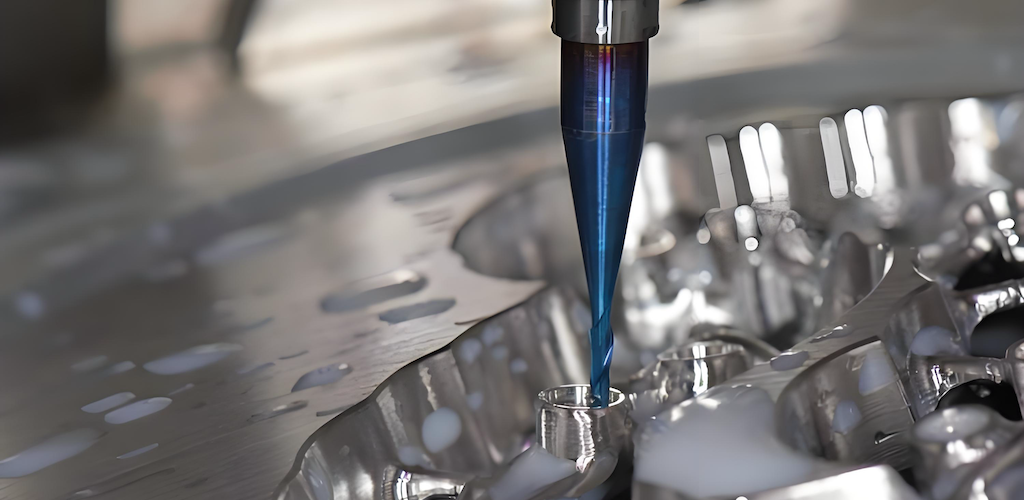
CNC Machining can appear at multiple stages in a product life cycle, and it often works alongside other processes.
- Concept validation and functional prototypes
Early in a project, engineers use CNC Machining to quickly produce functional prototypes from real engineering materials. This allows realistic testing of strength, heat resistance, and assembly compatibility.
- Bridge production between prototype and mass production
Before investing in expensive molds or high-volume tooling, many companies use CNC Machining for bridge production. This means producing hundreds or thousands of units to validate the market, refine the design, and prepare the supply chain.
- Low-volume and high-mix production
CNC Machining is well suited to low-volume production and high-mix product portfolios where many part numbers are produced in relatively small quantities. Program changes can be made quickly, and machines can switch between jobs with minimal downtime.
- Post-processing of castings, forgings, and fabrications
Even when parts are formed by casting, forging, or sheet metal fabrication, CNC Machining is often used as a secondary operation. It adds precision features such as mounting interfaces, sealing surfaces, and threaded holes.
- Integration with digital measurement and quality systems
CNC Machining is often combined with CMM inspection, optical measurement, and statistical process control. This ensures that each batch stays within specification and that changes can be tracked and documented.
As an OEM-oriented factory in China, a company like SHANGCHEN focuses on providing CNC Machining services and complete manufacturing solutions for overseas brands, wholesalers, and producers. Such a factory typically offers:
- CNC milling and CNC turning for metals and plastics
- Rapid CNC Machining prototyping for new product development
- Batch and small-volume CNC Machining for custom parts
- Precision machining combined with sheet metal fabrication
- CNC Machining support for tooling, molds, and jigs
By integrating CNC Machining with other services, the factory can deliver not only individual parts but also assemblies and complete mechanical systems. This helps international customers reduce the number of suppliers they must manage and simplifies quality control and logistics.
For global brands and manufacturers, outsourcing CNC Machining to a specialized factory offers several advantages.
First, customers avoid large capital investments in machines, tooling, and skilled labor. Instead, they pay for CNC Machining as needed, scaling volumes up or down according to demand. This is especially attractive for startups, small-to-medium manufacturers, and companies that operate in multiple markets.
Second, professional CNC Machining suppliers provide engineering support. They review 3D models and drawings, suggest design changes to improve manufacturability, and help optimize material choices and tolerances. This design-for-manufacturing guidance can lower costs, shorten machining time, and improve product reliability.
Third, a strong CNC Machining partner can combine multiple processes—CNC Machining, sheet metal fabrication, 3D printing, and mold production—under one project management structure. This ensures better coordination between different part types and processes, leading to shorter lead times and more predictable outcomes.
Finally, international CNC Machining suppliers are experienced in export logistics, packaging, and quality documentation. They can support compliance requirements, material traceability, and testing reports needed for various regional markets.
CNC Machining competes with and complements other manufacturing methods such as 3D printing, injection molding, die casting, and stamping. Each process has its strengths, but CNC Machining offers several distinct advantages.
- No expensive hard tooling for most parts
Many CNC Machining projects require only standard fixtures and cutting tools. This eliminates the high up-front cost and long lead time of molds and dies. For low-to-medium volumes, CNC Machining can be more economical.
- Better structural performance than many printed parts
CNC Machining uses fully dense material stock. In many cases, the mechanical properties, fatigue resistance, and temperature performance are superior to that of parts produced by 3D printing. This is important for load-bearing and safety-critical components.
- High-quality surfaces and fine details
CNC Machining can produce smooth surfaces, sharp edges, and tight corner radii. When combined with finishing processes such as anodizing, plating, or coating, the result can be both functional and visually appealing.
- Scalability from one-off to batch production
The same CNC Machining program can be used to make a single prototype or hundreds of units with very few changes. This gives manufacturers flexibility and reduces the risk when launching new products.
- High dimensional accuracy
With proper machine calibration and process control, CNC Machining can consistently meet tight tolerances on features such as bores, slots, and mating surfaces. This helps ensure proper fit and function in assemblies.
To get the best results from CNC Machining, engineers and designers should follow certain design principles.
- Choose CNC-friendly geometries
Features such as extremely deep pockets, very thin walls, or tiny radii can be difficult or costly to machine. Adapting the design to more CNC-friendly shapes often reduces time and cost.
- Specify realistic tolerances
Over-tightening tolerances can increase machining time and scrap. It is usually better to apply tight tolerances only where they truly affect performance and use standard tolerances elsewhere.
- Select appropriate materials
Material choice affects machinability, cost, strength, and surface finish. For example, aluminum alloys are easy to machine and widely used, while titanium and hardened steels require more time and specialized tools.
- Consider fixturing and tool access
Parts should be designed so they can be clamped securely and reached by cutting tools from one or more directions. Good fixturing reduces vibration, improves surface finish, and increases accuracy.
- Communicate requirements clearly
Detailed drawings, tolerances, surface finish specifications, and functional notes help CNC Machining suppliers understand what is critical. Clear communication reduces the chance of rework and delays.
CNC Machining helps at different stages of product development and production.
- Early prototypes
Developers use CNC Machining to turn digital concepts into physical parts quickly, enabling real-world testing, user feedback, and design refinement. Parts can be made from final-use materials, giving an accurate sense of performance.
- Pilot runs and validation
Before full mass production, CNC Machining produces pilot batches for certification tests, reliability studies, and market trials. This is a critical step to identify issues and optimize designs.
- Production and aftermarket
CNC Machining remains important even when high-volume processes are in place. It is used for spare parts, low-volume variants, custom options, and aftermarket upgrades that do not justify new tooling.
- Tooling and fixtures
CNC Machining also produces molds, dies, jigs, and fixtures that support other manufacturing processes. High-quality tooling improves repeatability, productivity, and quality in the entire production chain.
CNC Machining is not a standalone industry but a foundational manufacturing process embedded in many industrial sectors, including aerospace, automotive, medical, electronics, energy, industrial machinery, and defense. It offers high precision, repeatability, material flexibility, and scalability, making it a preferred choice for everything from early prototypes to low-volume production and precision components. For global OEM brands and manufacturers, partnering with a specialized CNC Machining factory—especially one that combines CNC Machining with sheet metal fabrication, 3D printing, and mold production—provides a powerful way to bring new products to market quickly, control quality, and manage costs across the entire product life cycle.
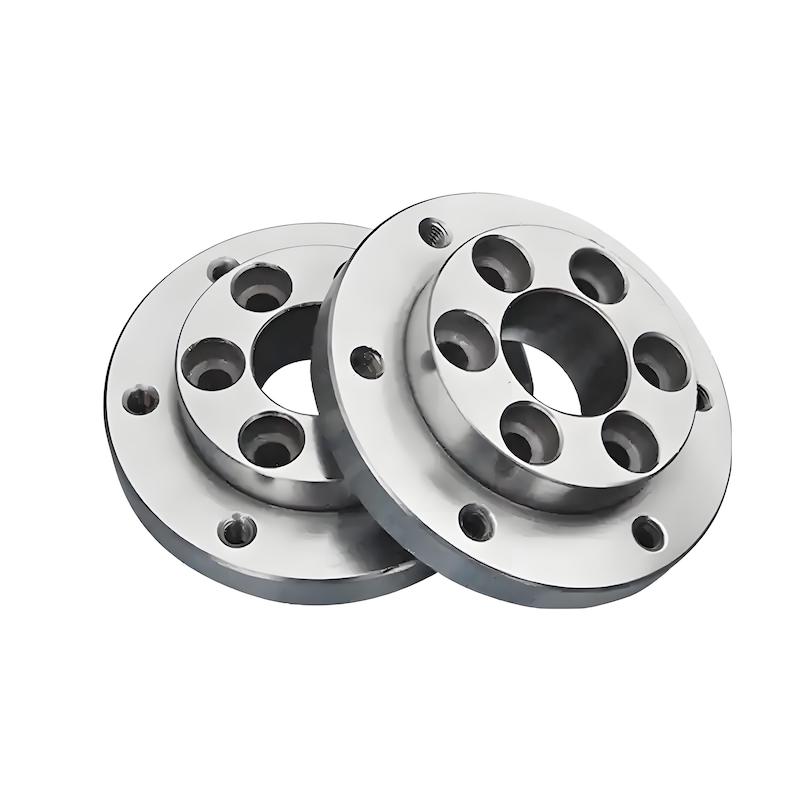
CNC Machining belongs to the wider manufacturing and precision engineering industry rather than being treated as a separate industry. It is a core process used by machine shops, contract manufacturers, and OEM suppliers to produce metal and plastic components for many sectors. In industrial classification, it usually appears under machining, metalworking, and advanced manufacturing services.
The industries that use CNC Machining most intensively include aerospace, automotive, medical devices, electronics, industrial machinery, energy, oil and gas, and defense. In these sectors, CNC Machining provides critical parts such as engine components, structural brackets, surgical tools, housings, frames, and high-precision mechanical assemblies. Any industry that needs accurate, repeatable, and durable parts can benefit from CNC Machining.
Yes, CNC Machining is particularly well suited to low-volume and medium-volume production. Because it does not always require dedicated hard tooling, setup costs are relatively low compared with molding or casting. This makes CNC Machining an efficient choice for customized products, engineering prototypes, bridge production, and spare parts, where flexibility and responsiveness are more important than very high annual volumes.
CNC Machining typically offers better mechanical properties, dimensional accuracy, and surface finish than many 3D printing processes, especially for metals and structural plastics. It produces parts from solid, fully dense materials, making them stronger and more reliable for load-bearing applications. While 3D printing excels at extremely complex internal geometries and very low volumes, CNC Machining is often preferred for functional prototypes, production parts, and components that must meet strict performance requirements.
A CNC Machining factory serving overseas OEM clients provides more than just cutting metal. It usually supports the entire process from design review and DFM analysis through material selection, CNC Machining, surface finishing, assembly, quality inspection, and export logistics. By combining CNC Machining with sheet metal fabrication, 3D printing, and mold production, the factory can deliver complete mechanical solutions, reduce lead times, and help international customers manage projects efficiently and cost-effectively.

