
Views: 222 Author: Amanda Publish Time: 2026-01-22 Origin: Site


Content Menu
● What FDM Means in Rapid Prototyping
● Why FDM Is Popular in Rapid Prototyping
● FDM vs Other Rapid Prototyping Methods
● Common FDM Materials for Rapid Prototyping
● Industrial Applications of FDM Rapid Prototyping
● Integrating FDM with CNC and Other Services
● Design Guidelines for FDM Rapid Prototyping
● Advantages and Limitations of FDM in Rapid Prototyping
● When to Choose FDM for Your Project
● FAQ About FDM in Rapid Prototyping
>> 1. What does FDM stand for in Rapid Prototyping?
>> 2. Why is FDM important for Rapid Prototyping?
>> 3. Which materials are commonly used in FDM Rapid Prototyping?
>> 4. How accurate is FDM compared with other Rapid Prototyping methods?
>> 5. Can FDM be used for production, not just Rapid Prototyping?
FDM stands for Fused Deposition Modeling, one of the most widely used 3D printing technologies in modern Rapid Prototyping workflows for functional plastic parts. In Rapid Prototyping, FDM helps product teams turn digital CAD designs into tangible models quickly, cost‑effectively, and with engineering‑grade thermoplastic materials.
Fused Deposition Modeling has become a cornerstone technology in Rapid Prototyping because it shortens product development cycles and reduces risk before committing to expensive tooling. By integrating FDM with services such as CNC machining, turning, sheet‑metal fabrication, and molding, manufacturers can support overseas OEM brands, wholesalers, and production partners more flexibly and efficiently.
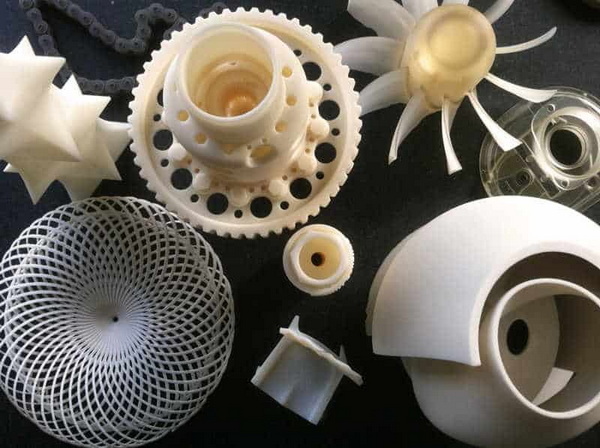
Fused Deposition Modeling is an additive manufacturing process in which thermoplastic filament is melted and deposited layer by layer to create a part directly from a CAD file. In Rapid Prototyping, FDM belongs to the material‑extrusion family and is especially popular because it balances speed, cost, and part durability for design validation and low‑volume production.
In everyday Rapid Prototyping projects, FDM is used to test form, fit, and function before investing in hard tooling such as injection molds or large CNC machining programs. It allows engineers and OEM partners to iterate multiple design versions in days instead of the weeks typical of traditional prototyping methods.
FDM also makes it easier to involve multiple stakeholders—designers, engineers, marketers, and end customers—because Rapid Prototyping parts can be produced quickly for review. This early feedback helps optimize ergonomics, assembly, and performance before scaling up to precision machining or mass production.
FDM Rapid Prototyping starts with a 3D CAD model that is exported to a file format such as STL and loaded into slicing software. The slicer converts the model into thin layers, generates support structures where necessary, and produces machine instructions (commonly G‑code) for the printer.
During the FDM process, thermoplastic filament (for example ABS, PLA, PETG, or PEI) is fed into a heated nozzle, melted, and precisely extruded along a programmed path on a build platform. The printer lays down thin strands of molten material that cool and fuse to the previous layer, gradually building the prototype in the Z‑direction until the part is complete.
After printing, Rapid Prototyping teams remove support structures and perform light finishing such as sanding, drilling, tapping, or coating to achieve the required look and feel. Depending on the requirements, post‑processing may also include vapor smoothing, painting, or assembly with metal and CNC‑machined components.
In a professional Rapid Prototyping factory environment, multiple FDM printers can run in parallel, allowing dozens of different prototypes to be produced for various OEM clients at the same time. This scalability makes FDM especially attractive for international customers who need frequent design updates and parallel development of multiple product lines.
FDM is widely adopted in Rapid Prototyping because it offers low machine and material costs, making it accessible for early‑stage concept models and continuous design iteration. Many entry‑level and industrial FDM systems are straightforward to operate, so teams can move from CAD to physical prototypes with minimal setup.
Another key advantage in Rapid Prototyping is that FDM uses engineering thermoplastics with mechanical properties similar to injection‑molded parts. This allows teams to test real‑world functionality, including snap‑fits, hinges, brackets, and housings under realistic loading and environmental conditions.
Since FDM is additive and deposits only the required material, Rapid Prototyping runs generate less waste compared with subtractive processes such as traditional milling. Material efficiency and simplified setup reduce overall project cost, especially when producing multiple design iterations or variant versions for different markets.
For overseas OEM and brand customers working with a Chinese Rapid Prototyping supplier, FDM offers an attractive combination of speed, cost control, and predictable quality. It allows customers to validate design intent and assembly with international shipping of prototype batches while final production planning continues in parallel.
In Rapid Prototyping, FDM competes with other additive and subtractive technologies such as SLA (stereolithography), SLS (selective laser sintering), CNC machining, vacuum casting, and sheet‑metal prototyping. Each process has distinct strengths in terms of surface finish, accuracy, material range, and production scalability.
For many early‑stage Rapid Prototyping projects, FDM is chosen for its low cost and robustness, while SLA may be preferred for very fine details and smooth cosmetic surfaces. SLS is valuable where complex geometries and higher strength are required without support structures, especially for functional nylon components.
When prototypes need to be produced in metals or high‑precision machined plastics, CNC machining and turning become complementary options within a broader Rapid Prototyping strategy. Sheet‑metal fabrication is often used for enclosures, brackets, and structural components, while mold manufacturing supports bridge tooling and mass production.
By combining FDM Rapid Prototyping with CNC milling, turning, and molding, a manufacturing partner can provide full‑stack support from concept verification to pilot runs and small‑batch production. This integrated approach reduces the number of suppliers a customer needs to manage and shortens communication paths between design and manufacturing.
FDM Rapid Prototyping typically relies on thermoplastic filaments supplied on spools and fed into the printer's extrusion system. Common choices include ABS for balanced strength and temperature resistance, PLA for easy printing and cosmetic prototypes, and PETG for improved toughness and chemical resistance.
Industrial FDM Rapid Prototyping systems can process advanced materials such as polycarbonate, nylon‑based blends, and high‑performance thermoplastics like PEI and PEEK (on specialized platforms). These materials enable high‑strength, high‑temperature prototypes that approach end‑use performance in demanding environments.
With careful Rapid Prototyping material selection, teams can match the application requirements:
- Concept models: PLA or low‑cost materials for shape and visual review.
- Functional prototypes: ABS, PETG, and engineering‑grade thermoplastics for impact resistance and durability.
- Tooling and fixtures: High‑temperature or fiber‑reinforced materials for dimensional stability and stiffness.
In addition, color and filament type can be chosen to simulate the final appearance of a product, making FDM Rapid Prototyping helpful for marketing samples and trade‑show presentations.
In aerospace Rapid Prototyping, FDM is used to build lightweight ducts, enclosures, and mounting brackets that help test assembly and airflow before committing to full‑scale production. Engineers can verify clearances, cable routing, and ergonomics using FDM Rapid Prototyping parts that are robust enough to handle repeated installations.
Automotive and consumer‑electronics brands rely on FDM Rapid Prototyping for assembly tools, custom fixtures, and ergonomic mock‑ups that support faster line setup and product launches. Jigs, gauges, and positioning tools printed with FDM significantly reduce the cost and lead time compared with fully machined equivalents.
Medical device teams apply FDM Rapid Prototyping to jigs, prosthetic trials, and anatomical models that shorten development time and improve clinician feedback. Educational and research institutions also use FDM Rapid Prototyping to explore new design concepts, test engineering hypotheses, and teach students about manufacturability and design for assembly.
For overseas OEM customers working with a dedicated Rapid Prototyping and precision manufacturing factory, FDM provides a flexible platform for low‑risk experimentation. Customers can request multiple versions of a design, evaluate them on‑site, and then instruct the manufacturing partner to move directly into CNC machining or small‑batch molding once the design is locked.
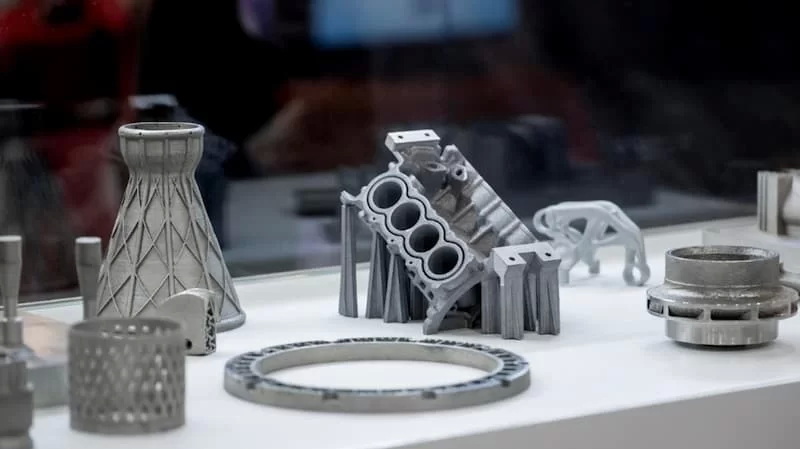
In many professional environments, FDM is one of several Rapid Prototyping tools alongside CNC machining, turning, sheet‑metal fabrication, and mold making. Additive Rapid Prototyping with FDM is ideal for fast design validation, while subtractive processes provide tighter tolerances and production‑grade metals for later stages.
A typical Rapid Prototyping workflow may start with FDM concept models, move to precision CNC‑machined prototypes, and finally transition to injection molding or small‑batch production. For example, a product may first be realized as an FDM Rapid Prototyping part for ergonomic testing, then as a CNC‑machined aluminum prototype for performance testing, and finally as an injection‑molded component for production.
This integrated Rapid Prototyping approach gives OEM customers flexibility in cost, speed, and performance as designs mature. It also allows manufacturers to advise customers on the most suitable combination of FDM, machining, turning, and molding to meet project timelines and quality targets.
For a Chinese factory providing Rapid Prototyping, CNC machining, precision batch production, turning, sheet‑metal fabrication, 3D printing, and mold production, FDM is the natural entry point for many projects. Once Rapid Prototyping has confirmed the design, the same team can seamlessly transition to high‑precision machining and serial manufacturing with full process control.
To take full advantage of FDM in Rapid Prototyping, designers should follow a few practical guidelines:
- Respect minimum wall thickness and feature size to ensure stable printing and adequate part strength.
- Use fillets, chamfers, and gradual transitions instead of sharp corners to reduce stress concentration and improve durability.
- Orient parts on the build platform to balance surface quality, mechanical strength, and support volume.
Rapid Prototyping often involves many iterations, so simple design tweaks can have a big impact on cost and lead time. Designers can collaborate with the Rapid Prototyping factory to optimize parts for FDM while keeping an eye on later processes such as CNC machining or molding.
When a part is intended to move from Rapid Prototyping to mass production, designing with manufacturing constraints in mind (for example draft angles for molding or tool access for machining) prevents costly redesigns. FDM Rapid Prototyping can then be used as a practical preview of the final manufacturable design rather than a one‑off experimental model.
Like any Rapid Prototyping method, FDM has both strengths and limitations that should be considered during process selection.
Key advantages in Rapid Prototyping include:
- Relatively low capital and material cost.
- Ability to use engineering‑grade thermoplastics similar to final production materials.
- Fast turnaround and suitability for producing multiple design variants.
Typical limitations in Rapid Prototyping include:
- Visible layer lines and a more textured surface than resin‑based methods.
- Lower resolution for very small features compared with SLA or high‑end industrial technologies.
- Anisotropic mechanical properties, with strength depending on layer orientation and bonding.
A professional Rapid Prototyping partner will help customers understand when FDM is ideal and when other processes such as SLA, SLS, CNC machining, or sheet‑metal fabrication may deliver better results. Often, the best solution is a hybrid Rapid Prototyping strategy that uses FDM alongside other technologies.
FDM is an excellent choice in Rapid Prototyping when:
- The priority is fast, cost‑effective functional testing rather than showroom‑grade appearance.
- The prototype needs to withstand mechanical loads, assembly operations, or moderate temperatures.
- Multiple iterations are expected, and design changes will be frequent in early development.
If the project demands very smooth cosmetic surfaces, ultra‑fine details, or transparent components, other Rapid Prototyping methods may be more appropriate. However, even in those cases, FDM Rapid Prototyping can be used for fixture design, assembly tools, and internal prototypes that support the main product development effort.
For OEM and brand customers who want a single partner to handle concept through production, choosing a factory that combines FDM Rapid Prototyping with CNC machining, turning, sheet‑metal manufacturing, and mold making provides maximum flexibility. FDM helps de‑risk early design decisions, while the other processes ensure that the final product meets performance and quality expectations.
FDM stands for Fused Deposition Modeling and is a cornerstone of modern Rapid Prototyping because it converts digital CAD designs into robust plastic parts using an efficient, layer‑by‑layer material‑extrusion process. By combining low cost, readily available thermoplastic filaments, and highly automated operation, FDM Rapid Prototyping enables faster design iteration, functional testing, and support tooling across industries from aerospace to consumer products.
When integrated with CNC machining, turning, sheet‑metal fabrication, and mold manufacturing, FDM Rapid Prototyping provides OEM brands, wholesalers, and manufacturers with a flexible, scalable path from concept to production‑ready components. Working with a professional Rapid Prototyping factory that offers FDM alongside traditional precision manufacturing ensures that each stage of product development uses the most suitable process for cost, speed, and quality.
Contact us to get more information!
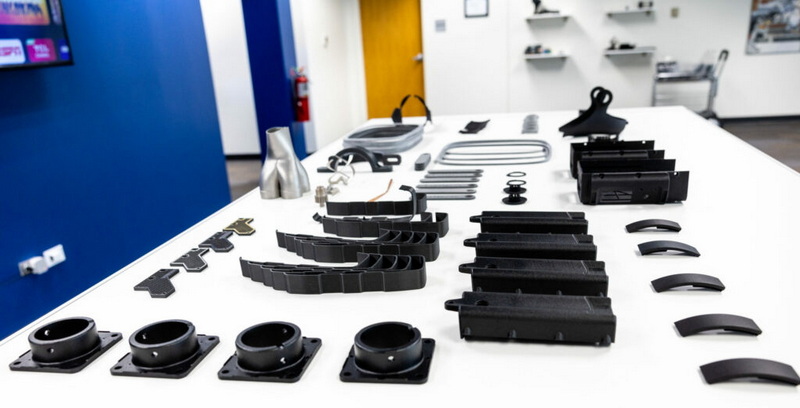
FDM stands for Fused Deposition Modeling, a material‑extrusion 3D printing process widely used in Rapid Prototyping for plastic parts. It builds prototypes by melting and depositing thermoplastic filament layer by layer to form a solid object directly from a 3D CAD design.
FDM is important in Rapid Prototyping because it offers a fast, affordable way to validate designs without investing in expensive tooling, especially in early development stages. It produces durable thermoplastic parts that allow teams to test fit, function, assembly, and ergonomics before moving to more costly manufacturing routes.
Typical FDM Rapid Prototyping materials include ABS, PLA, PETG, and various engineering‑grade thermoplastics such as polycarbonate or PEI, supplied as spooled filament. These materials offer different combinations of stiffness, toughness, and temperature resistance, letting Rapid Prototyping teams choose the best option for concept models, functional parts, or tooling.
FDM Rapid Prototyping delivers good dimensional accuracy suitable for many functional prototypes, fixtures, and low‑volume parts. However, processes such as SLA can achieve finer details and smoother surfaces, so Rapid Prototyping projects often combine FDM with other technologies when extremely high cosmetic quality or tiny features are required.
Industrial FDM systems can support low‑volume production when Rapid Prototyping results show that the design and material meet performance targets. In many cases, the same FDM Rapid Prototyping setup used for early prototypes can be scaled to produce short runs of end‑use parts, jigs, and fixtures, especially when flexibility and quick design updates are more important than very high production volumes.
1. https://www.hubs.com/knowledge-base/what-is-fdm-3d-printing/
2. https://avidpd.com/fused-deposition-modeling/
3. https://www.3dpartsunlimited.com/capability/fused-deposition-modeling-fdm/
4. https://prototal.co.uk/blog/fused-deposition-modelling-process/
5. https://fathommfg.com/capabilities/3d-printing-services/fdm-printing/
6. https://formlabs.com/blog/ultimate-guide-to-rapid-prototyping/
7. https://en.wikipedia.org/wiki/Rapid_prototyping
8. https://protoshopinc.com/blog/understanding-rapid-prototyping/
9. https://www.autodesk.com/solutions/rapid-prototyping
10. https://www.xometry.com/resources/3d-printing/what-is-rapid-prototyping-in-3d-printing/
11. https://xometry.pro/en/articles/3d-printing-fdm-overview/
12. https://mizaradditive.com/en/the-fused-deposition-modeling-process/
13. https://www.hlhprototypes.com/advantages-and-uses-of-fdm-rapid-prototyping/
14. https://www.sofeast.com/resources/materials-processes/3d-printing-rapid-prototyping/
15. https://www.protolabs.com/services/3d-printing/fused-deposition-modeling/

