
Views: 222 Author: Amanda Publish Time: 2026-01-22 Origin: Site


Content Menu
● Why Rapid Prototyping Matters
● Core Technologies in Rapid Prototyping
>> CNC Machining in Rapid Prototyping
>> Lathe Turning for Functional Parts
>> Sheet Metal Fabrication in Rapid Prototyping
>> 3D Printing and Additive Manufacturing
>> Tooling and Molds for Pre‑Production
● The Rapid Prototyping Workflow
>> Process Selection and Quoting
>> Manufacturing and In‑Process Checks
>> Post‑Processing and Finishing
>> Testing, Feedback, and Iteration
● Benefits of Rapid Prototyping for OEMs
● Rapid Prototyping vs Traditional Methods
● Common Applications of Rapid Prototyping
● Leveraging Rapid Prototyping with Integrated Services
● Rapid Prototyping and Design for Manufacturability
● Rapid Prototyping and Quality Assurance
● Rapid Prototyping for International OEM Collaboration
>> 1. What is rapid prototyping in manufacturing?
>> 2. How is rapid prototyping different from 3D printing?
>> 3. When should an OEM use rapid prototyping?
>> 4. Which materials can be used in rapid prototyping?
>> 5. How does rapid prototyping reduce project risk?
Rapid prototyping is a fast, technology‑driven way to turn 3D designs into physical parts so engineers can test, refine, and prepare products for mass production in days instead of months. For manufacturers and OEM partners, Rapid Prototyping is the bridge that connects digital ideas with reliable, scalable production parts.
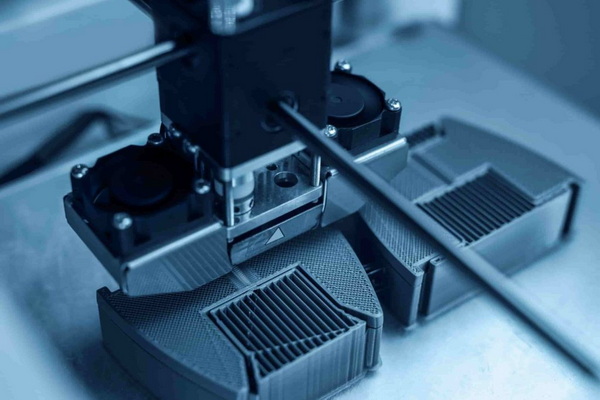
Rapid prototyping is a group of techniques used to quickly fabricate a physical part or assembly from 3D CAD data, often using 3D printing, CNC machining, or other digital manufacturing processes. In manufacturing, rapid prototyping focuses on building parts that closely match final production geometry so that form, fit, and function can be evaluated early.
Rapid prototyping allows multiple design iterations to be produced in a short time, incorporating feedback from engineers, customers, and end users. This iterative approach significantly reduces risk, improves product quality, and shortens time‑to‑market compared with traditional methods.
Rapid prototyping reduces the time needed to move from concept to production‑ready design by enabling fast, repeated testing. It minimizes costly late‑stage changes because most design issues are discovered and resolved while parts are still easy to adjust.
For OEMs and international brands, rapid prototyping is especially critical when launching new products into competitive markets. A well‑run rapid prototyping process helps align engineering, marketing, and manufacturing teams around tangible proof‑of‑concept and pre‑production parts.
Rapid prototyping also supports better communication within global supply chains. Engineers can quickly share clear, physical references with purchasing teams and overseas factories, reducing misunderstandings that may arise from drawings or text alone.
Rapid prototyping is not a single technology but a toolbox of complementary processes. Each method has different strengths in terms of speed, cost, material properties, and dimensional accuracy, and choosing the right one is essential to a successful project.
CNC machining for rapid prototyping uses computer‑controlled tools to cut parts from solid metal or plastic, providing excellent dimensional accuracy and surface finish. It is ideal when prototypes need to perform like real production parts under mechanical loads, temperature, or wear.
For rapid prototyping, CNC milling handles complex 3D geometries, and CNC turning is used for shafts, bushings, and other rotational components. Because CNC machining does not require dedicated molds, it is efficient for low‑volume prototypes, engineering validation builds, and bridge production before full tooling is ready.
CNC‑based rapid prototyping is also valuable for precision parts that must meet tight tolerances, such as mechanical interfaces, bearing seats, or sealing surfaces. When combined with professional inspection, rapid prototyping via CNC machining helps ensure that parts will behave predictably once the product enters mass production.
CNC turning (lathe turning) is widely used in rapid prototyping for cylindrical parts such as connectors, fasteners, spacers, and precision pins. These parts often require tight tolerances and smooth surfaces, which are natural strengths of turning processes.
When a rapid prototyping project includes both prismatic and rotational features, combining CNC milling and turning in one workflow ensures consistent quality across all mating parts. This integrated approach helps validate assemblies, confirm runout and concentricity, and reduce risk before committing to full‑scale production tooling.
Lathe‑based rapid prototyping is also useful for developing custom shafts, couplings, and threaded components used in automation equipment, robotics, and industrial machinery. With quick setup and flexible programming, multiple design variations can be produced and compared in a short time.
Sheet metal rapid prototyping uses cutting, bending, and forming to produce enclosures, brackets, chassis, and structural frames quickly. Laser cutting and automated bending enable prototype sheet metal parts to be produced with high accuracy in very short lead times.
Because sheet metal rapid prototyping can include welding, fasteners, and surface finishing, it is highly suitable for creating production‑like assemblies for functional tests and certification trials. This allows design teams to verify stiffness, assembly sequence, and ease of installation early in the development cycle.
Sheet metal rapid prototyping is particularly important for products such as control cabinets, racks, mechanical housings, and protective guards. Design changes to hole patterns, cutouts, ventilation slots, and mounting features can be implemented rapidly, allowing engineers to refine both performance and usability.
3D printing is one of the most recognized technologies in rapid prototyping, building parts layer by layer directly from CAD models. It excels at fast concept models, complex internal geometries, and lightweight structures that would be difficult or impossible with conventional machining.
For rapid prototyping, additive manufacturing supports plastics, resins, and metals, giving designers flexibility to choose between visual models and functional components. It is particularly effective in the early stages of rapid prototyping when many design variations must be evaluated quickly or when lattice structures, organic shapes, or weight‑optimized parts are required.
Beyond concept models, industrial 3D printing can deliver high‑performance prototypes used in wind tunnel tests, ergonomic trials, and low‑volume end‑use applications. As part of a complete rapid prototyping strategy, 3D printing complements CNC and sheet metal processes rather than replacing them.
While rapid prototyping typically avoids traditional long‑lead tooling, soft tooling and rapid molds can be created to simulate injection‑molded or die‑cast parts. These rapid prototyping molds are cost‑effective for small batches and can validate part geometry, mold flow, and assembly behavior before investing in hardened production tools.
When an OEM plans high‑volume manufacturing, combining rapid prototyping parts with early‑stage molds provides a more realistic view of manufacturing challenges. This helps refine gate locations, wall thicknesses, and draft angles in parallel with functional testing, shortening the time between design freeze and stable mass production.
Rapid prototyping with soft tooling is especially attractive for market testing and pilot runs. Companies can produce small batches of near‑final parts for beta users, trade shows, and early sales without committing to expensive long‑life tooling.
Although each project is unique, most rapid prototyping workflows follow a similar structure. Understanding these steps helps brands and buyers work efficiently with their manufacturing partners and get the maximum value from rapid prototyping.
The process begins with CAD design, where engineers create a 3D model representing the intended geometry and key functional features. During this stage, design for manufacturability is considered to ensure the model is suitable for rapid prototyping via CNC machining, sheet metal fabrication, or 3D printing.
CAD files are then exported in formats such as STEP, IGES, or STL for downstream processing in CAM or slicing software. Clear dimensional tolerances, critical features, and material specifications at this stage help avoid rework later in the rapid prototyping cycle.
Next, the engineering and sourcing teams choose which rapid prototyping technologies to use based on part geometry, material, and target lead time. For example, simple prismatic metal parts may be best suited to CNC machining, while complex internal channels might favor 3D printing or combined processes.
Digital manufacturing platforms and experienced suppliers can quickly generate quotes, lead times, and manufacturability feedback for rapid prototyping orders. This allows customers to balance cost, speed, and performance when planning their prototype builds and project milestones.
Once the order is confirmed, CNC programs, laser cutting paths, or print files are generated from the CAD model. During manufacturing, in‑process inspections verify critical dimensions and ensure that rapid prototyping parts stay within tolerance.
For sheet metal projects, bend sequences, tooling selection, and fixture design are validated to maintain accuracy across each rapid prototyping batch. For machined parts, tool wear, surface roughness, and material behavior are monitored closely to ensure stable quality throughout the build.
After the initial build, rapid prototyping often includes deburring, polishing, heat treatment, coating, or painting to simulate final product appearance and performance. These finishing steps help OEMs evaluate aesthetics, corrosion resistance, and assembly compatibility.
For 3D printed parts, post‑processing may involve support removal, UV curing, or infiltration to improve strength and surface quality. High‑quality surface finishes in rapid prototyping make it easier to carry prototypes into marketing, photography, customer demonstrations, and investor presentations.
Completed rapid prototyping parts are tested for fit, function, and reliability, either in isolation or within a larger assembly. Test data and user feedback are then used to update the CAD model and generate improved prototype iterations.
This loop of prototyping, testing, and refinement continues until the design meets all technical, regulatory, and commercial requirements. When the design is frozen, rapid prototyping transitions into tooling, pilot runs, and full‑scale production while maintaining the same focus on quality and repeatability.
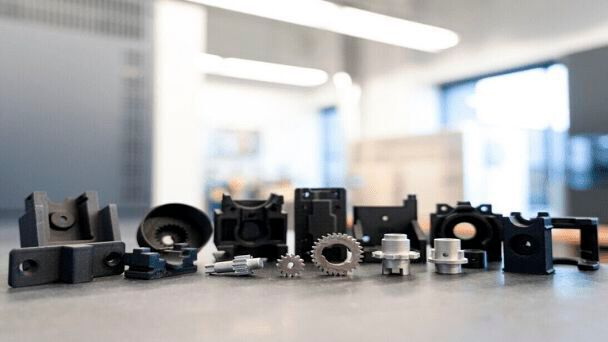
Rapid prototyping delivers multiple tangible advantages for international brands, wholesalers, and manufacturers.
- Faster time‑to‑market because physical prototypes can be produced within days instead of weeks or months.
- Lower development cost since design flaws are identified early and do not propagate into production tooling.
- Better communication: engineers, managers, and customers can all review and handle real parts, not just digital models.
- Design freedom in rapid prototyping, especially with 3D printing, supports complex geometries and weight‑optimized structures.
- Flexible low‑volume production using CNC machining and sheet metal fabrication allows OEMs to bridge the gap between prototype and mass production.
Rapid prototyping also supports more informed decision‑making. Because teams can test realistic parts under real‑world conditions, they can select materials, finishes, and design features based on measured performance instead of assumptions.
Traditional product development relied heavily on manual machining, hard tooling, and long feedback cycles. Rapid prototyping replaces many of these steps with digital, automated workflows and agile iteration.
In a traditional approach, teams might design a product, build expensive tooling, and only then discover that certain features are difficult to assemble or fail under load. Rapid prototyping encourages multiple rounds of learning before large investments are made, significantly reducing financial and technical risk.
With rapid prototyping, design modifications can be implemented quickly, and small batches of updated parts can be produced in parallel with ongoing tests. This makes it easier to respond to market feedback, new regulations, or evolving customer requirements without restarting the entire project.
Rapid prototyping is used across many industries that require precise, repeatable parts and short development cycles.
- Aerospace components for test rigs, brackets, housings, and airflow experiments.
- Automotive rapid prototyping for engine parts, interior trim, lighting components, and structural elements.
- Industrial equipment, including machine frames, guards, fixtures, tooling, and automation components.
- Consumer electronics enclosures, connectors, mounting hardware, and structural skeletons.
- Medical devices, where rapid prototyping supports ergonomic trials, biocompatibility assessments, and regulatory testing.
In each case, rapid prototyping helps teams validate ergonomics, durability, manufacturability, and assembly before large investments are made. It also enables incremental improvements and product refreshes that keep brands competitive.
A powerful rapid prototyping strategy depends on having access to multiple manufacturing capabilities under one roof or within one coordinated network. When CNC machining, turning, sheet metal fabrication, 3D printing, and tooling support work together, prototypes are more consistent and lead times are shorter.
For international OEM customers, this integrated rapid prototyping model simplifies purchasing, quality control, and logistics because all parts for an assembly can be manufactured, inspected, and packaged through one partner. This holistic approach aligns rapid prototyping closely with subsequent small‑batch and mass production phases.
An integrated rapid prototyping partner can also provide process suggestions at the design stage. For example, a complex part may initially be produced by 3D printing for concept validation, then moved to CNC machining or rapid tooling as the design stabilizes and functional requirements become clearer.
Design for manufacturability is an essential companion to rapid prototyping. By considering manufacturing constraints early, engineers can use rapid prototyping not only to test ideas but also to refine them toward robust, repeatable production.
Through rapid prototyping, design teams can:
- Validate wall thicknesses, fillets, and draft angles that will later be needed in molding or casting.
- Optimize assembly sequences, access for fasteners, and space for tools.
- Confirm that tolerances are realistic and aligned with the chosen production processes.
Rapid prototyping makes design for manufacturability more practical because engineers learn from real parts instead of relying solely on theoretical rules. This leads to smoother ramp‑up, fewer quality problems, and more predictable production schedules.
Quality assurance is another area where rapid prototyping plays a key role. Early prototypes can be inspected using coordinate measuring machines, optical scanners, and functional gauges to compare actual geometry against CAD models.
This data helps teams:
- Identify areas where the design is overly sensitive to minor process variation.
- Decide where tighter tolerances are truly needed and where they can be relaxed.
- Build control plans and inspection strategies before mass production begins.
By integrating quality tools into rapid prototyping, companies can create more robust designs and avoid quality surprises after launch. This results in fewer returns, higher customer satisfaction, and a stronger reputation in demanding markets.
For overseas buyers working with manufacturing partners in China and other major industrial centers, rapid prototyping is a powerful tool to build trust and transparency. Sending and reviewing physical prototypes ensures that both sides share the same understanding of requirements and standards.
Rapid prototyping can support:
- Early alignment on materials, finishes, and branding details.
- Clear communication about fit between parts supplied by different vendors.
- Progressive validation of complex assemblies before large orders are placed.
When combined with detailed reports, dimensional data, and visual documentation, rapid prototyping becomes the backbone of a long‑term strategic relationship between OEMs and their suppliers.
Rapid prototyping means more than simply making a quick mock‑up; it is a structured, technology‑driven process that transforms CAD designs into functional, testable parts with speed and precision. By combining CNC machining, lathe turning, sheet metal fabrication, 3D printing, and rapid tooling, companies can validate designs, reduce risk, and move into mass production with confidence.
For OEM brands, wholesalers, and manufacturers working with advanced factories, rapid prototyping delivers faster launches, lower development costs, and higher overall product quality. As markets become more competitive and product life cycles become shorter, a strong rapid prototyping capability becomes a core strategic advantage in global manufacturing.
Contact us to get more information!
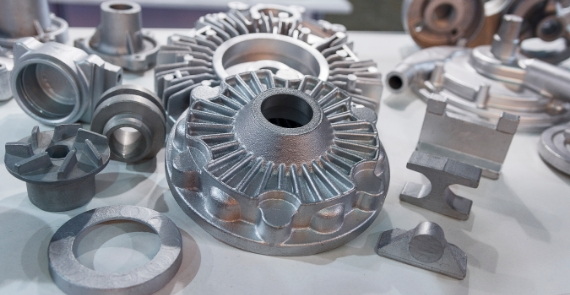
Rapid prototyping in manufacturing is the use of digital processes like CNC machining, sheet metal fabrication, and 3D printing to quickly create physical parts from CAD data for testing and validation. It focuses on achieving production‑representative form, fit, and function before committing to full tooling and large‑scale production.
3D printing is one technology within rapid prototyping, mainly using additive manufacturing to build parts layer by layer. Rapid prototyping is a broader strategy that also includes CNC machining, sheet metal fabrication, and rapid tooling so that parts can match final production requirements more closely in terms of strength, precision, and surface finish.
An OEM should use rapid prototyping whenever a new product, variant, or critical component is under development and needs to be validated quickly. It is especially valuable before investing in expensive molds or dies, or when short development cycles are essential to beat competitors to market and respond to customer feedback.
Rapid prototyping supports a wide range of materials including aluminum, steel, stainless steel, copper alloys, engineering plastics, and resin systems. Depending on the chosen process, companies can select materials that closely simulate final‑use conditions, whether structural, thermal, electrical, or aesthetic.
Rapid prototyping reduces project risk by exposing design, manufacturing, and assembly issues early, when changes are still inexpensive and fast to implement. Multiple iterations can be built and tested in quick succession, helping teams avoid costly modifications to production tooling, schedule delays, and quality problems after launch.
1. https://en.wikipedia.org/wiki/Rapid_prototyping
2. https://formlabs.com/blog/ultimate-guide-to-rapid-prototyping/
3. https://www.productplan.com/glossary/rapid-prototyping/
4. https://www.propelsoftware.com/glossary/rapid-prototyping
5. https://www.fictiv.com/articles/cnc-machining-for-prototyping
6. https://jiga.io/cnc-machining/cnc-prototyping/
7. https://www.fictiv.com/articles/sheet-metal-prototyping
8. https://www.norck.com/collections/rapid-prototyping-sheet-metal
9. https://www.interaction-design.org/literature/topics/rapid-prototyping
10. https://www.makerverse.com/resources/cnc-machining-guides/the-guide-to-cnc-machining-for-prototyping/
11. https://gtrmfg.com/rapid-sheet-metal-prototyping/
12. https://gtrmfg.com/rapid-sheet-metal-prototyping/
13. https://www.makerverse.com/resources/cnc-machining-guides/the-guide-to-cnc-machining-for-prototyping/
14. https://www.sciencedirect.com/topics/engineering/rapid-prototyping

