
Views: 222 Author: Amanda Publish Time: 2025-12-17 Origin: Site


Content Menu
● Shangchen and Rapid Prototyping Reality
● Technical Limitations of Rapid Prototyping
>> Limited material selection and properties
>> Lower accuracy, surface finish, and tolerances
>> Not always suitable for complex assemblies
● Economic Disadvantages of Rapid Prototyping
>> High equipment, material, and operational cost
>> Budget creep from uncontrolled iterations
● Process and Time-Related Drawbacks
>> Complex post-processing and finishing
● Design and Engineering Risks
>> Design illusions and incomplete engineering
>> Manufacturability gaps between prototype and production
● Organizational and Strategic Challenges
>> Need for skilled personnel and structured workflow
>> Environmental impact and waste
● Balancing Rapid Prototyping With Traditional Manufacturing
● FAQ
>> 1: What is the biggest disadvantage of rapid prototyping?
>> 2: Why can rapid prototyping increase project costs instead of reducing them?
>> 3: Is rapid prototyping suitable for mass production?
>> 4: How can OEMs reduce the risks of using rapid prototyping?
>> 5: When should a project move from rapid prototyping to CNC machining or molding?
Rapid prototyping allows product teams to build and test physical parts faster than ever before, but it is not a perfect solution for every stage of development. When used without a clear strategy, rapid prototyping can hide serious technical risks, increase project costs, and complicate the transition from prototype to mass production.
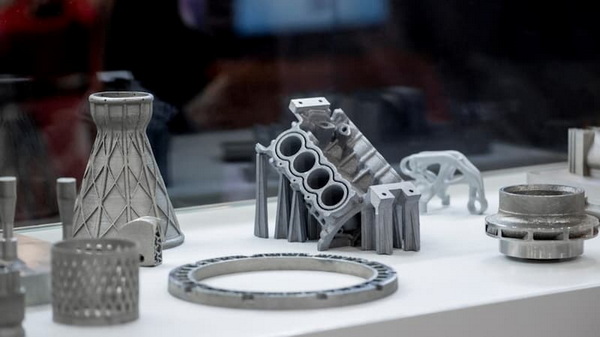
For OEM clients who depend on precise CNC machining, sheet metal fabrication, turning, 3D printing, and mold production, rapid prototyping should be treated as one tool in a complete toolbox, not as a replacement for proper engineering and industrialization. Understanding these disadvantages helps you choose when rapid prototyping is appropriate and when traditional methods are more reliable.
Shangchen (sc-rapidmanufacturing.com) is a China-based factory focused on rapid prototyping, CNC machining services, precision batch production, turning, sheet metal manufacturing, 3D printing services, and mold production for international customers. By working with both early prototypes and full-scale production, Shangchen sees how decisions made during rapid prototyping directly affect costs, quality, and delivery performance later.
From this practical viewpoint, rapid prototyping is most powerful when it is integrated with manufacturing knowledge from the very beginning. Instead of producing “beautiful but unrealistic” models, a smart rapid prototyping workflow creates parts that reflect real materials, realistic tolerances, and manufacturable geometries whenever possible.
One major disadvantage of rapid prototyping is that material options are often more limited than in full production. Many rapid prototyping processes use specific resins, powders, or plastics that do not match the mechanical, thermal, or chemical performance of production-grade engineering materials.
This means a rapid prototyping part that looks perfect on the outside may behave very differently under real loads, high temperatures, or long-term use. If design decisions are based only on rapid prototyping samples, teams may underestimate stress, fatigue, or wear problems that appear later when the product is manufactured in metal or tougher plastics.
To reduce this risk, experienced suppliers like Shangchen will recommend when to switch from early rapid prototyping materials to CNC-machined prototypes using production-equivalent alloys or engineering plastics, especially for safety-critical or high-load components.
Another key disadvantage of rapid prototyping is limited dimensional accuracy and surface quality compared with high-precision CNC machining or molding. Layer-by-layer processes often create visible lines, small deviations, or warping that affect the final dimensions of the part.
For concept reviews, this is usually acceptable. However, for tight assemblies, sealing surfaces, or high-precision mechanisms, small deviations can cause misalignment, leaks, noise, or premature wear. A rapid prototyping part may appear to fit during early tests, yet fail once parts are produced in volume with tighter, more consistent tolerances.
For precision-fit components, Shangchen often combines rapid prototyping with secondary CNC machining or grinding on critical surfaces. This hybrid approach preserves the speed of rapid prototyping while achieving the accuracy needed for serious functional tests.
Rapid prototyping works very well for single parts, such as housings, covers, ergonomic handles, or simple brackets. However, once a product includes complex assemblies with many moving parts, the limitations of rapid prototyping become more obvious.
Assemblies that depend on exact fits, bearing seats, gear meshes, and tight clearances are sensitive to even small dimensional errors. If every component in an assembly is produced using rapid prototyping, tolerance stack-up can cause binding, vibration, or excessive play that does not accurately represent a properly machined or molded product.
The best practice here is to use rapid prototyping for low-risk cosmetic or ergonomic pieces and rely on CNC-machined components for the most critical mechanical features. A partner like Shangchen can help you decide which parts are safe for rapid prototyping and which should be made with higher-precision processes during validation.
Even though rapid prototyping can save time, it does not automatically save money. Industrial-grade 3D printers and related equipment are expensive, and the specialized powders or resins they consume can be significantly more costly per kilogram than standard production materials.
Running a professional rapid prototyping setup also requires trained engineers, technicians, and maintenance staff. If machines are not fully utilized, the cost per part rises even further. Many companies discover that in-house rapid prototyping becomes a hidden cost center when they consider equipment amortization, labor, and material waste.
Outsourcing rapid prototyping to a factory like Shangchen helps reduce fixed investment, but it is still important to manage design changes and avoid unnecessary iterations, because every new version adds material, machine, and labor cost.
Rapid prototyping makes it easy to try new ideas, but this convenience can encourage teams to iterate endlessly on small details. Designers may repeatedly adjust cosmetic features such as fillets, textures, or logos simply because it is so easy to print another sample.
This behavior often pushes back key decisions on the core structure, functional performance, or manufacturability of the product. While each rapid prototyping iteration seems cheap, the total cost of dozens of small changes—data preparation, build time, finishing, and review—can consume a large portion of the development budget.
To protect budgets, it is important to define clear targets for each rapid prototyping round and to limit the number of iterations per project phase. A disciplined partner like Shangchen can help your team focus on solving real engineering risks rather than chasing endless cosmetic perfection.
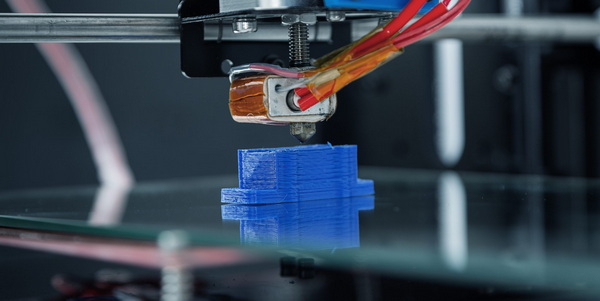
Rapid prototyping is ideal for one-off parts or small batches but becomes inefficient when you need hundreds or thousands of pieces. Printing time scales roughly with the total volume and complexity of the parts, and each build may require several hours or days.
For higher quantities, traditional methods such as injection molding, die casting, or multi-axis CNC machining offer much faster cycle times per part once tooling and fixtures are in place. If companies try to rely on rapid prototyping to produce medium or large batches, they may face long lead times, machine bottlenecks, and high per-unit costs.
The practical approach is to use rapid prototyping to validate designs quickly, then move into soft tooling, bridge tooling, or direct machining for pilot runs and early production. Shangchen can guide this transition by planning rapid prototyping, CNC machining, and mold production as a coordinated sequence instead of isolated steps.
Many rapid prototyping parts require additional operations such as support removal, sanding, polishing, painting, or heat treatment before they are suitable for customer reviews or functional tests. These finishing steps are often manual, time-consuming, and require careful quality control.
As project volumes grow, post-processing can become a serious bottleneck. If finishing processes are not standardized, different samples may show inconsistent color, texture, or dimensional accuracy, which confuses stakeholders and damages confidence in the prototype.
An experienced supplier sets clear work instructions and quality expectations for each rapid prototyping project. At Shangchen, rapid prototyping parts can be combined with in-house CNC finishing, painting, and inspection so that each iteration is representative of how the final product will look and feel.
A very polished rapid prototyping model can create a strong psychological effect: because it looks like a finished product, decision-makers may assume the design is fully engineered. In reality, many important questions—such as long-term durability, thermal behavior, manufacturing tolerances, or assembly sequence—may still be unresolved.
When teams fall in love with a good-looking rapid prototyping model, they sometimes skip deeper analysis, simulation, or physical testing needed to understand how the product will perform over time. This can lead to expensive redesigns later, once real-world problems appear in pilot production or field use.
To avoid this trap, rapid prototyping should be paired with systematic engineering activities such as FEA, DFM/DFX reviews, and structured validation plans. A factory like Shangchen can provide early feedback on machining, forming, and molding constraints that a simple rapid prototyping model cannot reveal by itself.
Because rapid prototyping processes often support complex geometries easily, designers may create shapes that are difficult or impossible to reproduce with mainstream production methods. Thin walls, undercuts, sharp internal corners, and unsupported features that are simple to print may require extremely complex tooling or cannot be machined at all.
When the project eventually moves from rapid prototyping to real tooling, large design changes may be required. These changes trigger new validation rounds, new samples, and new approval processes, adding time and cost just when the team expects to finalize the design.
Working with a manufacturer that understands both rapid prototyping and production, such as Shangchen, helps close this gap. During early stages, engineers can review models for CNC machinability, sheet metal formability, and molding feasibility, and adjust the rapid prototyping design so that it remains compatible with later processes.
A rapid prototyping operation requires more than just equipment. It needs engineers who understand materials, manufacturing constraints, digital file preparation, and quality standards. Without skilled people and structured workflows, rapid prototyping may produce attractive but misleading models.
In many companies, rapid prototyping laboratories become overloaded because every department wants quick samples. Without clear rules for prioritization, documentation, and design version control, this overload can slow down urgent projects and create confusion about which version of a prototype is the latest.
By outsourcing rapid prototyping and related machining or fabrication to a dedicated partner like Shangchen, OEM customers can access ready-made expertise, capacity, and project management. This reduces the pressure on internal teams and helps maintain better control over versions, timelines, and quality.
Although some rapid prototyping processes are relatively efficient, they still generate waste in the form of support structures, failed prints, unused powder, and consumables like filters or cleaning agents. If not managed properly, this waste can increase environmental impact and handling costs.
Frequent design changes mean that many rapid prototyping models quickly become obsolete and are discarded. When multiplied across multiple projects, this represents a significant material and energy footprint. Companies that care about sustainability must consider how rapid prototyping fits into broader environmental goals.
Shangchen can help customers minimize waste by optimizing build orientation, sharing material between compatible jobs, and recommending design changes that reduce unnecessary volume or support structures. Combining rapid prototyping with efficient CNC machining, sheet metal fabrication, and tooling can further improve overall resource use.
A practical way to manage the disadvantages of rapid prototyping is to treat it as an accelerator within a complete manufacturing strategy rather than a standalone solution. Early concept models, simple functional tests, and ergonomic studies can all benefit from rapid prototyping speed and design freedom.
As the design matures, the development flow should gradually shift toward processes that more closely represent final manufacturing, such as CNC machining of key components, low-volume molding, and precision sheet metal work. This staged approach allows teams to keep learning fast while progressively reducing technical and economic risk.
Because Shangchen offers rapid prototyping, CNC machining, turning, sheet metal fabrication, and mold making under one roof, project teams can move step by step from fast concepts to production-ready solutions without changing suppliers. This integrated path simplifies communication, improves traceability, and reduces the chance of unpleasant surprises late in the project.
Rapid prototyping delivers impressive speed and flexibility, but it also brings disadvantages that engineers and buyers must understand clearly. Limited material choices, lower accuracy, complex post-processing, high iteration cost, and manufacturability gaps can all cause serious issues if rapid prototyping is used without planning.
By combining rapid prototyping with solid engineering practices, careful cost control, and early manufacturing input, these disadvantages can be managed effectively. An integrated partner like Shangchen (sc-rapidmanufacturing.com), with capabilities in rapid prototyping, CNC machining, sheet metal fabrication, turning, and mold production, can help OEM brands, wholesalers, and manufacturers use rapid prototyping as a powerful tool while still achieving robust, production-ready designs.
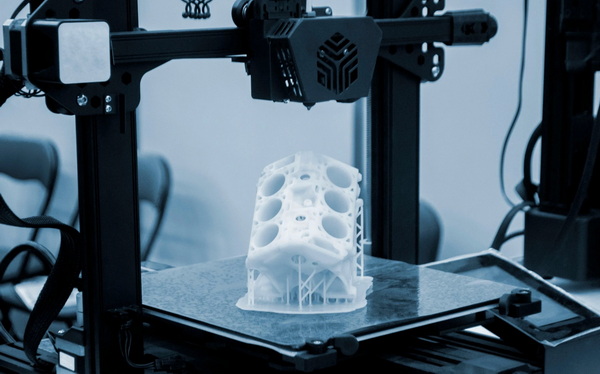
The biggest disadvantage of rapid prototyping is that many prototype parts do not accurately represent final production materials and tolerances, which can lead to incorrect conclusions about performance and durability. Teams may feel confident based on attractive prototypes while hidden engineering or manufacturing problems remain unresolved.
Rapid prototyping can increase costs when there are too many design iterations and rush orders that were never planned in the original budget. Each new prototype consumes machine time, material, and labor, so uncontrolled changes can quietly turn a fast, flexible process into an expensive habit.
Rapid prototyping is generally not suitable for mass production because per-part costs and cycle times are higher than those of processes like injection molding, die casting, or high-volume CNC machining. It is most effective for small quantities, early prototypes, and pre-production verification before investing in full tooling.
OEMs can reduce risks by involving manufacturing experts at the beginning, validating critical functions with production-equivalent materials, and limiting the number of iterations per project stage. Working with a partner that provides rapid prototyping plus CNC machining, sheet metal, and mold design helps ensure prototypes stay aligned with real production capabilities.
A project should move from rapid prototyping to CNC machining or molding when the overall design is stable, key risks are understood, and higher accuracy or larger quantities are required. At this stage, investing in tooling and fixtures typically lowers unit cost, improves repeatability, and brings the product closer to true mass-production conditions.

