
Views: 222 Author: Amanda Publish Time: 2025-11-22 Origin: Site


Content Menu
● Why Rapid Prototyping Is Crucial Today
● Main Categories of Rapid Prototyping
● Additive Manufacturing–Based Rapid Prototyping
>> Selective Laser Sintering (SLS)
>> Fused Deposition Modeling (FDM)
>> Metal 3D Printing (DMLS / SLM)
● Subtractive Manufacturing–Based Rapid Prototyping
>> CNC Turning and Lathe Prototyping
● Sheet Metal–Based Rapid Prototyping
● Vacuum Casting and Urethane Prototyping
● Rapid Tooling and Mold Prototyping
● How to Choose a Rapid Prototyping Method
● Applications of Rapid Prototyping Across Industries
● How Shangchen Supports Global OEM Rapid Prototyping
● FAQ
>> 1. What is Rapid Prototyping used for?
>> 2. Which Rapid Prototyping process should I choose?
>> 3. Can Rapid Prototyping produce end-use parts?
>> 4. How does Rapid Prototyping reduce product development time?
>> 5. What industries benefit most from Rapid Prototyping?
Rapid Prototyping is a group of modern manufacturing techniques that quickly transform 3D design data into physical parts for evaluation, testing, and small-batch production. It dramatically shortens development cycles, reduces risk, and helps companies bring better products to market faster. For OEM brands, wholesalers, and manufacturers, Rapid Prototyping is now a core capability rather than an optional extra.[3][4][7][9]
As a professional factory in China, Shangchen (sc-rapidmanufacturing.com) provides Rapid Prototyping, CNC machining, precision batch production, turning, sheet metal fabrication, 3D printing, and mold production for global OEM clients across automotive, aerospace, medical, industrial equipment, and consumer electronics industries. By combining multiple Rapid Prototyping processes, Shangchen helps customers validate designs, optimize manufacturing feasibility, and move smoothly from prototype to mass production.[1][4][5][3]
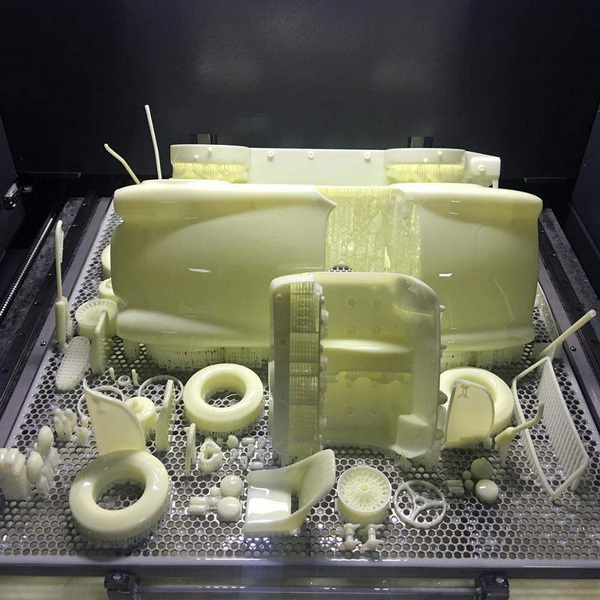
Rapid Prototyping is the use of digital manufacturing technologies—such as 3D printing, CNC machining, and rapid molding—to quickly create physical prototypes or small production runs directly from CAD models. These prototypes can be appearance models, functional parts, or pre-production samples used for testing, certification, or marketing.[4][8][9][3]
Unlike traditional processes that require fully finished tools and long setup times, Rapid Prototyping focuses on speed, flexibility, and iteration. Engineers can adjust designs after each test cycle and rapidly generate new versions, which compresses development time and greatly improves design quality.[5][6][7][4]
Modern markets demand frequent updates, customized products, and faster launch times, which makes Rapid Prototyping a strategic advantage. Companies use Rapid Prototyping to validate ergonomics, assembly, strength, heat resistance, and user experience before making costly investments in mass production tooling.[6][9][3][4]
In sectors like automotive, aerospace, medical devices, and consumer electronics, Rapid Prototyping supports early risk detection and better compliance with strict industry standards. It also enables bridge production—small batches between prototype and full mass production—to support pilot runs, market testing, and early customer deliveries.[7][1][5][6]
Rapid Prototyping covers a wide spectrum of technologies, usually divided into three main categories: additive manufacturing, subtractive manufacturing, and rapid tooling. Each category has different strengths in terms of speed, accuracy, cost, and material capability, so the ideal solution often combines several methods in one project.[9][3][4][7]
Additive methods build parts layer by layer, subtractive methods remove material from solid stock, and rapid tooling methods create temporary or pre-production tooling for processes like injection molding or casting. Shangchen integrates all three categories to provide complete Rapid Prototyping and low-volume manufacturing solutions for global OEM customers.[8][1][3][5]
Additive manufacturing is the most iconic form of Rapid Prototyping and includes several major 3D printing processes. It is especially powerful for complex geometries, internal channels, lightweight lattice structures, and one-off or customized components.[3][6][8][9]
These processes read CAD data, slice it into thin layers, and create the part layer by layer using resin, powder, or filament. The key benefit for Rapid Prototyping is design freedom: engineers can focus on function and performance rather than tooling constraints.[4][6][9][3]
Stereolithography (SLA) uses a UV laser to selectively cure layers of liquid photopolymer resin, producing very accurate parts with fine details and smooth surfaces. It is widely used for visual models, high-detail housings, dental components, and master patterns for silicone molds.[5][8][9][3]
SLA Rapid Prototyping is valuable when appearance, small features, and dimensional accuracy are critical but mechanical loads are moderate. It also supports transparent or translucent parts, which are useful for fluid-flow visualization, lighting components, and optical concept models.[6][9][3][4]
Selective Laser Sintering (SLS) fuses plastic powders—commonly nylon-based materials—into solid parts using a laser in a heated powder bed. Because the unsintered powder supports the part during printing, SLS can create complex geometries, moving hinges, and internal channels without dedicated support structures.[9][3][6]
SLS Rapid Prototyping is ideal for functional testing, snap-fit assemblies, and rugged prototypes that must withstand mechanical loads and heat. It is widely used in automotive, aerospace, and industrial equipment for brackets, housings, ducts, and functional enclosures.[1][3][5][6]
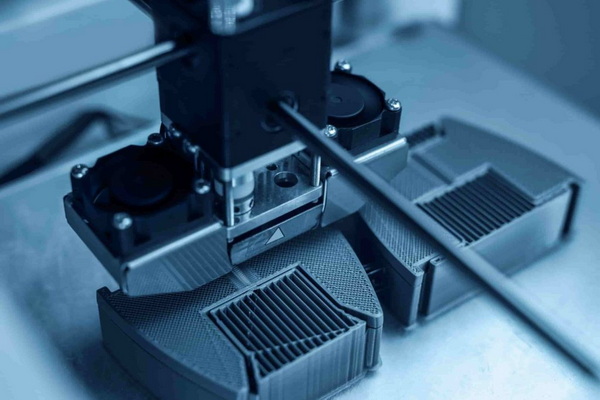
Fused Deposition Modeling (FDM) extrudes thermoplastic filament—such as PLA, ABS, or engineering-grade materials—through a heated nozzle and deposits it layer by layer. This form of Rapid Prototyping is widely available, cost-effective, and suitable for concept models, jigs, fixtures, and simple functional parts.[8][5][6][9]
While FDM generally has lower surface quality and dimensional precision than SLA or SLS, it offers robust, low-cost prototypes with good strength in certain directions. For early-stage design validation and quick internal trials, FDM-based Rapid Prototyping is often the fastest and most economical choice.[3][4][6][9]
Multi Jet Fusion (MJF) is a powder-bed fusion technology that jets fusing and detailing agents onto polymer powder and then uses infrared energy to solidify each layer. It creates nylon parts with consistent mechanical properties and fine feature resolution, making it excellent for high-fidelity Rapid Prototyping and short-run production.[6][9][3]
MJF Rapid Prototyping is especially useful for parts that require both strong mechanical performance and relatively high throughput, such as consumer electronics housings, robotics components, and complex functional assemblies. It bridges the gap between traditional prototypes and end-use production parts.[7][4][3][6]
Direct Metal Laser Sintering (DMLS) and Selective Laser Melting (SLM) build fully dense metal parts layer by layer from metal powders like aluminum, stainless steel, and titanium. This form of metal Rapid Prototyping is used for high-performance components where weight reduction, complex internal structures, and high strength are essential.[5][3][6]
Metal Rapid Prototyping enables engineers to perform real-world mechanical and thermal testing in the same alloys used for mass production. Industries such as aerospace, medical implants, motorsports, and energy rely on this technology for brackets, manifolds, heat exchangers, and surgical instruments.[1][9][3][6]
Subtractive methods remove material from solid stock using cutting tools, drills, and turning processes controlled by digital programs. Among these, CNC machining and CNC turning are the most common subtractive Rapid Prototyping technologies.[8][3][5]
Subtractive Rapid Prototyping offers excellent precision, surface finish, and material flexibility, especially for metals and engineering plastics. When functional performance and close-to-production properties are critical, CNC-based Rapid Prototyping often becomes the preferred solution.[4][7][9][3]
CNC machining uses computer-controlled mills and machining centers to cut parts from solid blocks of metal or plastic according to CAD/CAM data. It can achieve tight tolerances, high surface quality, and reliable repeatability for both prototypes and low-volume batches.[9][3][5]
Rapid Prototyping via CNC machining supports materials such as aluminum, steel, brass, titanium, ABS, POM, and engineering plastics that are difficult to process with many 3D printing methods. This makes it ideal for mechanical components, housings with sealing requirements, precision fixtures, and parts that must be tested under real operating conditions.[7][3][4][5]
CNC turning focuses on rotational parts such as shafts, bushings, rings, and threaded elements. By spinning the workpiece and moving cutting tools along defined paths, CNC turning achieves high dimensional accuracy and smooth cylindrical surfaces.[3][5][8]
Lathe-based Rapid Prototyping is valuable for drive components, connectors, fluid fittings, and any design involving concentric geometry and threads. For OEM clients, this method is key for rapidly validating sealing interfaces, bearing fits, and torque transmission features.[4][5][7][3]
Sheet metal Rapid Prototyping uses cutting (laser, waterjet, punching), bending, and welding processes to create metal enclosures, brackets, chassis, and structural parts from flat sheets. It combines digital cutting data from CAD with flexible forming operations to produce prototypes and low-volume assemblies quickly.[6][8][3][4]
This form of Rapid Prototyping is essential for products such as control cabinets, machine panels, consumer device housings, and mounting brackets. With proper design for manufacturability, sheet metal Rapid Prototyping can easily transition into scalable mass production with the same materials and processes.[5][7][8][4]
Vacuum casting uses a master model—often made by SLA or CNC—to create a silicone mold, which is then used to cast multiple polyurethane parts under vacuum. These parts can imitate the appearance, color, and mechanical feel of common injection molding plastics.[9][3][4][5]
Vacuum casting Rapid Prototyping is ideal for batches of 10–100 pieces used for functionality tests, assembly evaluation, and marketing demonstrations. It offers smooth surfaces, consistent dimensions, and flexible material choices—from rigid plastics to rubber-like materials—at lower cost than full injection molds.[7][3][4][5]
Rapid tooling, sometimes called prototype tooling or soft tooling, refers to creating molds and dies quickly for limited-run injection molding or casting. Tooling is made from materials like aluminum or pre-hardened steel using accelerated machining methods and streamlined design.[3][4][7][9]
This form of Rapid Prototyping allows OEM customers to test actual molded parts produced from near-final materials, often in quantities of dozens to a few hundred pieces. It is particularly valuable for bridge production, regulatory testing, and early market launch while final production tools are still in development.[4][5][7]
Selecting the best Rapid Prototyping method depends on part function, material needs, cost target, and timeline. In many projects, the optimal approach uses one method for early concept verification and another for functional or pre-production validation.[7][9][3][4]
Key selection factors include:
- Required mechanical strength and heat resistance
- Surface finish and cosmetic expectations
- Dimensional tolerance and assembly requirements
- Target quantity and lead time
- Budget and anticipated design changes
By aligning these factors with the strengths of SLA, SLS, FDM, MJF, metal 3D printing, CNC machining, sheet metal fabrication, vacuum casting, or rapid tooling, Rapid Prototyping delivers the fastest path from idea to qualified part.[3][4]
Rapid Prototyping is now used in virtually every manufacturing-oriented sector worldwide. It supports everything from early-stage concepts to engineering validation, regulatory testing, and pilot production.[1][6][9][7]
Typical applications include:
- Visual concept models for design reviews and marketing
- Ergonomic mock-ups for handheld devices, wearables, and medical tools
- Functional mechanical prototypes for load, vibration, and thermal testing
- Rapid tooling and bridge production for small batches before full-scale launch
- Custom and personalized products, especially in medical and consumer markets
By enabling fast, low-risk experimentation, Rapid Prototyping improves product performance, user satisfaction, and overall development efficiency.[5][3]
Shangchen (sc-rapidmanufacturing.com) combines multiple Rapid Prototyping technologies, including CNC machining, CNC turning, sheet metal fabrication, 3D printing, vacuum casting, and rapid mold production, to serve overseas brands, wholesalers, and manufacturers. A dedicated engineering team evaluates each project's requirements and recommends the most suitable Rapid Prototyping route in terms of cost, lead time, and performance.[1][4][5][3]
With integrated quality control, stable supply chains, and experience in export projects, Shangchen helps international OEM clients move from CAD to physical parts quickly and reliably. This end-to-end Rapid Prototyping capability supports concept validation, engineering verification, and low-volume production ahead of mass manufacturing.[1][5][7][3]
Rapid Prototyping encompasses a wide range of digital manufacturing technologies—from SLA, SLS, FDM, MJF, and metal 3D printing to CNC machining, CNC turning, sheet metal fabrication, vacuum casting, and rapid tooling—that together transform how products are developed and launched. By shortening design cycles, enabling fast iterations, and providing realistic functional prototypes, Rapid Prototyping reduces risk and improves the quality of final products across industries.[6][9][4][3]
For global OEM customers, choosing the right Rapid Prototyping partner and process mix is essential to achieving speed, precision, and cost efficiency. With its comprehensive capabilities in Rapid Prototyping and precision manufacturing, Shangchen (sc-rapidmanufacturing.com) offers a reliable path from initial concept to market-ready production, helping brands innovate faster and compete more effectively worldwide.[5][1]
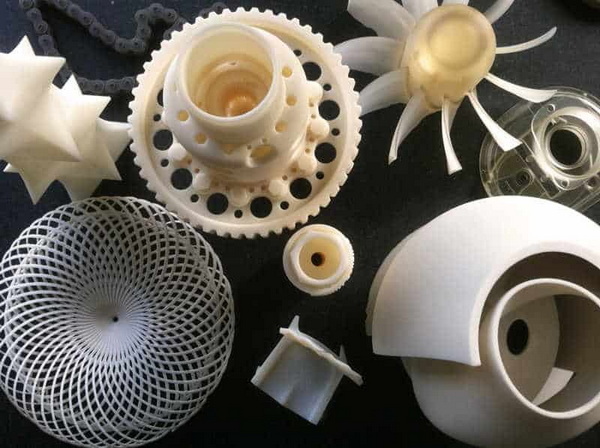
Rapid Prototyping is used to quickly create physical parts from CAD data for design validation, functional testing, ergonomic evaluation, and small-batch production before mass manufacturing. It helps identify design flaws early, optimize performance, and reduce development risk and cost.[9][4][7][3]
The best Rapid Prototyping process depends on required material, mechanical performance, surface finish, quantity, and lead time. In general, 3D printing is ideal for complex geometries and fast concept models, while CNC machining, sheet metal, and rapid tooling are better for functional and pre-production parts.[4][7][9][3]
Yes. Many Rapid Prototyping methods, such as SLS, MJF, metal 3D printing, CNC machining, and sheet metal fabrication, can produce end-use or near-end-use parts with high strength and durability. These processes are often used for low-volume production, custom products, and bridge manufacturing between prototype and full-scale production.[6][7][3][5]
Rapid Prototyping reduces development time by allowing fast, repeated design iterations with short lead times between each version. Engineers can test and refine geometry, assembly, and performance in parallel, which condenses traditional multi-iteration development cycles into fewer, more effective loops.[7][4][5][6]
Industries such as automotive, aerospace, medical devices, industrial machinery, consumer electronics, and robotics rely heavily on Rapid Prototyping to accelerate innovation and meet strict performance standards. These sectors use Rapid Prototyping for everything from concept models and tooling to functional prototypes and pilot batches.[1][3][6][7]
[1](https://uptivemfg.com/rapid-prototyping-companies/)
[2](https://www.rcoeng.com/blog/rapid-prototyping-the-future-of-manufacturing)
[3](https://xometry.pro/en/articles/rapid-prototyping-manufacturing/)
[4](https://www.protolabs.com/resources/guides-and-trend-reports/rapid-prototyping-processes/)
[5](https://www.cncprotolabs.com/en/blog/what-are-the-applications-of-rapid-prototyping)
[6](https://bigrep.com/posts/rapid-prototyping-3d-printing/)
[7](https://www.fictiv.com/articles/rapid-prototyping-guide)
[8](https://www.stephengould.com/rapid-prototyping/)
[9](https://formlabs.com/blog/ultimate-guide-to-rapid-prototyping/)

