
Views: 222 Author: Amanda Publish Time: 2025-11-04 Origin: Site


Content Menu
● Historical Perspective of Moulding Production
● Major Types of Moulding Production Techniques
● Special Techniques in Moulding Production
>> 3D Printing for Rapid Tooling
● Moulding Production Design Fundamentals
● Applications and Industry Impact
● Latest Trends and Future Outlook
>> Sustainability in Moulding Production
>> Digitalization and Automation
>> Hybrid Manufacturing Techniques
● How to Choose the Best Moulding Production Technique
● FAQ
>> (1) What is the difference between injection moulding and extrusion moulding?
>> (2) Which moulding production technique is best for high-volume manufacturing?
>> (3) How do I reduce defects in moulding production?
>> (4) Are moulding production techniques environmentally friendly?
>> (5) Can metal parts be produced with moulding techniques?
Modern manufacturing relies heavily on moulding production, a family of high-precision methods focused on transforming raw materials into finished products with exact shapes and functional features. From automotive components and medical devices to electronics and consumer packaging, moulding production techniques contribute to the realization of robust, scalable, and cost-efficient solutions. This article presents an extensive exploration of the main types of moulding production, their workflows, key benefits, the science behind each process, design considerations, and industrial impacts.[1][2]

The concept of moulding production dates back centuries, but only with the advent of industrial plastics and metals did it become a driver for mass manufacturing. Early manual moulding methods have evolved into highly automated operations, facilitated by innovations such as electric discharge machining (EDM), CNC mills, and advanced forming technologies. Continuous improvements in materials science, tooling, and process control have enabled the moulding production sector to meet the stringent demands of today's international markets.[3][6]
Injection moulding stands at the forefront of moulding production. It involves injecting molten material (typically plastic or, increasingly, metal) into a pre-made mould at high pressure to produce highly detailed parts.
Workflow:
- Tooling created from steel/aluminum via CNC or EDM machining.[6][3]
- Mould attached to machine; raw material (pellets) loaded and melted in a barrel.
- Molten material is injected into the mould cavity, filling every detail under precise pressure controls.
- Cooling and solidification; ejector pins push the finished part out.
- Post-processing includes deflashing and surface finishing.
Types:
- Thermoplastic injection moulding – for plastics that can be melted and cooled repeatedly.
- Liquid silicone rubber moulding – for flexible, durable parts.
- Overmoulding – layering materials for added performance.
- Insert moulding – embedding components (like metal threads) during production.[1]
Advantages:
- Mass production of identical parts with tight tolerances.
- Broad material flexibility and surface finishing options.
- Efficient for very large volumes; fast production cycles.[8][1]
Applications: Automotive dashboards, consumer electronics cases, medical device housings.
Blow moulding specializes in manufacturing hollow or thin-walled products by inflating a heated tube of thermoplastic into a mould.
Workflow:
- Resin is melted and extruded as a tubular parison.
- The parison is clamped in a mould; air is blown inside, filling the cavity.
- Cooling and ejection complete the cycle.
Advantages:
- Dominant in the production of bottles, tanks, and fluid containers.
- Highly automated and fast.
Applications: Beverage bottles, chemical containers, automotive fluid reservoirs.[2]
In compression moulding, a heated material (often thermoset plastic or rubber) is placed into a heated mould and compressed into shape.
Workflow:
- Preheated charge of material is placed in an open mould.
- Mould is closed, applying heat and pressure.
- The material cures and takes the mould's shape.
- Excess material is trimmed away.
Advantages:
- Suited for large, robust components.
- Good for fiber-reinforced plastics and rubber items.
Applications: Electrical housings, appliance handles, automotive bumpers.[2]
Rotational moulding (rotomolding) produces large, hollow parts using resin powder and heat in a continuously rotated mould.
Workflow:
- Resin powder placed in mould, rotated about two axes in an oven.
- Resin melts and coats the interior as the mould spins.
- Mould cools, and the finished part is removed.
Advantages:
- Low tooling costs.
- Highly customizable part geometries; thick walls and seamless construction.
Applications: Storage tanks, playground equipment, custom containers.[2]
Extrusion moulding makes continuous profiles, such as pipes and tubes, using a die that shapes molten material.
Workflow:
- Material melted in a heated chamber and forced through a die.
- The extruded profile is cooled and cut to length.
Advantages:
- Very rapid for long, simple shapes.
- Minimal waste.
Applications: Plumbing pipes, window frames, sheeting for construction.[11]
Thermoforming heats a plastic sheet until pliable, then forms it over a mould by vacuum or pressure.
Workflow:
- Sheet heated and pressed or vacuumed onto a mould.
- After cooling, the part is trimmed for precision.
Advantages:
- Ideal for large panels, trays, packaging.
- Economic for low-volume or large, simple items.[5]
Applications: Food packaging, refrigerator interiors, automotive panels.
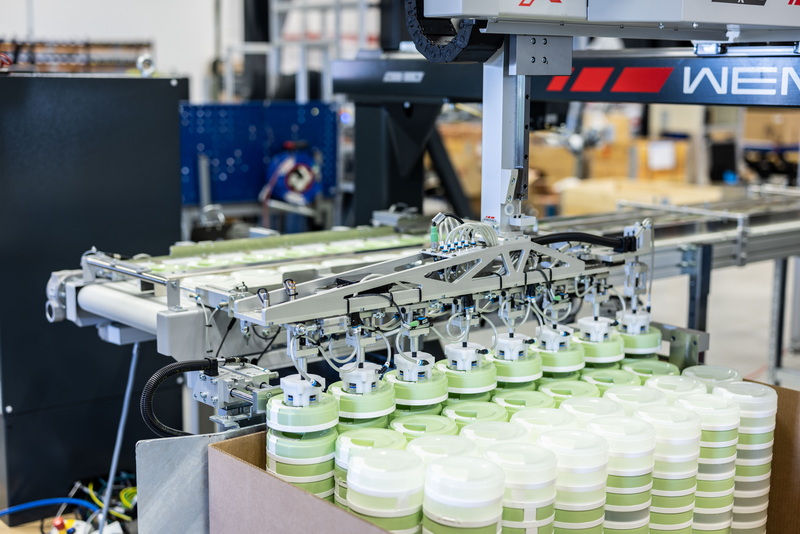
The rise of industrial 3D printing has transformed moulding production. Rapid tooling allows engineers to create complex moulds for prototype and low-volume runs, cutting costs and development time. Combined with conventional processes, 3D printed moulds can accelerate go-to-market schedules for new products.[5]
While most moulding production processes focus on plastics, metal injection moulding enables mass production of intricate metal parts. Powdered metals are mixed with binders, injected into moulds, and then sintered to achieve density and strength. This expands moulding production into aerospace, medical, and high-tech sectors.
Successful moulding production depends on intelligent design and meticulous process control.
Key Considerations:
- Material selection: Balancing cost, performance, and compatibility.
- Draft and wall thickness: Ensuring proper ejection and minimizing defects.
- Tolerance control: Designing for manufacturability within tightly controlled parameters.[3][1]
- Surface finish: Tool design influences aesthetics and functionality.
- Quality systems: Use of scientific moulding and robust inspection protocols to guarantee repeatability.
Advancements such as software-based mould flow simulation, automated part inspection, and statistical process control are at the heart of modern moulding production, enabling zero-defect manufacturing and traceability.[7][6]
Moulding production is indispensable in sectors including automotive, aerospace, medical devices, consumer electronics, home appliances, and packaging. It enables:
- Mass customization for consumer products.
- Lightweight, durable automotive components.
- Precision medical and surgical tools.
- Fail-safe packaging solutions for hygiene and goods protection.
The scalability and adaptability of moulding production techniques have made them key drivers of industrial progress and global supply chains.[11][1]
Eco-friendly practices are shaping the future of moulding production. Techniques such as recycled resin usage, closed-loop process cycles, and biopolymer adoption are lowering the environmental impact.
Integration of sensors, machine learning, and robotics into moulding production lines is improving efficiency, reducing human error, and enabling full traceability from raw material to finished part.[6]
Firms now combine injection moulding, additive manufacturing, and CNC machining to maximize speed, flexibility, and product performance. Rapid prototyping and low-volume runs empower designers to innovate and iterate efficiently.
Selecting the optimal process depends on several factors:
- Part Geometry: Complex shapes or thin walls often require injection or compression moulding.
- Material Requirements: Some methods are better for certain polymers or metals.
- Volume and Lead Time: Mass production favors injection, extrusion, or blow moulding. Prototyping or niche applications suit 3D printing and thermoforming.
- Budget: Tooling investment and production cost must align with project goals.
- Finish and Performance: Required appearance, mechanical strength, and durability affect technique choice.
Consulting with experienced moulding production specialists ensures correct method selection and streamlined manufacturing.
Moulding production techniques are the backbone of modern manufacturing, providing unmatched speed, scalability, and precision across countless industries. Understanding the strengths, scientific principles, and intricacies of each technique empowers businesses to produce high-quality components efficiently. The evolution of automation, material science, and sustainability continues to advance the sector, enabling smarter, greener, and more dynamic production worldwide. For manufacturers, designers, and engineers, expertise in moulding production translates to competitive advantage and industrial excellence.[1][5][2]
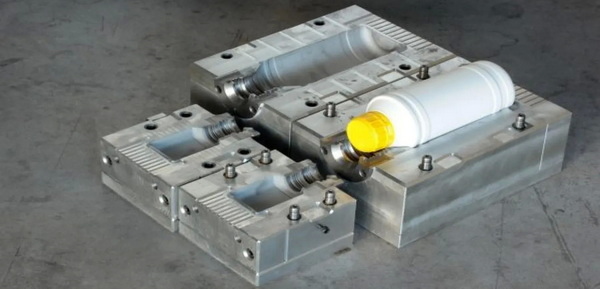
Injection moulding is used to create complex, precision-shaped parts by injecting material into a closed mould, while extrusion moulding produces continuous profiles such as pipes or tubing by forcing material through a die.[11][1]
Injection moulding is typically preferred for high-volume production due to its rapid cycle times, precision, and scalability. Extrusion and blow moulding also offer advantages for large-scale runs.[1][11]
Quality defects—such as warping, short shots, sink marks—can be minimized by optimizing mould design, using high-quality materials, and implementing rigorous process controls and post-production inspection.[3][1]
Techniques are becoming greener with recycled material usage, biopolymers, and closed-loop systems. Advances in process automation are helping reduce waste and energy consumption.[5]
Yes. Metal injection moulding supports the creation of precision metal parts, especially for industries needing small, complex geometries at scale.[12]
[1](https://www.protolabs.com/resources/guides-and-trend-reports/designing-for-moldability-fundamental-elements/)
[2](https://www.jtc-machining.com/CNC-blog/from-injection-to-thermoforming-a-comprehensive-guide-to-molding-techniques.html)
[3](https://geomiq.com/injection-moulding-guide/)
[4](https://www.extrememolding.com/blog/guide-to-mold-manufacturing-its-processes)
[5](https://formlabs.com/blog/how-to-make-a-mold/)
[6](https://www.aprios.com/insights/the-basics-of-plastic-injection-molding-a-guide-for-engineers)
[7](https://advancedplastiform.com/a-guide-to-injection-molding-tooling/)
[8](https://sybridge.com/injection-molding-guide/)
[9](https://www.ksplastic.com/blog/comprehensive-guide-to-plastic-injection-molding/)
[10](https://www.cadrex.com/a-starter-guide-to-injection-molding)
[11](https://firstmold.com/tips/injection-molding-vs-extrusion-molding/)
[12](https://www.xometry.com/resources/injection-molding/types-of-injection-molding-technology/)

