
Views: 222 Author: Amanda Publish Time: 2026-01-14 Origin: Site


Content Menu
● Why Rapid Prototyping Matters for OEM Projects
● Main Categories of Rapid Prototyping Methods
● 3D Printing Rapid Prototyping Methods
● CNC Machining Rapid Prototyping
>> Lathe Turning in Rapid Prototyping
● Sheet Metal Rapid Prototyping
● Vacuum Casting Rapid Prototyping
● Rapid Prototyping with Injection Molding (Bridge Tooling)
● How to Choose the Right Rapid Prototyping Method
● How Shangchen Supports Rapid Prototyping
● FAQs About Rapid Prototyping
>> (1) What is the main goal of Rapid Prototyping?
>> (2) Which Rapid Prototyping method should I choose first?
>> (3) How many parts can Rapid Prototyping produce economically?
>> (4) Can Rapid Prototyping use the same materials as mass production?
>> (5) Why should OEM buyers choose Shangchen for Rapid Prototyping?
Rapid Prototyping is a family of fast manufacturing technologies that turn 3D CAD designs into real parts for testing, validation, and low-volume production. Rapid Prototyping allows OEM buyers to shorten development cycles, reduce risk, and move smoothly into mass production with fewer surprises.
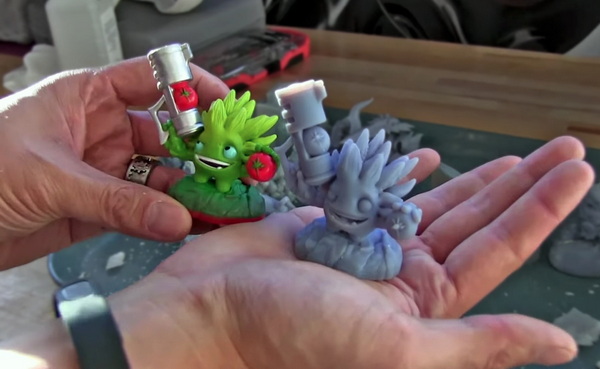
Rapid Prototyping combines digital design with flexible manufacturing methods to build parts in days instead of weeks or months. It includes Rapid Prototyping by 3D printing, CNC machining, sheet metal fabrication, vacuum casting, and bridge tooling for injection molding.
For international brands, wholesalers, and manufacturers, working with a partner like Shangchen that offers multiple Rapid Prototyping methods under one roof makes it easier to choose the best balance of speed, cost, and performance for each project. Throughout this article, the term Rapid Prototyping is used frequently to clarify how each method supports different stages of product development.
Rapid Prototyping is essential because it connects early design with real-world performance before full tooling investment. It lets teams test form, fit, function, and manufacturability with real materials and realistic tolerances.
For OEM buyers, Rapid Prototyping brings three main advantages:
- Faster design validation and fewer engineering change loops.
- Lower risk before investing in expensive molds or large production runs.
- Better communication between designers, engineers, and manufacturing partners like Shangchen.
In a global supply chain environment, Rapid Prototyping is also a strategic tool for entering new markets or adapting products to local regulations and customer expectations. Fast iterations make it possible to localize geometry, branding, and packaging while keeping development costs controlled.
Different Rapid Prototyping methods are optimized for different goals such as visual appearance, functional testing, or pre-production batches. The most common categories include 3D printing, CNC Rapid Prototyping, sheet metal Rapid Prototyping, vacuum casting, and Rapid Prototyping with bridge tooling.
Choosing the right Rapid Prototyping method depends on geometry, material, surface finish, mechanical strength, regulatory requirements, and required quantity. A multi‑process factory like Shangchen can mix several Rapid Prototyping methods in one program to support each development phase, from industrial design mock‑ups to pilot run builds.
3D printing is often the first choice for Rapid Prototyping because it is fast, flexible, and requires no hard tooling. Multiple 3D printing technologies support different levels of detail, strength, and cost.
Below are the most widely used 3D printing methods for Rapid Prototyping and how OEM buyers can use them effectively.
FDM (Fused Deposition Modeling) is a filament‑based Rapid Prototyping method that extrudes thermoplastic material layer by layer. It is usually the most cost-effective option for early functional prototypes and large concept models.
Key characteristics of FDM Rapid Prototyping include:
- Suitable materials such as ABS, PLA, PC, PETG, and other engineering thermoplastics.
- Layer lines that are visible on the surface but acceptable for many internal, functional, or test-only parts.
FDM Rapid Prototyping is best used when:
- You need quick, low-cost parts for basic mechanical checks.
- You want to verify ergonomics with hand-held models.
- You are not yet concerned about final surface finish or tight tolerances.
For OEM projects, FDM Rapid Prototyping is ideal during the earliest design phases, when concepts may still change dramatically. It allows product teams to explore multiple design directions in parallel, dramatically compressing the time from idea to physical sample.
SLA (Stereolithography) uses a UV laser to cure liquid resin, offering very high detail and smooth surfaces for Rapid Prototyping. It is excellent for visual models, complex small parts, and prototypes that need a presentation-quality appearance.
Main features of SLA Rapid Prototyping:
- Very smooth surfaces that are easy to paint, finish, or present directly to decision makers.
- High resolution and fine details suitable for intricate features, logos, and textures.
SLA Rapid Prototyping is especially valuable when:
- You need impressive prototypes for investor meetings, trade shows, or marketing photography.
- You require a master pattern to create silicone molds for vacuum casting.
- You are evaluating cosmetic details such as fillets, blends, and text.
Because SLA Rapid Prototyping parts can be finished to look close to production injection-molded parts, they help non-technical stakeholders understand the final design much more clearly.
SLS (Selective Laser Sintering) is a powder‑bed Rapid Prototyping technology that fuses nylon powder with a laser to create strong, functional parts. It does not need support structures, so very complex geometries are possible.
Important advantages of SLS Rapid Prototyping:
- Freedom of geometry, including internal channels, undercuts, and lattice structures.
- Strength and durability suitable for functional testing, snap fits, and rugged use.
SLS Rapid Prototyping is often used when:
- You need mechanically robust prototypes that behave similarly to final production parts.
- You want to test assemblies with clips, hinges, and mechanical interfaces.
- You are optimizing weight with internal light‑weighting structures.
In multi‑stage development plans, SLS Rapid Prototyping frequently follows simple FDM or SLA trials. Once the basic concept is proven, SLS Rapid Prototyping allows deeper engineering validation under realistic conditions.
MJF (Multi Jet Fusion) is another powder‑based Rapid Prototyping method that uses fusing and detailing agents plus infrared light to create uniform, strong plastic parts. It offers high throughput for small to medium batches and very consistent mechanical properties.
Key strengths of MJF Rapid Prototyping:
- Excellent dimensional consistency across batches, which is critical for assemblies.
- Fast build times and efficient nesting that support small batch Rapid Prototyping and bridge production.
Typical MJF Rapid Prototyping applications include:
- Functional plastic housings, brackets, and mechanical components.
- Small series of parts for pilot runs and early sales samples.
- Components that may eventually move to injection molding once the design stabilizes.
For overseas OEM buyers, MJF Rapid Prototyping is particularly attractive when you need both speed and repeatability in quantities that are too small to justify tooling but too large for single-part processes.
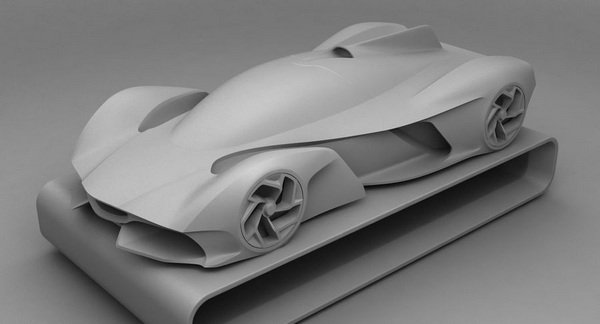
CNC machining is a subtractive Rapid Prototyping method that cuts material from solid blocks of metal or plastic using computer-controlled tools. It is ideal for high-precision prototypes in production-grade materials where tolerances and structural performance are critical.
Key benefits of CNC Rapid Prototyping:
- True production materials such as aluminum, stainless steel, brass, and engineering plastics.
- Tight tolerances and surface finishes that match what can be achieved in series production.
CNC Rapid Prototyping is the best option when:
- You need parts for mechanical or thermal tests that must match final properties.
- Your design includes critical sealing surfaces or tight-fitting interfaces.
- Certification tests or endurance trials require accurate, stable components.
Because CNC Rapid Prototyping is so close to final production performance, it is often used in later phases of development. It also helps verify that a part is genuinely manufacturable before full tooling is ordered.
Lathe turning is a specific CNC Rapid Prototyping method for rotational parts such as shafts, bushings, pins, and threaded components. A rotating workpiece is cut by fixed tools to achieve roundness and excellent surface finish.
Typical uses of turning within Rapid Prototyping:
- Cylindrical parts that must run true at high speed, such as motor shafts.
- Precision internal and external threads for connectors and fittings.
- Sealing surfaces where circularity and finish are crucial.
In many assemblies, Rapid Prototyping requires both milled and turned parts. A partner like Shangchen that offers integrated CNC machining and turning can deliver complete assemblies for testing instead of just individual components, making Rapid Prototyping more realistic and efficient.
Sheet metal Rapid Prototyping uses cutting, bending, and forming operations to create thin‑walled metal parts quickly. It is widely used for enclosures, brackets, chassis, frames, and structural components across many industries.
Typical sheet metal Rapid Prototyping process steps:
- Design review and DFM (Design for Manufacturability) check to ensure bend radii, hole spacing, and material choice are workable.
- Laser cutting, punching, or shearing to create flat patterns from sheet stock.
- Bending, forming, welding, and assembly to create final 3D structures.
Sheet metal Rapid Prototyping is ideal when:
- You need metal housings, cabinets, and frames early in development.
- You want to verify cable routing, connector placement, and mounting interfaces.
- You are developing custom brackets, supports, or enclosures for industrial equipment.
By using Rapid Prototyping in sheet metal, OEM buyers can test assembly procedures, verify access for maintenance, and ensure that the structural layout supports real loads before committing to more complex stamping tools.
Vacuum casting (polyurethane casting) is a powerful Rapid Prototyping method for making small batches of plastic parts with excellent cosmetic quality. It uses a silicone mold created from a master model, often produced by SLA or CNC Rapid Prototyping.
Advantages of vacuum casting for Rapid Prototyping:
- Superb surface finish and appearance comparable to injection-molded parts.
- Flexible choice of polyurethane materials that imitate rigid, semi‑rigid, or rubber‑like plastics.
- Cost-effective for small batches of 10–50 pieces where full tooling is not justified.
Vacuum casting Rapid Prototyping is especially useful when:
- You need realistic marketing samples for customer trials or trade shows.
- You want to run limited field trials with multiple units.
- You need several color or hardness variations to refine product strategy.
Vacuum casting works as an intermediate Rapid Prototyping bridge. After single 3D printed parts validate the design, vacuum casting can generate enough units to test the product in real conditions without losing the agility of Rapid Prototyping.
For some projects, Rapid Prototyping requires parts that are extremely close to final mass-production components. In such cases, temporary or “bridge” injection molds are used to produce low to medium quantities quickly.
Key characteristics of bridge tooling Rapid Prototyping:
- Aluminum or soft steel molds with simplified cooling and gating to reduce cost and lead time.
- Real production-grade plastics used in the injection press, giving highly realistic performance.
Bridge injection molding as a Rapid Prototyping strategy is ideal when:
- You need hundreds or a few thousand parts before the final high-cavitation mold is ready.
- Regulatory or certification bodies require tests on parts made by molding, not just 3D printing.
- You want to de‑risk the final mold design by testing gate locations, wall thickness, and ejection before making a full investment.
This type of Rapid Prototyping is often combined with earlier 3D printing, CNC, and vacuum casting stages. Together, these methods form a complete Rapid Prototyping pipeline from early sketches to market-ready products.
Because there are so many options, choosing the best Rapid Prototyping path can be challenging, especially for teams without deep manufacturing experience. A practical approach is to evaluate the following factors for each project stage.
Key criteria when selecting a Rapid Prototyping method:
- Purpose: appearance only, functional testing, or pilot production.
- Material: plastic, metal, or elastomer; need for real production materials.
- Quantity: one-off, small series, or hundreds of parts.
- Timeline: how quickly Rapid Prototyping samples must be delivered.
- Budget: available cost for each iteration.
For example, an early-stage consumer product might use FDM Rapid Prototyping for internal models, SLA Rapid Prototyping for investor demos, SLS Rapid Prototyping for functional stress tests, and finally bridge injection molding as the last Rapid Prototyping step before mass production.
As a Chinese factory focused on Rapid Prototyping, CNC machining, precision batch production, turning, sheet metal, 3D printing, and mold manufacturing, Shangchen acts as a one‑stop OEM partner for overseas buyers.
By offering multiple Rapid Prototyping methods in‑house, Shangchen can:
- Help customers select the most suitable Rapid Prototyping path based on geometry, material, target price, and schedule.
- Combine Rapid Prototyping by 3D printing, CNC machining, vacuum casting, sheet metal, and bridge tooling to support every development stage from first concept to volume-ready designs.
For brands, wholesalers, and producers, this integrated Rapid Prototyping capability reduces coordination work, shortens lead times, and ensures consistent quality. A single engineering team at Shangchen can track the project, provide DFM feedback, and plan the transition from Rapid Prototyping to stable mass production.
Rapid Prototyping is no longer a single technology but a complete toolbox of processes that let OEM buyers move from idea to reality with speed and confidence. From FDM, SLA, SLS, and MJF 3D printing to CNC machining, sheet metal fabrication, vacuum casting, and bridge molding, each Rapid Prototyping method has its own ideal window of application.
Partnering with a flexible supplier like Shangchen allows you to mix these Rapid Prototyping methods according to project requirements, balancing speed, cost, precision, and material performance. For international brands, wholesalers, and producers, this multi‑process Rapid Prototyping capability translates directly into faster launches, stronger products, and more reliable supply chains.
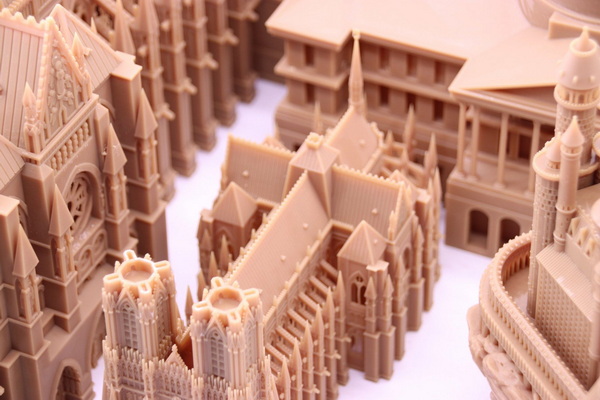
The main goal of Rapid Prototyping is to quickly turn digital designs into physical parts so teams can evaluate appearance, fit, and function before investing in full-scale production. This Rapid Prototyping loop reduces design errors and shortens development time.
Rapid Prototyping also builds a direct feedback cycle between designers, engineers, suppliers, and end users, allowing issues to be discovered and fixed early when changes are much cheaper and easier to implement.
For many projects, 3D printing is the best starting point for Rapid Prototyping because it requires no tooling and offers very short lead times. FDM works well for early functional Rapid Prototyping, while SLA is ideal for high-detail visual models and investor-ready samples.
As designs mature, CNC machining, sheet metal fabrication, and vacuum casting Rapid Prototyping become more attractive for functional testing and small-batch validation, especially when material properties, strength, and tolerances are critical for the final application.
Rapid Prototyping is most economical for low to medium volumes, typically from a single piece up to a few hundred or a few thousand units depending on the process. 3D printing Rapid Prototyping excels at 1–100 pieces, while vacuum casting and MJF can efficiently cover small batches requiring tens or hundreds of parts.
For volumes higher than that, bridge injection molding used as a Rapid Prototyping step can be the best option, especially when parts are close to final production design and when regulatory or customer tests require molded components rather than printed parts.
Some Rapid Prototyping methods, especially CNC machining and injection molding with bridge tooling, can use the same metals and engineering plastics planned for mass production. This makes Rapid Prototyping extremely useful for functional tests, safety validation, and certification activities.
Other processes, such as SLA or vacuum casting Rapid Prototyping, use alternative resins that simulate production behavior but may not be identical. Even then, Rapid Prototyping still provides valuable insights into geometry, assembly, ergonomics, and user experience before a full material match is needed.
OEM buyers benefit from choosing Shangchen for Rapid Prototyping because they gain access to CNC machining, turning, sheet metal, 3D printing, vacuum casting, and mold production in a single factory. This integrated Rapid Prototyping capability simplifies supplier management and speeds up every phase of development.
With experience serving overseas brands, wholesalers, and producers, Shangchen can recommend the most efficient Rapid Prototyping route for each part, combine methods when needed, and then smoothly transition from prototypes to precision batch production and full OEM manufacturing under consistent quality control.

