
Views: 222 Author: Amanda Publish Time: 2025-10-22 Origin: Site


Content Menu
● What is Vacuum Mold Casting?
● Importance of Vacuum Mold Casting in Automotive Manufacturing
● Key Advantages of Vacuum Mold Casting
>> Enhanced Quality and Precision
>> Versatility for Different Materials
>> Cost-Effectiveness and Prototyping Flexibility
● Vacuum Mold Casting Compared to Traditional Casting Methods
● Applications of Vacuum Mold Casting in the Automotive Industry
>> Engine and Transmission Components
>> Interior and Exterior Automotive Parts
>> Safety and Structural Components
>> Customization and Aftermarket Parts
● Detailed Steps of the Vacuum Mold Casting Process
● Overcoming Challenges in Vacuum Mold Casting
● Innovations Driving Vacuum Mold Casting Forward
>> Automation and Digital Integration
>> Sustainable Manufacturing Trends
● Choosing the Right OEM Partner for Vacuum Mold Casting
● Frequently Asked Questions (FAQ)
>> 1. What types of automotive parts are best suited for Vacuum Mold Casting?
>> 2. How does Vacuum Mold Casting improve part strength?
>> 3. Is Vacuum Mold Casting cost-effective for mass production?
>> 4. How customizable are Vacuum Mold Cast parts?
>> 5. What lead times are typical with Vacuum Mold Casting?
Automotive component manufacturing demands precision, durability, and efficiency. One advanced technology that meets these stringent requirements is Vacuum Mold Casting. This process is revolutionizing how manufacturers produce complex, high-quality parts with enhanced mechanical properties and reduced defects.
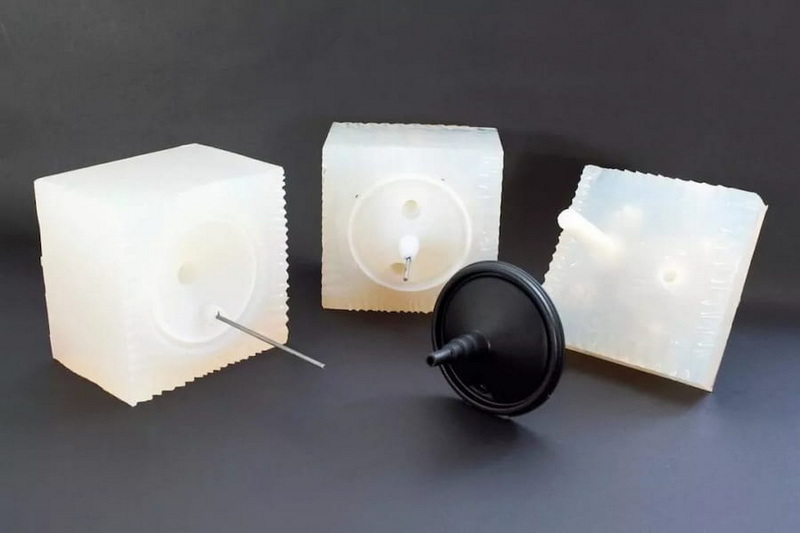
Vacuum Mold Casting is an advanced method of producing detailed and durable components by using a vacuum environment to improve material flow and reduce air entrapment during casting. This technique differs significantly from traditional casting by using vacuum pressure to fill molds completely, ensuring fewer imperfections and stronger parts.
The automotive industry demands components with precise geometries, reliable strength, and excellent surface finishes. Vacuum Mold Casting enables:
- High dimensional accuracy
- Reduced porosity and air pockets
- Improved mechanical strength
- Ability to cast complex geometries, including thin walls and intricate details
- High production rates suitable for both prototyping and batch manufacturing
By evacuating air from the mold cavity, the technique eliminates common casting defects such as gas porosity and shrinkage. This results in smoother surfaces and tighter tolerances, which are crucial for automotive components like engine housings, brackets, and manifold parts.
Vacuum Mold Casting reduces material waste by ensuring complete filling with minimal flash. This efficiency lowers material costs and aligns with sustainability goals prevalent in the automotive sector.
This process supports a variety of casting materials commonly used in automotive manufacturing, including polyurethane, silicone, and specific composite resins, allowing for tailored solutions based on component requirements.
Vacuum Mold Casting offers a cost-effective alternative to injection molding, especially for prototypes and low-volume production. It allows automotive manufacturers to test designs and make adjustments before committing to expensive metal tooling, reducing risks and development time.
Vacuum Mold Casting surpasses traditional gravity or pressure casting in several key areas:
- Air entrapment is minimized, resulting in fewer defects.
- Surface finish is superior, requiring less post-processing.
- Dimensional accuracy is higher, facilitating the production of complex automotive assemblies.
- The ability to produce intricate shapes improves design freedom.
- Quicker turnaround times offer faster prototyping and production cycles.
Vacuum Mold Casting produces lightweight, durable engine covers and transmission parts that withstand harsh thermal and mechanical stresses. These components benefit from improved wear resistance and heat tolerance.
From dashboards and console panels to exterior trim and decorative elements, vacuum casting offers both functional and aesthetic advantages. This process is well-suited for producing parts with intricate textures and tight tolerances.
Functional prototypes and small batch runs of safety-critical parts such as mounting brackets, sensor housings, and structural supports gain from the strength and consistency vacuum casting provides, ensuring reliability during operation.
This technology supports customization for aftermarket parts and limited editions, enabling manufacturers and suppliers to respond swiftly to demand with high-quality, tailor-made products.
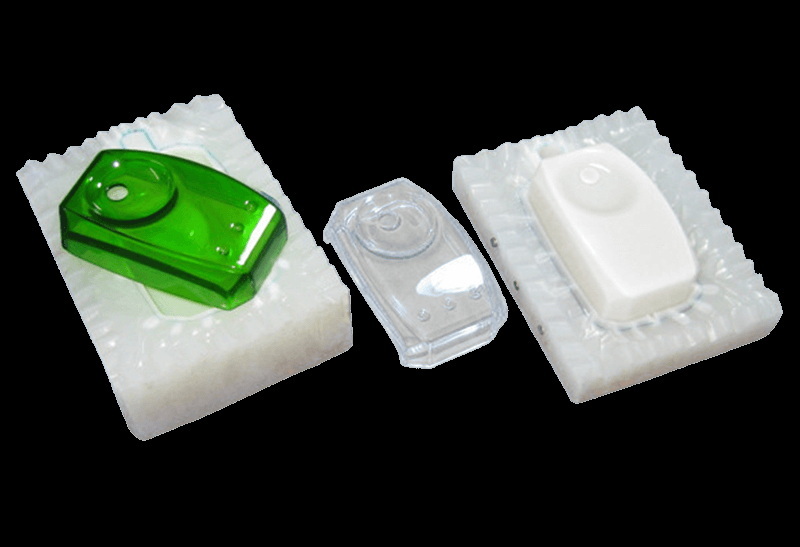
1. Master Pattern Creation: A highly detailed master pattern is fabricated using CNC machining or 3D Printing. This pattern serves as the original template for the mold.
2. Mold Making: The master is encased in silicone rubber to produce a flexible mold capable of capturing fine details and withstanding repeated casting cycles.
3. Material Preparation: Casting materials like polyurethane or epoxy resins are thoroughly mixed and degassed to remove trapped air, ensuring consistency.
4. Vacuum Casting: The mold and mixed material are placed into a vacuum chamber. The vacuum pulls the casting material into the mold cavity, preventing defects such as bubbles and voids.
5. Curing: The filled mold is cured under controlled temperature and humidity conditions to set the material properly, securing the part's mechanical properties.
6. Demolding and Finishing: The part is carefully removed and undergoes trimming, sanding, painting, or other finishing operations to meet final specifications.
Not all resin materials perform equally in vacuum casting. Manufacturers must select materials based on the specific automotive application, balancing factors such as flexibility, hardness, and thermal resistance.
Silicone molds have a limited lifespan compared to metal tooling, typically lasting for dozens to a few hundred castings. Optimizing mold design and curing parameters helps extend mold life.
While vacuum casting excels at prototyping and small batch production, scaling to mass production requires balancing cost and speed, often integrating with other manufacturing processes.
Advanced automation in vacuum casting systems increases repeatability and reduces human error. Digital process controls monitor temperature, pressure, and cure times precisely, resulting in consistent high-quality parts.
Research into composite casting resins and hybrid materials is expanding the range of properties achievable with vacuum casting, offering improved heat resistance, reduced weight, and enhanced mechanical strength.
Vacuum Mold Casting fits well into sustainable manufacturing by reducing material waste and emissions. Additionally, it supports the trend toward using bio-based and recyclable materials, aligning with the automotive industry's environmental goals.
Selecting an experienced manufacturing partner is vital for success. Companies like Shangchen offer:
- Advanced vacuum molded casting capabilities combined with CNC machining and 3D打印 expertise
- Rigorous quality assurance systems to ensure part consistency and performance
- Flexible production scales from prototyping to precision batch manufacturing
- Competitive delivery times and cost efficiency tailored to the automotive market needs
Vacuum Mold Casting has become an indispensable technology in automotive component manufacturing. It offers a blend of precision, material efficiency, and design flexibility unmatched by traditional casting methods. For OEMs and automotive suppliers looking to innovate while controlling costs and reducing lead times, Vacuum Mold Casting is a powerful solution. As material science and automation evolve, this process will continue to play a central role in the industry's pursuit of quality and sustainability.

Parts requiring high dimensional accuracy, intricate details, and enhanced surface finish such as engine covers, interior panels, and safety brackets benefit most from this technology.
The vacuum environment removes air bubbles and voids, resulting in denser, more uniform components with superior structural integrity.
It is optimized for prototyping and small to medium batch runs. For very high volumes, injection molding or die casting may be more economical.
This process enables extensive customization in geometry, color, and surface texture, making it ideal for tailored automotive applications.
Lead times vary but generally range from 1 to 3 weeks, significantly shorter than traditional metal tooling approaches.

