
Views: 222 Author: Amanda Publish Time: 2025-10-22 Origin: Site


Content Menu
● Understanding Vacuum Mold Casting
>> How Vacuum Mold Casting Works
>> Advantages of Vacuum Mold Casting
● Applications in Industrial Equipment Manufacturing
● Material Selection and Process Optimization
● Integration with Modern Manufacturing
● Environmental and Economic Impact
● FAQs
>> 1. What materials can be used with vacuum mold casting?
>> 2. How does vacuum mold casting improve product durability?
>> 3. What are typical applications of vacuum mold casting in industrial equipment?
>> 4. Can vacuum mold casting be used for mass production?
>> 5. How long does it take to produce a part using vacuum mold casting?
Vacuum mold casting is a transformative manufacturing process that combines durability and precision, making it ideal for producing industrial equipment components. At Shangchen, a leading Chinese factory specializing in rapid prototyping, CNC machining, precision batch production, lathe turning, sheet metal fabrication, 3D printing, and mold production, we deliver top-tier vacuum mold casting services tailored to meet the needs of international brands, wholesalers, and manufacturers. This article explores the technology, benefits, applications, and best practices of Vacuum Mold Casting, offering deep insight for stakeholders considering this advanced manufacturing solution.
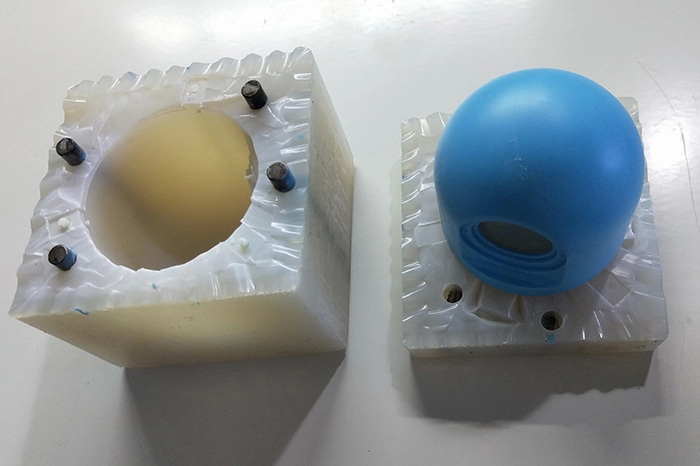
Vacuum mold casting is a process where a vacuum is created inside a mold to eliminate air bubbles and reduce defects during casting. This technique ensures high dimensional accuracy and enhances the mechanical properties of the final product, which is why it is favored in the production of industrial equipment parts.
1. Mold Preparation
The mold, usually made of silicone or other elastomeric materials, is fabricated based on a master prototype created via 3D printing or CNC machining. This master captures the precise geometry with surface details to achieve accurate replication.
2. Vacuum Application
The mold is placed inside a vacuum chamber, and air is evacuated to create a near-zero pressure environment. This step removes trapped air from the mold cavity, preventing voids and improving cast integrity.
3. Material Pouring
Casting material, commonly polyurethane or epoxy resin, is poured carefully into the mold under vacuum conditions, allowing the material to fill every detail without air entrapments or bubbles.
4. Curing and Demolding
After the material cures, the mold is opened, and the cast part is removed, showcasing superior surface finish and dimensional reliability.
Vacuum mold casting presents many advantages over conventional casting or injection molding, especially when working with low-to-medium production runs. Key benefits include:
- Enhanced Surface Quality
The vacuum environment minimizes air bubbles, resulting in parts with smooth finishes and detailed surface textures that require less post-processing.
- High Dimensional Accuracy
This process can achieve tight tolerances, which is critical for industrial equipment components that must fit precisely into assemblies.
- Material Versatility
A wide range of polyurethane and epoxy resins simulate the physical properties of thermoplastics such as ABS, nylon, and TPU, providing strength, flexibility, or impact resistance as needed.
- Rapid Tooling and Production
The molds can be created quickly from 3D printed masters, significantly reducing lead times compared to metal tooling.
- Cost-Effective for Low Volumes
Vacuum mold casting avoids the high tooling costs associated with traditional metal molds, making it ideal for prototype runs or limited batch production.
Vacuum mold casting is extensively applied in manufacturing parts for different types of industrial equipment. Its combination of durability, precision, and surface finish quality ensures components function reliably under operational stress.
- Precision Gears and Mechanical Components
Vacuum cast gears exhibit enhanced wear resistance and dimensional stability, making them suitable for light machinery.
- Protective Covers and Equipment Housings
These components benefit from the high surface quality and dimensional precision required to ensure proper fit and protection.
- Custom Fixtures and Mounting Brackets
Quickly produced via vacuum casting, these parts support assembly lines and automation setups.
- Functional Prototypes
Engineering teams use vacuum mold casting to create realistic prototypes for performance and durability testing before committing to metal tooling.
- Automotive: Producing prototype parts and small series for testing and specialty components.
- Robotics and Automation: Components that require high precision and complex geometries.
- Electronics: Insulative housings and intricate connectors.
- Medical Devices: Small batch, high-precision components that comply with strict quality standards.
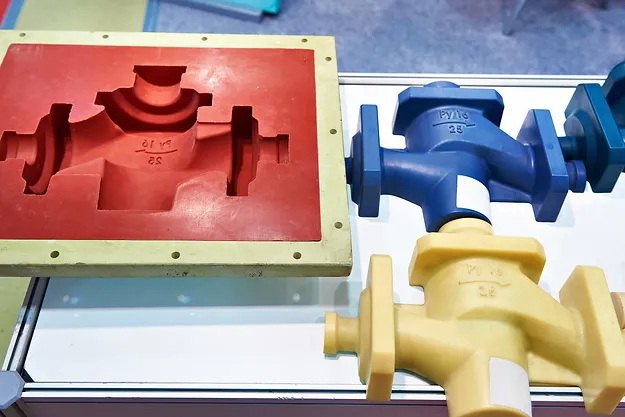
Choosing the right material and optimizing the vacuum mold casting process are crucial for delivering parts that meet the demanding requirements of industrial applications.
- Mechanical Properties: The choice depends on whether the final part needs rigidity, flexibility, or wear resistance.
- Thermal Stability: Some industrial parts operate in harsh temperature environments, necessitating thermally resistant resins.
- Chemical Resistance: Certain applications require parts to withstand exposure to oils, solvents, or cleaning agents.
- Designing molds to enable consistent resin flow and minimize potential trapping of air.
- Incorporating venting channels to enhance vacuum effectiveness.
- Ensuring molds use durable silicones or elastomers to support repeatability across medium production runs.
- Maintaining consistent vacuum levels throughout the casting cycle.
- Monitoring curing times and temperatures to optimize part strength and surface finish.
- Utilizing quality inspection tools such as 3D scanning or coordinate measuring machines (CMM) for dimensional verification.
Vacuum mold casting integrates seamlessly with other advanced manufacturing techniques, enhancing overall production capabilities.
- 3D Printing for Rapid Master Patterns
High-resolution additive manufacturing produces master models from which molds are created, dramatically reducing prototype turnaround times.
- CNC Machining for Precision Tooling
CNC-machined parts serve as masters or final components that require metal inserts for increased durability within vac-molded assemblies.
- Sheet Metal Fabrication and Assembly
Combining vacuum cast parts with metal assemblies creates hybrid components with optimized strength and weight.
Vacuum mold casting also offers sustainability advantages.
- Material Efficiency: Minimal waste compared to traditional molding as excess resin can often be recycled.
- Energy Savings: Avoids energy-intensive metal mold production.
- Cost Savings: Lower upfront investment allows smaller companies or startups to innovate with reduced financial risk.
Vacuum mold casting is a powerful manufacturing technique that brings together the principles of precision molding and durability optimization, perfectly suited to the demanding environment of industrial equipment production. By leveraging vacuum to remove air impurities and employing versatile resin materials, manufacturers achieve high-quality, dimensionally stable parts with excellent surface finish. At Shangchen, our expertise in vacuum mold casting, combined with comprehensive prototyping and machining capabilities, allows us to serve global OEM clients with timely, cost-effective solutions. Whether for prototyping or batch production, vacuum mold casting opens avenues for innovation and quality assurance in industrial component manufacturing.
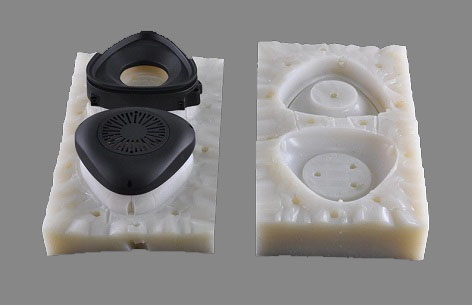
Vacuum mold casting is mostly compatible with polyurethane and epoxy resins, which can replicate the properties of thermoplastics like ABS and nylon.
By eliminating air bubbles and impurities in the casting material, the process prevents weak points that would compromise structural integrity.
Common applications include producing gears, housings, brackets, and prototype components requiring high precision.
It is best suited for low to medium volume production due to mold durability and cost dynamics but is not typically used for very high volume metal casting.
Depending on mold complexity and material curing times, parts can often be produced within days, making it ideal for rapid prototyping.

