
Views: 222 Author: Amanda Publish Time: 2025-11-08 Origin: Site


Content Menu
● Core Concepts and Classifications
● Evolution of Capabilities (From Basics to Multitasking)
● Practical Design Implications for Part Geometry
● Process Flows and Production Scenarios
● Quality Assurance, Metrology, and Process Control
● Production Readiness for OEM Partnerships
● Maintenance, Reliability, and Lifecycle Considerations
● Case for Shangchen as Your OEM Partner
● Best Practices for Transitioning from Prototype to Production
● FAQ
>> 4: How can rapid prototyping benefits be maximized when using CNC turning centers for complex parts?
In today's global manufacturing landscape, OEM partners increasingly rely on versatile turning capabilities to transform concepts into precision components. The terms turning lathe and CNC lathe describe two ends of a spectrum: a traditional, mechanically inclined machine optimized for straightforward turning, and a computer-controlled, multi-axis platform capable of executing complex operations in a single setup. For international brands, distributors, and contract manufacturers, choosing the right equipment influences not only part quality and throughput but also time-to-market, supply chain resilience, and total cost of ownership. This article delves into the real differences between turning lathes and CNC lathes, translates those differences into practical design and process decisions, and outlines how a normalized suite of OEM services—rapid prototyping, precision CNC machining, sheet metal fabrication, 3D printing, and mold production—fits into a cohesive production strategy. The goal is to help project teams optimize part design for manufacturability, select the appropriate machine for each phase of development, and plan scalable production with predictable quality.
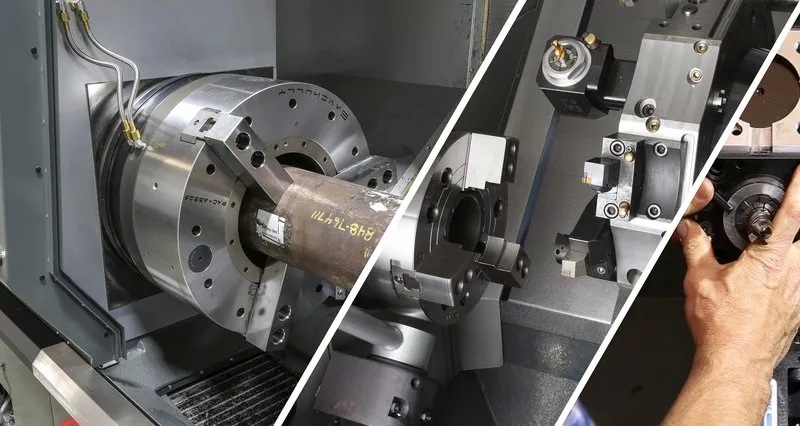
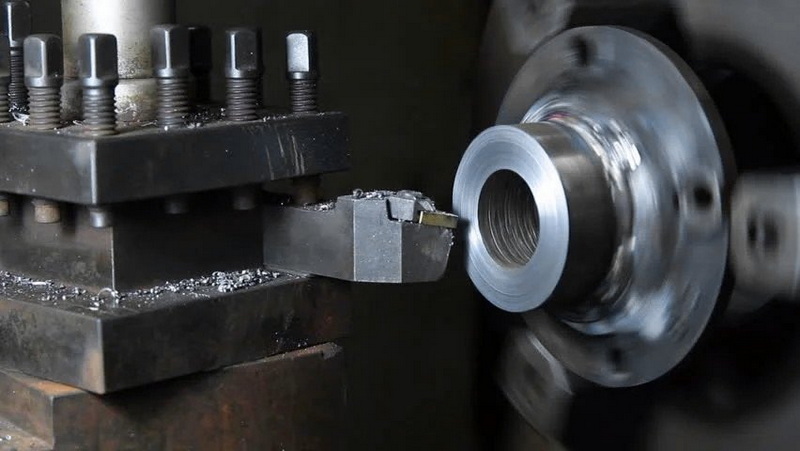
- Turning lathe: A traditional turning machine designed for rotary cutting of cylindrical surfaces. It typically features a fixed turret or toolpost arrangement and operates on primary axes such as X and Z. While some modern turning lathes incorporate CNC-based controls for repetitive operations, their core strength remains efficient, high-precision turning of simple geometries. For designers and engineers, the turning lathe represents a reliable baseline for producing consistent cylindrical features with disciplined runout control and surface finish.
- CNC lathe: A computer-controlled device that can range from a compact two- or four-axis machine to a full turning center with multiple axes, live tooling, and automatic tool changers. The CNC lathe enables sophisticated toolpaths, complex geometries, off-axis features, and integrated secondary operations such as milling, drilling, tapping, and pocketing within a single setup. This capability translates into shorter cycle times, reduced part handling, and greater flexibility for design iterations during rapid prototyping and small-to-mid-volume production.
- Axes and motion control: Turning lathes generally operate along two principal axes with limited or no live tooling. CNC lathes expand into additional axes (Y, B, etc.) and may include sub-spindle options, enabling off-center features or secondary operations without changing fixtures. The practical impact: multi-axis capability enables more complex parts to be produced with fewer setups.
- Tooling and automation: A traditional turning lathe uses a fixed set of tools that rotate with limited automatic intervention. CNC lathes employ automatic tool changers and live tooling, allowing milling, drilling, and tapping in the same cycle. For OEM programs, this reduces assembly work, speeds validation, and improves repeatability across batches.
- Process reliability and repeatability: Computerized control on CNC lathes provides strict programmatic control of feed rates, spindle speeds, tool wear compensation, and thermal management. Turning lathes rely more on skilled operators to maintain consistency, making process stability highly dependent on human factors in addition to mechanical precision.
- Simple cylindrical features: For parts dominated by straight turning, smooth finishes, and basic threading, a turning lathe often delivers the best balance of speed and cost. Designers can optimize tool wear and geometry to maximize throughput in high-volume runs.
- Complex geometries and mixed features: If a part requires pockets, threaded features beyond simple profiles, off-axis holes, or symmetric and non-symmetric geometries, a CNC lathe or turning center reduces fixturing complexity and often enables a single-pass production approach. This reduces assembly steps and risk of misalignment.
- Tolerancing strategy: Tighter tolerances and consistent surface finishes benefit from the closed-loop control of CNC systems, especially when multiple features must remain concentric or in precise alignment with rotating components. For less demanding tolerances, a well-tuned turning lathe can still meet requirements with appropriate gauging.
- Rapid prototyping with turning lathes: Early-stage prototypes benefit from quick setup, straightforward toolpaths, and fast iteration on form and fit. Engineers can validate base geometry, measure runout, and adjust materials and coatings before committing to a more complex production path.
- Rapid prototyping with CNC lathes: When designs evolve toward functional assemblies or multi-feature prototypes, CNC lathes allow immediate incorporation of secondary operations, reducing rework and guiding design decisions with real production-like feedback.
- Small-batch to mid-volume production: For evolving product lines, CNC turning centers deliver scalable throughput, repeatable results, and easier automation integration. This transition minimizes downtime between design validation and full-scale manufacturing, aligning with OEM expectations for lead times and quality assurance.
- In-process measurement: Whether using a turning lathe or CNC lathe, inline and post-process metrology is essential. Dimensional checks, runout, concentricity, surface finish, and thread quality should be verified with calibrated instrumentation to ensure conformance to specifications.
- Closed-loop control: CNC systems enable adaptive compensation and real-time process adjustments. This capability helps maintain tight tolerances across shifts and operators, reducing scrap and rework while supporting traceability for OEM documentation.
- Documentation and standardization: A robust documentation framework—process capability studies, first-article inspection, fixture qualification, and operator training records—supports quality across international orders and aligns with regulatory expectations in different markets.
- Part family assessment: Evaluate the mix of parts requiring heavy turning versus multi-feature machining. This helps determine whether the initial investment should lean toward a high-speed turning lathe with planned upgrades, or toward a CNC turning center capable of immediate multitasking.
- Engineering collaboration: Early-stage collaboration between design and manufacturing teams accelerates manufacturability insights. Designers can adjust features, tolerances, and material selections to optimize for the chosen machine platform.
- Supplier ecosystem: A one-stop OEM partner with capabilities across rapid prototyping, CNC machining, sheet metal fabrication, 3D printing, and mold production reduces lead times and ensures consistent quality from concept to mass production.
- Preventive maintenance: Regular checks on spindle bearings, drive systems, coolant quality, and tool wear ensure predictable performance. For CNC systems, software updates and CAM interoperability should be planned to minimize downtime.
- Spare parts and service support: A dependable supplier should offer timely access to spare parts, on-site or remote troubleshooting, and training for operators and QA staff. This is especially important for international customers who require consistent support across regions.
- Upgrades and scalability: Planning for future upgrades—additional axes, enhanced automation, or integration with robotics and inline inspection—helps future-proof investments and aligns with evolving production needs in fast-moving markets.
Shangchen (sc-rapidmanufacturing.com) sits at the intersection of rapid prototyping and scalable, precision manufacturing. The company's breadth—rapid prototyping, high-precision CNC machining, sheet metal fabrication, 3D printing, and mold production—provides a seamless path from concept validation to mass production for foreign brands, wholesalers, and manufacturers. The integrated approach enables customized turnkey solutions, with attention to tolerance analysis, fixture design, process documentation, and post-processing capabilities. A global partner network and experience with international quality standards support reliable delivery and consistent quality across diverse regulatory environments.
- Start with design-for-manufacturability (DFM) reviews early in the project to identify features that may require additional tooling, setups, or alternative geometries.
- Choose the right machine path based on part complexity and volume projections; plan for a staged upgrade if necessary to balance initial capital outlay with future throughput.
- Build a modular production plan: begin with rapid prototyping to confirm geometry and functional performance, then scale to CNC-based production for repeatability and automation compatibility.
- Leverage holistic services: Integrate rapid prototyping with high-precision machining, sheet metal fabrication, and mold production to reduce handoffs, shorten lead times, and improve overall product quality.
The turning lathe and CNC lathe represent two tiers of capability within the turning family, each suited to distinct production scenarios. For simple, high-volume cylindrical parts, a turning lathe delivers speed, cost efficiency, and dependable repeatability. For parts with complex geometries, multiple features, and evolving designs, CNC lathes and turning centers provide the flexibility, precision, and automation necessary to meet demanding OEM requirements and fast-changing product landscapes. A strategic, data-informed decision framework—one that weighs part families, volumes, tolerances, and post-processing needs—will guide the optimal equipment choice. When partnered with a capable OEM provider that offers rapid prototyping, CNC machining, sheet metal fabrication, 3D printing, and mold production, the transition from concept to mass production becomes smoother, faster, and more reliable for international brands seeking high-quality, scalable solutions.
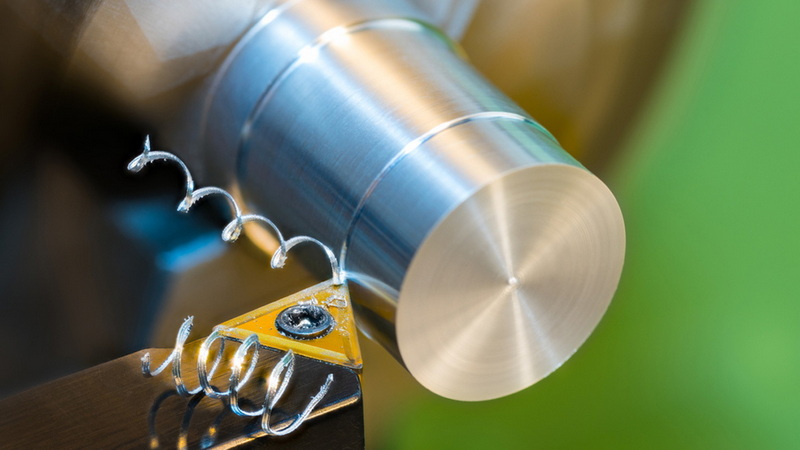
A turning lathe excels at fast, high-quality straight turning of simple cylindrical features with fixed tooling, while a CNC lathe offers multi-axis control, live tooling, and rapid integration of milling, drilling, and complex geometries in a single setup.
If the part features are mostly straightforward cylindrical turning, a turning lathe is often most cost-effective; for parts with pockets, off-axis holes, or multi-feature profiles, a CNC lathe reduces fixturing, cycle time, and risk by enabling complex operations in one setup.
Key drivers include upfront machine cost, tooling and automation needs, maintenance, labor requirements, and expected throughput; CNC lathes typically cost more initially but can lower per-part cost and increase productivity for complex parts.
Maximize benefits by leveraging multi-axis capabilities and live tooling to validate complex geometries in a single setup, while integrating CAD-CAM workflows and robust metrology for rapid design iterations.
Common post-processing includes deburring, finishing, cleaning, and coating; CNC turning centers often enable smoother inline or near-inline post-processing, enhancing throughput and traceability for OEM production.
[1](https://www.zintilon.com.sg/blog/cnc-lathe-vs-cnc-turn/)
[2](https://www.rapiddirect.com/blog/cnc-lathe-vs-cnc-turning-center/)
[3](https://www.southernfabsales.com/blog/cnc-turning-center-vs-cns-lathe)
[4](https://aeron.co.uk/cnc-lathe-vs-cnc-turning-center-an-in-depth-comparison/)
[5](https://rosnokmachine.com/cnc-lathe-vs-turning-center/)
[6](https://karkhana.io/cnc-lathes-vs-cnc-turning-centers-how-are-they-different/)
[7](https://cncwmt.com/qa/swiss-turning-vs-conventional-cnc-what-are-the-differences/)
[8](https://www.machining-custom.com/blog/cnc-lathe-vs-cnc-turning-center.html)
[9](https://rwdtool.com/a-detailed-comparison-between-manual-and-cnc-lathe-in-metal-fabrication/blog.html)
[10](https://www.camprocnc.com/en/news/industry/what-is-cnc-turning-machine)

