
Views: 222 Author: Amanda Publish Time: 2025-07-28 Origin: Site


Content Menu
● What is Vacuum Mold Casting?
>> Advantages of Vacuum Mold Casting
● The UK Vacuum Mold Casting Industry Landscape
>> Key Sectors Using UK Vacuum Mold Casting Services
● Top Vacuum Mold Casting Manufacturers and Suppliers in UK
>> 7. Brunel Engineering Services
● How to Choose the Right Vacuum Mold Casting Manufacturer or Supplier
>> Customization & Engineering Support
>> OEM & Confidentiality Assurance
>> Global Shipping and Logistics
● Step-by-Step Guide: Vacuum Mold Casting Process in UK Factories
>> Step 4: Cooling and Solidification
>> Step 5: Demolding and Finishing
>> Step 6: Inspection & Quality Control
● Applications of Vacuum Mold Casting
● Latest Trends and Innovations
● FAQS
>> 1. What is the typical lead time for vacuum mold cast parts in the UK?
>> 2. Which industries benefit most from vacuum mold casting in the UK?
>> 3. How does vacuum mold casting compare to traditional sand casting?
>> 4. Are UK vacuum mold casting manufacturers equipped for OEM and confidential projects?
>> 5. Can UK vacuum mold casting suppliers handle international shipments?
Vacuum mold casting has revolutionized the manufacturing industry, giving rise to higher quality parts with intricate geometries and outstanding surface finishes. In the dynamic UK manufacturing landscape, vacuum mold casting manufacturers and suppliers stand out for their innovation, efficiency, and dedication to meeting global demands. This comprehensive guide explores the top manufacturers and suppliers in the UK, how they operate, the advantages of vacuum mold casting, and key considerations for sourcing. This article is designed to be your authoritative reference for understanding and selecting vacuum mold casting partners in the UK.

Vacuum mold casting is an advanced fabrication process that employs negative pressure to fill molds with molten material, typically metals or alloys. Unlike conventional sand casting, vacuum mold casting offers better dimensional accuracy, smoother surface finishes, and reduces defects such as porosity and incomplete filling. The process is invaluable for producing prototypes, small-batch production runs, and even fully functional end-use components across various industries, including automotive, aerospace, medical, and consumer electronics.
- Superior accuracy and surface quality
- Minimal defects and enhanced mechanical properties
- Efficient for complex shapes and thin-walled parts
- Rapid turnaround for prototyping and custom productions
- Versatile for a range of metals, including alloys and non-ferrous materials
Vacuum mold casting significantly improves metallurgical properties by reducing impurities and internal voids. The vacuum-assisted process eliminates trapped gases that typically form during traditional casting, resulting in stronger, more reliable parts. It is particularly well-suited for applications demanding high structural integrity coupled with intricate detail.
The United Kingdom boasts a strong and growing network of vacuum mold casting manufacturers and suppliers. These companies leverage advanced technology, robust quality control systems, and seasoned expertise to deliver top-tier products for domestic and international clients alike. With a focus on precision, reliability, and customer-centric OEM solutions, UK manufacturers have garnered a global reputation for excellence.
Capitalizing on the UK's rich engineering heritage and well-established supply chains, manufacturers here cater to a diverse range of sectors, pushing the boundaries with continuous investments in automation, digital prototyping, and eco-friendly manufacturing processes. The commitment to sustainability is evident in the adoption of energy-efficient furnaces and recycling of casting materials, aligning with global environmental initiatives.
- Automotive industry: Custom components like engine parts, gears, housings, and lightweight structural elements.
- Aerospace: Production of lightweight, high-strength critical components meeting stringent certification standards.
- Medical devices: Manufacturing of high-precision surgical tools, implant housings, and diagnostic equipment parts.
- Electronics: Intricate metal casings, connectors, and heat sinks for consumer and industrial devices.
- Industrial machinery: Custom brackets, mounts, and complex assemblies delivering enhanced performance and durability.
These sectors demand not only dimensional precision but also traceability and compliance with various industry regulations, factors well-managed by UK manufacturers.
The following companies lead the UK's vacuum mold casting industry, recognized for their specialization, service excellence, and technical innovation.
Renishaw PLC stands at the forefront of precision engineering, supplying vacuum mold cast components through advanced prototyping and production techniques. Their extensive research and development programs ensure clients benefit from state-of-the-art process improvements. Renishaw's capabilities encompass tight tolerances for aerospace and medical devices, with an emphasis on reliability and repeatability.
Dean Group has a longstanding reputation for delivering high-quality vacuum mold casting solutions across the UK. Their service encompasses design consultation, in-house tooling, and post-casting finishing, providing cost-effective turnkey manufacturing support. Their adaptability to complex and large castings positions them as a preferred supplier for automotive and industrial sectors.
Finecast Foundry specializes in bespoke vacuum mold casting, excelling in producing highly engineered parts with demanding geometries. Their innovative approach includes collaborative design-for-manufacturability feedback, ensuring that each casting meets both functional and aesthetic requirements. Finecast caters extensively to the aerospace and electronics industries.
Haworth Castings is synonymous with precision and quality in the UK vacuum casting market. Their advanced quality assurance systems incorporate digital inspection and metallurgical analysis to guarantee parts meet the tight specifications necessary for medical and aerospace applications. They are well-regarded for complex tooling and finishing services.
Grainger & Worrall offers lightweight casting solutions utilizing cutting-edge vacuum molding techniques. Their expertise spans aluminum and magnesium alloys, focusing on automotive and aerospace sectors that emphasize weight reduction without compromising strength. Their engineering teams work closely with clients on material selection and process optimization.
Deanestor Ltd is recognized for robust and efficient casting tailored to medium and large-scale orders. They have invested heavily in technology that expedites both prototyping and mass production phases. With a focus on quality and timely delivery, Deanestor serves automotive suppliers and industrial machinery manufacturers.
Brunel Engineering Services combines technical innovation with exceptional customer service, facilitating rapid prototyping, short runs, and full-scale production. They support OEM projects with strict confidentiality and employ lean manufacturing techniques to optimize costs and turnaround.
These companies not only provide superior vacuum mold casting services but also comprehensive after-sales support, including part validation, metallurgical testing, and logistics coordination to ensure seamless supply chain operations.
Selecting an ideal vacuum mold casting partner involves a strategic evaluation of key factors to ensure mutual success and product excellence.
Vet the supplier's equipment, technology stack, and expertise with your materials. Does the company have advanced vacuum chambers, temperature-controlled environments, and CNC machining capabilities for mold creation? Also, check their experience with the alloy types and component sizes your project requires.
A manufacturer with rigorous quality management systems, including ISO certifications, non-destructive testing, 3D scanning, and traceability, will minimize defects and ensure consistent output.
Optimal partners provide engineering input throughout design and production cycles, offering design-for-manufacturing insights, prototyping advice, and iterative adjustments to enhance manufacturability and part performance.
Time-to-market can be critical. Evaluate their lead times for prototyping and batch production stages, and how effectively they manage expedited requests.
Partners active in OEM markets understand the importance of intellectual property protection. Confirm their policies on confidentiality, secure data handling, and dedicated production lines.
A well-established supply chain capability supports international delivery, including packaging standards to prevent damage and cost-effective freight options.
Understanding the process helps companies optimize their designs and collaborate effectively with suppliers.
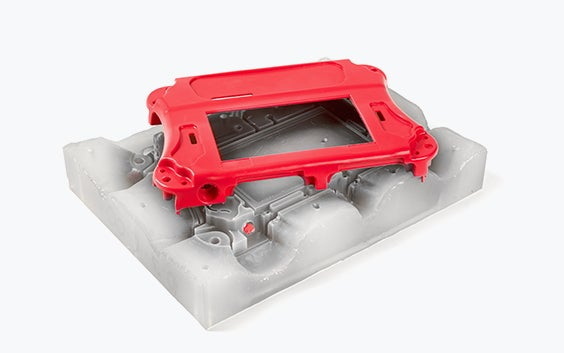
Patterns are typically created using CNC machining or 3D printing of resin models. The mold cavity is then formed in ceramic or refractory materials, selected to withstand molten metal temperatures and to provide the required surface finish. Precision in mold fabrication is crucial to achieving dimensional accuracy.
Once the mold is assembled, it is placed inside a sealed chamber, and a vacuum system removes all air and gases. This step prevents gas entrapment, reducing porosity and ensuring that molten metal fully fills intricate cavities.
Molten metal, often aluminum, zinc, or magnesium alloys, is poured into the evacuated mold cavity. The negative pressure assists in drawing the molten metal deep into thin sections and replicating fine mold details.
Controlled cooling allows the metal to solidify with tight grain structures, promoting strength and enhancing mechanical properties. Cooling rates may be adjusted to mitigate internal stresses.
The solid cast part is carefully extracted. Subsequent finishing procedures include trimming risers and feeders, heat treatment to improve properties, machining to tight specifications, and surface treatments such as polishing or coating.
Each casting undergoes dimensional inspection with CMM (Coordinate Measuring Machines), X-ray or ultrasonic testing for internal quality, and metallographic examinations to ensure compliance with specifications.
Vacuum mold casting's benefits make it indispensable across sectors requiring precision and quality.
- Aerospace: Producing lightweight structural parts and complex components meeting stringent safety and performance requirements.
- Medical Devices: Manufacturing instrument housings, implant casings, and surgical tools that require biocompatibility and precision.
- Automotive: Engine components, gearbox housings, and brackets designed for durability and reduced weight.
- Industrial Machinery: Components that endure mechanical stresses with complex shapes and surface finishes.
- Electronics: Manufacturing precise casings and connectors for gadgets, ensuring heat dissipation and material integrity.
- Art and Design Prototypes: Creating detailed, high-quality models and finished art pieces with metallic finishes.
Vacuum mold casting enables rapid iteration during product development, allowing designers and engineers to validate and refine concepts before moving to costly large-scale production.
The UK's vacuum mold casting sector integrates continuously evolving technologies:
- Digital Twins and Simulation Software: Predict defects, optimize mold design, and improve yield before physical production.
- Sustainable Practices: Use of recycled alloys, energy-efficient induction furnaces, and waste minimization protocols align with green manufacturing goals.
- Automation and Robotics: Automated mold handling, pouring, and finishing reduce human error and improve consistency.
- Hybrid Manufacturing Processes: Combining vacuum mold casting with additive manufacturing to produce complex parts with reduced tooling needs.
- Advanced Surface Treatments: Incorporation of nano-coatings and enhanced polishing techniques to improve corrosion resistance and aesthetics.
These advancements collectively help UK manufacturers stay competitive, boost productivity, and lower environmental impact.
The UK's vacuum mold casting manufacturers and suppliers represent the cutting edge of precision manufacturing, offering comprehensive and innovative solutions tailored to high-demand industries worldwide. Their expertise in managing the entire vacuum mold casting lifecycle—from design consultation and prototyping to mass production and logistical management—ensures clients receive exceptional quality, faster turnaround, and cost-effective solutions. Partnering with reputable UK suppliers allows brands, wholesalers, and producers to leverage superior engineering capabilities, gain competitive advantages in product development, and meet stringent industry standards across automotive, aerospace, medical, electronics, and more.
Lead times vary based on part complexity and order size. Rapid prototyping can be achieved within 7–14 days, while larger batch production typically takes 3–6 weeks.
The automotive, aerospace, medical device, electronics, and industrial machinery sectors are major beneficiaries due to their demands for precision, durability, and design complexity.
Vacuum mold casting provides superior dimensional accuracy, finer surface finishes, and fewer internal defects. While initial mold costs may be higher, the resultant part quality and reduced post-processing often justify the investment.
Yes, many manufacturers operate with strict OEM protocols, including non-disclosure agreements and secure handling of proprietary designs and data.
Most leading UK suppliers have established logistics networks for global distribution, ensuring safe, timely, and cost-efficient shipping to clients worldwide.

