
Views: 222 Author: Amanda Publish Time: 2025-10-11 Origin: Site


Content Menu
● What is 3D Print Prototyping?
● Leading 3D Printing Technologies for Prototyping
>> Selective Laser Sintering (SLS)
>> Fused Deposition Modeling (FDM)
● Benefits of 3D Print Prototyping for Businesses
● Integration of Advanced Technologies in Rapid Prototyping
>> Artificial Intelligence (AI) in 3D Prototyping
>> Virtual Reality (VR) for Prototype Visualization
● Industry Applications Empowered by 3D Print Prototypes
● Role of OEM Services in High-Quality 3D Print Prototyping
● Challenges and Practical Solutions in 3D Print Prototyping
>> Material Compatibility and Selection
>> Design Limitations and Scaling
>> Post-Processing Time and Labor
● Frequently Asked Questions (FAQ)
>> 1. What is the most accurate 3D printing technology for prototypes?
>> 2. Can 3D print prototypes be used for functional testing?
>> 3. How quickly can a 3D print prototype be produced?
>> 4. Are multi-material 3D print prototypes feasible?
>> 5. How does rapid prototyping enhance OEM manufacturing?
3D print prototype technology has revolutionized the landscape of product development, enabling rapid prototyping, accelerating innovation, and making production cost-effective. As global demand surges from OEMs, brand owners, and manufacturers, understanding the top technologies powering high-quality 3D print prototypes becomes paramount. This article delves into the essential 3D printing technologies used in prototyping, what sets them apart, their practical applications, and how these advances empower businesses to transform concepts into market-ready products efficiently.
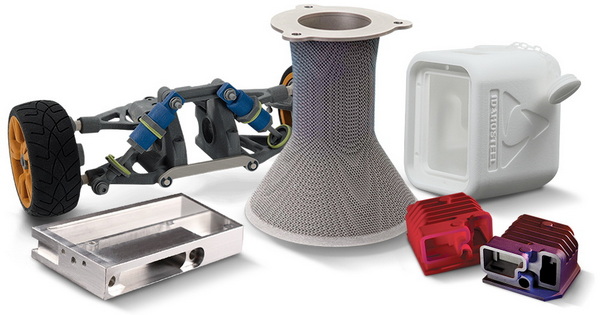
3D print prototyping is the process of creating tangible physical models of product designs using computer-aided design (CAD) and additive manufacturing technologies. This approach enables stakeholders to evaluate and test designs physically before investing in large-scale manufacturing. The rapid iteration cycle facilitated by 3D printing improves communication between teams, reduces design errors early on, and helps create products that are closer to final market expectations.
Stereolithography (SLA) works by curing liquid resin with a UV laser, building solid parts layer by layer. It is renowned for creating prototypes with exceptional detail and exceptionally smooth finishes, often indistinguishable from final injection-molded products.
Best Uses:
- High-detail concept visualization
- Presentation-ready prototypes for client approval
- Casting and molding patterns
Advantages:
- Excellent surface finish and intricate details
- High dimensional accuracy
- Large build volume options for sizable models
Selective Laser Sintering (SLS) fuses powdered materials, typically nylon, using a laser to build durable parts without requiring support structures. It excels in producing mechanically resilient prototypes capable of functional testing and accommodating complicated designs.
Best Uses:
- Functional prototypes with moving parts like hinges or snap fits
- Complex assemblies and interlocking parts
- Testing mechanical and structural features
Advantages:
- Parts are robust and suitable for end-use simulation
- No need for support materials, enabling design freedom
- Allows complex geometries and undercuts
MultiJet Printing (MJP) creates parts by jetting layers of photopolymer resin and curing them with UV light. It produces ultra-fine resolution parts, making it ideal for detailed, small components, such as those required in medical or jewelry industries. MJP also supports multi-material printing and wax casting patterns.
Best Uses:
- Small, intricate components
- Investment casting patterns with wax-like materials
- Multi-material and multi-color prototyping
Advantages:
- Very high resolution and fine surface texture
- Supports dissolvable support materials for complex shapes
- Allows combining different materials in one print
Fused Deposition Modeling (FDM) operates by extruding thermoplastic filaments like ABS or PLA through a heated nozzle to build layers. It is one of the most accessible and affordable 3D printing methods, making it popular for early-stage concept validation and simple functional prototypes.
Best Uses:
- Low-cost, rapid prototyping cycles
- Functional jigs, fixtures, and ergonomic designs
- Basic visual models for form and fit studies
Advantages:
- Affordable and widely available technology
- Supports a wide array of thermoplastic and composite materials
- Fast production of medium to large-sized parts
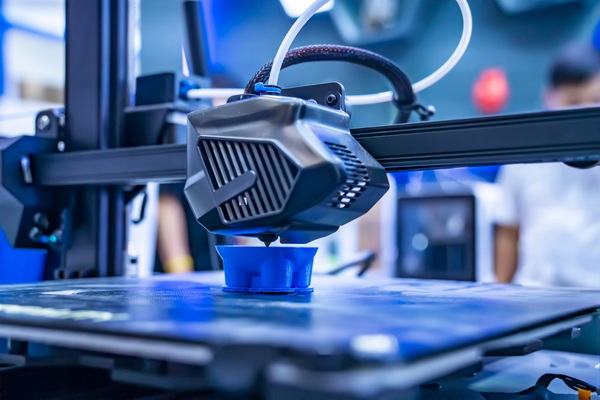
3D print prototyping delivers multiple advantages across the product development spectrum:
- Accelerated Design Cycles: Rapid iterations help reduce the time from concept to final design.
- Cost and Time Efficiency: Minimizes the expensive tooling and manufacturing lead times.
- Design Flexibility: Allows creation of complex geometries difficult or impossible with traditional manufacturing.
- Improved Collaboration: Physical models enhance communication between engineers, designers, marketers, and clients.
- Early Detection of Flaws: Prototypes enable thorough testing, reducing costly downstream manufacturing errors.
- Customization and Personalization: Supports creation of made-to-order products for niche markets or specific client needs.
AI-powered software is now being integrated into 3D prototyping workflows to enhance design optimization. AI algorithms analyze design requirements and user feedback to propose improved prototype iterations, predict structural weaknesses, and streamline the development process. This capability increases first-pass success rates and minimizes manual trial-and-error.
Virtual Reality innovations enable designers and clients to experience prototypes in immersive 3D environments before physical fabrication. VR allows stakeholders to interact with a design's form, fit, and function virtually, revealing design flaws early. This immersive review process accelerates decision-making and reduces costly physical iterations.
Emerging materials such as flexible polymers, bio-compatible resins, and advanced composites extend the functional scope of prototypes. Innovations improve prototype durability, thermal resistance, and mechanical behavior, allowing parts to be tested under real-world conditions instead of just conceptual visualization.
- Aerospace: Lightweight, complex geometries improve fuel efficiency and performance.
- Consumer Electronics: Rapidly iterate on highly intricate parts, enabling quick design-to-market cycles.
- Medical: Custom devices, implants, and surgical guides tailored for individual patients.
- Automotive: Functional prototypes enable aerodynamic optimization and ergonomic testing.
- Consumer Goods: Fast development of ergonomic, aesthetic, and functional product elements.
Factories like Shangchen provide comprehensive OEM 3D print prototype services to international brands, wholesalers, and manufacturers. Their offerings span rapid prototyping, CNC machining, precision batch production, sheet metal manufacturing, and mold making. Partnering with such OEM providers enables businesses to outsource the entire product development cycle, benefitting from high-quality prototype fabrication combined with large-scale manufacturing expertise. This holistic approach reduces time-to-market and ensures design fidelity from prototype to production.
Selecting the correct material that mimics final-use conditions remains a key challenge. Businesses must align material properties like strength, flexibility, and temperature resistance with prototype function.
Solution: Collaborate with material specialists and test multiple materials to identify the best match.
Differences between prototype and final manufacturing methods may cause scaling or geometric constraints, especially if moving from additive processes to injection molding or casting.
Solution: Incorporate design for manufacturability principles early and work closely with manufacturing engineers.
Some 3D print prototypes require significant finishing—such as polishing, painting, or assembling—that can add time and cost.
Solution: Plan post-processing steps in the timeline and optimize prototypes to reduce complexity where possible.
Advanced 3D printing technologies and materials can become costly, especially for large or complex parts.
Solution: Select prototype technologies based on project phase and prototype purpose to balance cost and fidelity effectively.
High-quality 3D print prototypes powered by advanced technologies such as SLA, SLS, MJP, and FDM have truly transformed product development across industries. These technologies enable faster design iterations, unprecedented design freedom, and significant cost savings, thereby fueling innovation for OEMs and manufacturers around the globe. The incorporation of AI and VR further accelerates development cycles and enhances design validation accuracy. Factory partners like Shangchen offer comprehensive OEM services that empower brands and producers to bring their visionary designs to fruition with speed and reliability. Embracing these cutting-edge 3D print prototype technologies is essential to remain competitive and innovate successfully in today's rapidly evolving marketplace.
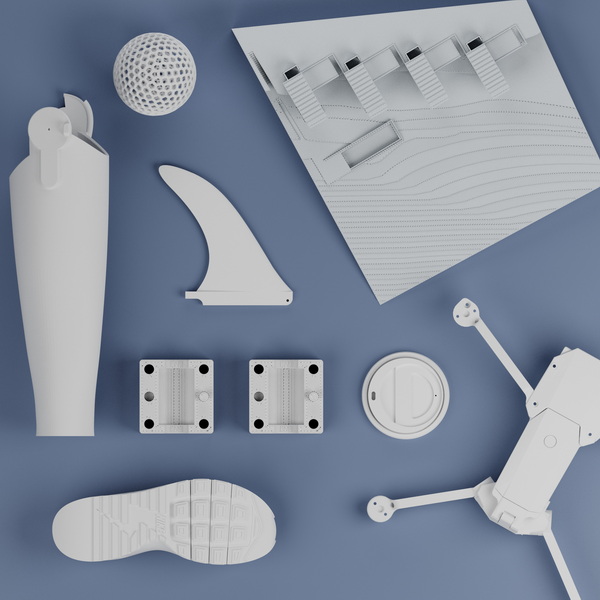
SLA printing provides the highest resolution and smooth finishes, ideal for creating detailed, presentation-quality prototypes.
Yes, technologies such as SLS and FDM produce durable parts suitable for mechanical and practical functional testing.
Production speed varies based on design complexity and printing technology, but rapid prototyping typically enables turnaround within days, much faster than traditional methods.
Yes, MultiJet Printing (MJP) and some advanced 3D printers can combine different materials and colors within a single print for functional and aesthetic prototypes.
Rapid prototyping shortens development cycles, lowers costs, improves collaboration among stakeholders, and enables design customization before large-scale production.

